English


Why Do Overhead Crane Prices Vary So Much? Understanding Overhead Crane Cost
Why Do Overhead Crane Prices Vary So Much? Understanding Overhead Crane Cost
Date: 2026-07-31 Share:
Overhead Crane Cost can vary sharply even when two quotations show the same capacity. The difference usually comes from crane quality, material cost, motor brand and rating, controls, duty class, certification, and project scope. This guide explains how crane quality affects overhead crane cost and how overhead crane certification requirements and cost shape the final quotation. Buyers must compare the work each crane is designed to perform—not only the headline price.
What Determines Overhead Crane Cost?
The final price includes:
- Girders, end carriages, wheels, and runway interfaces
- Hoists, motors, gearboxes, brakes, ropes, and bearings
- Duty classification and intended operating life
- Electrical controls and automation
- Safety devices, testing, certification, and documents
- Transport, installation, commissioning, and training
Span, lifting height, structure, environment, controls, and compliance can substantially change engineering requirements.
How Crane Quality Affects Overhead Crane Cost
Cranes should be judged on the basis of structural calculations, tracing of material, proper welding, good brakes, electrical protection, inspection documents, and handbooks.
Why Equal-Capacity Cranes Can Have Different Quality
A rare 10-ton maintenance crane does not equal a 10-ton production crane that works round the clock. In some cases, the production crane needs a higher duty cycle rating, better motors, higher cycle brakes, better gearbox, and better wheels.
Request drawings, data sheets, schematics, test reports, warranty terms, and spare-parts lists. These reveal verified quality beyond minimum capacity.
How Material Cost Changes the Price
Cost of material will be more than the cost of steel in the market. Increased capacity will call for stronger girders, hoist, wheels, and runways. Increased spans may need girders to be deeper, thicker, reinforced, or fabricated box sections. Increased lifting height will need increased ropes, drums, and increased motor power.
Single-Girder vs. Double-Girder Construction
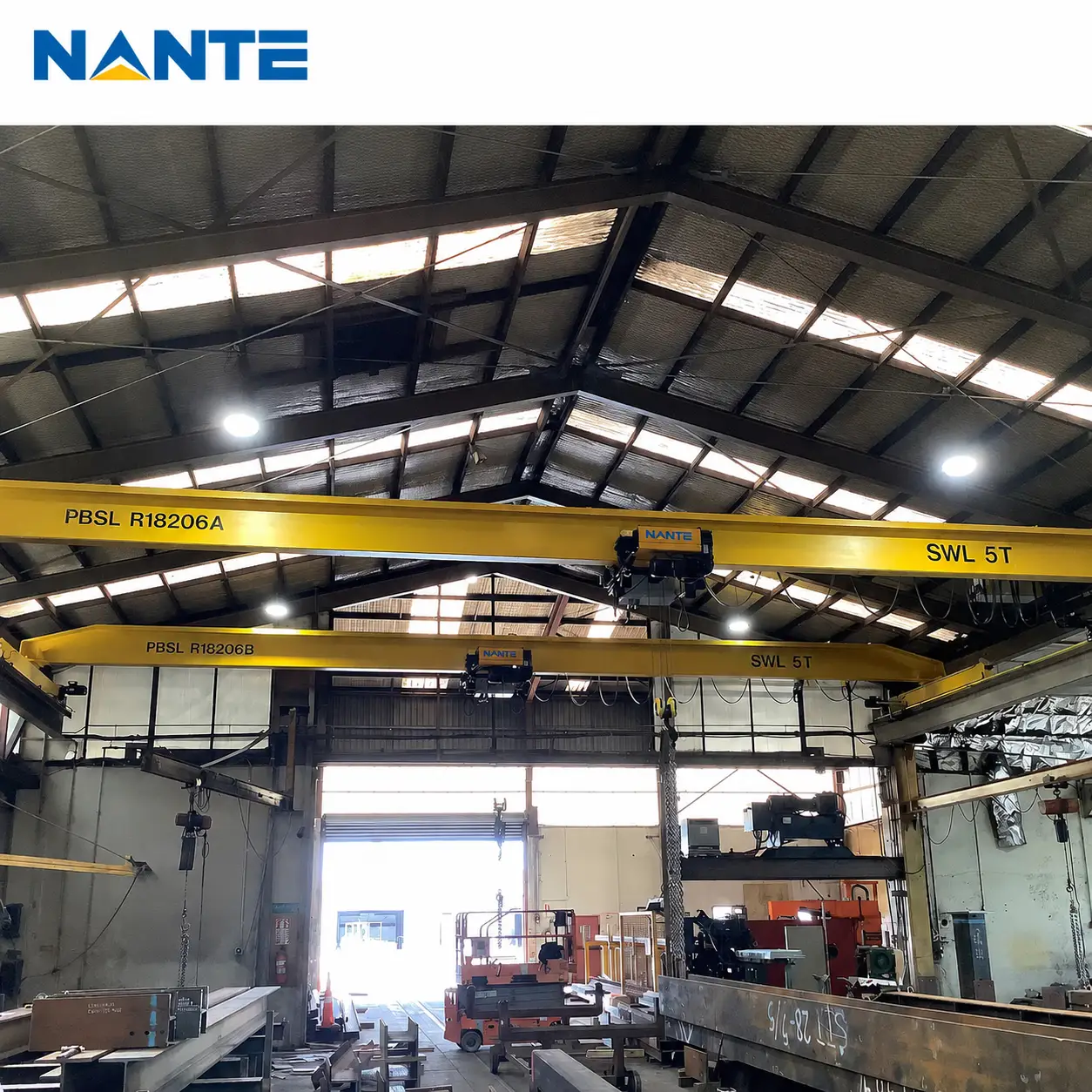
The single-girder crane usually requires less amount of material and can be used for many light and medium-duty applications. However, the double girder crane is costlier but is worth considering for heavy lifting, long spans, high hook heights, walkways, auxiliary hoist, and heavy-duty applications.
Outdoor, wet, dusty, or corrosive sites may also require stronger coatings, sealed components, or stainless enclosures.
Capacity, Span, and Lifting Height
Rated capacity affects nearly every load-bearing and drive component. Oversizing can unnecessarily increase steel weight, wheel loads, motor power, runway reactions, freight, and installation work.
A span increase can require a fabricated girder. Lifting height affects rope length, drum capacity, reeving, power demand, and headroom. Limited roof clearance may require a customized low-headroom arrangement.
Duty Class and Working Frequency
Duty class reflects average load, operating cycles, travel distance, shifts, and the percentage of lifts near rated capacity.
Higher duty requires greater fatigue life and thermal capacity. Correct classification costs more but reduces overheating, premature wear, damage, and downtime.
How Motor Brand and Specifications Affect Cost
Motor brand can influence service and spare parts supply, but the specification is more important than the brand.
Consider power, duty cycle, start-up torque, insulation, over-heating protection, water and dust resistance, brake type, encoders, and compatibility with speed control systems. Even equal kilowatt motors may operate differently during repeated reversing and braking.
Controls, Electrical Configuration, and Automation
Basic control costs less than variable-speed control. Variable speed provides smoother acceleration, better positioning, less load swing, and lower mechanical shock, but needs drives, programming, protection, and commissioning.
Control-panel options can include higher dust-and-water protection, stainless construction, anti-sway control, automation, monitoring, and data logging.
Safety Features and Compliance
Compare overload protection, emergency stops, travel limits, buffers, alarms, anti-collision functions, rope-management devices, brakes, and load displays.
Safety adds hardware, engineering, inspection, and record costs. Applicable rules may require visible rated-load markings, operational testing, verification of limit and safety devices, and documented rated-load tests.
Overhead Crane Certification Requirements and Cost
Requirements depend on the installation country, industry, customer specification, design code, and inspection scope.
The documentation could encompass design approval, materials and welding records, electrical certification, factory testing, load testing, witnessing, translation of manuals, and a technical file. Ensure the needs are established prior to quoting because a low quote may not contain the acceptance documentation.
Customization and Operating Environment
Standard indoor cranes use repeatable designs. Heat, cold, dust, moisture, corrosion, hazardous areas, restricted headroom, synchronized lifting, rotating loads, or automation require additional engineering.
Customization changes materials, seals, cooling, coatings, electrical protection, software, testing, and documentation. These are functional costs, not arbitrary premiums.
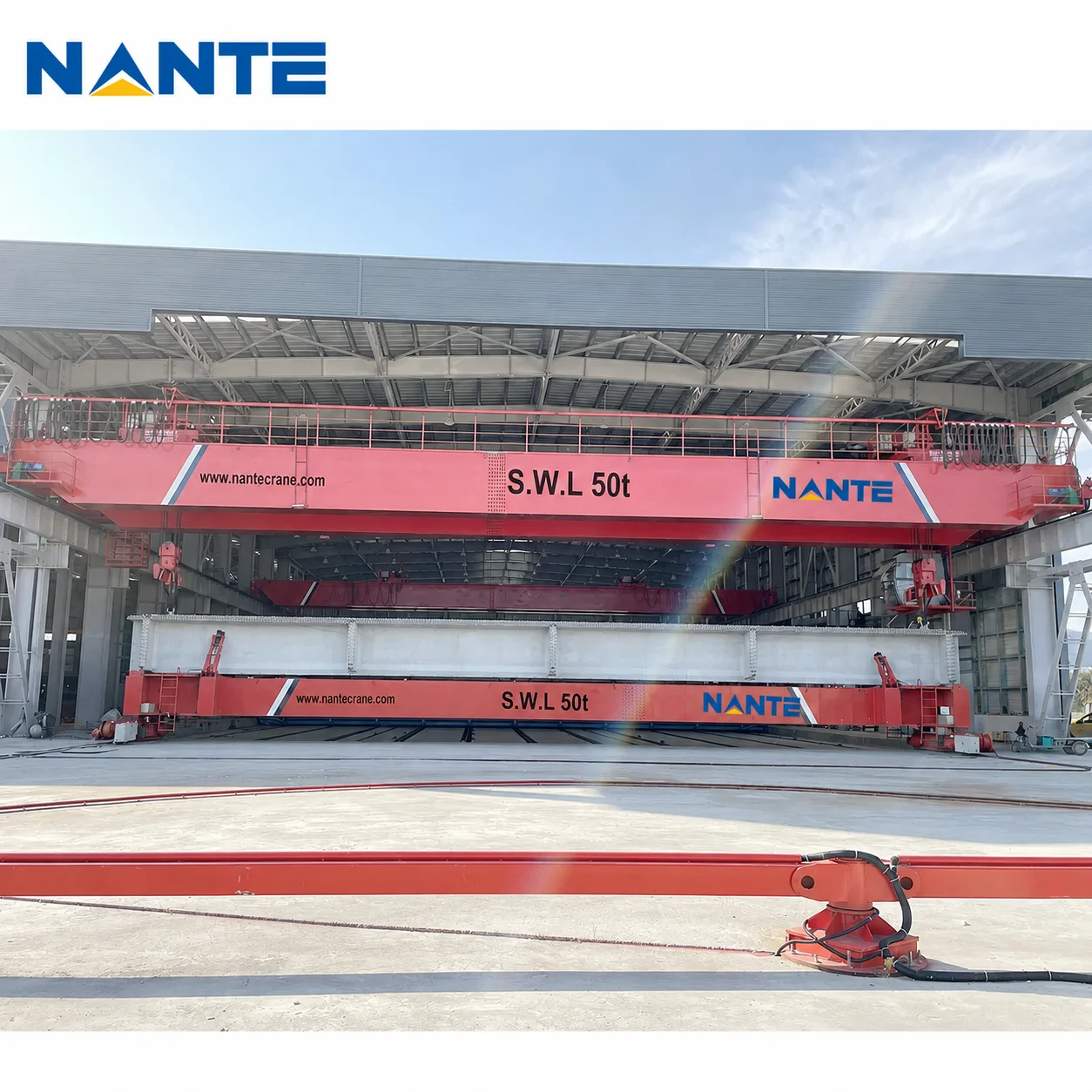
Real Case: Heavy-Duty Automotive Production Crane
A documented stamping-workshop project used one 50t/25t crane and one 50t crane. It included heavy-duty classification, dual open winches, dual braking, rope-management devices, synchronized operation, anti-sway control, overload and travel protection, service-life recording, live load display, and remote rated-load setting.
Capacity alone cannot explain the price: redundancy, production-duty machinery, precision controls, monitoring, and safety add value.
Real Component Case: Hoist for a Pipe-Pile Facility
Another project involved loads up to 50 tons, weak power supply, dust, water, corrosion risk, and precise positioning. The solution addressed cable sizing, motor capability, compacted wire rope, sealed electrics, overload protection, emergency stops, testing, and training. Reported results included faster handling, improved safety, and lower maintenance demand.
The hoist specification can materially change cost in a harsh environment.
Hidden Costs in a Low Quotation
Check whether the price includes:
- Runway beams, rails, and building reinforcement
- Main power supply and crane electrification
- Packing, freight, customs, and unloading
- Installation labor and lifting equipment
- Commissioning, test weights, and inspection
- Training, manuals, spare parts, and tools
Compare equipment, landed, and fully installed costs separately. A low equipment-only figure may become expensive after exclusions are added.
Purchase Price vs. Total Cost of Ownership
Use this formula:
Total cost of ownership = purchase + delivery + installation + energy + inspection + maintenance + spare parts + downtime – residual value
A correctly specified crane may cost more initially but offer better availability and component life. The result depends on operating intensity and interruption costs.
How to Compare Overhead Crane Quotes
Use an Apples-to-Apples Checklist
Standardize:
- Capacity, typical load, span, lifting height, and runway length
- Duty class, lifts per hour, shifts, and travel distances
- Speeds, controls, and positioning accuracy
- Temperature, dust, moisture, corrosion, and outdoor use
- Motor, brake, gearbox, rope, wheel, and enclosure ratings
- Safety, certification, testing, warranty, and documents
- Freight, installation, commissioning, training, and exclusions
The strongest offer has the clearest scope and lowest acceptable lifecycle risk—not necessarily the lowest price.
FAQ
Why Do Cranes With the Same Capacity Have Different Prices?
They may differ in span, height, duty class, structure, motors, controls, safety, environmental protection, certification, or project scope.
Does Better Crane Quality Always Cost More?
Verified engineering, materials, inspection, testing, and durable components usually cost more. However, unnecessary over-specification also wastes money.
What Information Is Needed for an Accurate Quote?
Provide capacity, load profile, span, lifting height, runway length, duty cycle, environment, power supply, controls, destination, certification, and installation scope.
Request a Configuration-Based Quote from Nante Crane
Nante Crane designs and manufactures overhead cranes, gantry cranes, hoists, travelling mechanisms, power-supply systems, control panels, and safety components for industrial applications. Its overhead crane range includes single-girder, double-girder, underhung, and customized heavy-duty configurations, supported by engineering, quality management, testing, and international project experience. Submit your capacity, span, lifting height, duty class, operating environment, destination requirements, and installation scope to receive a configuration-based quotation. Contact Nante Crane today to discuss your lifting requirements and request a tailored technical proposal.