English


What Happens During a Double Girder Overhead Crane FAT (Factory Acceptance Test)?
Date: 2026-07-14 Share:
When purchasing a heavy-duty Double Girder Overhead Crane for international industrial projects, global buyers often share a common anxiety: Will this massive piece of machinery assemble seamlessly and operate safely once it arrives at our site thousands of miles away?
Shipping a crane with design mismatches, electrical faults, or structural defects to a remote location can lead to catastrophic project delays and skyrocketing correction costs.
This is where the Factory Acceptance Test (FAT) serves as your ultimate safety net. Conducting a rigorous FAT before shipping is the single most effective way to ensure your material handling equipment is 100% compliant, safe, and ready for immediate installation.
In this comprehensive guide, we will take you behind the scenes of a professional double girder crane FAT process, showing you exactly what happens, what to look for, and how top-tier manufacturers like NANTECRANE secure flawless global deliveries.
Why is a FAT Essential for Your Double Girder Overhead Crane?
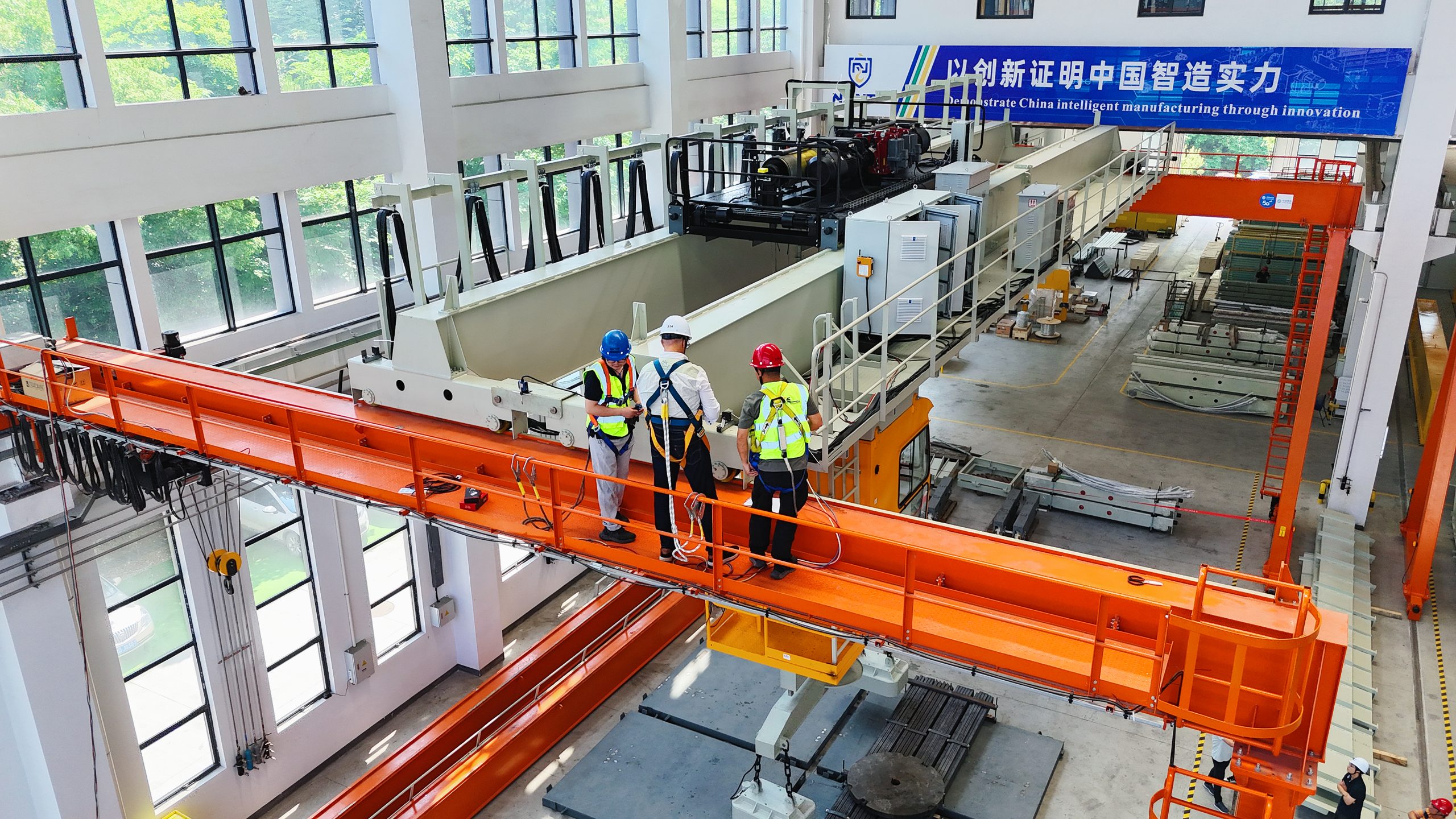
A Factory Acceptance Test (FAT) is a structured evaluation process conducted at the manufacturer’s facility before the equipment is disassembled for shipment. While it is highly recommended for all industrial cranes, it is absolutely non-negotiable for double girder overhead cranes, which are typically customized for high-capacity, heavy-duty, or hazardous environments.
By investing time in a comprehensive FAT, buyers secure three critical benefits:
Elimination of On-Site Rectification Risks: Fixing a structural or electrical issue in a fully equipped manufacturing smart factory is fast and cost-effective. Attempting the same fix on an active construction site in another country can delay projects by weeks.
Verification of Tailored Customizations: Heavy-duty cranes often feature highly specialized designs, such as rotating spreaders, heat-resistant insulation, or specialized grab buckets. A FAT verifies that these specific features function exactly as engineered.
Unparalleled Project Transparency: A verified FAT report provides indisputable proof of quality, giving project owners, safety boards, and stakeholders complete peace of mind.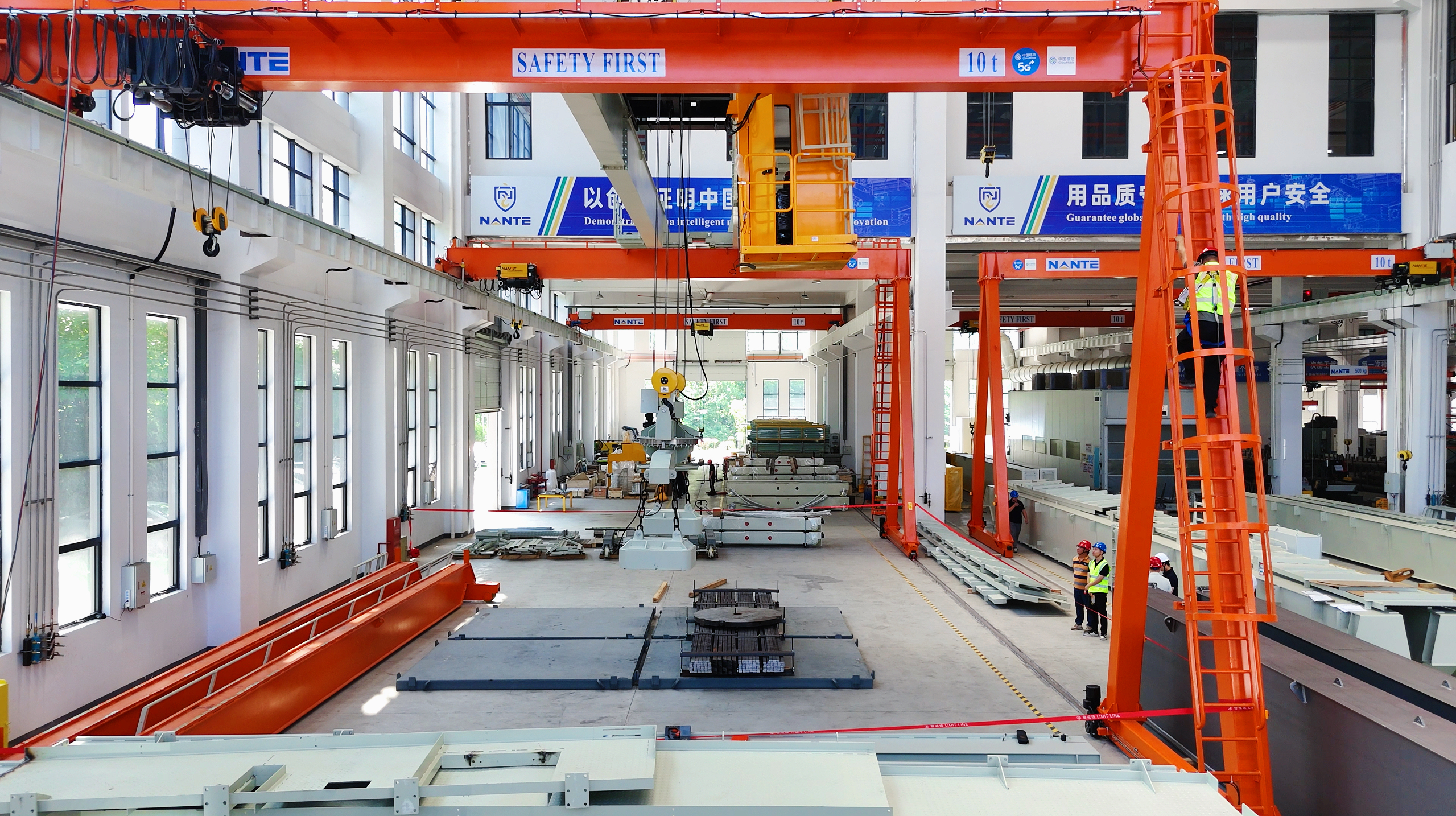 Step-by-Step: Inside a Standard Double Girder Crane FAT Process
A successful FAT is never a quick, casual walk-through. It is a highly organized, multi-day technical audit. At NANTE, a standard FAT for a Double Girder Overhead Crane is executed in four rigorous phases:
Phase 1: Technical Document Review (The Foundation)
Before a single button is pressed on the pendant control, the technical teams must align.
Technical Drawings & Calculations: Engineers review the general assembly drawings, structural calculation sheets, and electrical schematic diagrams.
Material & Component Traceability: The manufacturer presents raw material test certificates (MTRs), non-destructive testing (NDT/UT/MT) reports for critical welds, and certificates of conformity for key components like motors, gearboxes, and hoist units.
Phase 2: Design Highlight & Visual Quality Inspection
Next, the crane is visually inspected in its fully assembled state on the factory test bed.
Structural & Weld Quality: Inspectors scrutinize the welding quality of the main double girders, end carriages, and crab frame, ensuring structural integrity and checking that the paint dry film thickness (DFT) meets the specified industrial coating standards (such as C3 or C4 corrosion protection).
- Customization Verifications: For cranes designed for extreme environments (like steel plants), teams verify that special Class F or H insulated motors are installed and that features like air-conditioned operator cabins are fully functional.
Phase 3: Comprehensive Electrical & Functional Testing
Once the visual checks pass, the crane’s electrical brain and mechanical nervous system are powered up.
Motion and Speed Checks: The crane’s lifting (hoisting), cross traveling (trolley), and long traveling (bridge) functions are operated at variable speeds to check for smooth acceleration, deceleration, and braking.
Safety Interlocks & Limits: Technicians test safety-critical devices, including hoisting limit switches, infrared anti-collision sensors, overload limiters, and the crucial power-off protection systems for magnet attachments to guarantee loads cannot fall during emergency power cuts.
Phase 4: Dynamic & Static Load Testing (The Core Stage)
This is the most critical phase, proving the structural muscle of the double girder crane under load.
Static Load Test (125% Rated Capacity): The trolley is positioned in the middle of the span, and a test load equal to 125% of the rated capacity is suspended. Engineers measure the main girder’s elastic deflection and verify that there is no permanent deformation after the load is released.
Dynamic Load Test & Spreader Validation (100% to 110% Capacity): The crane performs lifting and traveling motions with a full design load (e.g., a 10-ton test load). Specialized accessories, such as a rotating spreader or custom lifting attachments, are rigorously operated under load to confirm precise, stable, and smooth rotatio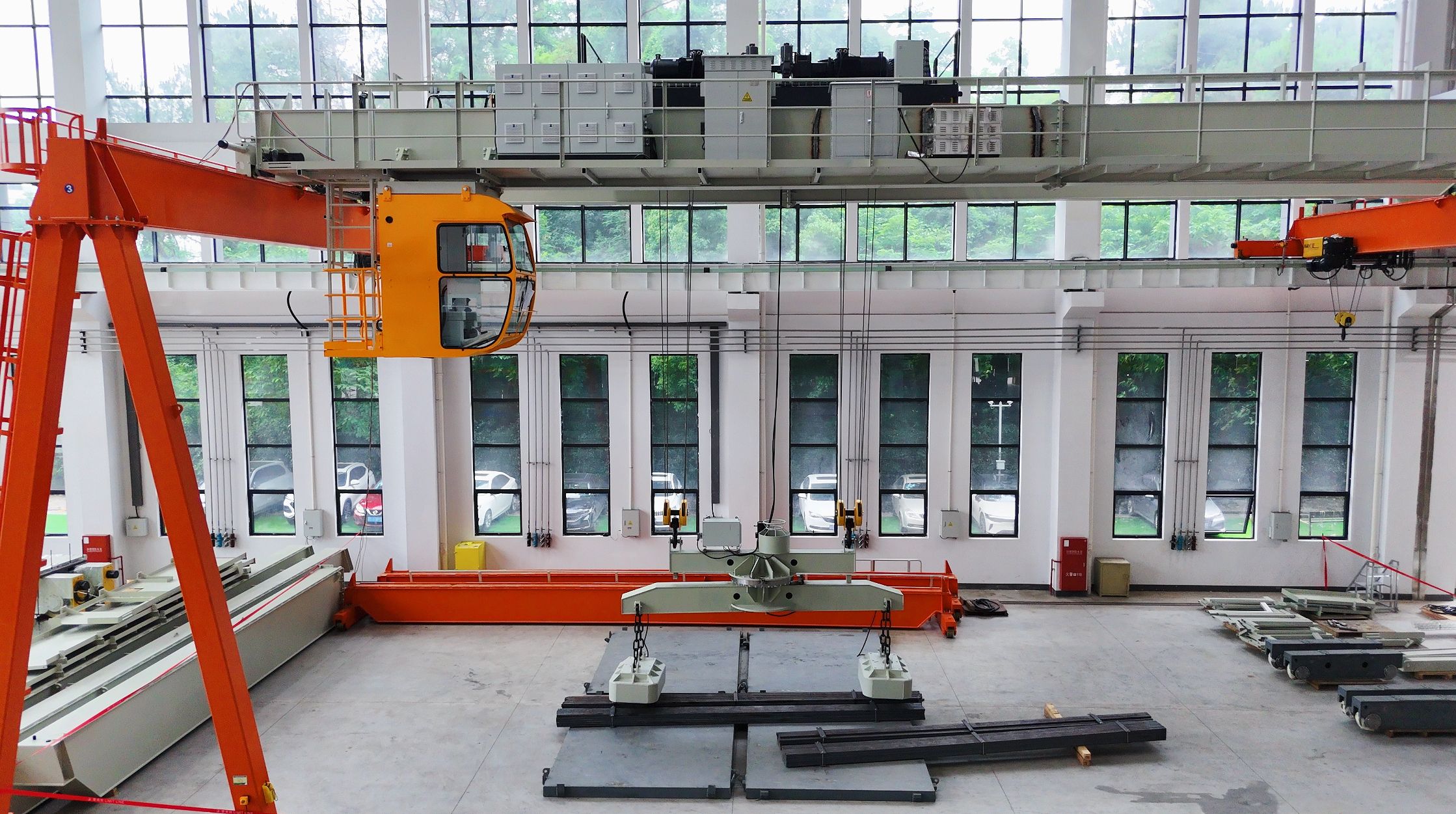
Real-World Case: NANTE’s Strict FAT for Egypt Mega Project
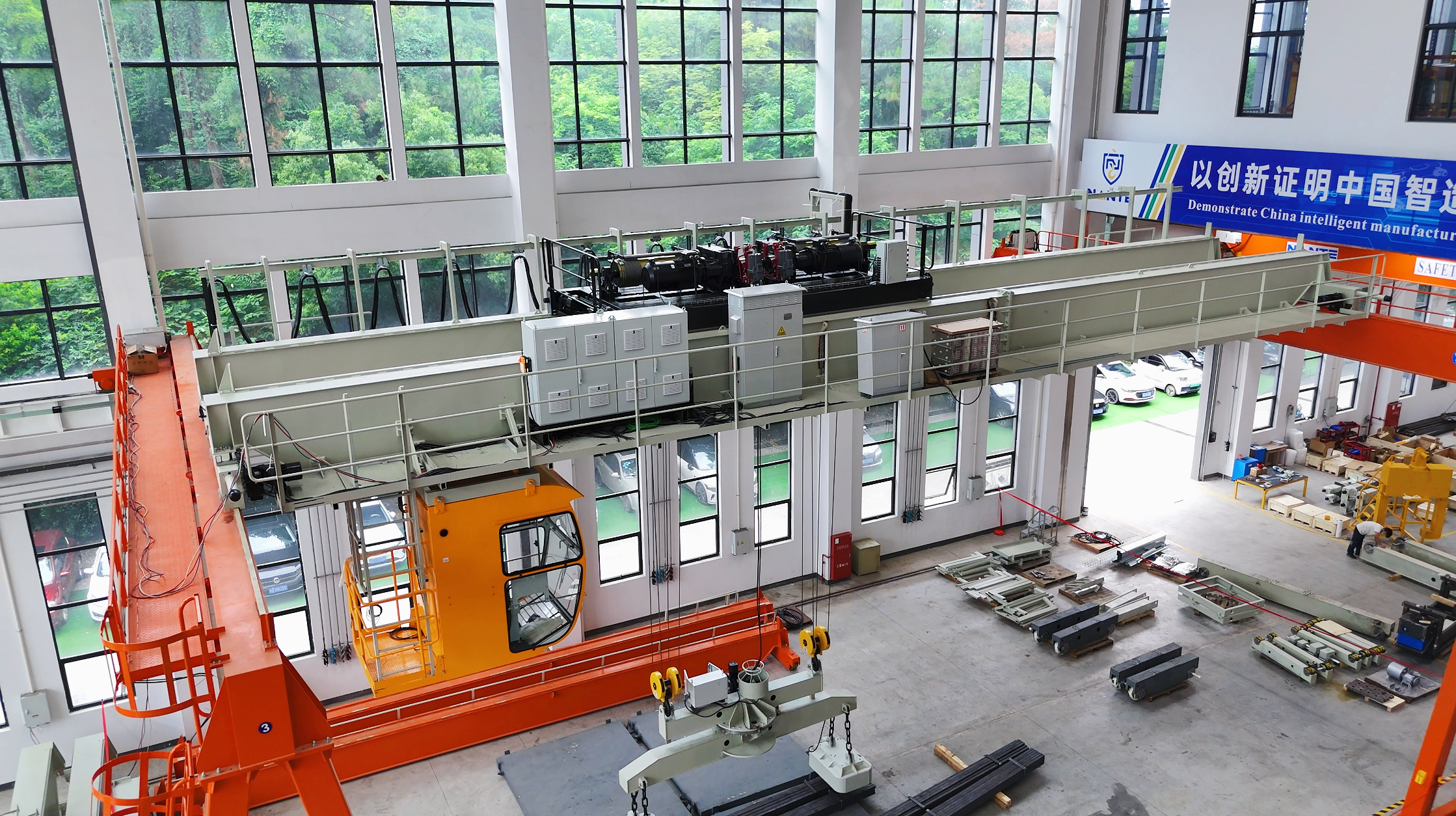
The power of a rigorous FAT was recently demonstrated at NANTE’s state-of-the-art Yinshan Smart Factory during the factory acceptance testing of five customized double girder cranes destined for a major industrial project in Egypt.
Project Location: Egypt Industrial Facility
Equipment Tested: 5 Customized Industrial Overhead Cranes
Testing Facility: NANTE Yinshan Smart Factory, Shaoxing, China
Key Focus: 10-Ton Dynamic Load Testing & Rotating Spreader Validation
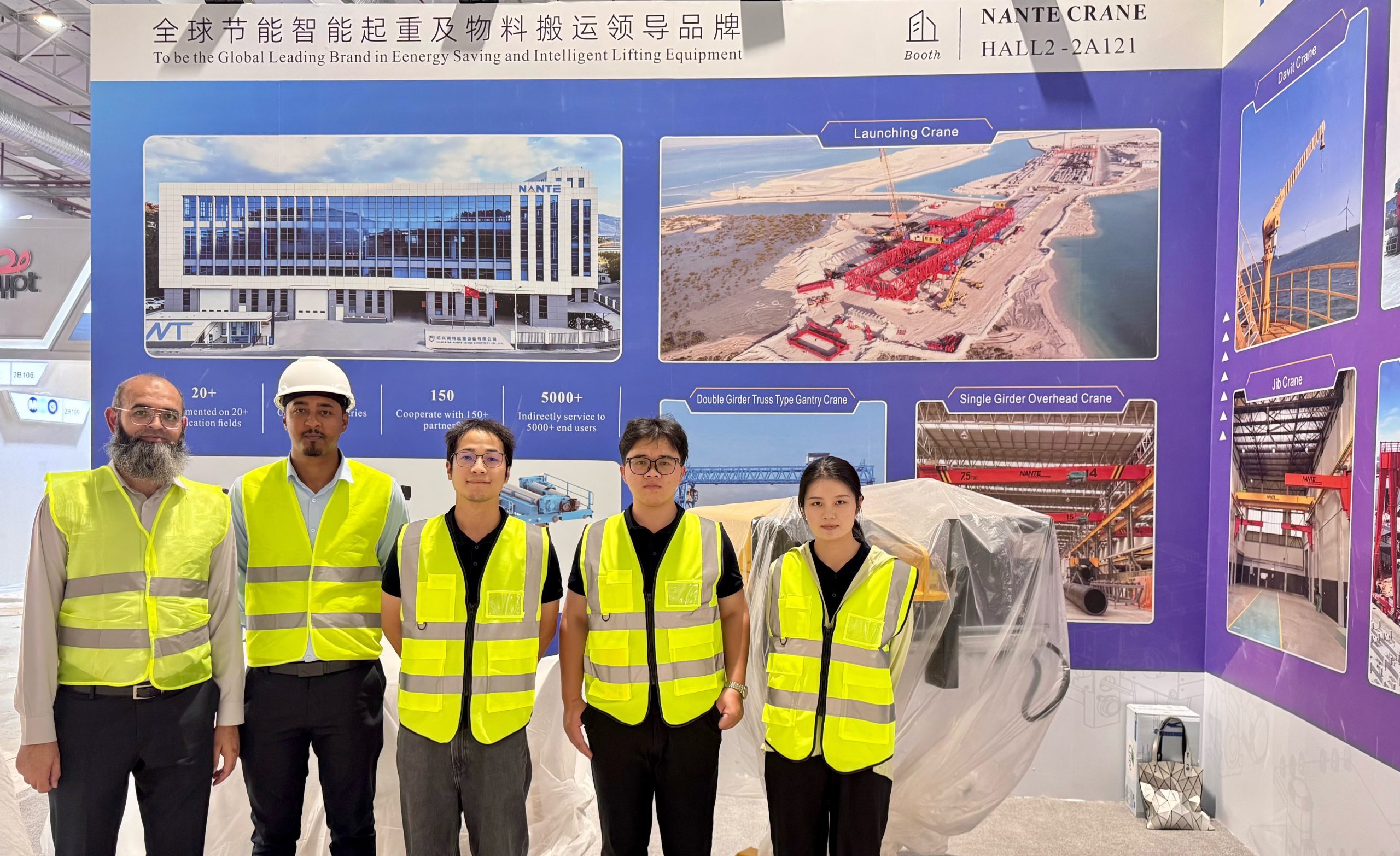
During the multi-day visit, the Egyptian client delegation worked closely with the Nantes executive team, and the Nantes experts guided the clients through every technical detail of the machinery. The process started with a complete review of all structural calculations and electrical drawings.
The highlight of the audit was the live load testing. With a 10-ton test load suspended, the crane and its specialized rotating spreader operated with flawless stability and positioning accuracy. Following the successful completion of all tests, the Egyptian client officially signed the FAT protocols, marking the start of the global delivery phase for this customized crane project.
Key Checklist for Buyers During an Overhead Crane FAT
If you are preparing to attend or remotely audit a FAT for your upcoming double girder crane, keep this quick checklist in hand:
Calibrated Testing Equipment: Has the manufacturer provided up-to-date calibration certificates for all load cells, laser distance meters, and paint thickness gauges used during the test?
Standardized Test Weights: Are certified, clearly marked test blocks available on-site to conduct both the 100% dynamic and 125% static load tests?
Remote FAT Capabilities: If your team cannot travel, does the manufacturer offer high-definition multi-angle live video streaming and real-time digital sharing of sensor data?
Signed FAT Protocol: Is there a mutually agreed-upon “Punch List” and FAT protocol document ready to be signed by both parties to authorize shipment?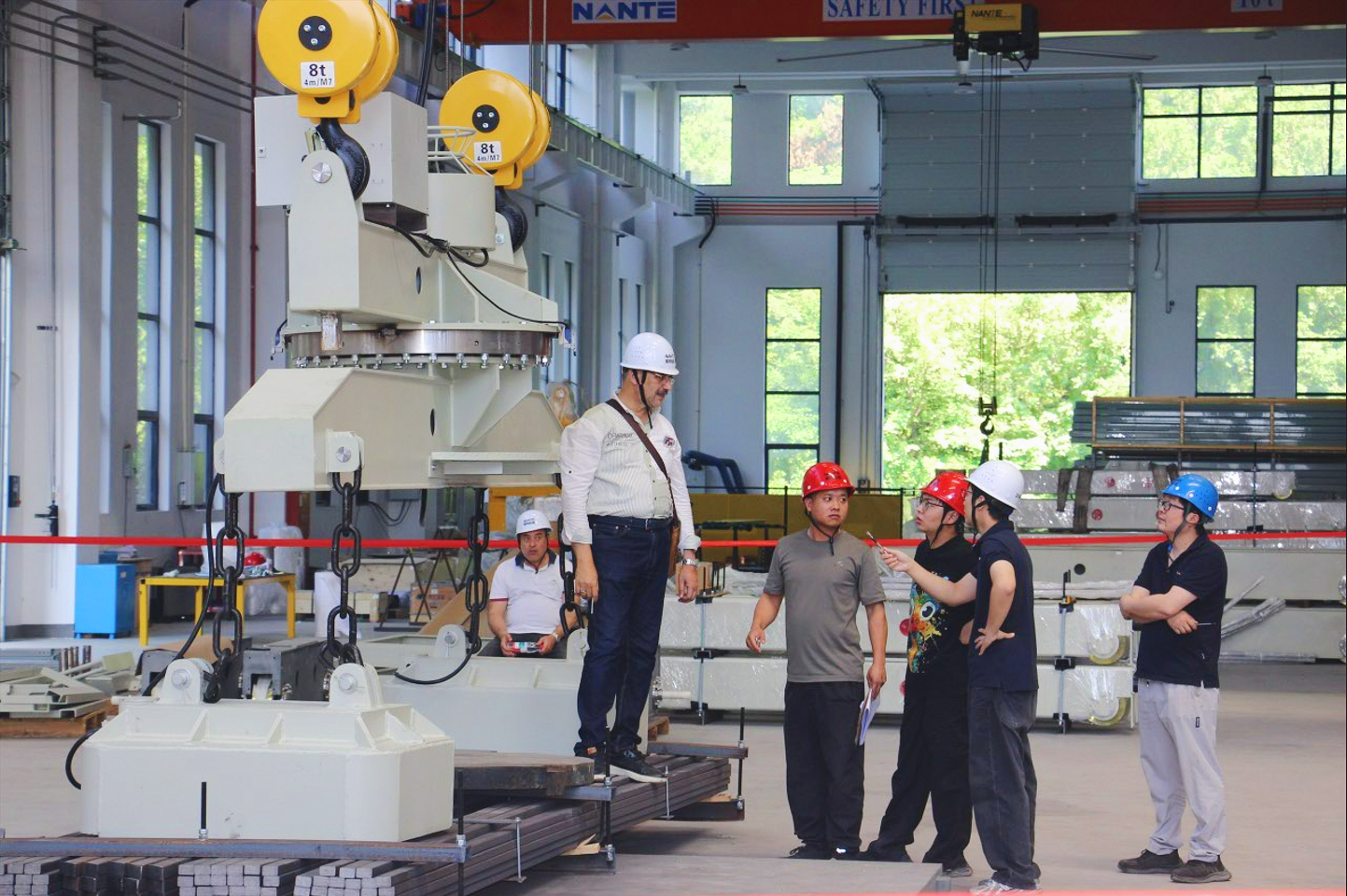 Partner with NANTE for Your Next Tailored Lifting Project
Securing a reliable, high-performance Double Girder Overhead Crane requires a manufacturing partner who values precision, quality control, and absolute transparency.
At NANTE, our newly operating 21,000-square-meter smart manufacturing factory is engineered to deliver world-class lifting solutions. We design, build, and test our cranes to meet the highest international standards, ensuring that when our equipment arrives at your job site—whether in Egypt, Europe, or the Americas—it is ready to perform safely from day one.
Looking for a dependable double girder overhead crane manufacturer for your next project? Contact NANTE’s engineering experts today to request a customized technical solution and free consultation!