English


European Wire Rope Hoist vs Traditional Wire Rope Hoist Key Differences
European Wire Rope Hoist vs Traditional Wire Rope Hoist Key Differences
Date: 2026-07-09 Share:
European wire rope hoists for factories, warehouses, workshops, and other crane system projects need to be chosen carefully. A European wire rope hoist is different from a standard wire rope hoist. It has a compact design, meets FEM standards, features a low-headroom design, operates smoothly, is more efficient, and has a lower lifetime cost.
What Is a European Wire Rope Hoist?
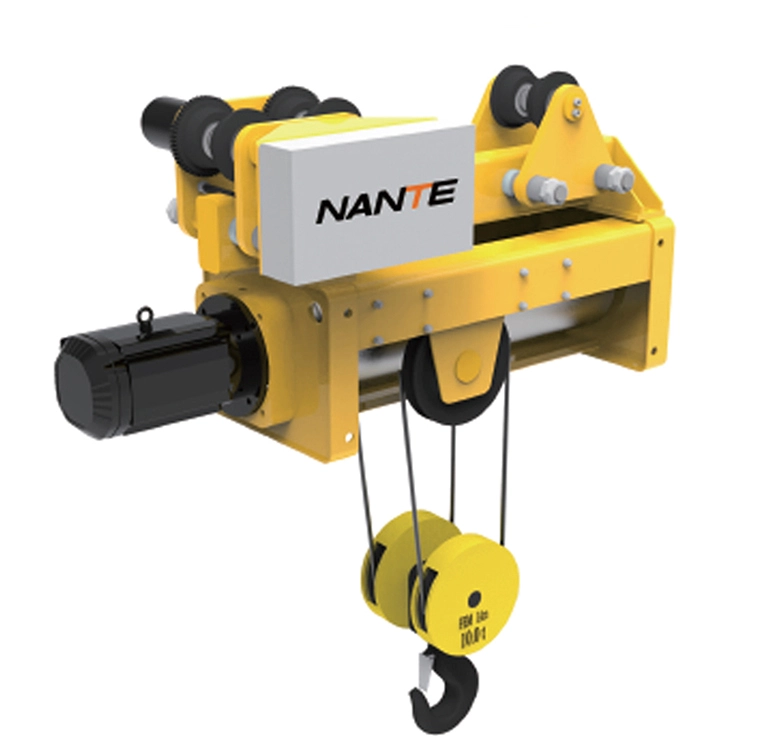
A European wire rope hoist is a modern lifting mechanism designed for efficient material handling. It usually combines the motor, gearbox, brake, drum, pulley, hook block, control panel, and safety devices into a more compact and modular structure. Nante Crane describes the hoisting mechanism as the core component of a crane, including these major parts and safety devices such as limit switches, overload protection, and phase protection.
Key Features of a European Wire Rope Hoist
A European wire rope hoist is typically designed for:
- Compact body structure
- Low headroom hoist installation
- Smooth lifting and travelling
- Better hook approach
- Higher lifting height in the same building
- Modular component layout
- More precise positioning
- Reduced vibration and impact
This makes it suitable for modern crane systems where space, efficiency, safety, and long-term performance are important.
Why FEM Hoist Design Matters
When specifying hoists with FEM design, the hoist can be matched to the actual area of application and thus be better than just selecting on basis of nominal capacity taking into account load spectrum, number of operation hours, frequency of lift, area of application and required service life.
Duty selection for FEM-style hooks is typically based on load spectrum and average daily operating time in order to avoid under-rating for frequent use in high-frequency lifting operations.
What Is a Traditional Wire Rope Hoist?
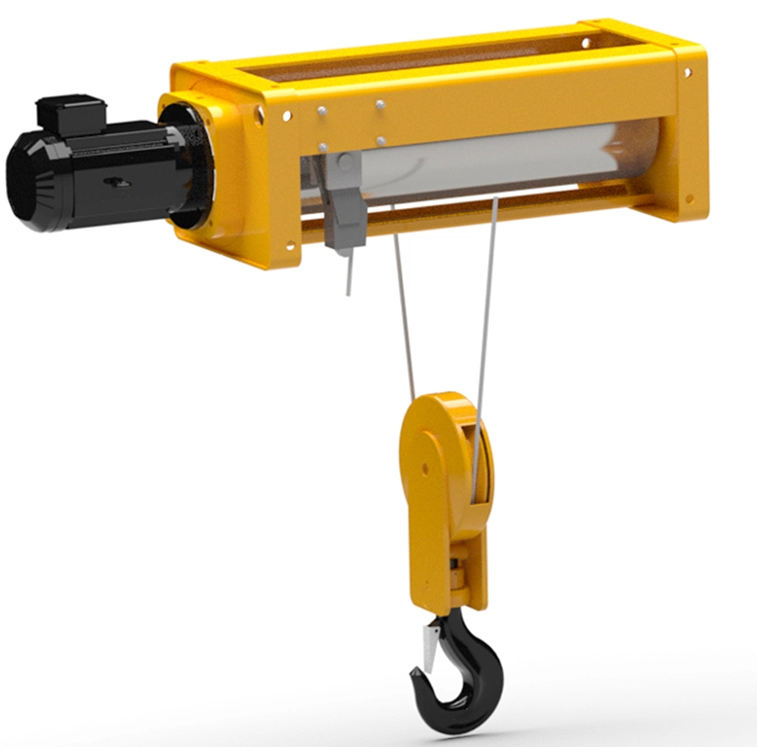
A traditional wire rope hoist is a conventional electric hoist used for general lifting. It normally has a simpler structure, familiar maintenance process, and lower initial purchase cost.
Traditional wire rope hoists are still widely used in workshops, warehouses, repair areas, and light-to-medium duty crane systems. They are practical when the lifting frequency is not too high and the building has enough installation height.
Key Features of a Traditional Wire Rope Hoist
A traditional wire rope hoist usually has:
- Conventional motor and reducer arrangement
- Larger overall size
- Higher headroom requirement
- Simple mechanical structure
- Lower initial cost
- Familiar spare parts and maintenance process
- Good suitability for general lifting
However, it may be less efficient when the project requires compact structure, frequent lifting, or precise load handling.
European Wire Rope Hoist vs Traditional Wire Rope Hoist: Comparison Table
| Comparison Factor | European Wire Rope Hoist | Traditional Wire Rope Hoist |
| Structural Design | Compact, modular, optimized | Conventional, larger body |
| Headroom | Better low headroom hoist performance | Requires more vertical clearance |
| Duty Class | Better suited for FEM hoist design selection | Suitable for general duty |
| Space Use | Higher lifting height and better hook approach | Lower space efficiency |
| Efficiency | Smooth operation and efficient transmission | Stable but less optimized |
| Maintenance Cost | Lower long-term cost potential | Lower initial cost, possible higher upkeep |
| Service Life | Better when matched to duty class | Depends strongly on usage and maintenance |
| Positioning | More precise and controlled | Suitable for standard lifting |
| Best For | Modern plants, limited space, frequent lifting | General lifting and budget-sensitive use |
Structural Design Differences
The main difference is design philosophy. A European wire rope hoist is built around compactness, modularity, and performance. The motor, gearbox, brake, drum, and trolley are arranged to reduce unused space and improve crane coverage.
A traditional wire rope hoist is more conventional. Its structure is easier to understand, but the larger body may reduce usable lifting height.
Modular Design vs Conventional Design
Modular design makes installation, inspection, and component replacement more convenient. It also supports different crane layouts, lifting speeds, control systems, and duty requirements.
Conventional design is simpler, but it may not be ideal for projects that require high productivity, low building clearance, or advanced control.
Headroom and Space Utilization
A low headroom hoist is designed to reduce the vertical distance between the crane beam and the hook. This allows the load to be lifted higher within the same building.
Low headroom electric wire rope hoists are especially useful in low-ceiling warehouses, compact factories, and existing workshops where increasing building height is not practical. Nante Crane notes that low headroom wire rope hoists reduce the beam-to-hook gap and help improve usable lifting space.
Which Hoist Is Better for Limited Space?
A European wire rope hoist is usually the better choice for limited headroom. Its compact structure helps maximize lifting height and improve workspace utilization.
A traditional wire rope hoist can still be suitable when the workshop has enough clearance and the lifting task is simple.
Duty Class and Working Performance
Duty class is one of the most important selection factors. A hoist used a few times per day does not need the same design as a hoist working continuously in production.
FEM Hoist Design for Frequent Lifting
European wire rope hoists are often selected according to actual working intensity. This includes average load, maximum load percentage, daily operating time, and lifting cycles.
This is why FEM hoist design is valuable for manufacturing lines, warehouses, metal processing, assembly areas, and other applications with repeated lifting.
When a Traditional Wire Rope Hoist Is Enough
A traditional wire rope hoist may be enough if:
- Lifting frequency is low
- The load is predictable
- The working environment is simple
- Headroom is not limited
- Initial budget is the main concern
Efficiency, Control, and Safety
European wire rope hoists are designed for smooth start, stable braking, accurate travelling, and reduced load swing. This improves safety and productivity, especially when handling valuable or heavy materials.
Traditional wire rope hoists can lift reliably, but they may offer less refined control depending on configuration.
Control System Considerations
Modern hoist control systems can support lifting, cross travel, long travel, overload protection, limit control, and other safety functions. Nante Crane’s crane control panel page states that the control panel can issue instructions to different crane mechanisms and may support intelligent functions such as anti-sway, automation, IoT, and data logging.
Maintenance Cost and Service Life
Maintenance cost is not only the price of spare parts. It also includes downtime, labor, inspection time, production interruption, and emergency repair risk.
Wire rope condition is especially important. OSHA’s wire rope inspection rules identify removal criteria such as broken wires, rope distortion, crushing, and other damage that may affect safe operation.
Common Maintenance Points
Both hoist types should be checked for:
- Wire rope wear, corrosion, and broken wires
- Drum and rope winding condition
- Brake performance
- Hook and pulley condition
- Gearbox lubrication
- Motor temperature and noise
- Limit switch and overload device function
- Electrical control reliability
Which Hoist Has Better Long-Term Value?
A traditional wire rope hoist may be cheaper at the beginning. A European wire rope hoist may offer better lifecycle value when the project requires frequent lifting, low headroom, smoother control, and reduced downtime.
How to Choose the Right Hoist
Choose a European wire rope hoist if you need compact structure, low headroom hoist design, higher lifting efficiency, frequent operation, better control, and stronger lifecycle performance.
Choose a traditional wire rope hoist if your application is simple, your usage frequency is low, your building has enough space, and the initial budget is the main decision factor.
FAQ
What is the main difference between a European wire rope hoist and a traditional wire rope hoist?
The main difference is design. A European wire rope hoist focuses on compact structure, FEM hoist design, low headroom, efficiency, and long-term performance. A traditional wire rope hoist focuses on simple structure and general lifting.
Why is FEM hoist design important?
FEM hoist design helps select the right hoist according to load spectrum, daily operating time, and working intensity, improving safety and service life.
Which hoist has lower maintenance cost?
A traditional hoist may have lower initial cost. A European wire rope hoist may reduce long-term maintenance and downtime when correctly selected.
Nante Crane is a crane and crane component designer and manufacturer with products used in more than 20 professional fields and service coverage across 50+ countries and regions. Its hoisting mechanism range includes European standard electric wire rope hoists, traditional electric wire rope hoists, open winches, chain hoists, and explosion-proof wire rope hoists, supporting different lifting capacities, crane layouts, duty classes, and control requirements. Contact Nante Crane today to discuss your lifting requirements and receive a customized hoisting solution from our engineering team.