English



Types of Crane Rails and Their Applications
Types of Crane Rails and Their Applications
Date: 2026-07-03 Share:
When selecting crane rails, you want more than a list of products to choose from. Crane rails support moving loads, guide the wheels of cranes, protect runways, and can greatly affect maintenance costs. The right rail profile helps in stable travel and in maintaining and planning for future repairs. This guide covers the typical uses of the various crane rail profiles for the use in overhead cranes as well as gantry cranes. We explain what to look out for when choosing the right products for your industrial applications.
Types of Crane Rails
The selection of crane rails depends on the load, wheel type, travel way, number of operating cycles and the site where they are to be used.
1. Light Crane Rails
Light crane rails are typically used for light loads to be moved short distances. Often used in warehouses, workshops, production lines and other factories including food processing plants and other light industries.
Light duty cranes such as overhead cranes, small gantry cranes, transfer trolleys and workstation cranes.
2. Heavy-Duty Crane Rails
The Heavy-duty crane rails are for installations where the cranes are carrying very large loads, or are operating very frequently, or traveling very long distances.
Some of the most common applications for cut-to-length panels are steel processing, ports, shipyards, mining, cement plants and heavy equipment workshops.
3. Grooved Crane Rails
In terms of providing accurate wheel paths and preventing unwanted side movement, grooved crane rails can be useful where specific ‘paths’ are to be followed by equipment.
4. Flat Crane Rails
Flat crane rails provide a broad contact surface for wheels. They suit overhead crane runways, gantry crane tracks, and transfer car systems when the wheel and rail width are matched.
Their main benefit is stable load distribution. Proper support and fastening help prevent uneven wear.
5. Curved Crane Rails
There are curved crane rails which are used for non straight lines and for space restricted applications and special production lines.
They require accurate bending, careful installation, and correct wheel matching to avoid flange wear and unstable travel.
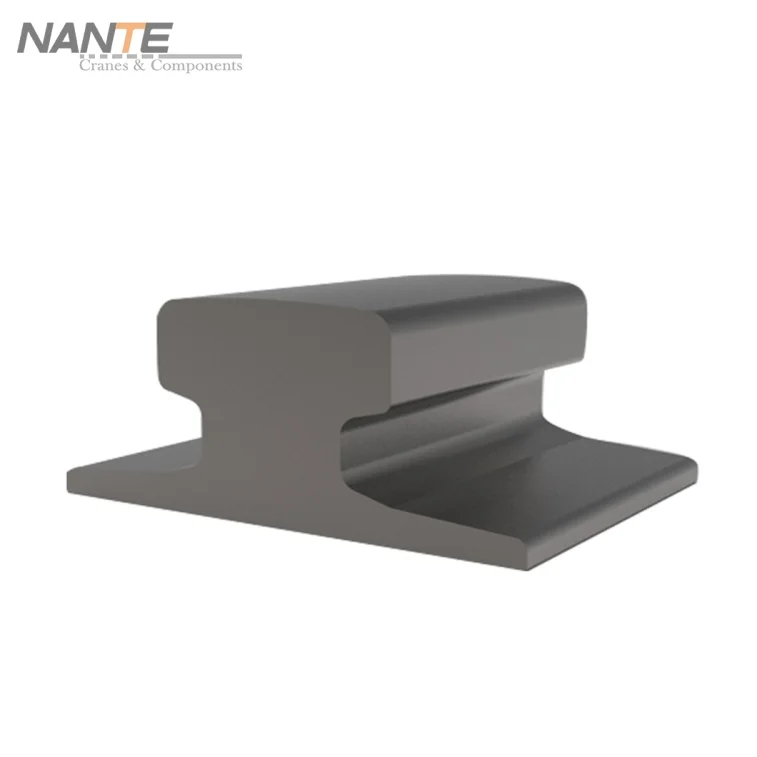
6. Vignole Crane Rails
Vignole rails are flat bottom rail profiles that are suited to light or medium industrial movement.
These bearings are generally not suitable for very high wheel loads and their capacity, rail head geometry and bearing housing foundation must be checked.
Materials Used for Crane Rails
Rail for crane rails is to withstand pressure, impact, fatigue and wear. The choice of material for the respective area of application.
1. Carbon Steel
Carbon steel has good strength, is cost effective and is a good option for indoor crane rail applications where there is minimal corrosion.
2. Alloy Steel
Alloy steel has increased toughness, hardness and wear resistance, and is generally used for higher frequency operations such as crane movement, and for very heavy duty gantry cranes.
3. Stainless Steel
Stainless steel is selected when corrosion resistance is critical. It suits chemical facilities, marine environments, and hygiene-sensitive production areas.
4. Heat-Treated Steel
Heat-treated steel improves hardness and abrasion resistance. It suits heavy loads, continuous operation, and sites where downtime is costly.
Key Crane Rail Applications Across Industries
Crane rail applications can vary depending on the industry, load, speed, environment and safety requirements of that industry.
1. Ports and Shipyards
Ports and shipyards require strong rails for outdoor gantry cranes and container handling systems. Rails must withstand heavy wheel loads, moisture, salt exposure, and frequent travel.
2. Steel and Metal Processing
Steel plants use overhead cranes to move coils, billets, plates, molds, and heavy materials. Rails must resist impact, heat, vibration, and continuous operation.
3. Construction and Infrastructure
Construction yards use rail systems for gantry cranes, launching cranes, and segment lifters. These systems support steel beams, precast concrete parts, and bridge components.
4. Warehousing and Logistics
Warehouses use lighter rail systems for indoor cranes, automated carts, or transfer equipment. The goal is smooth movement, efficient flow, and less manual handling.
5. Mining and Heavy Industry
Mining and heavy industrial sites need rails that handle dust, shock, vibration, and high loads. Harsh conditions make inspection especially important.
6. Automotive and Aerospace Manufacturing
These industries need precise travel and stable positioning. Crane rails support production lines, component handling, tooling movement, and assembly operations.
7. Power Generation Plants
Power plants use crane rails for lifting turbines, generators, pumps, and heavy equipment during installation and maintenance.
8. Chemical and Petrochemical Facilities
Chemical plants may require rails and accessories that resist corrosion, chemical exposure, and outdoor weather.
How to Choose Crane Rails for Overhead and Gantry Cranes
When deciding how to choose crane rails for overhead and gantry cranes, buyers should not look only at crane capacity. A safe selection also considers wheel load, rail profile, duty class, speed, foundation, and environment.
1. Check Maximum Wheel Load
The maximum wheel load is defined by the weight of the crane itself plus the lifted load, plus the position of the trolley, plus dynamic effects caused by acceleration, braking and impact. This value is the starting point for the selection of the rails.
2. Match the Rail Profile with the Wheel
The rail head and wheel tread must be matched up to operate correctly. A poor match up can cause the flange to contact resulting in noise, vibration and premature wear.
3. Consider Duty Class and Travel Speed
A crane, for example, that is used during the day might require a stronger rail system than an identical crane which is only used from time to time, all year round. The load cycles affect fatigue.
4. Evaluate the Installation Environment
Outdoor tracks are exposed to rain, temperature change, dust and movement of the track foundation. In coastal or chemical environments, components may require to be made of corrosion-resistant materials or to be fitted with coatings or accessories to resist attack.
5. Select the Right Accessories
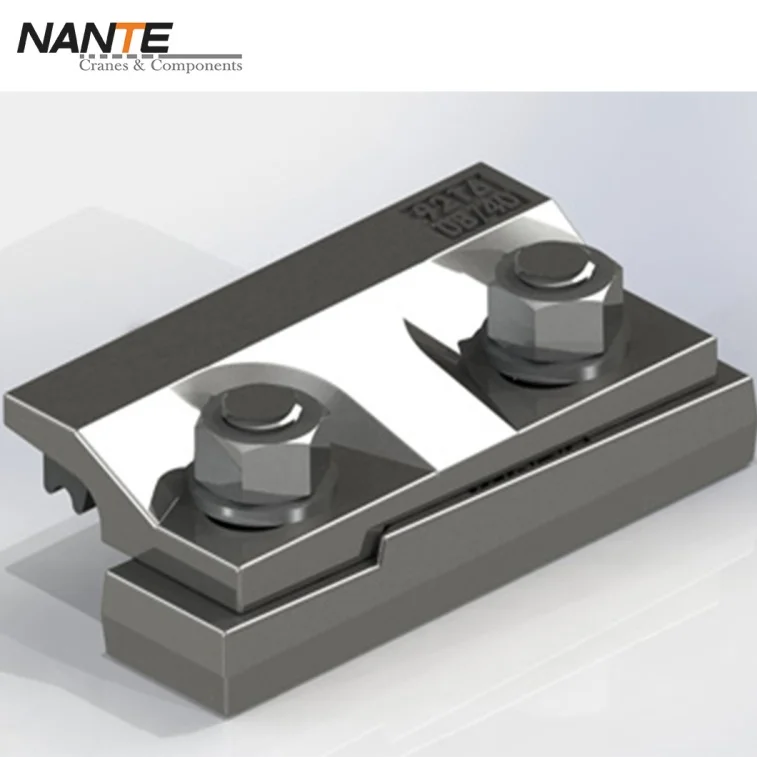
A complete rail system includes rails, clips, fishplates, rubber pads, sole plates, bolts, and foundation support. These accessories maintain alignment, reduce vibration, and extend rail life.
Maintenance Tips for Crane Rail Systems
Maintenance, done properly, will cut down on time spent idle, and protect both the rail and crane wheels.
1. Inspect Rail Alignment Regularly
Failure to properly align rail and wheels can lead to flange contact, vibration, unusual noise, and abnormal wear of rail surfaces.
2. Check Fasteners and Joints
Loose clips, bolts or fishplates reduce track stability and poses a safety risk.
3. Monitor Rail and Wheel Wear
Check rail wear and wheel wear together as a set as a damaged wheel can quickly damage a new rail.
4. Replace Damaged Rail Pads
Rail pads are designed to absorb vibration and protect the bearing’s supporting structure. It is very important to replace any damaged pads before they can cause any problems with the alignment.
5. Keep the Rail Surface Clean
Remove oil, metal particles, dust and debris to allow for smooth movement and to prevent wheel slip or impact.
Conclusion
Proper crane rails can enhance safety, improve travel stability, increase load capacity and reduce the operating cost. Several key considerations must be reviewed before selecting a proper rail for your application, including: wheel load, wheel type and profile, duty of crane, travel pattern, work environment, rail material and possible accessories.
FAQ
What are the main types of crane rails?
There are also light duty, heavy duty, grooved, flat, curved and Vignole crane rails.
What is the best crane rail for overhead cranes?
This calculation can be influenced by several variables such as wheel load, span, duty class, travel speed and structure of the runway.
What rail is used for gantry cranes?
Gantry cranes can be supplied with flat bar, square bar, P rail, QU rail, A rail, or other profiles.
Why is crane rail material important?
The properties of a material can influence wear resistance, corrosion resistance, impact resistance and the service life of a component.
How often should crane rails be inspected?
Perform maintenance inspection on a regular basis on light-duty indoor systems. Heavier duty systems or those used outdoors would need more frequent inspection.
Nante Crane is the leading Manufacturer and supplier of all types of Cranes and crane parts including industrial cranes, overhead cranes, gantry cranes, construction cranes, crane rails, flat bar rail, square bar rail, P18-P50 rail, QU70-QU120 rail, A45-A150 rail, crane rail clamp, fishplate, rubber pad, etc. We offer these Cranes and Crane parts on bulk orders for B2B projects. Please contact Nante Crane for an expert consultation on wheel load, rail profile, installation environment etc. and the whole complete crane rail system.