English


Construction Winch Solutions for Material Lifting Challenges in Construction Projects
Construction Winch Solutions for Material Lifting Challenges in Construction Projects
Date: 2026-07-02 Share:
Construction Winch Solutions allow project managers and contractors to move equipment and materials in a safe, efficient manner on time to sites with the most complexity. Whether required for lifting of construction materials in confined spaces or high rise construction using winch solutions a lifting plan that is efficient is key to reducing waiting time, increased coordination and control of daily safety issues.
The issue of material lifting affects several areas of construction including schedule control, labor productivity, site congestion and worker safety. If material lifting is not properly planned then materials will end up at the wrong location, cause other crews to loose time while waiting for space to offload, and heaviest items will be lifted the most which can be extremely inefficient if not done with a proper winch system.
Why Material Lifting Becomes a Job Site Bottleneck
Most challenges with lifting on a construction site occur before the load is even lifted. Access to sites with restricted roads, lack of space for laying down materials, changing floor levels and overlapping trades all have an impact on the movement of materials around a site. On high rise projects the challenge of vertical lifting in tall buildings is further compounded as many different floors will be reliant on the same limited number of routes for lifting.
Lifting coordination is also important. Even when materials are available poor lifting coordination can delay structural work, facade installation, MEP installation and interior fit-out. Additionally heavy material handling places excessive strain on personnel resulting in fatigue and increased risk of accident due to poor staging.
Some common production blocks are: delivery of materials to wrong floor, crews waiting for lifting equipment, jobs being moved as they have not been planned into a staging area, landing area being blocked by existing stock, lifting plans not being updated as project progresses through different phases.
Common Construction Site Lifting Challenges
Limited Access and Congested Work Areas
Urban building sites, bridge projects, tunnel entrances, and renovation sites often have limited space for heavy lifting equipment. Narrow access roads, nearby structures, weak ground conditions, and public traffic can make lifting routes difficult to arrange.
In these conditions, a winch-based lifting system can support selected lifting tasks where larger equipment is not practical for every movement. It can move materials through a defined path and keep critical work areas clear.
Changing Loads Across Project Phases
The type of load changes throughout a project. Early phases may involve formwork, rebar, steel sections, and temporary structures. Later phases may require facade panels, ducts, pipes, electrical equipment, tools, and fit-out materials.
Because of this, construction material lifting equipment should be selected based on more than maximum load weight. Contractors should evaluate lifting height, rope length, working frequency, duty cycle, control method, braking performance, and site installation conditions.
Safety Risks in Construction Lifting Operations
Safety risks in construction lifting operations often come from poor planning, overloaded rigging, unstable loads, unclear communication, and workers entering the load area. A safe lift requires a clear route, an experienced operator, inspected rigging, and a controlled exclusion zone.
Before lifting starts, teams should confirm load weight, center of gravity, rated capacity, anchor point strength, brake function, communication method, and emergency stop procedure.
Where Winches Fit in Construction Material Lifting Equipment
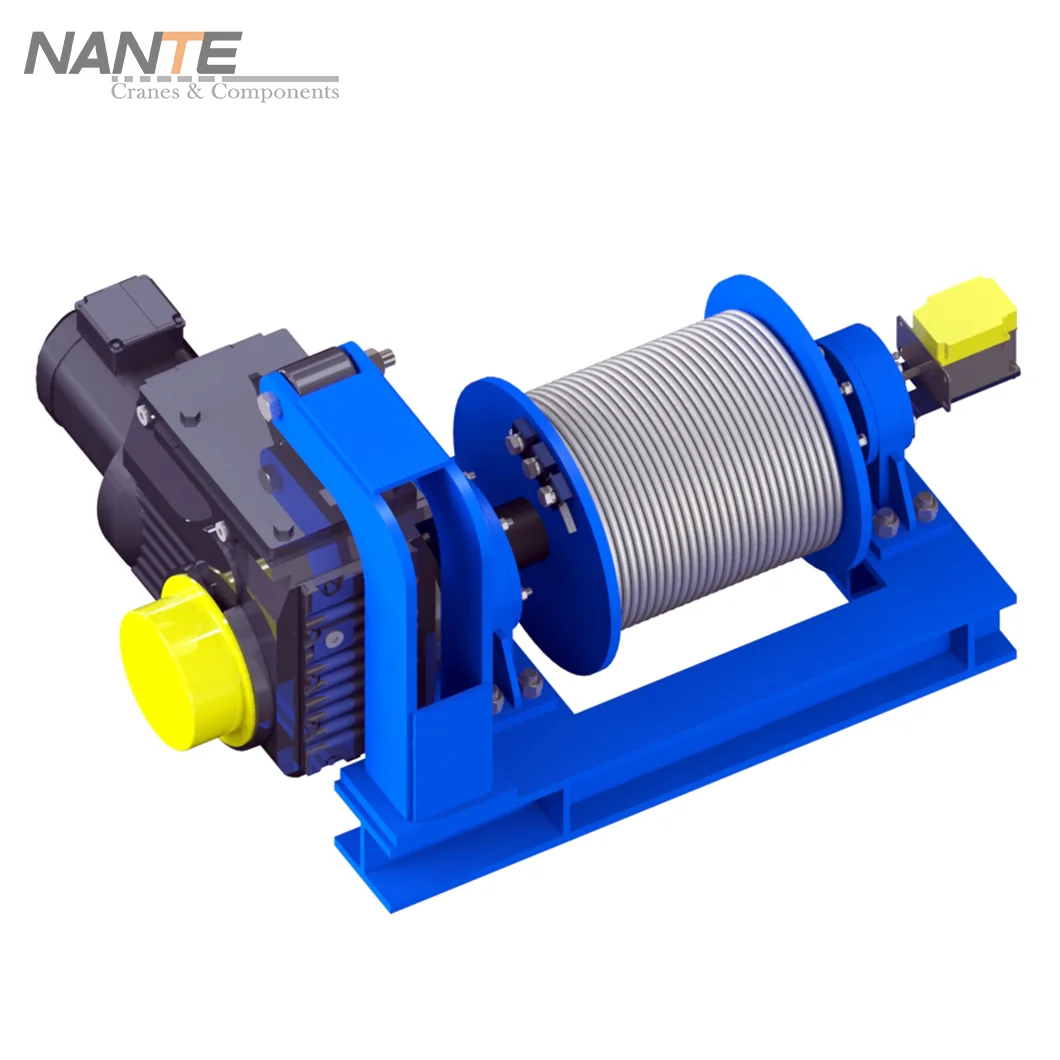
A construction winch uses a powered drum and wire rope to lift or pull heavy loads. It can be fixed to structures, masts, trailers, vehicles, or project-specific lifting frames. Depending on the layout, it can support vertical lifting, horizontal pulling, inclined movement, or controlled positioning.
Winches are useful when contractors need controlled movement in fixed paths. They are especially relevant for repetitive material lifting, restricted work zones, temporary lifting systems for infrastructure projects, and heavy components that require stable handling.
A typical winch solution may include a motor, gearbox, drum, wire rope, brake system, lifting attachment, electrical control panel, limit protection, and overload protection. These components should match the real lifting cycle, not only the heaviest possible load.
Winch Solutions for High-Rise Construction
Winch solutions for high-rise construction should be planned around floors, phases, and lifting cycles. Capacity is important, but it is not the only selection factor. A winch that can lift the maximum load may still delay work if it cannot complete enough lifting cycles per shift.
For vertical lifting in tall buildings, contractors should ask:
· Which floors need priority deliveries?
· What is the maximum lifting height?
· What is the average and maximum load weight?
· How many lifts are needed per shift?
· Where are the pickup and landing points?
Lift zoning can improve productivity by sorting materials by floor, trade, or installation sequence before lifting. Non-critical loads can be moved outside peak hours, while priority loads are scheduled around critical activities. This reduces waiting time and helps site managers control daily workflow.
Temporary Lifting Systems for Infrastructure Projects
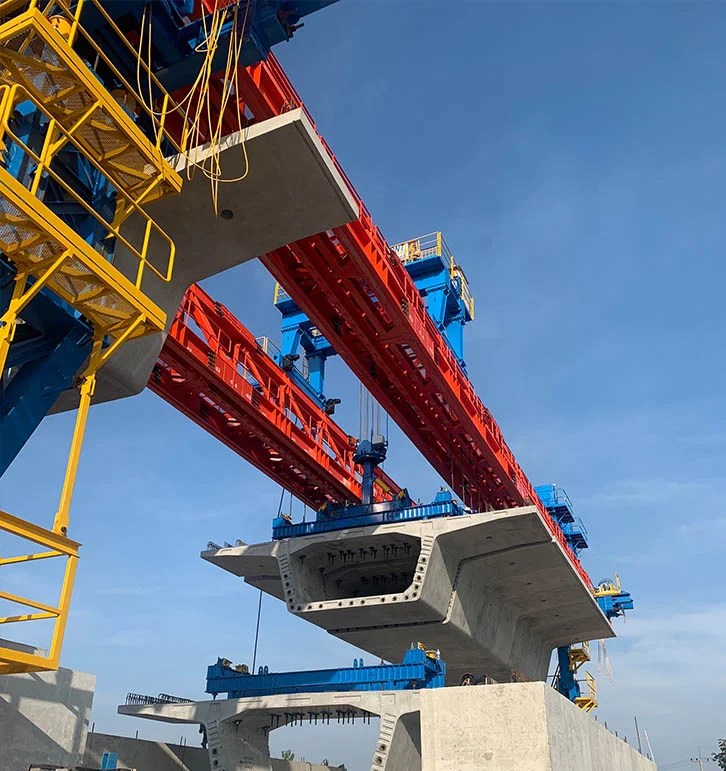
Temporary lifting systems for infrastructure projects must be flexible. Bridges, tunnels, rail corridors, roads, ports, and utility projects often have long work fronts and changing site conditions. In many cases, large lifting equipment cannot reach every installation point.
Where controlled movement is required, a winch solution can move components along a planned path if the lifting route is known and the anchoring structure is properly designed. Road and bridge systems must adapt to rivers, railways, tunnels, curves, and different construction methods.
Important selection factors include pulling distance, lifting height, rope capacity, environmental exposure, power supply, site anchoring method, load size, center of gravity, control accuracy, and relocation requirements.
How to Select Construction Winch Solutions by Project Type
For high-rise building projects, the main concerns are lifting height, number of lifts, landing accuracy, and schedule coordination. For infrastructure projects, contractors should choose a system that can operate outdoors, support long-distance pulling, and adapt to changing work fronts.
For industrial construction projects, the lifting task may involve heavy equipment, tanks, steel structures, or process plant components that require precise positioning and stable low-speed movement. For renovation and confined sites, a compact winch system can support controlled lifting where larger equipment is not practical.
Construction Lifting Process Flowchart
Project lifting requirement → Load profile review → Site access and lifting path survey → Winch capacity, speed, rope, and duty cycle selection → Anchor point and power supply planning → Rigging method and safety device check → Exclusion zone and communication setup → Test lift →Production lifting operation → Daily inspection and maintenance → Lift records, feedback, and schedule optimization
This workflow helps project managers manage lifting as a planned activity, to complete safely, on time and with as little disruption as possible to other trades.
Project Case Studies
Case Study 1: High-Rise Fit-Out Material Delivery
A high-rise fit-out team will often have panels, tools, ducts and other electrical materials staged at ground level while other trades are completing the upper levels fit-out and ready to begin their section. Without prior arranged lifting the team waiting at ground level will lose valuable time whilst the various materials are moved around the storage area.
A planned construction winch system can support the scheduled vertical delivery of materials by floor zone. This supports the efficient delivery of sorted materials to the site, clearly identifies priority loads and reserves sufficient space on adjacent floors for materials to land. This results in less manual handling, fewer waiting periods and increased coordination of activities.
Case Study 2: Bridge Component Handling in a Restricted Corridor
For a bridge or road construction site traffic, water, rail lines or uneven terrain may prevent the large equipment required for lifting very large items to reach all the required work points. Items can be moved to the required work point by a temporary winch-based lifting system traveling along a defined course.
The improved movement stability of the Stax Rail system reduces the dependence on large lifting equipment for each task. The system also enables safer and more convenient installation in confined areas.
FAQ
What are Construction Winch Solutions?
Construction Winch Solutions are lifting or pulling systems used to move construction materials on site. They can support vertical lifting, inclined movement, horizontal pulling, or controlled positioning.
When should temporary lifting systems be used for infrastructure projects?
Temporary lifting systems are useful when access is restricted, work fronts change frequently, permanent lifting equipment is unavailable, or materials must be moved in bridges, tunnels, rail corridors, highways, ports, or utility projects.
How do contractors choose the right construction winch?
Contractors should consider load weight, lifting height, pulling distance, duty cycle, installation conditions, anchor points, controls, safety devices, and project duration.
Nante Crane is manufacturer of cranes, crane parts, hoists, winches, hoist control panels and other lifting equipment for construction, infrastructure, industrial and material handling applications. For project managers and contractors facing problems with vertical lifting, heavy material handling or the use of temporary lifting systems, Nante Crane can help choose the right equipment and set up a suitable lifting system for your specific needs. Contact Nante Crane today to discuss your project requirements and we will find a suitable construction winch for your site.