English


Festoon Cable Selection Guide for Overhead Cranes
Festoon Cable Selection Guide for Overhead Cranes
Date: 2026-06-11 Share:
Selecting the correct festoon cable remains important for steady power and control supply in overhead cranes. Right festoon cable choice supports smooth work, cuts down on stops, and lengthens system life. This guide explains festoon cable kinds, crane festoon system design, and festoon cable details. It focuses on main points like flat cable vs round cable, cable bending radius, and festoon cable strength.
Whether for indoor shops or tough outdoor places, knowledge of these parts helps engineers and maintenance teams make smart choices for safety and good performance.
Understanding Festoon Cable Systems for Overhead Cranes
What Is a Crane Festoon System?
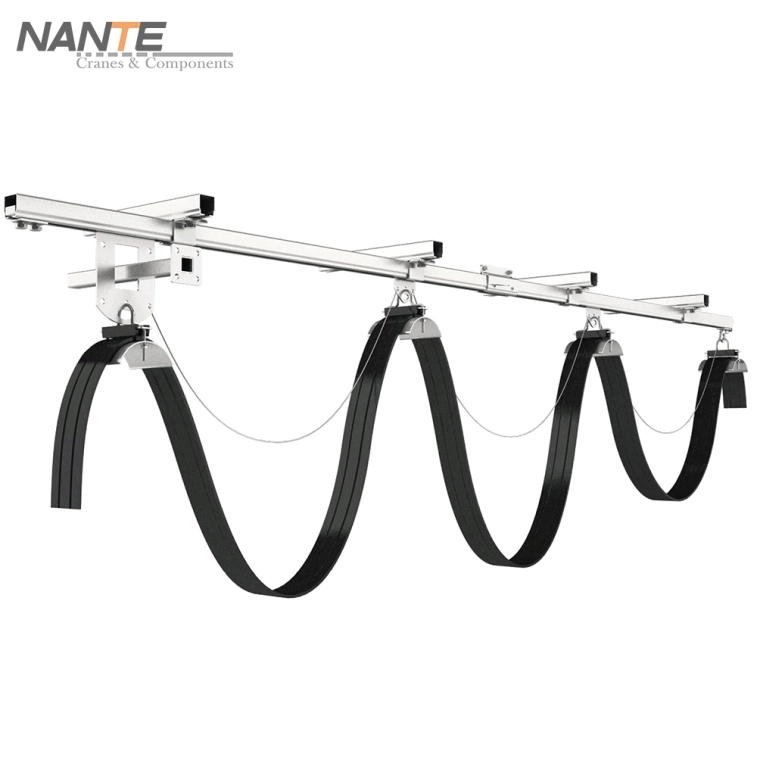
A crane festoon system forms a movable power supply method. It uses flexible cables held by trolleys that travel along a track. The system sends electricity and control signals to the moving sections of overhead cranes, such as the bridge and trolley.
This setup gives flexibility for short-to-medium travel lengths. It lowers cable twisting and allows ongoing movement without breaks. Festoon systems see wide use because they mix cost, dependability, and simple upkeep in different industrial areas.
Key Components in Festoon Systems
Common parts include C-track or I-beam rails, cable trolleys (tow and intermediate), cable saddles, end stops, and the festoon cables themselves.
- Tracks create the path.
- Trolleys carry and arrange cables.
- Saddles hold cables at the bend points.
- End stops block over-travel.
These items join together to keep proper cable loops and tension during crane work.
Festoon Cable Types
Flat Cable vs Round Cable
Flat cable vs round cable counts as one key comparison in festoon cable selection.
Flat cables save space and permit tighter bending radii. They fit well in small setups where many cables stack in order. They perform strongly in applications with little room and give solid resistance to wear in managed settings.
Round cables deliver better flexibility and toughness in rough conditions. They manage twisting and heavy mechanical force with more success. They suit outdoor or high-duty uses. Yet they often need extra space and bigger saddles.
- Pick flat cables for usual indoor cranes.
- Choose round cables when strength under heavy flexing or outside exposure matters most.
Other Festoon Cable Variations
Beyond flat and round, choices include:
- PVC-jacketed cables for normal use
- Neoprene or special rubber mixes for oil and chemical protection
- Multi-conductor designs that join power and control wires
Some versions include flame-retardant or UV-resistant jackets for certain site needs.
Festoon Cable Specifications
Electrical and Mechanical Requirements
Festoon cable specifications often cover voltage ratings up to 600V or higher, conductor sizes from AWG 16 to larger gauges, and different numbers of conductors based on power and control demands.
Main parameters include:
- Ampacity
- Stranding for flexibility
- Cable weight
- Operating temperature ranges (often -40°C to +105°C)
Always match details to the crane’s duty cycle and load needs.
Cable Bending Radius
The cable bending radius stays vital to stop inner damage.
Makers usually suggest a minimum radius of 5–15 times the cable thickness or diameter. This depends on flat or round type and use frequency.
- Smaller radii work for flat cables in light-duty systems.
- Round cables may need bigger ones for steady flexing.
Good saddle choice and loop depth help keep this radius during operation. They avoid early wear.
Crane Festoon System Design Considerations
Cable Selection Factors
Main factors in crane festoon system design include:
- Travel distance
- Speed
- Acceleration
- Duty cycle
- Total cable weight
- Number of conductors
Calculate total cable length by adding:
- Track length
- 10–15% slack for loops
- Hookup allowances at both ends
Consider the crane class (e.g., CMAA standards) to make sure the system manages repeated cycles without breakdown.
System Layout and Calculations
Design begins with track selection:
- C-rail for standard loads
- I-beam for heavier duty
Arrange cables with the largest or heaviest on top for better support. Account for storage distance when the crane sits parked. Make certain trolley capacity matches combined cable weight.
Proper layout stops imbalance and lowers tension on single cables.
Environmental Considerations for Festoon Cables
Indoor vs Outdoor Applications
Environmental factors affect performance in big ways.
Indoor systems deal with:
- Dust
- Temperature changes
- Occasional moisture
Outdoor ones face:
- UV exposure
- Rain
- Snow
- Wind
Select jackets with care—PVC for mild indoor use and special compounds for outdoor strength.
Harsh Condition Adaptations
For chemical plants or steel mills, choose oil-resistant and flame-retardant cables.
Corrosive environments may need:
- Stainless steel tracks
- Coated parts
Always check abrasion, extreme temperatures, and possible impact. This helps pick materials that keep festoon cable durability.
Festoon Cable Durability and Longevity
Factors Affecting Durability
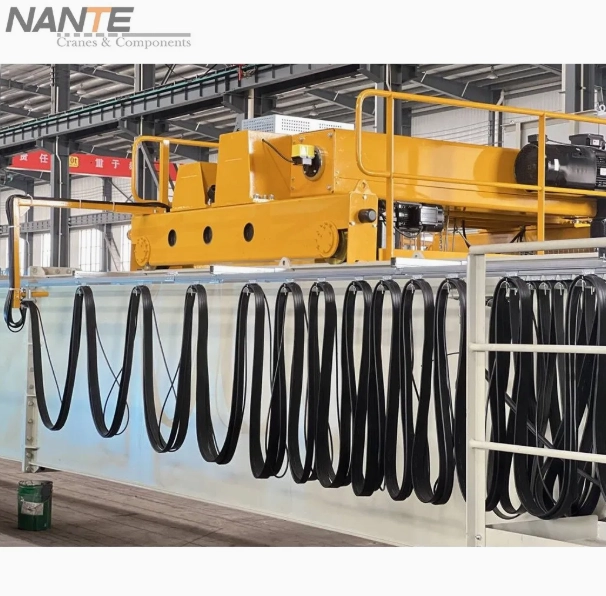
Festoon cable durability relies on:
- Flex cycles
- Proper bending radius observance
- Even load distribution
- Installation quality
Abrasion from poor saddles or too much tension shortens life.
Regular checks for:
- Wear
- Cracking
- Loop imbalance
help find problems early.
Enhancing System Durability
Use:
- High-quality stranded conductors
- Correct trolley spacing
- Planned maintenance schedules
Reduce sharp edges and ensure even cable distribution.
Systems designed with suitable duty margins can reach millions of flex cycles when maintained well.
Specification Charts for Festoon Cables
Sample Cable Specification Table
| Cable Type | Conductor Size | Jacket Material | Min. Bending Radius | Ampacity Example | Recommended Use |
| Flat | 8 × 16 AWG | PVC/Neoprene | 5–8× thickness | 10–20A | Indoor standard cranes |
| Round | 4 × 12 AWG | Rubber | 8–12× diameter | 25–40A | Outdoor heavy duty |
| Flat | Multi-control | Oil-resistant | 6× thickness | Varies | Harsh environments |
Adjust based on exact electrical calculations.
Trolley and Track Selection Guide
- C32 Track:Up to 20kg steel trolley capacity, suitable for light-medium duty.
- C40/I-Beam:Higher capacities for demanding applications.
Select based on speed, environment, and total load.
Installation Examples for Overhead Cranes
Basic Festoon System Setup
- Mount the track securely along the crane runway or bridge.
- Install end stops and hangers at proper intervals.
- Assemble trolleys and thread cables through saddles, starting with the heaviest.
- Adjust tension for smooth loops with adequate sag.
- Test full travel range while monitoring bending radius and balance.
Common Installation Scenarios
For bridge travel, use C-track along the runway.
Trolley hoist applications often employ shorter festoon runs with flat cables.
Outdoor gantry cranes benefit from:
- Robust round cables
- Weatherproof components
Avoid common pitfalls like insufficient slack or misaligned trolleys that cause binding.
Troubleshooting and Maintenance
- Cable wear:Check bending radius and replace damaged sections.
- Uneven loops:Rebalance trolleys and adjust tension.
- Noise or binding:Inspect track alignment and lubricate moving parts.
Perform visual checks monthly and full inspections quarterly.
Best Practices for Festoon Cable Selection
Combine all factors—electrical needs, mechanical stresses, environmental exposure, and duty requirements—when choosing festoon cables.
Consult detailed calculations and consider professional input for complex systems.
Focus on durability and correct specifications leads to safer, more efficient overhead crane operations.
Partner with Nante Crane for Your Festoon Solutions
Nante Crane is a leading manufacturer with over 30 years of experience in overhead cranes and components, including reliable festoon systems.
They offer:
- C-track festoon systems
- I-beam festoon systems
- Wire rope festoon systems
- Angle bar festoon solutions
Options include galvanized steel, stainless steel, and custom curved tracks to suit various industrial needs.
Their high-quality, durable products emphasize safety, ease of installation, and performance across diverse applications. Contact Nante Crane today.
FAQ
What are the main festoon cable types for overhead cranes?
The primary types are flat cables for space efficiency and round cables for enhanced flexibility in demanding conditions. Selection depends on space, environment, and duty cycle.
How do I determine the right cable bending radius?
Follow manufacturer guidelines, typically 5–15 times the cable thickness or diameter. Maintain this during installation and operation using appropriate saddles to prevent damage.
What environmental factors should I consider?
Temperature extremes, moisture, UV, chemicals, dust, and corrosion. Choose jacket materials and track coatings that match site conditions for long-term performance.
Why is proper festoon system design important?
Good design ensures reliability, reduces maintenance, prevents cable failure, and maximizes safety and uptime in crane operations.