English


Compact Jib Cranes for Small Workshop Applications
Compact Jib Cranes for Small Workshop Applications
Date: 2026-06-04 Share:
Small workshops often have tight space. Every square foot matters in these places. Compact jib cranes give efficient localized lifting. They do this without taking over useful floor area. These systems meet small workshop jib crane needs. They offer compact lifting solutions and space-saving jib cranes at the same time. The features raise productivity. They also cut risks that come with manual handling. The cranes work well for light-duty material handling in small areas. They give flexibility for repeated tasks. Examples include assembly, maintenance, and machining. This guide looks at how these cranes make good use of limited space. They improve workflow. They also provide cost-effective performance for modern small workshops.
Why Compact Jib Cranes Are Ideal for Small Workshops
Small workshops face real problems. Narrow aisles and crowded stations create issues. Low headroom adds more limits. Shops must use every inch of space. Traditional overhead cranes or forklifts often prove too large. They take floor area and raise costs.
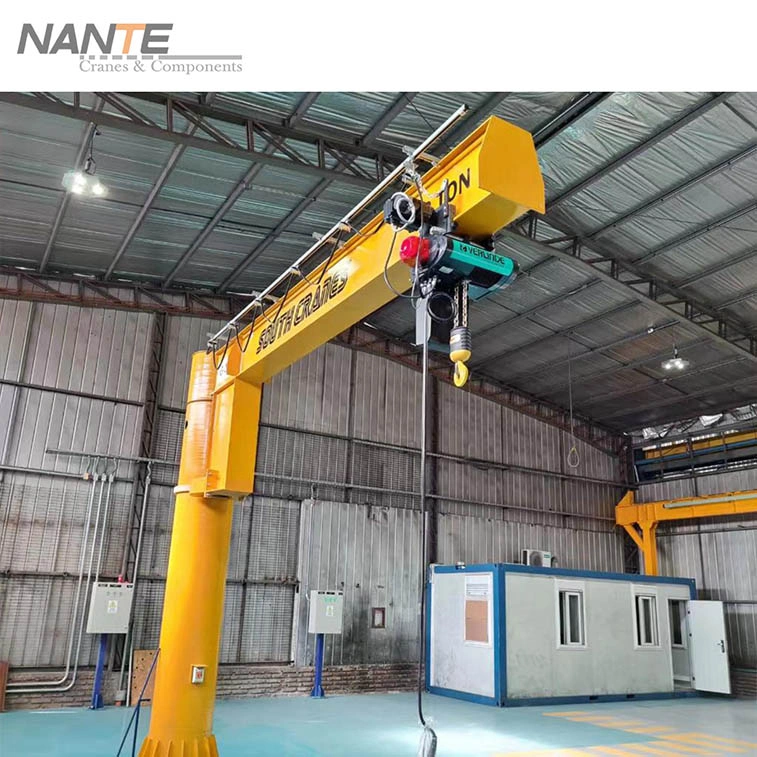
Compact jib cranes solve these problems in direct ways. They have a small footprint. Workers can install them in tight spots where bigger systems cannot fit. The cranes mount on walls, columns, or small freestanding bases. They supply lifting coverage right where it is needed most.
Key advantages include fast setup. They also cost less at the start than full bridge cranes. The cranes fit into existing layouts without trouble. Reduced manual lifting improves safety. It lowers worker fatigue. Overall efficiency rises for light-duty tasks that reach several tons. Businesses that want compact lifting solutions find a good balance here.
Key Benefits of Small Workshop Jib Cranes
Maximizing Limited Space and Floor Optimization
Space-saving jib cranes reclaim floor area in a strong way. Wall-mounted and column-mounted designs use existing structures. They remove the need for large floor bases. This change frees room for machines, storage, or clear paths.
Vertical use of height becomes important in workshops with little room. Jib cranes make good use of wall and column height. The boom stays clear of ground traffic. Operators move loads exactly where needed. They avoid large equipment in crowded zones. The result is better space use and smoother work.
Enhanced Flexibility and Reach
These systems offer clear flexibility. Most models rotate from 180° to 360°. One mounting point reaches several workstations. Adjustable boom lengths help. Manual or motorized slewing lets shops adjust to new needs or layouts.
Portable versions add more movement. Teams can shift the crane when workflows change. This adaptability fits dynamic places such as custom fabrication, repair bays, or assembly cells.
Cost-Effective Lifting Solutions
Compact jib cranes need less money upfront than larger systems. They also need less maintenance over time. Simple designs and easy setup bring quick returns through higher output and fewer injuries.
Many cases avoid heavy foundation work or extra structural support. Wall-mounted options help here. Long-term savings come from less downtime, lower labor costs, and longer equipment life with proper care.
Types of Compact Jib Cranes for Workshop Use
Wall Mounted Jib Cranes
Wall mounted jib cranes perform well in tight settings. They fix to walls or columns and use no floor space. Lifting capacity runs from 250kg to 5000kg. Rotation often reaches 180°. These cranes suit along-the-wall stations, assembly areas, or repair spots.
Nante Crane supplies strong wall-mounted models. They feature seamless pipe columns, box girder or I-beam arms, and choices for chain or wire rope hoists. Simple installation and low maintenance make them popular for small workshops that seek space-saving jib cranes.
Workstation Crane Systems
Workstation crane systems combine jib parts with enclosed tracks or light profiles. They give precise and ergonomic handling in set work cells. These systems work with tools and hoists. They support loads suited to light-duty material handling.
They excel at repeated tasks. Smooth low-effort movement reduces strain on operators. Modular designs let shops match specific layouts. Productivity and safety both improve.
Portable and Light-Duty Material Handling Options
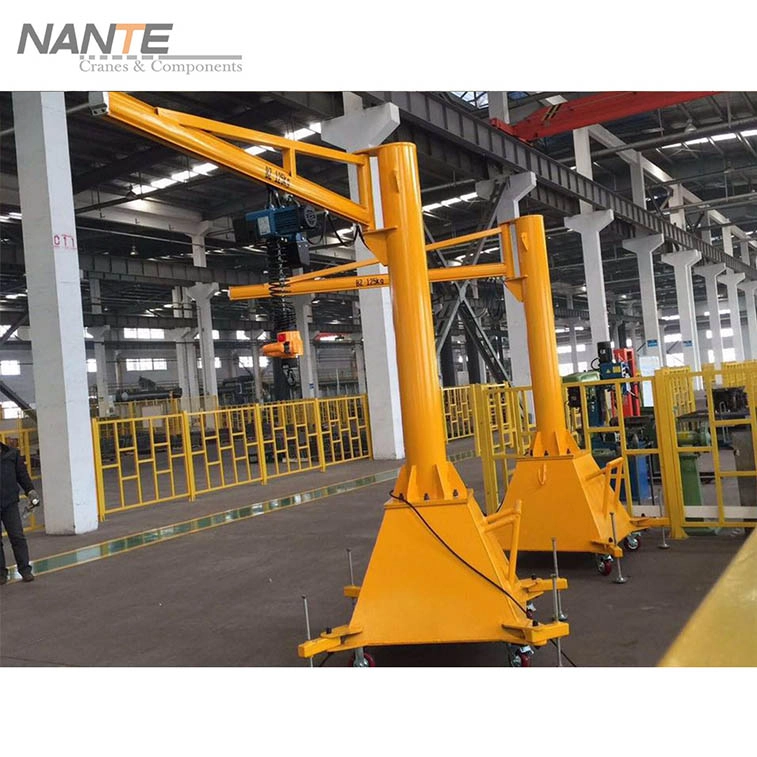
Portable jib cranes give the most mobility. They use wheeled or counterweighted bases that forklifts move with ease. Capacity usually runs from 150kg to 1000kg with 360° rotation. They fit temporary or multi-location needs in small workshops.
These light-duty options need no permanent install. They suit maintenance, prototyping, or changing production demands.
Space Optimization Strategies with Jib Cranes
Good results need careful planning. Place cranes near machines or assembly points that see frequent use. This keeps travel distance short. Combine cranes with existing columns or walls to skip new foundations. Check headroom and boom paths when planning the layout.
Numbered installation considerations:
- Check load-bearing strength of walls or floors.
- Pick rotation limits that avoid obstacles.
- Match hoist types to load needs.
- Allow room for future layout changes.
These steps turn limited space into a productivity gain with compact lifting solutions.
Real-World Small Workshop Case Studies
One machining workshop added a wall-mounted jib crane next to CNC stations. The change removed the need for forklifts during part loading. Floor space grew by nearly 20%. Handling time fell in a clear way. Operators felt less physical strain.
An assembly site added several workstation jib systems to separate cells. Productivity rose because workers handled parts on site. They no longer waited for shared equipment. Safety incidents from manual lifting dropped in a noticeable way.
A maintenance shop used portable jib cranes. The team gained the ability to support different repair bays on demand. Quick moves between jobs cut downtime and showed the practical value of small workshop jib crane use.
Choosing the Right Compact Jib Crane for Your Workshop
Factors to Consider
Review capacity needs first. Next check required span or boom length. Look at rotation angle and mounting options. Study current and future workflows to keep room for growth. Manual operation works for lighter and less frequent use. Motorized versions raise efficiency when volume is higher.
Installation and Safety Best Practices
Always confirm structural strength before mounting. Follow standards such as FEM, ISO, or CMAA. Regular checks of hoists, slewing parts, and electrical items keep performance steady. Proper operator training finishes the safety steps.
Conclusion: Boost Efficiency with Smart Lifting Solutions
Compact jib cranes change small workshops. They supply targeted, flexible, and cost-effective lifting. Strong space use, better safety, and smoother workflow help businesses achieve more inside limited areas.
Ready to Optimize Your Workshop? Contact Nante Crane
Nante Crane is a leading designer and manufacturer of high-quality jib cranes, including free-standing, wall-mounted, wall-traveling, and movable models tailored for workstation applications. With a focus on innovative, reliable, and standards-compliant solutions (FEM, ISO, etc.), Nante Crane supports global clients across industries with durable, flexible lifting equipment that enhances space utilization and productivity. Visit nantecrane.com to explore their comprehensive range of compact jib cranes and custom solutions. Contact Nante Crane today.
FAQ
What is the typical capacity for a small workshop jib crane?
Most models handle 250kg to 5000kg, with light-duty options starting lower for precise workstation tasks.
How do wall mounted jib cranes save space compared to freestanding models?
They attach directly to existing walls or columns, using zero floor area while still providing effective coverage.
Are compact jib cranes suitable for light-duty material handling only?
Primarily yes, though many support capacities up to several tons depending on design and mounting.
What maintenance is required for workstation crane systems?
Routine checks of hoists, rotation mechanisms, and structural connections—typically minimal due to simple, robust construction.
How quickly can a compact lifting solution be installed in a limited-space workshop?
Wall-mounted models often install in days with proper planning, offering faster deployment than larger crane systems.