English


Function and Maintenance of the Hoisting Mechanism of Double Girder Overhead Cranes
Function and Maintenance of the Hoisting Mechanism of Double Girder Overhead Cranes
Date: 2026-05-07 Share:
The hoisting mechanism of a double girder overhead crane acts as the main system. It handles vertical lifting and careful lowering of heavy loads.
What Is the Hoisting Mechanism of a Double Girder Overhead Crane?
Definition of Double Girder Overhead Crane Hoisting System
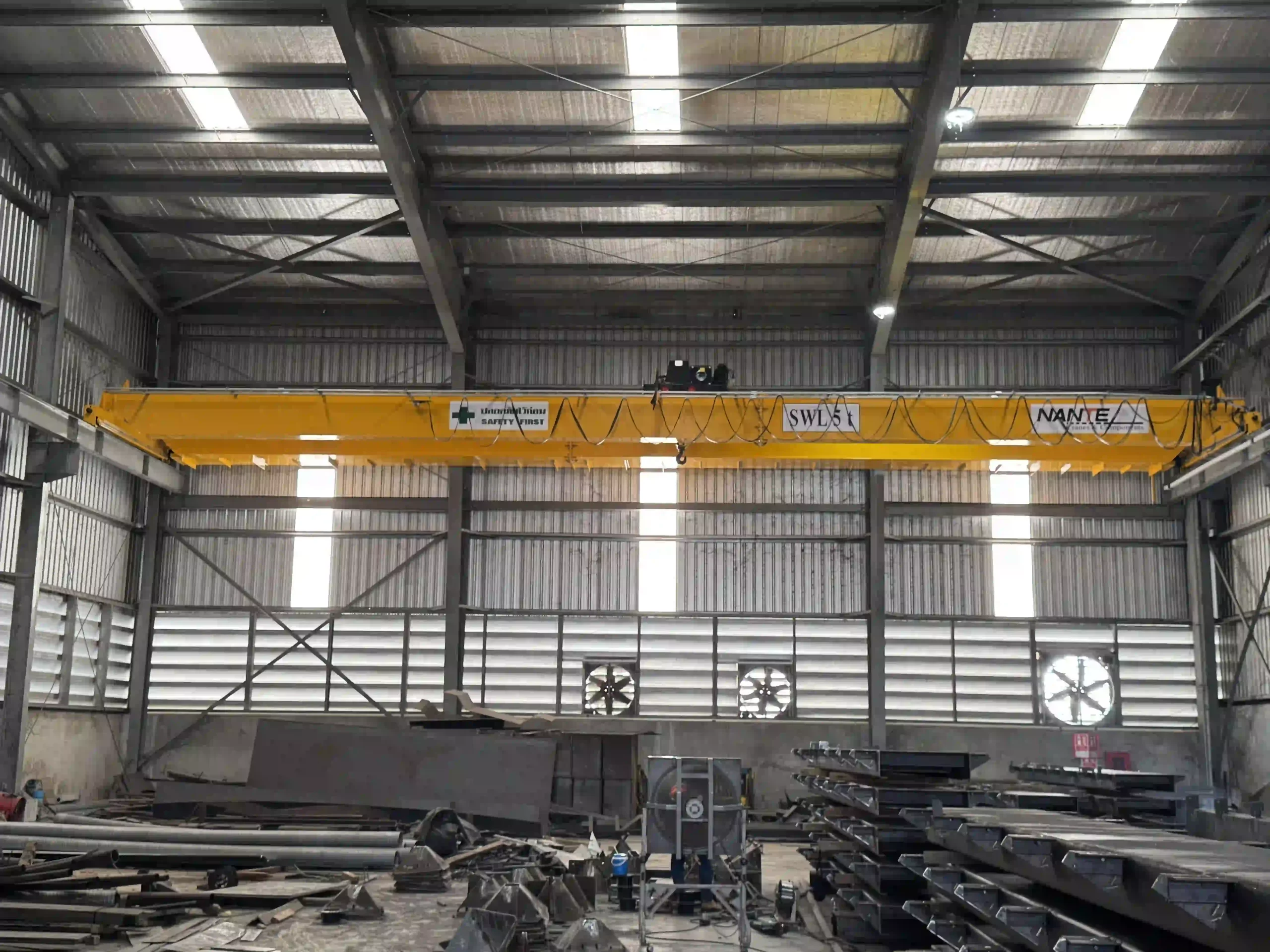
The hoisting mechanism of a double girder overhead crane includes the full assembly. This assembly lifts, holds, and lowers loads. It uses mechanical and electrical parts mounted on a trolley. The system works on its own for vertical motion. Meanwhile, the double girder bridge gives structural support. This design handles heavier capacities than single girder designs do. The mechanism often uses an electric hoist or winch setup. It fits capacities from 5 tons to over 50 tons in industrial places.
Key Components of Hoisting Mechanism in Overhead Cranes
The crane hoisting mechanism has several connected parts. These parts work together for smooth work:
- The hoist motor supplies the driving power for lifting.
- The gearbox (reducer) sends torque and manages speed.
- The wire rope and drum system winds and unwinds the lifting medium.
- The brake system holds the load when it stays still.
- Limit switches and overload protection devices stop over-travel or extra loads.
These components make sure the crane hoisting system components give steady performance under regular duty cycles.
How Hoisting Systems Differ in Single vs Double Girder Cranes
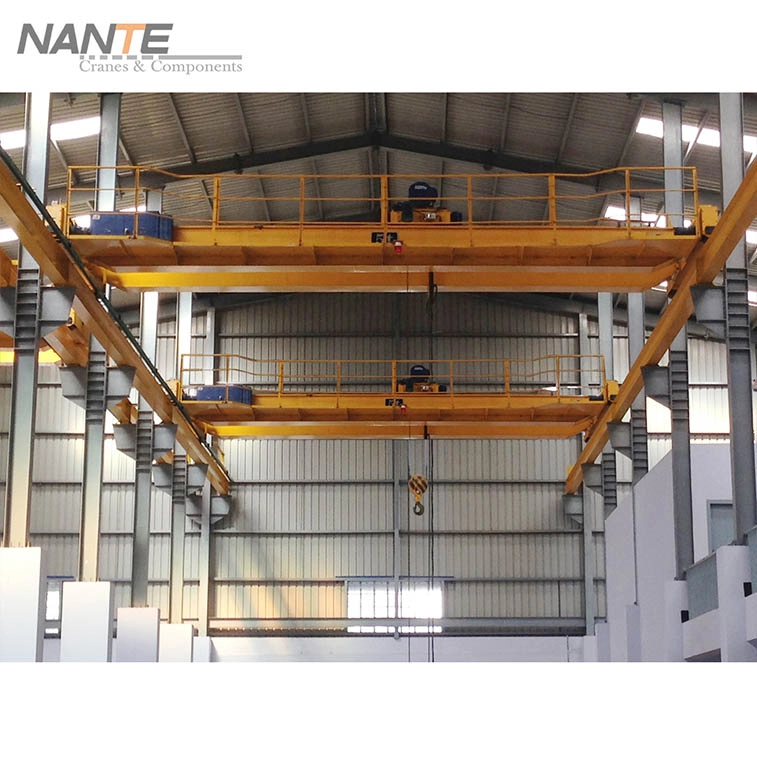
Single girder cranes usually have a compact hoist trolley. It hangs from one beam. This setup limits headroom and capacity. Double girder overhead cranes let the trolley run on top of two parallel girders. The design brings better stability, higher load ratings, and extra space for bigger hoisting mechanisms. This setup supports open winch trolleys or strong electric hoists for heavy-duty tasks. It improves load distribution and reduces deflection while the crane works.
Importance of Hoisting Mechanism in Industrial Lifting Operations
The hoisting mechanism allows safe vertical movement of materials. This happens in steel mills, manufacturing plants, warehouses, and assembly lines. Without a reliable crane hoisting system, operations see more downtime and safety risks. The mechanism affects productivity directly. It permits precise load positioning. At the same time, it fits with the overall crane structure and trolley system.
Main Components of the Hoisting Mechanism Explained
Crane Hoist Motor Function in Double Girder Cranes
The crane hoist motor changes electrical energy into mechanical power. It drives the lifting process. The motor has high insulation classes and protection ratings. These features help it survive industrial environments. The motor pairs with inverter controls. They create smooth acceleration and deceleration. This action lowers stress on the system during frequent starts and stops in double girder setups.
Role of Gearbox in Lifting Performance and Torque Control
The gearbox (or reducer) in the crane hoisting mechanism increases torque from the motor. At the same time, it lowers rotational speed. This matches the needed lifting velocities. The component ensures efficient power transmission to the drum. It prevents overload on the motor. It also allows precise speed control for heavy loads. Good gear alignment keeps operation quiet. It also lengthens service life.
Wire Rope and Drum System in Heavy Load Lifting
The wire rope winds around the crane drum. It forms the lifting medium in most double girder overhead crane hoists. The drum turns to reel in or pay out the rope. This action raises or lowers the hook block and the attached load. Multiple reeving arrangements spread weight evenly. They improve stability and capacity for tough industrial lifting tasks.
Brake System Function in Load Safety and Control
The brake system in the crane hoisting mechanism engages automatically. It does this when power stops or the motor halts. Electromagnetic or mechanical brakes hold the load firmly. They prevent accidental lowering. Redundant braking designs offer fail-safe operation. This feature stays critical for safety during power interruptions or emergency stops.
Limit Switches and Overload Protection Devices
Limit switches stop the crane hoist motor. They act before the hook reaches extreme upper or lower positions. This prevents over-winding or rope slack. Overload protection devices check load weight. They interrupt operation if the safe working load goes too high. These safety elements protect the entire hoisting mechanism and the nearby crane structure from damage.
Function of the Hoisting Mechanism in Double Girder Overhead Cranes
Vertical Lifting and Lowering Operations of Heavy Loads
The main function of the hoisting mechanism covers controlled vertical movement. The motor, gearbox, and drum work together. They lift loads at set speeds. The brake keeps the load secure at any height. This ability supports precise placement of heavy components in manufacturing processes.
Horizontal Movement Integration with Trolley System
The hoisting mechanism mounts on the crane trolley. The trolley travels across the double girders. This connection lets the lifted load move sideways along the bridge. The crane bridge itself handles longitudinal travel. Coordinated controls enable three-dimensional positioning. They do this without swinging in well-kept systems.
Precision Load Handling in Manufacturing Environments
In factories and assembly lines, the hoisting mechanism provides smooth, variable-speed operation. It works for delicate or heavy items. Inverter-driven motors reduce load swing. They support accurate positioning needed in advanced manufacturing and logistics operations.
Heavy-Duty Lifting Applications in Industrial Sectors
Double girder cranes with strong hoisting mechanisms manage large capacities. This occurs in steel mills, shipbuilding, mining, and power plants. The system handles repeated cycles of lifting coils, machinery, or structural elements. It keeps stability across wide spans.
Common Problems in Hoisting Mechanisms of Overhead Cranes
Wire Rope Wear and Fatigue Issues
Wire rope in the crane hoisting mechanism faces abrasion, corrosion, birdcaging, or broken strands. These issues come from repeated bending over sheaves and drums. Poor lubrication or shock loading speeds up fatigue. This can cause sudden failures if teams do not monitor it.
Motor Overheating and Electrical Faults
The crane hoist motor can overheat. Causes include too many duty cycles, bad ventilation, or voltage changes. Electrical faults like short circuits or faulty wiring stop operation. They also risk component burnout in continuous industrial use.
Brake System Failure Risks and Safety Impact
Worn brake pads, weak springs, or dirty surfaces make the brake slip. They can also stop it from holding the load. Such failures create major safety risks. These include uncontrolled load drops. They put workers and equipment in danger.
Gearbox Noise, Leakage, and Lubrication Problems
The gearbox makes unusual noise or shows oil leakage. This happens when gears wear or lubrication fails. Poor maintenance leads to more friction, overheating, and eventual torque loss in the hoisting mechanism.
Load Swing and Operational Instability Issues
Poor speed control, unbalanced loads, or worn parts cause too much load swing. This instability lowers precision. It also adds stress on the wire rope, drum, and trolley system.
Maintenance of Hoisting Mechanism in Double Girder Cranes
Daily Inspection Checklist for Crane Hoisting Systems
Operators should do these checks at the start of each shift:
- Visually inspect wire rope for fraying, kinks, or wear.
- Test the brake by lifting a light load and checking secure holding.
- Confirm limit switches stop motion at set positions.
- Listen for unusual motor or gearbox noises.
- Check hook and block for deformation or damage.
Lubrication Schedule for Gearbox and Moving Parts
Technicians apply suitable grease or oil to the gearbox, drum bearings, and sheaves. They follow manufacturer intervals. Regular lubrication cuts friction. It also prevents early wear in the crane hoisting system components.
Wire Rope Inspection and Replacement Guidelines
Inspect the wire rope daily for visible defects. Measure diameter reduction as well. Replace the rope when broken wires pass limits. Do the same when crushing, abrasion, or corrosion hits set thresholds. Proper reeving and tensioning extend rope life.
Brake System Testing and Adjustment Procedures
Test brakes under no-load and loaded conditions. Verify stopping distance and holding power. Adjust or replace worn linings quickly. This keeps reliable load control in the hoisting mechanism.
Preventive Maintenance Best Practices for Crane Safety
Set up routine procedures. These include cleaning, alignment checks, and electrical testing. Document all inspections. This tracks component condition. It also schedules timely replacements before failures happen.
Partner with Nante Crane for Reliable Hoisting Solutions
Nante Crane manufactures high-end double girder cranes and crane parts. Their hoisting units are efficient, economical, and compact. These hoisting units find varied applications in industries. Having vast expertise in overhead cranes and gantry cranes, and providing a full range of services like installation and maintenance assistance, Nante Crane offers custom-made lifting equipment. Nante Crane focuses on safety and durability for clients across the globe. To know more about Nante Crane and its products, visit their website or talk to their representatives. Choose from their range of double girder EOT cranes.
FAQ
What is the primary function of the hoisting mechanism of a double girder overhead crane?
The hoisting mechanism provides controlled vertical lifting, holding, and lowering of loads. It integrates with the trolley for horizontal positioning.
How often should the wire rope in a crane hoisting mechanism be inspected?
Daily visual inspections are recommended. More detailed examinations and replacements follow manufacturer guidelines or when defects appear.