English


CMAA Guide to Selecting the Right Overhead Crane
CMAA Guide to Selecting the Right Overhead Crane
Date: 2026-05-07 Share:
The overhead crane selection guide from the Crane Manufacturers Association of America (CMAA) gives engineers and procurement teams a solid framework for industrial applications. This overhead crane selection guide helps professionals match crane specifications to real operational demands. It also prevents costly mismatches in duty class or capacity.
CMAA standards set clear criteria for design, classification, and performance of electric overhead traveling cranes.
What Is the CMAA Overhead Crane Selection Guide?
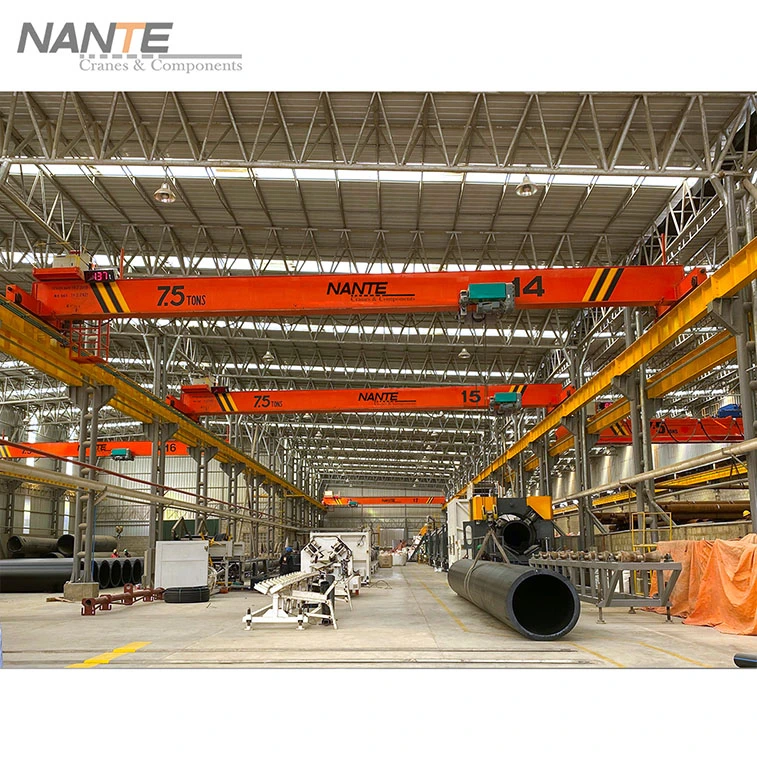
The CMAA overhead crane selection guide acts as the main technical reference for electric overhead traveling cranes in North America. The Crane Manufacturers Association of America created the guide to standardize design, classification, and specification processes across the industry.
CMAA Specification 70 covers top-running bridge and gantry-type multiple-girder cranes. CMAA Specification 74 addresses single-girder cranes that utilize under-running trolley hoists. Both documents promote uniformity in safety, structural integrity, and operational reliability.
The standardization purpose ensures consistent performance expectations no matter the manufacturer. Engineers depend on these specifications. They reflect many years of field data on load handling and fatigue resistance. Facilities in the United States adopt CMAA guidelines widely. The standards align with national safety regulations. They also reduce procurement risks.
Why CMAA Classification Matters in Crane Selection
Proper CMAA classification directly influences safety outcomes in every industrial setting. A correctly classified crane resists structural fatigue. It also prevents overload failures during repeated lifting cycles.
Correct classification also delivers cost efficiency. Facilities avoid both under-engineering that leads to early replacement and over-engineering that increases initial capital outlay.
Lifecycle performance improves when the crane matches the application. The right service class extends service intervals. It also maintains consistent uptime under real operating conditions. Ignoring classifications often results in unplanned downtime or safety incidents. These incidents disrupt production schedules.
Understanding CMAA Crane Service Classes (A–F)
CMAA duty classifications organize cranes according to load spectrum and total load cycles expected over the equipment’s life. The system uses four load classes (L1 to L4) and four cycle categories (N1 to N4) to determine the final service class.
Class A (Standby or Infrequent Service) applies to precise, slow-speed handling with long idle periods. Typical applications include power houses or maintenance areas with 0–2 lifts per hour.
Class B (Light Service) suits repair shops or light assembly operations. The crane handles occasional full loads at slow speeds with 2–5 lifts per hour.
Class C (Moderate Service) fits machine shops or paper-mill machine rooms. Average loads reach 50 percent of rated capacity with 5–10 lifts per hour.
Class D (Heavy Service) serves heavy machine shops or foundries. The crane manages frequent loads near 50 percent capacity at 10–20 lifts per hour.
Class E (Severe Service) handles loads approaching rated capacity in demanding environments with high cycle counts.
Class F (Continuous Severe Service) supports nonstop, high-intensity operations that combine maximum loads and continuous cycles.
The following table summarizes the relationship between load class and load cycles that define each service class:
- L1 + N1 = Class A
- L2 + N2 = Class B
- L3 + N3 = Class C
- L4 + N4 = Class D (and higher combinations scale to E and F)
This CMAA crane service class explanation provides the foundation for accurate selection.
How Service Class Affects Crane Lifespan
Load cycle fatigue accumulates stress on girders, hoists, and mechanical components. Higher service classes use thicker materials and reinforced designs. These features help withstand greater cumulative stress.
Structural reinforcement requirements increase with class. Classes D through F often specify enhanced bearings, stronger end carriages, and upgraded bridge girders.
Engineers calculate expected lifespan by combining average load percentage with total projected cycles. Proper class selection ensures the crane reaches its design life without premature wear.
How to Choose the Correct CMAA Class
Engineers begin by collecting operational data on lifts per hour and average lift height. They then calculate the mean load as a percentage of rated capacity.
Shift cycles provide the next data point. Single-shift intermittent use may allow a lower class. Continuous multi-shift operation demands a higher rating.
Operational environment also influences the choice. Elevated temperatures, dust, or corrosive atmospheres often require an upward adjustment in service class. A step-by-step decision process includes:
- Record actual load spectrum from production logs.
- Estimate total load cycles over the crane’s projected 10–20 year life.
- Cross-reference the load class and cycle data with the CMAA table.
- Add environmental modifiers if conditions exceed standard assumptions.
This methodical approach ensures the selected crane aligns precisely with real-world demands.
Key Factors in Selecting the Right Overhead Crane
Several engineering parameters drive the final configuration choice. Load capacity, span, and duty cycle form the core triad of decision factors.
Load Capacity and Safety Margin Considerations
Rated load represents the maximum safe working load. Maximum load includes dynamic effects from acceleration and deceleration.
Dynamic load factors account for swinging, impact, and sudden stops. Engineers typically apply a 15–30 percent safety buffer above expected peak loads.
Safety margin selection balances protection against overload with unnecessary cost. The CMAA overhead crane selection guide provides formulas to incorporate these factors without excessive over-specification.
Span and Facility Layout Requirements
Runway span directly affects girder design and deflection limits. Longer spans require deeper or box-type girders to maintain L/600 deflection criteria under full load.
Building structure constraints include column spacing and available headroom. Headroom limitations often dictate under-running configurations or custom trolley designs.
Duty Cycle and Operating Environment
Indoor installations allow standard material selections. Outdoor use requires weather-resistant coatings and wind restraints.
Temperature extremes, dust accumulation, or corrosive vapors influence component choices. They may elevate the required service class. Continuous operation patterns demand more robust mechanical systems than intermittent use.
Single Girder vs Double Girder Crane Selection
Configuration choice depends on capacity, span, and duty requirements. Each type offers distinct performance characteristics.
When to Choose Single Girder Overhead Cranes
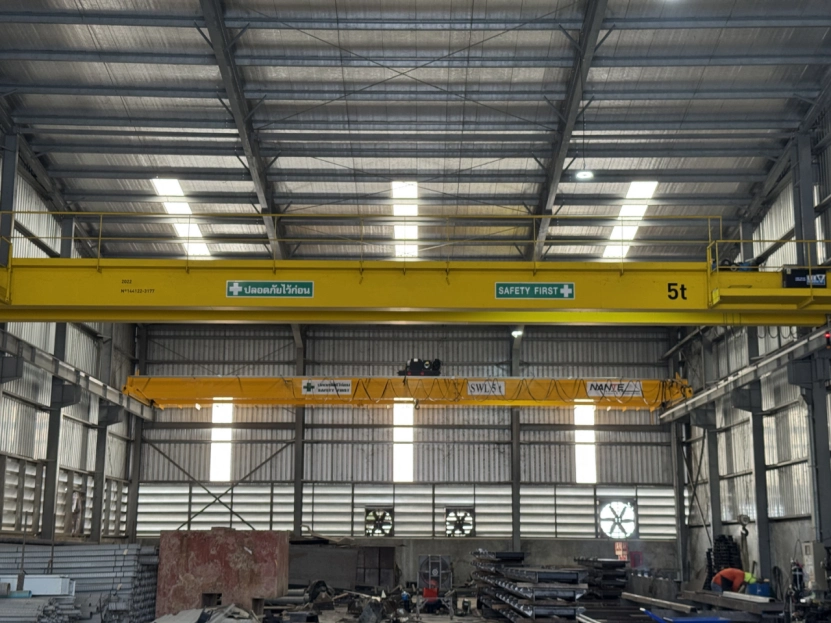
Single girder overhead cranes suit light to moderate duty applications with capacities up to 20 tons and spans under 65 feet.
These cranes deliver lower self-weight and compact design. The design fits space-constrained facilities. Procurement teams select single girder models when budget constraints and limited capacity requirements dominate the project.
When Double Girder Cranes Are Required
Double girder cranes become necessary for heavy industrial lifting above 20 tons or spans that exceed 65 feet.
The dual-girder design provides superior stability and higher hook heights. High duty cycle operations benefit from the added strength. They also gain the ability to support auxiliary hoists or maintenance platforms.
Top Running vs Under Running Crane Configuration
Mounting style selection hinges on building height, capacity needs, and layout flexibility.
Top Running Crane Advantages
Top running cranes achieve higher load capacities. The bridge travels on top of the runway beams.
These cranes deliver greater lifting heights. They excel in heavy-duty industrial environments. The configuration also provides more floor clearance in many facility layouts.
Under Running Crane Advantages
Under running cranes operate on the bottom flange of the runway. They fit buildings with low headroom constraints.
The design offers cost-efficient retrofit solutions for lighter applications. Flexible interlocking options make under-running cranes practical for workstation-style coverage.
Facility and Structural Requirements in CMAA Crane Selection
Integration with the building structure forms a critical part of the selection process.
Building Support Structure Considerations
Runway beam design must accommodate wheel loads and deflection limits per CMAA guidelines. Column load calculations include both static and dynamic forces from the crane.
Engineers verify that the support structure meets required stiffness. This prevents excessive sway during operation.
Installation Planning
Early coordination between crane supplier and structural engineer ensures proper runway alignment and power supply routing. Serviceability access points receive attention during the layout phase. This simplifies future component replacement.
Best Practices for CMAA-Based Crane Selection
Match the crane class exactly to measured operational cycles rather than rough estimates.
Always evaluate future expansion needs and potential load increases during initial specification.
Consult CMAA 70 and CMAA 74 specifications at the earliest project stage.
Balance upfront cost against long-term durability and operational reliability for optimal return on investment.
Partner with Nante Crane for Your Overhead Crane Needs
Nante Crane is a leading manufacturer of cranes and crane components with more than 30 years of history. The company produces single girder overhead cranes (1-20t capacity), double girder EOT cranes with hoist (3.2-63t) or open winch (10-300t+), and underhung overhead cranes (0.5-10t). Nante also supplies comprehensive crane components including hoisting mechanisms, travelling mechanisms with various end carriages, and power supply systems such as conductor rails and festoon systems. For tailored solutions aligned with CMAA principles, contact Nante Crane through their website or service team for professional consultation on crane selection and components.
Frequently Asked Questions about CMAA Overhead Crane Selection
What is the main difference between CMAA 70 and CMAA 74?
CMAA 70 covers specifications for top-running multiple-girder cranes, while CMAA 74 addresses single-girder cranes with under-running trolleys.
When should a facility choose a double girder overhead crane over a single girder model?
Double girder cranes suit higher capacities, longer spans, or high duty cycles where greater strength and hook height are required.