English


How Workstation and Jib Cranes Are Used in the Automotive Industry
How Workstation and Jib Cranes Are Used in the Automotive Industry
Date: 2026-04-30 Share:
Car makers deal with big material moving problems on car building lines. Workers pick up heavy parts like engines, transmissions, body panels, and tools by hand. These jobs lead to worker tiredness, raise safety dangers, and cause production hold-ups. Workstation and jib cranes give local, exact lift help that fixes these problems well.
Jib cranes for material handling in automotive assembly let fast turns and place of parts in tight spots. Workstation cranes in vehicle production lines back easy moves of parts along building stops. These setups raise safety, cut strain, and lift work rate in current car making. This piece looks at their exact uses, gains, and pick points.
Why Efficient Material Handling Solutions Are Essential in Automotive Manufacturing
Car building lines run at fast paces. They need exact team work. Poor material moving breaks the stream. It also hikes costs.
Challenges of Manual Lifting in Vehicle Production Lines
Hand lifting of heavy car parts makes many issues. Workers deal with engines that weigh a few hundred kilograms over and over. They also handle big body panels. These steps cause muscle and bone hurts, mainly in the back and shoulders. Odd body positions when lining up transmissions or frame parts add more stress.
Building delays happen when workers get tired. Delays also come when parts line up wrong during set. Safety events grow in full spots with fork lifts and moving cars close by. Repeated moves lower total work too. They raise missing days. Car plants need solid lift tools to keep steady flow and guard staff.
The Role of Workstation and Jib Cranes in Modern Automotive Assembly
Workstation and jib cranes give aimed help without big roof setups over the whole plant. These cranes manage local jobs with good aim. Jib cranes give turn moves for spot lifts. Workstation cranes cover straight or square areas along building lines.
Both kinds fit into current plans with ease. They cut hand work. They let one worker handle heavy weights safely. This part makes them useful in body work areas, engine build spots, and last car building lines.
Jib Cranes in the Automotive Industry
Jib cranes act as flexible tools for use-point lifts in car plants.
What Are Jib Cranes and Their Key Features for Automotive Applications
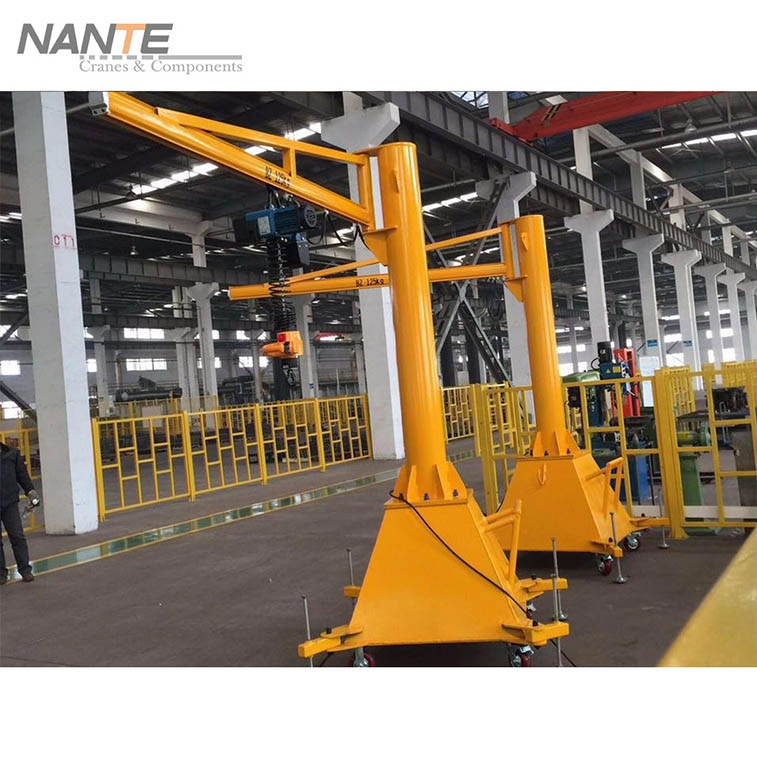
Jib cranes have a level arm (jib) that turns around a set point. Makers put them on floors, walls, or posts. Nante offers free-standing jib cranes, wall-mounted jib cranes, wall-travelling jib cranes, and movable jib cranes.
Weights go from 150kg to 5000kg based on the type. Arm sizes often reach 1.3m to 7m. Turn goes to 180°, 270°, or full 360° with hand or power choices. Lifts include electric chain hoists or wire rope hoists. Parts like box girder or I-beam arms, IP55 enclosures, and festoon systems make sure lasting strength and easy run. These plans meet world rules like FEM, CMAA, and ISO.
The small base and bend mount fit tight car work spots where room is short.
Common Uses of Jib Cranes for Material Handling in Automotive Assembly
Jib cranes do well at load and unload spots. They also work at single build stops. They shift engine blocks from store to mount points with good hold. Workers use them to set transmissions right on frames.
Other usual jobs cover wheels and tires, body panels, and press tools. In tight areas, the 360° turn lets workers swing weights around blocks without moving the whole crane. This skill smooths material stream. It cuts wait times on quick build lines.
How Jib Cranes Support Tool, Die, and Component Handling in Vehicle Plants
Car building needs often tool and die swaps for body panel stamps or plastic shapes. Jib cranes lift and reset these heavy things safely at the work spot.
Workers tie slings or hooks to dies. Then they swing them into presses with little work. For part handling, jib cranes back sub-builds during weld or fit steps. The good hold stops harm to soft parts. It keeps line-up limits needed in car quality rules.
Benefits of Floor-Mounted and Wall-Mounted Jib Cranes in Automotive Facilities
Floor-mounted (free-standing) jib cranes give full 360° cover and strong base for bigger weights. They fit open spots near load piers or big build bays. Wall-mounted kinds save floor room. They tie right to set posts. This makes them good for full build areas.
Both kinds set up fast with small breaks. They cut body stress on workers. They raise body fit. Car plants get better room use and quicker handle turns.
Workstation Cranes in the Automotive Industry
Workstation cranes give wider cover for repeat jobs along building lines.
Types of Workstation Cranes Used in Vehicle Production
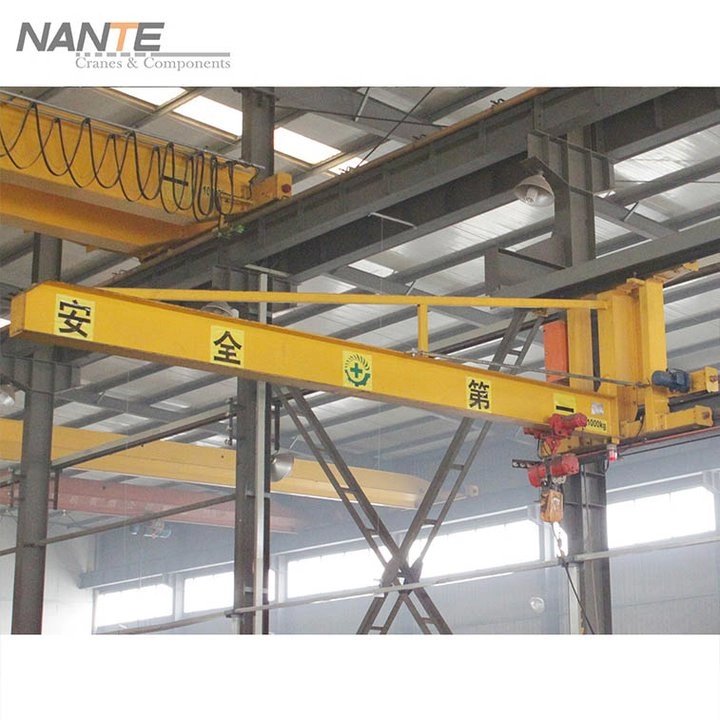
Usual kinds include overhead bridge cranes, monorail systems, gantry cranes, and light closed-track builds. Nante provides single-girder overhead cranes with weights from 1t to 20t. These have tight build and low own weight.
Part light crane setups go from 150kg to 10t. These cover bridge, monorail, and small gantry picks. Parts like low-headroom hoists, power-save motors, and festoon systems back easy travel. Made-to-fit lets plants match exact reach, height, and weight needs.
Workstation Cranes on Automotive Assembly Lines for Parts Handling
Workstation cranes set up side by side with belt systems or along build stops. They let one worker move sub-builds or big parts between stops without fork lifts.
Bridge or monorail plans cover square areas well. Workers shift frame parts, door units, or inside parts with set speed. This fit backs just-in-time part give. It cuts crowd on the line.
Using Workstation Cranes for Maintenance and Repair Tasks in Automotive Plants
Care areas use workstation cranes to lift parts during engine fixes or transmission work. The exact place helps techs take out and put back heavy parts safely.
Cranes cut down time by letting quick reach to machines. Workers skip odd hand moves that could harm cars or cause hurt.
Advantages of Workstation Cranes Compared to Traditional Lifting Methods
Workstation cranes beat hand handling or basic lifts in many ways. They cover more ground than set jib cranes. Yet they stay body-friendly. Smooth power travel cuts worker push compared to chain pulls.
Fit with set builds skips the high price of full plant strength work. Safety grows through weight stops and anti-hit parts. In all, these cranes give more output and lower long-run work costs.
Key Benefits of Workstation and Jib Cranes in Automotive Production
Improving Safety and Reducing Worker Strain in Vehicle Manufacturing
These cranes end most hand heavy lifts. Workers face less back and shoulder stress during repeat jobs. Exact holds stop quick falls or wrong lines that make events.
Body-fit plans match current safety rules. They cut missing days from hurts.
Boosting Productivity and Efficiency on Automotive Assembly Lines
Quicker part place shortens turn times at each stop. One worker handles weights that took many before. Less hold-ups keep the whole line going even.
Fit with auto tools lifts stream more in new car build plants.
Achieving Cost Savings Through Reliable Lifting Solutions
Lower hurt claims and missing days cut side costs. Less down time from handle waits raises work. Lasting, power-save builds from makers like Nante cut care costs over time.
Plants get better pay back through more work and longer gear life.
Take the Next Step – Expert Guidance for Your Material Handling Needs
Nante Crane is a leading manufacturer with over 30 years of experience providing high-quality cranes and crane components. The company offers a wide range of workstation cranes, jib cranes, overhead cranes, and gantry cranes that feature intelligent design, lightweight construction, energy efficiency, and customization to meet demanding automotive production requirements. With a global service network and strict quality standards, Nante Crane delivers reliable lifting solutions that enhance safety and productivity in vehicle manufacturing facilities worldwide.
Contact Nante Crane today for expert consultation on selecting the right jib or workstation crane system for your automotive assembly needs. Request a quote, download technical brochures, or speak with a specialist to optimize material handling in your vehicle production lines.
Frequently Asked Questions (FAQ)
How do jib cranes improve material handling in automotive assembly?
They enable 360° rotation and precise positioning of heavy components such as engines and transmissions, reducing manual effort and speeding up station cycles.
Can workstation cranes integrate directly with existing vehicle production lines?
Yes, modular designs allow seamless installation parallel to conveyors or stations with minimal modification to the facility.
What capacities are typical for jib cranes used in car manufacturing?
Typical capacities range from 150kg for lighter parts to 5000kg for heavy engine or body components, depending on the model and mounting type.