English


Cable Festoon System: Its Different Types
Cable Festoon System Its Different Types
Date: 2026-04-29 Share:
A cable festoon system is a power supply setup used for moving equipment in industrial places. It delivers reliable electricity and control signals to cranes. At the same time, it manages cables that move along with the machinery. Businesses searching for a cable festoon system for cranes often need solutions that support long travel distances in overhead crane and gantry crane applications.
What Is a Cable Festoon System in Crane Electrification?
Engineers and procurement teams frequently ask what a cable festoon system is when planning crane electrification projects. The system provides continuous power to the moving parts of cranes. It does this without interrupting operations.
Definition and Working Principle of Festoon Systems
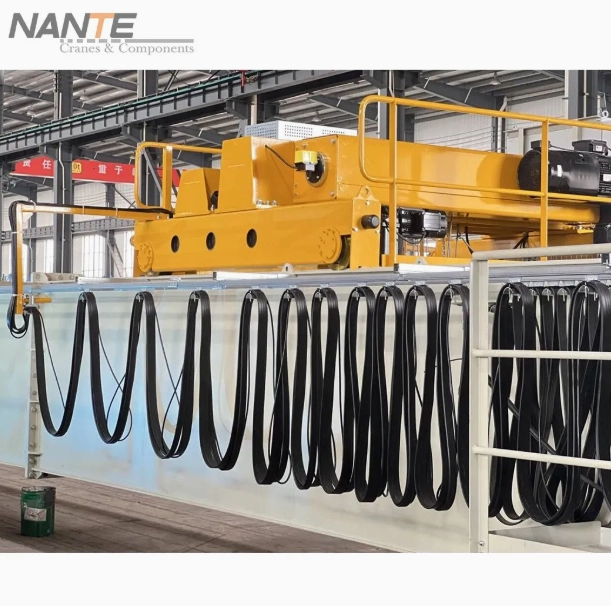
A cable festoon system serves as a flexible cable management solution. It supplies power to moving parts of cranes. The system works through a simple yet effective mechanism. Trolleys slide along a fixed track. Cables loop and extend or retract in an accordion-style motion as the crane bridge or trolley travels. This following motion keeps cables organized. It also prevents tangling or excessive wear during crane movement.
The principle relies on the trolleys. They carry the weight of the cables and allow smooth extension and retraction. When the crane moves forward, the trolleys spread out and feed cable slack. When the crane returns, the trolleys stack together and take up the slack. This design ensures uninterrupted power and control signals for hoist, trolley, and bridge movements in material handling applications.
Key Components of a Festoon Cable System
Every cable festoon system consists of several essential parts. These parts work together. The main components include festoon cable trolleys, cables, tracks, hangers, end stops, and power feed units. Festoon cable trolleys carry and support the cables. They roll smoothly along the track. Cables can be flat or round types. These cables transmit power and control signals.
The track forms the guiding path. It comes in various profiles such as C-rail or square rail. Hangers suspend the track securely. End stops limit trolley travel. Power feed units connect the system to the main electrical supply. The structure of a festoon cable trolley system ensures stable support for multiple cables. It prevents sagging.
When comparing a festoon cable versus conductor bar system, the festoon option offers greater flexibility in harsh conditions and longer travel distances. Conductor bars may suit applications with limited headroom or multiple bridges. The festoon cable trolley system structure provides reliable performance in dynamic crane movements.
Why Cable Festoon Systems Are Widely Used in Industry
Industries choose cable festoon systems for cranes. These solutions deliver dependable power management in demanding environments. The systems support overhead cranes, gantry cranes, and other material handling equipment effectively.
Adaptability to Harsh Environments
Cable festoon systems demonstrate strong adaptability to harsh environments. The design handles outdoor use, high-temperature areas, dusty conditions, and corrosive settings common in steel mills, ports, and construction sites. Operators rely on the system for overhead crane operations. Exposure to weather or industrial contaminants occurs regularly in these places. The robust construction protects cables during continuous movement in these challenging conditions.
Flexibility and Easy Installation
The flexibility of a cable festoon system makes it suitable for various crane travel paths. Installers appreciate the straightforward assembly process for new installations or retrofit projects in crane electrification. The system adapts to straight or slightly curved runways. It does this without complex modifications.
Installation steps typically include:
- Mounting the track securely along the crane runway.
- Routing and securing cables through the trolleys.
- Positioning trolleys and connecting power feeds.
This approach reduces setup time. It also allows quick integration with existing overhead or gantry crane structures.
Cost Efficiency and Low Maintenance
Cable festoon systems provide cost efficiency through reliable long-term performance in industrial operations. The design minimizes downtime in continuous material handling processes. Users benefit from a solution. It supports efficient crane electrification without frequent interventions.
Different Types of Cable Festoon Systems
Selecting the right type depends on the specific crane application. Several types of cable festoon system exist. They match different loads, environments, and travel requirements in overhead cranes and gantry cranes.
Heavy Duty Cable Festoon System
A heavy duty cable festoon system serves high-load industrial conditions effectively. This type suits overhead cranes and heavy material handling operations. Significant cable weight and frequent movement occur in these operations. The system often features single or double trolley configurations. These configurations provide extra support.
The design handles demanding crane travel with robust construction. Advantages include high cable weight capacity and suitability for tough industrial workloads. Heavy duty options ensure stable power delivery in applications. These applications require strong performance under load.
C Rail Cable Festoon System
The C rail cable festoon system offers excellent versatility for general crane applications. It works well in both indoor and outdoor settings for overhead cranes and smaller gantry cranes. Stainless steel versions enhance corrosion resistance in humid or mildly corrosive environments.
Key advantages include a lightweight yet strong profile, universal performance, and easy integration with standard crane runways. The C rail design supports reliable operation across various material handling tasks. It maintains smooth trolley movement.
Round Cable / Flat Cable Festoon System
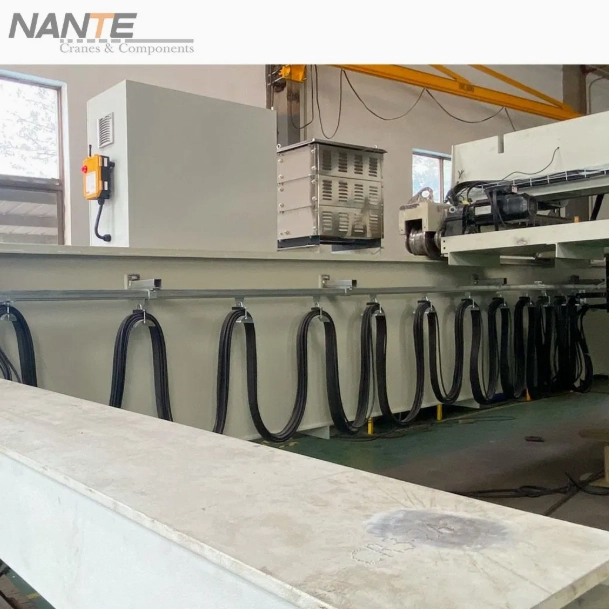
Round cable and flat cable festoon systems provide high flexibility for different crane electrification needs. The round cable festoon system excels where greater bendability and strength matter in rough conditions. Flat festoon cable offers space-saving benefits and tidy routing along the track.
Flat cables reduce overall system height. They minimize stretching in compact installations. Round cables deliver superior flexibility for dynamic movements. Both types adapt to multiple electrical systems. Operators choose based on available space and required durability in crane applications.
Track Mounted Cable Festoon System
A track mounted cable festoon system mounts directly on dedicated tracks. It provides consistent cable management. This configuration suits harsh environment cable systems in cranes. These cranes operate in dusty, outdoor, or demanding industrial sites. The mounted design ensures stable guidance for trolleys over the full travel distance.
Advantages include straightforward installation, good corrosion resistance, and reliable performance during crane operations. The system maintains cable integrity even in challenging conditions common to gantry and overhead crane setups.
Square Rail Festoon System
The square rail festoon system performs well in dusty environments and on complex track paths. It supports straight or curved track applications in material handling. The square or diamond-shaped rail profile protects against dust accumulation. It suits indoor or outdoor use.
This type offers effective dust resistance and adaptability to non-linear crane rails. Advantages include reliable operation in contaminated areas. It also has the ability to handle varied crane travel geometries. It does this without compromising power supply.
How to Choose the Right Festoon System Type
Proper selection of a cable festoon system for cranes ensures optimal performance and safety. Engineers should evaluate several factors before finalizing the choice.
Load Capacity and Cable Weight Considerations
Load capacity forms a primary consideration in festoon cable load calculations. The combined weight of power cables, control cables, and accessories must stay within the trolleys’ and track’s safe limits. Higher cable counts or thicker conductors require heavier-duty systems. These systems prevent sagging or strain during crane movement. Matching capacity to the specific hoist and trolley requirements of the overhead crane prevents premature wear.
Track Design and Travel Distance
Track design and travel distance influence system performance significantly. Longer travel distances in cranes favor systems with strong trolley support and appropriate cable looping. Short to medium runs may use lighter profiles. Long travel crane applications need reinforced tracks and trolleys. The chosen track type affects smoothness and overall reliability in overhead and gantry crane operations.
Environmental Factors and Application Needs
Environmental factors guide the final selection for outdoor cranes or dusty sites. Corrosive conditions call for stainless steel or protected components. Dusty or high-temperature environments benefit from enclosed or robust rail designs. Linking these factors to the crane type helps identify the most suitable festoon solution. The crane type may be overhead crane electrification or gantry crane power supply. This link supports safe and efficient material handling.
Discover Reliable Crane Power Solutions with Nante Crane
Nante Crane is a leading manufacturer with over 30 years of experience. It offers high-quality crane components. These include advanced festoon systems as part of its mobile power supply lineup. The company provides intelligent, energy-efficient, and customized solutions for overhead cranes, gantry cranes, jib cranes, and applications across industries worldwide. Engineers and procurement teams can request a quote or custom festoon solution. They contact Nante Crane for professional guidance tailored to specific crane electrification needs.
FAQ
What is a cable festoon system used for in cranes?
A cable festoon system supplies continuous power and control signals to moving parts of overhead cranes and gantry cranes. It manages cable movement safely.
What are the main types of cable festoon system?
Common types include heavy duty, C rail, round or flat cable, track mounted, and square rail festoon systems. Each type suits different load and environmental requirements in crane applications.
How does a cable festoon system work?
Trolleys carrying cables travel along a track. They allow the cables to extend or fold as the crane moves. This motion ensures uninterrupted power delivery without tangling.
When should I choose a C rail cable festoon system for my crane?
Choose a C rail cable festoon system when the application needs corrosion resistance, indoor-outdoor versatility, and reliable performance in standard crane operations.
What factors matter most when selecting a festoon system for long travel cranes?
Key factors include load capacity, track design, travel distance, and environmental conditions specific to the crane application.