English



The Different Types of Jib Cranes and Their Uses in the Construction Industry
The Different Types of Jib Cranes and Their Uses in the Construction Industry
Date: 2026-04-10 Share:
Jib cranes act as light lift tools for close-range, often-repeated item moves in building work. Knowing the various types of jib cranes and their uses in construction lets site leads and builders pick the best pick for raising metal frames, ready-made parts, light posts, and gear. This jib crane selection guide describes each kind’s traits, turn ranges, set-up ways, and best build tasks. It aims to raise work speed and safe on work spots.
What Is a Jib Crane and Why Is It Used in Construction?
A jib crane serves as a small top lift tool. It has a straight post or pole, a side jib arm (boom), and a power hoist or chain hoist to shift weights.
The build gives room-saving gains. It backs 180° to 360° turns. It stands out in repeated close lifts where big cranes seem unworkable.
In building, jib cranes bring bendy work in tight spots. They cut hand work. They allow exact spots. They drop costs over large gear. Usual jobs cover raising build parts, setting up service poles, and moving items in site shops or make areas.
These cranes better flow by backing often tasks. They give ruled moves that lift output and safe on full build spots.
Main Types of Jib Cranes
Jib cranes show up in a few setups to fit site plans and lift wants. Each kind gives special fix, turn, and move picks.
Freestanding Jib Crane (Column Mounted / Floor Mounted)
Freestanding jib cranes have a free post set on a concrete base. The jib arm takes box girder for big weights or I-beam/KBK shapes for small caps. Turn can be hand or power driven.
Main specs cover caps from 250kg to 5000kg, lift heights of 2m to 7m, and jib lengths of 2m to 7m. Turn hits 180°, 270°, or full 360°.
In building, these cranes fit open spots for ready part join, item move in make shops, or outside lift jobs that need wide reach. They bring high weight cap and large work circle without using build walls.
Gains cover strong build, simple set-up, and sure work in hard spots. The smooth tube post makes sure frame power.
Wall Mounted Jib Crane
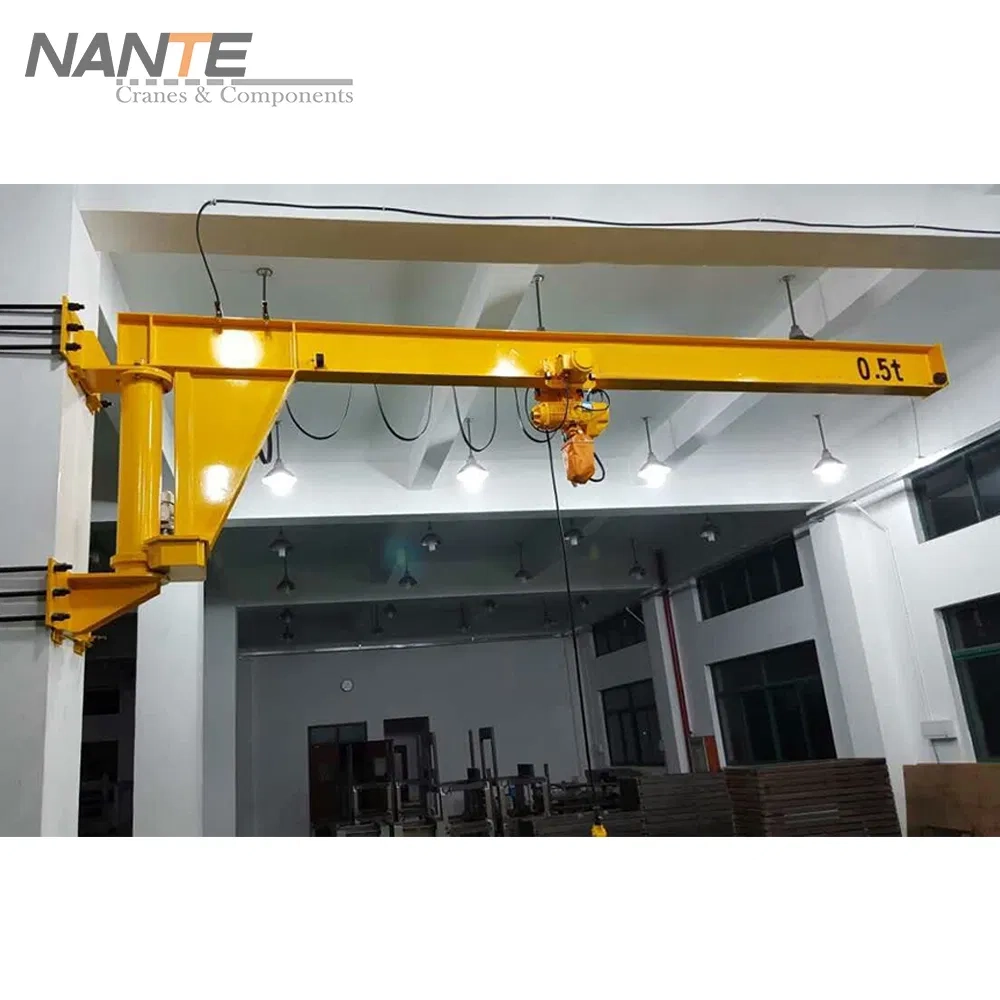
Wall mounted jib cranes tie right to walls or build posts with smooth tube backs. The jib arm uses like shape picks, with 180° turn in hand or power turn.
Caps go from 250kg to 5000kg, with lift heights of 2m to 7m and jib lengths up to 7m. The build stresses room use.
On build spots, these cranes do well in inside zones or by build walls in pre-join areas. They add to big systems in small spaces where floor room lacks.
Gains include full floor room use, bendy and strong build, and fast set-up without new bases. They make good use of old builds.
Wall Travelling Jib Crane
Wall travelling jib cranes shift along long tracks set on walls or posts. The jib arm gives extra reach. The unit moves side ways for square cover.
Specs match other set kinds: 250kg to 5000kg cap, 2m to 7m lift height, and up to 7m jib length.
These cranes fit long straight work areas or line-style pre-make in building. They take long item shift along build sizes well.
Gains cover bigger reach than still models, fit for repeated jobs over wider spots, and strong build for hard use. They best space in long sites.
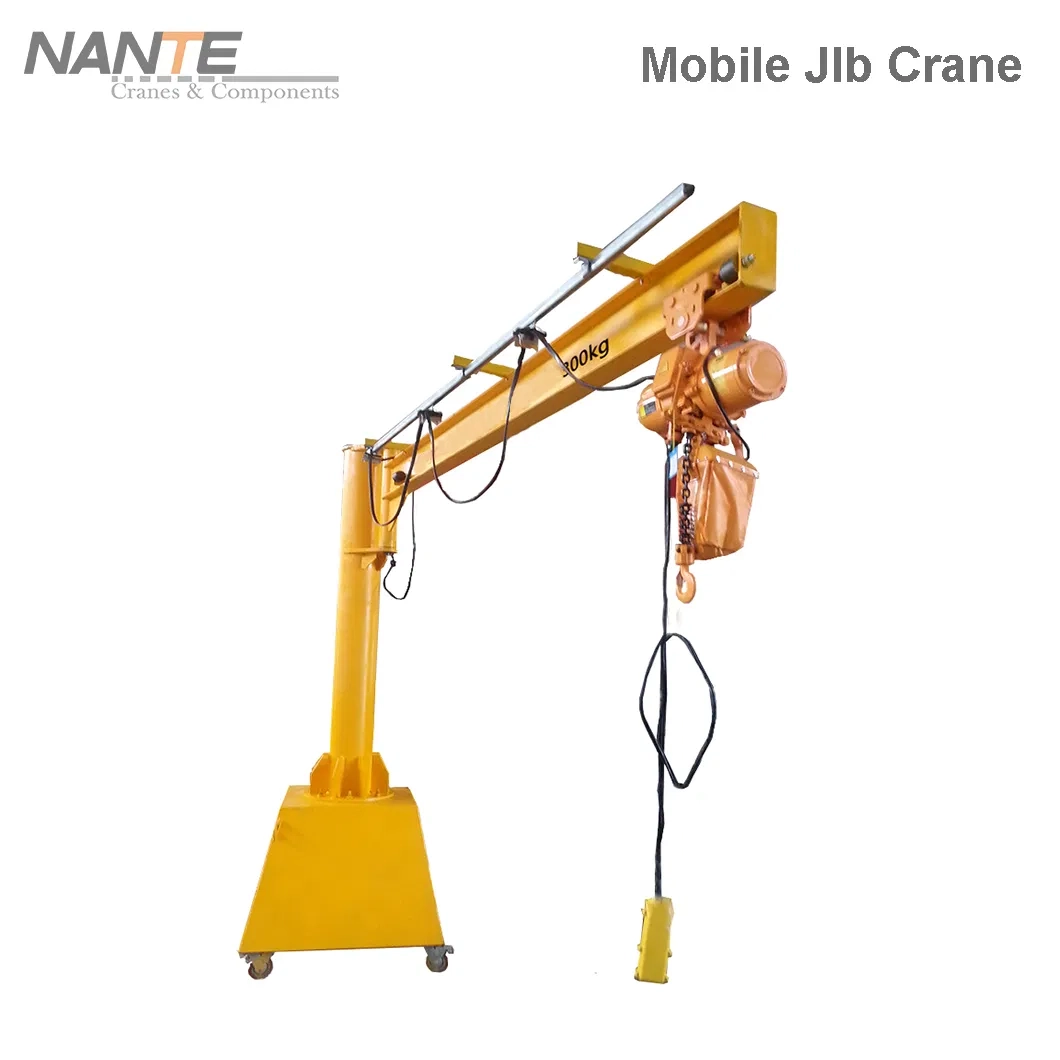
Mobile (Movable / Portable) Jib Crane
Mobile jib cranes use a built-in base with balance weight or wheels. No lasting base is needed. They give 360° hand turn in a small build.
Caps run from 150kg to 1000kg, with lift heights of 1.5m to 3m and jib lengths of 1.3m to 2.5m.
In building, they shine at short-term work points, many-zone switch, fix tasks, or fast set across changing spots. They fit easy as job wants change.
Main gains are great bend, no set fix, and simple move. These make them right for changing work spots.
Articulating Jib Crane (Knuckle Boom Style)
Articulating jib cranes have a two-arm build with two turn points for better move ease. Fix picks cover wall, floor, or join with other systems.
This setup lets the arm go around blocks or via tight opens. It gives top true in hard spaces.
On build jobs, they take tasks in metal frames, by posts, or in join where straight-arm cranes lack. They better reach in odd or blocked areas.
Gains cover better path in tight spots and exact weight spot for hard lifts.
Key Applications of Jib Cranes in the Construction Industry
Jib cranes fill many parts on new build spots due to their bend.
Usual jobs include:
· Lifting and positioning structural steel beams and prefabricated components. · Installing road lighting poles, traffic signals, and utility equipment. · Handling materials in bridge construction, highway projects, and metro rail transit sites. · Short-distance, high-frequency transfers in on-site workshops or pre-assembly areas. · Precise placement of transformers, cables, and electrical facilities.
They work best in close-range, often cases that need true spot. Where big cranes cannot work well, jib cranes fill the hole with ruled, local lifts.
In ready yards or make zones, they smooth flow. Their small size backs safe item move in full areas.
Advantages of Using Jib Cranes in Construction
Jib cranes bring a few gains that touch job ends right.
Main gains include:
· Increased operational efficiency by reducing reliance on manual labor and larger equipment.
· Enhanced flexibility and precise load control in confined construction environments.
· Significant space savings, especially with wall-mounted and travelling designs.
· Lower overall costs for light-to-medium duty material handling.
· Improved workplace safety through controlled, repetitive lifting operations.
· Durable, easy-to-install systems that integrate well with existing site structures.
These cranes cut stop time. They back faster turn times. Their small size fits small spaces while keeping good work. Workers get better rule, which cuts hurt risks in repeated jobs.
In all, jib cranes push cost cuts and higher output without losing safe.
How to Choose the Right Jib Crane for Your Project
Picking the true jib crane needs close check of job wants. This jib crane selection guide lists main steps.
Determine required load capacity and lifting height based on typical materials handled.
Evaluate available space and installation environment — floor/foundation versus wall/column support.
Consider rotation needs: 180° for wall-mounted models versus 360° for freestanding or mobile types.
Assess mobility requirements — fixed, travelling, or fully portable configurations.
Factor in site conditions, frequency of use, and integration with other lifting equipment.
Extra tips cover putting first bendy and strong builds with simple set-up. Made picks can fix special build wants, like set hoist kinds or arm shapes.
Fitting the crane kind to the spot makes sure top work and long sure.
Conclusion: Selecting the Best Jib Crane for Construction Efficiency
Knowing types of jib cranes and their uses in construction gives better choice make. Freestanding kinds give wide reach, wall-mounted ones save room, travelling types grow reach, and mobile units bring top bend. Articulating builds take hard plans well.
By lining crane traits with spot wants, builders reach higher output, better safe, and cut costs. The true jib crane turns into a good item move fix that backs good job do.
Get Your Custom Jib Crane Solution from Nante Crane
Nante Crane is a leading manufacturer with more than 30 years of experience providing high-quality cranes and crane components. The company offers flexible and durable jib crane systems designed for easy installation and reliable performance, including freestanding, wall-mounted, wall travelling, and movable models. Their comprehensive range of construction lifting equipment delivers tailored material handling solutions that enhance efficiency on job sites worldwide. Contact Nante Crane today for expert advice, custom design, or a quote to optimize your next construction project.
FAQ
What are the main types of jib cranes used in construction?
The primary types include freestanding (column mounted), wall mounted, wall travelling, mobile (portable), and articulating jib cranes. Each suits different space and mobility needs.
How do freestanding jib cranes differ from wall-mounted jib cranes?
Freestanding models use an independent floor-mounted column with up to 360° rotation and higher load capacity. Wall-mounted versions attach to existing walls or columns, offering 180° rotation and saving floor space.
What capacity range do Nante jib cranes typically offer?
Nante jib cranes cover 150kg to 5000kg depending on the model, with options for light-duty portable units and heavier freestanding or wall-mounted systems.
Are mobile jib cranes suitable for temporary construction sites?
Yes. Mobile jib cranes require no permanent foundation and can be relocated easily, making them ideal for temporary or multi-zone work.
How do I determine the best jib crane for my construction application?
Assess load weight, available space, rotation requirements, mobility needs, and installation environment. Consulting an experienced manufacturer helps match the crane to your specific project.