English


Wire Rope Hoist vs Chain Hoist: Which Is Better for Cranes?
Wire Rope Hoist vs Chain Hoist: Which Is Better for Cranes?
Date: 2026-09-03 Share:
Choosing between a wire rope hoist and a chain hoist affects crane capacity, lifting height, operating speed, maintenance, safety, and lifecycle cost. Neither design is automatically better for every lifting project.
Wire rope hoists are commonly selected for higher capacities, longer lifting heights, and demanding production cycles. Chain hoists are often suitable for compact layouts, moderate loads, shorter lifts, and workstation or jib crane applications.
The correct decision depends on the complete duty profile. Rated load, load spectrum, hook height, operating hours, speed, environment, controls, service access, and required service life should be evaluated together.
Quick Answer: Which Hoist Is Better for a Crane?
When a wire rope hoist is usually better
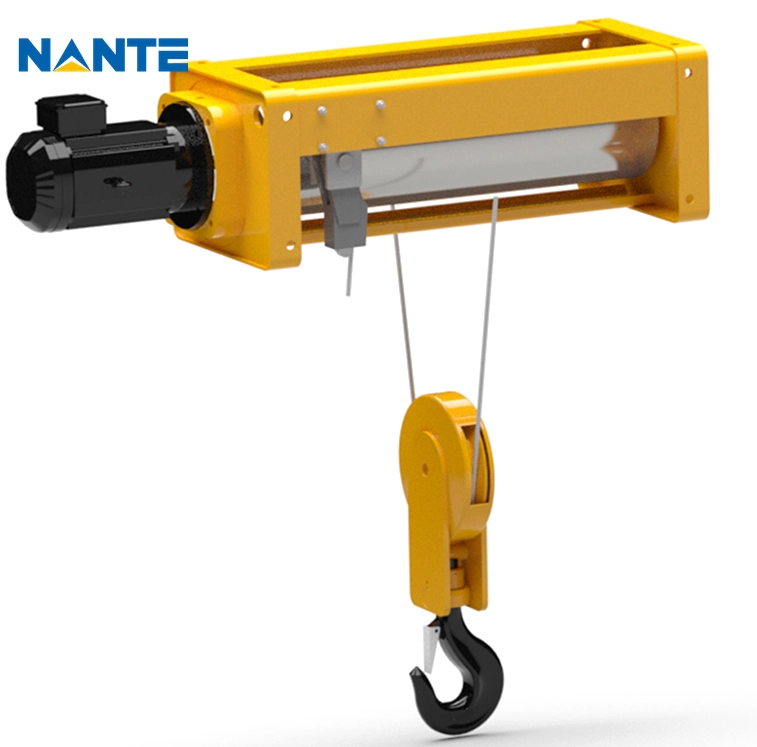
A wire rope hoist is generally preferred when the crane must handle higher loads, greater hook heights, frequent cycles, or long horizontal travel. The rope is wound onto a drum and reeved through sheaves, allowing the hoist to suit different crane arrangements.
For a wire rope hoist solution, the purchasing team should compare drum design, rope reeving, motor and brake arrangement, trolley geometry, control method, and inspection access.
single girder and double girder cranes. This should be taken into consideration when selecting the type of crane to use.
When a chain hoist is usually better
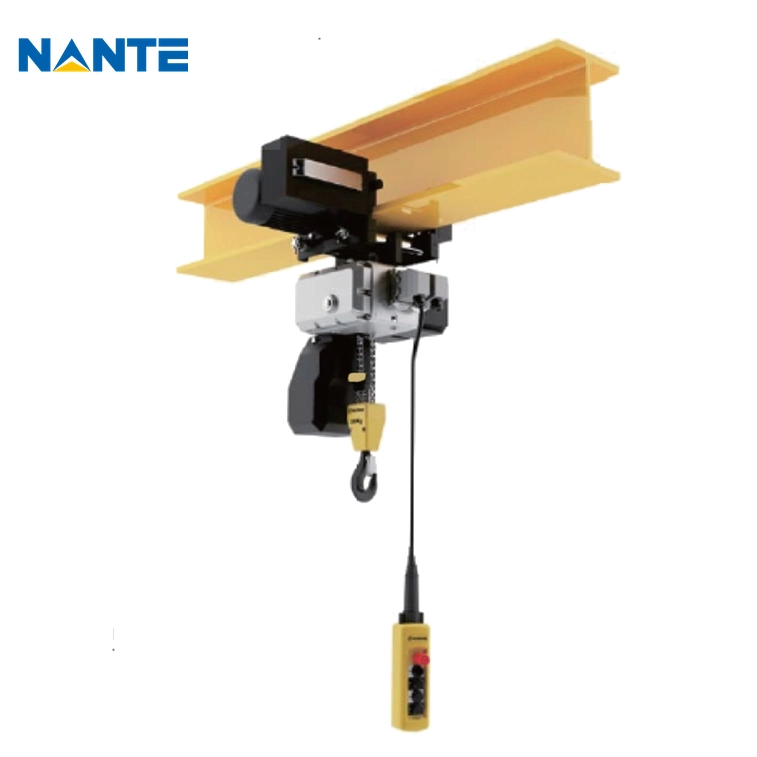
A chain hoist is often practical when compact dimensions, low headroom, and straightforward installation are more important than maximum capacity or very long lifting heights. The load chain passes through a pocket wheel and is collected in a chain container.
An electric chain hoist can work well on workstation cranes, light-duty overhead systems, and many jib crane layouts. Capacity, duty class, hook height, chain-container capacity, and operating frequency still need to be confirmed.
Capacity, Lifting Height, and Speed
Capacity comparison
Wire rope hoists are widely used for medium-to-heavy crane loads because the rope-and-drum arrangement supports different reeving configurations. This gives designers flexibility when specifying higher capacities or larger hook paths.
Chain hoists can also serve industrial applications, but their practical capacity range may be narrower. A quotation should state rated capacity, chain falls, load-bearing components, and allowable side-pull conditions.
Rated load is only one part of the calculation. Lifting accessories, impact factors, below-hook devices, load moments, and synchronized lifting arrangements may all affect the required hoist specification.
Lifting height and headroom
Long lifting heights usually favor wire rope hoists because rope is stored on a drum and can be arranged for extended hook travel. The trolley and drum layout can also be adapted to single-girder or double-girder cranes.
Chain hoists can provide a compact package for moderate hook heights. However, the chain container must have sufficient storage capacity, and the hanging chain can become an obstruction in restricted work areas.
Low-headroom versions are available in both categories. Minimum approach, top clearance, hook position, and building elevation should be checked against the crane layout before purchase.
Speed and load positioning
Wire rope hoists are often specified with dual-speed or variable-speed lifting. Faster empty-hook travel can improve productivity, while controlled acceleration and braking can reduce load swing.
Chain hoists may provide precise low-speed positioning for assembly, maintenance, and tool-handling tasks. For repetitive production, the comparison should cover the complete cycle: acceleration, lifting, lowering, stopping, and motor cooling time.
Duty Class, Durability, and Maintenance
Duty class and load spectrum
A crane hoist should be selected from expected load spectrum, daily operating time, starts per hour, average lifted load, and required service life. Maximum capacity alone cannot define the correct duty class.
Depending on the application and destination market, the specification may reference FEM, ISO, CMAA, or another applicable classification system. The quotation should identify the selected class and the assumptions used to determine it.
Low-capacity hoists running continuously may undergo more fatigue than high-capacity hoists that operate occasionally. The procurement documents need to incorporate operating hours, cycle rate, load profile, and the percent of lifts at full capacity.
Durability in industrial environments
Wire rope systems require inspection for broken wires, corrosion, kinking, crushing, lubrication, and correct spooling. Sheaves, rope guides, drums, brakes, and end connections also influence service life.
Chain hoists require inspection of chain elongation, wear, deformation, corrosion, chain guides, pockets, load sprockets, hooks, and brake components. Poor alignment or contamination can accelerate chain wear.
Dust, moisture, heat, chemicals, outdoor exposure, and potentially explosive atmospheres may require special motors, enclosures, coatings, materials, or certification. These conditions should be stated before quotation.
Maintenance requirements
Wire rope hoist maintenance involves more inspection points, but access is practical when the trolley and drum are correctly designed. Rope replacement requires the specified diameter, grade, lay, and termination method.
Chain hoists typically have a compact service package. Chain condition and lubrication are easy to monitor, but replacement must use the correct grade and pitch. A visually similar chain is not an acceptable substitute.
The maintenance plan should define inspection intervals, brake testing, gearbox and bearing checks, lubrication points, spare-part availability, and service records. Commissioning and operator training should also be clarified.
Electric Chain Hoist vs Wire Rope Hoist in Crane Layouts
Overhead crane integration
For an overhead crane system, a wire rope hoist can be integrated with single-girder or double-girder bridge arrangements. Trolley width, wheel loads, hook approach, and runway interface must be evaluated together.
Chain hoists can be integrated into lighter overhead systems when the bridge, end trucks, and runway are designed for the combined equipment weight and duty. Compact dimensions may help where building clearance is limited.
The crane hoist comparison should include bridge speed, cross-travel speed, lifting speed, control voltage, pendant or radio control, limit switches, overload protection, and emergency-stop functions.
Jib and workstation crane applications
Jib cranes often benefit from the compact form of a chain hoist, especially where the arm rotates inside a defined workstation envelope. The selected hoist still needs adequate duty class, hook height, and control ergonomics.
Wire rope hoists may be appropriate for larger freestanding jib cranes or applications requiring greater lifting height and higher cycle frequency. The column, foundation, arm, trolley, and hoist must be evaluated as one structure.
Heavy duty hoist applications
A heavy duty hoist for steel handling, machinery production, foundries, fabrication, or logistics should be selected from verified load-spectrum calculations. Wire rope is often considered for these applications, but the result depends on crane configuration and operating conditions.
Applications involving grabs, magnets, spreader beams, or process equipment may require special controls and structural verification. The hoist should be evaluated with the actual below-hook device rather than as an isolated component.
Crane Hoist Comparison: Procurement Criteria
Normalize the quotation scope
Price comparisons become unreliable when suppliers quote different scopes. The purchasing team should confirm whether each offer includes:
- Hoist, trolley, motor, brake, gearbox, drum, rope, or chain
- Pendant, radio control, inverter, limit switches, and overload limiter
- Bridge or jib interface, festoon system, conductor rail, and cable
- Drawings, calculations, manuals, inspection records, and spare-parts list
- Factory testing, packing, freight, installation, commissioning, and training
- Warranty terms, exclusions, response process, and recommended spares
The hoisting mechanism range provides a useful reference for organizing component-level questions.
Request evidence, not general assurances
A complete offer should include a data sheet, outline drawing, duty classification, motor and brake information, hook approach dimensions, load chart, and electrical requirements.
The buyer should request material certificates where relevant, welding and inspection records for structural parts, calibration records for test equipment, factory acceptance test procedures, and commissioning checklists.
At this stage, Nante Crane can be included in a comparable supplier review when its published wire rope hoist, chain hoist, overhead crane, and jib crane configurations match the project scope. Supplier-stated features should always be checked against the final technical specification.
Compare lifecycle cost
Initial price is only one part of the decision. The lifecycle comparison should include energy use, wear components, inspection labor, rope or chain replacement, downtime, spare parts, training, and expected production losses during service.
A higher purchase price may be justified when the hoist provides better access, more suitable duty classification, stronger documentation, or easier long-term support. The comparison should be based on the complete supplied scope.
How to Make the Final Selection
Use a five-step decision sequence
- Define rated capacity, hook height, span, lift frequency, and load spectrum.
- Check headroom, hook approach, bridge or jib geometry, and power supply.
- Select the required duty class and control functions.
- Compare inspection, maintenance, spares, documentation, and service support.
- Normalize all supplier quotations before comparing price and delivery terms.
Avoid common selection errors
Choosing by rated capacity alone can result in an under-classified hoist. Choosing by compact size alone may create insufficient cooling, chain-container limitations, or poor hook approach.
Another common error is treating a hoist as interchangeable without checking trolley wheels, beam flange width, structural loads, electrical interfaces, and limit-switch positions. Replacement projects require dimensional verification before an order is released.
FAQs About Wire Rope Hoist vs Chain Hoist
Is a wire rope hoist better for heavy loads?
It is often suitable for higher capacities, longer lifts, and intensive crane service. The final choice depends on duty class, reeving, crane structure, speed, environment, and required documentation.
Which hoist requires less maintenance?
Neither design is maintenance-free. Chain hoists may offer a compact inspection routine, while wire rope hoists provide a wider range of industrial configurations. Maintenance effort depends on duty, environment, access, operator practice, and spare-part planning.
Can a chain hoist replace a wire rope hoist?
Not automatically. The replacement must be checked for capacity, lifting height, headroom, trolley fit, structural loads, speed, controls, duty class, and applicable safety requirements.
Request a Hoist Selection Review and Comparable Quotation
For a project comparing a wire rope hoist and chain hoist, Nante Crane can review the lifting duty, crane layout, operating environment, control requirements, and documentation expectations to identify a suitable configuration and comparable quotation scope.
Purchasing managers, plant engineers, and project contractors should provide the capacity, lifting height, span or jib radius, duty class, operating schedule, power supply, destination, and installation scope. To request a technical review and comparable quotation basis, Contact Nante Crane.