English



Why Do Double Girder Gantry Cranes Usually Have Higher Capacity Than Single Girder Cranes
Why Do Double Girder Gantry Cranes Usually Have Higher Capacity Than Single Girder Cranes
Date: 2026-04-30 Share:
Double girder gantry cranes reach higher capacity levels. Their two-beam setup spreads the weight more evenly. It cuts down on bending and holds up stronger hoisting parts. Builders create single girder gantry cranes mainly for lighter work. Double girder models perform better in tough factory settings.
Understanding the Basic Structural Difference Between Single and Double Girder Gantry Cranes
The main design sets single girder gantry cranes apart from double girder versions. This design directly changes how well they carry loads. One main girder links the legs in one setup. Two parallel girders build a stronger frame in the other. This basic difference creates changes in stiffness, balance, and total capacity.
What Is a Single Girder Gantry Crane Structure
A single girder gantry crane has one main girder held up by two legs. The hoist system runs below it on a monorail. Makers build the girder with box, truss, or L-shape forms from high-strength S355 steel. Welding meets strict rules like ISO 15614 and AWS D14.1. They use non-destructive testing to check strength. Deflection stays inside 1/700 to 1/1000 limits for safe work.
The end carriages use hollow shaft or open gear types with alloy steel wheels that get heat treatment. This small setup keeps the crane light and simple to put up. The underslung hoist fits well for indoor or outdoor light-to-medium duty material handling. Yet the single beam focuses forces in one area. This focus limits the biggest safe loads in heavier or more regular use.
What Is a Double Girder Gantry Crane Structure
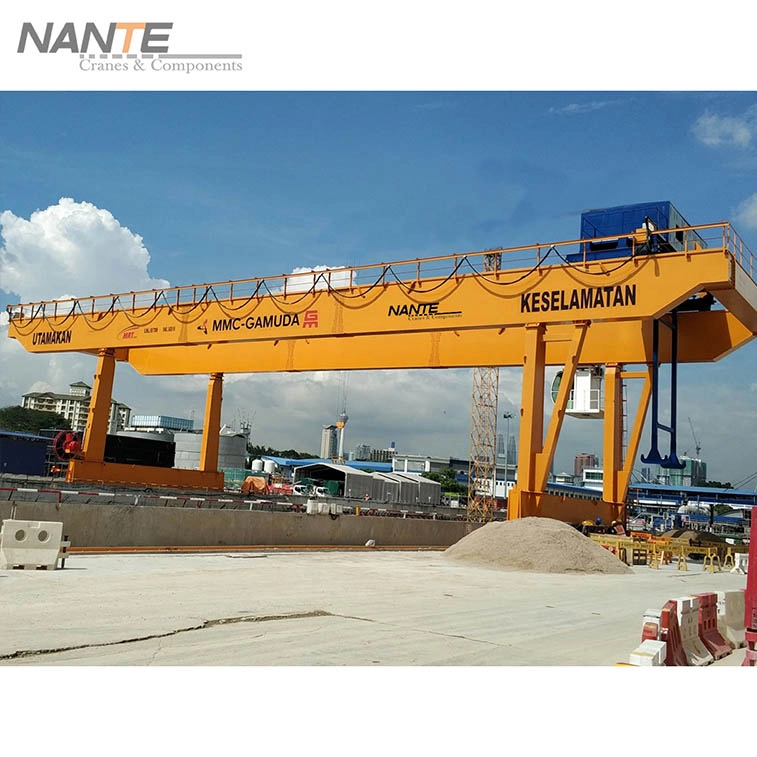
A double girder gantry crane uses two parallel main girders joined by cross beams. It includes walkways and handrails for easy maintenance. The build uses the same high-quality S355 steel and welding rules. But the two-girder frame makes a stiffer overall structure. For bigger capacities, bogie-type end carriages give high transmission efficiency and smooth movement.
This setup supports medium-to-heavy duty work with better balance. The two girders create a tough base that fights twisting and shape changes under pressure. Walkways give safe access to parts. The design fits both hoist and winch systems for different lifting needs.
Key Structural Differences That Affect Load Capacity
Single girder gantry cranes depend on one beam to hold the full load. This creates higher stress in one spot. Double girder gantry cranes share forces over two beams. They improve resistance to bending and add overall balance. The single vs double girder crane structural difference shows up most under heavy loads or long distances.
- Single girder designs focus stress on one beam and limit capacity.
- Double girder setups divide loads evenly and lower peak stress on parts.
- Two beams give more stiffness and better support for heavier hoisting equipment.
These differences let double girder gantry cranes keep their strength where single girder models hit their practical limits.
How Double Girder Design Increases Load Capacity
The two-girder build directly raises lifting performance through better mechanics. Better weight sharing and stiffness let engineers rate double girder gantry cranes for much higher capacities without losing safety.
Load Distribution Across Two Girders
Double girder cranes spread the lifting load over two parallel girders instead of one beam. This even sharing cuts stress on any single part and avoids overload. The design lowers the chance of shape change during big lifts and gives larger safety margins.
Engineers reach this result with careful girder alignment and cross-bracing. The outcome is a crane that manages heavier total weights and keeps smooth, steady motion. Load distribution across two girders stands as one main reason why double girder cranes handle tough factory jobs.
Improved Structural Strength and Rigidity
Double girder cranes get better strength from their stiff frame. Variable cross-section girders—stronger in the middle and adjusted at the ends—improve bending resistance while managing total weight. High-strength welding and heat-treated parts add more support against twisting forces.
This extra stiffness lets the crane stay steady during lifts that would cause clear flex in a single girder model. The stronger build holds heavier trolleys and winches. It directly adds to the rated capacity.
Reduced Beam Deflection Under Heavy Loads
Beam deflection single vs double girder crane performance shows clear benefits for the two-beam design. Single girder beams bend more under the same load, which can change accuracy and safety. Double girder setups cut down sag by sharing support. They keep deflection inside tight 1/700 to 1/1000 standards even at higher weights.
Lower deflection helps with exact load placement and stops too much swing. This balance matters a lot when moving heavy or valuable materials. It lets double girder gantry cranes work reliably at capacities far past single girder limits.
Role of Hoist Position and Lifting Mechanism in Capacity
Hoist placement serves a key technical part in setting effective lifting height and total capacity. The position next to the girders changes both mechanical strength and usable hook height.
Underslung Hoist in Single Girder Cranes
Single girder crane hoist position limitations come from the underslung setup. The hoist hangs below the single girder on a monorail. This saves some headroom but limits vertical space and restricts the size and strength of the hoisting system. This arrangement works well for lighter loads but limits maximum capacity and lifting height.
Low headroom or standard monorail hoists fit this design. Yet the setup puts more stress on the single beam and cuts choices for very heavy or high-speed lifting.
Top-Running Hoist in Double Girder Cranes
Double girder crane hoist on top advantages come from the trolley running on rails mounted atop the two girders. This top-running setup allows stronger European-standard hoists or heavy-duty winches with dual brakes. Direct-drive motors and inverter controls give smooth performance under tough loads.
The design supports higher transmission efficiency and fits winch systems for capacities up to 300 tons. Forged steel wheels and bogie carriages add more reliability during heavy work.
How Hoist Placement Improves Lifting Height and Efficiency
Hoist position affects lifting capacity crane performance by changing available hook height and system strength. Top-running placement in double girder designs often adds 18–36 inches of effective lifting height compared to underslung single girder setups. Greater height lets handlers move taller loads or stack items in tight vertical spaces.
Combined with more powerful mechanisms, this setup improves efficiency and safety. Double girder gantry cranes therefore reach both higher capacity ratings and better work flexibility.
Span, Duty Cycle, and Their Impact on Crane Capacity
Why Double Girder Cranes Handle Larger Spans
Double girder crane span vs single girder capabilities favor the dual design for wider coverage. Single girder models usually cover 5–30 meters. Double girder cranes manage 5–45 meters depending on whether a hoist or winch is used. The two-beam stiffness prevents too much bending over longer distances. It keeps full rated capacity.
This benefit makes double girder cranes right for large outdoor yards or wide production areas where single girder versions would need lower ratings or extra supports.
Higher Duty Class for Heavy Industrial Applications
Crane duty classification single vs double girder shows double girder models supporting higher classes (A5–A8) for frequent heavy operation. Single girder cranes usually fit lighter A1–A5 duties. Higher classes allow continuous or high-cycle use without fast wear.
International standards such as FEM, CMAA, and EN ISO guide these ratings. Double girder designs include reinforced parts to meet severe duty needs reliably.
Typical Load Capacity Ranges Comparison
Capacity data gives clear guidance for selection. Real-world ranges match structural and mechanical abilities.
Single Girder Crane Capacity Limits
Single girder gantry crane capacity range usually covers 1–20 tons, with some models reaching 30 tons under light conditions. Spans stay inside 5–30 meters and lifting heights range from 3–30 meters. These cranes work well in workshops or warehouses that need cost-effective, compact solutions for lighter material handling.
Double Girder Crane Capacity Range
Double girder gantry crane lifting capacity extends from 5–63 tons with hoist systems and up to 10–300 tons with winch configurations. Spans reach 5–45 meters, and lifting heights go to 60 meters with winches. This wide range supports medium-to-heavy industrial needs with excellent balance.
Application Scenarios That Require Higher Capacity Cranes
Heavy industries depend on better capacity for safe and efficient material movement.
Heavy Manufacturing and Steel Industry
Gantry crane for steel plant heavy lifting tasks often involves moving large coils, molds, or machinery. Double girder cranes deliver the balance and power needed for these exact, high-capacity operations in manufacturing environments.
Shipyards and Container Handling
Gantry crane for port and shipyard operations requires wide spans and strong lifting to handle ship sections or containers. Double girder models provide the needed strength and coverage for safe outdoor handling in busy port settings.
Large Outdoor Projects with Long Span Requirements
Gantry crane for outdoor large span lifting supports construction sites or storage yards. The dual-girder stiffness ensures reliable performance across wide areas under changing weather and load conditions.
Why Choose Nante Crane for Your Gantry Crane Solutions
Nante Crane is a leading manufacturer of cranes and crane components with over 30 years of history. The company offers a comprehensive product range including single girder and double girder gantry cranes, along with hoisting mechanisms, travelling mechanisms, and controls. Nante Crane emphasizes strict quality control and advanced manufacturing to ensure performance and safety while maintaining a global service network for professional support.