English



Which Type of Cable Reel Is Right for Your Crane: Spring or Motorized?
Which Type of Cable Reel Is Right for Your Crane Spring or Motorized
Date: 2026-03-13 Share:
Crane cable reels serve as key parts. They supply steady mobile power to cranes. This helps keep operations safe and smooth. They also stop cables from getting tangled, worn out, damaged, or broken. When people pick a cable reel for a crane, the two main choices are spring types and motorized types. This full guide looks at spring vs motorized cable reel. It covers how they work, things to think about when choosing, and real-world tips. These help procurement engineers and maintenance teams find the best fit for overhead cranes, gantry cranes, or special uses.
Introduction: What Is a Crane Cable Reel?
A crane cable reel gives ongoing electrical power to moving parts of the crane. These include the hoist, trolley, or runway travel systems. It stretches out and pulls back flexible multi-conductor cables as the crane moves. This keeps steady tension. That way, there is no slack. It avoids tangles and cuts down on stress to the cable.
Cable reels work better than fixed conductor bars when long horizontal travel, vertical lifting, or tough outdoor settings come into play. The main kinds—spring-driven and motorized—differ in how they get power, how much they can handle, and where they fit best. Spring versions rely on mechanical energy for lighter tasks. Motorized ones use electric drives for harder jobs. The right choice boosts safety, cuts downtime, and improves how the crane runs.
Spring Cable Reel: When It Makes Sense
Definition & Mechanism
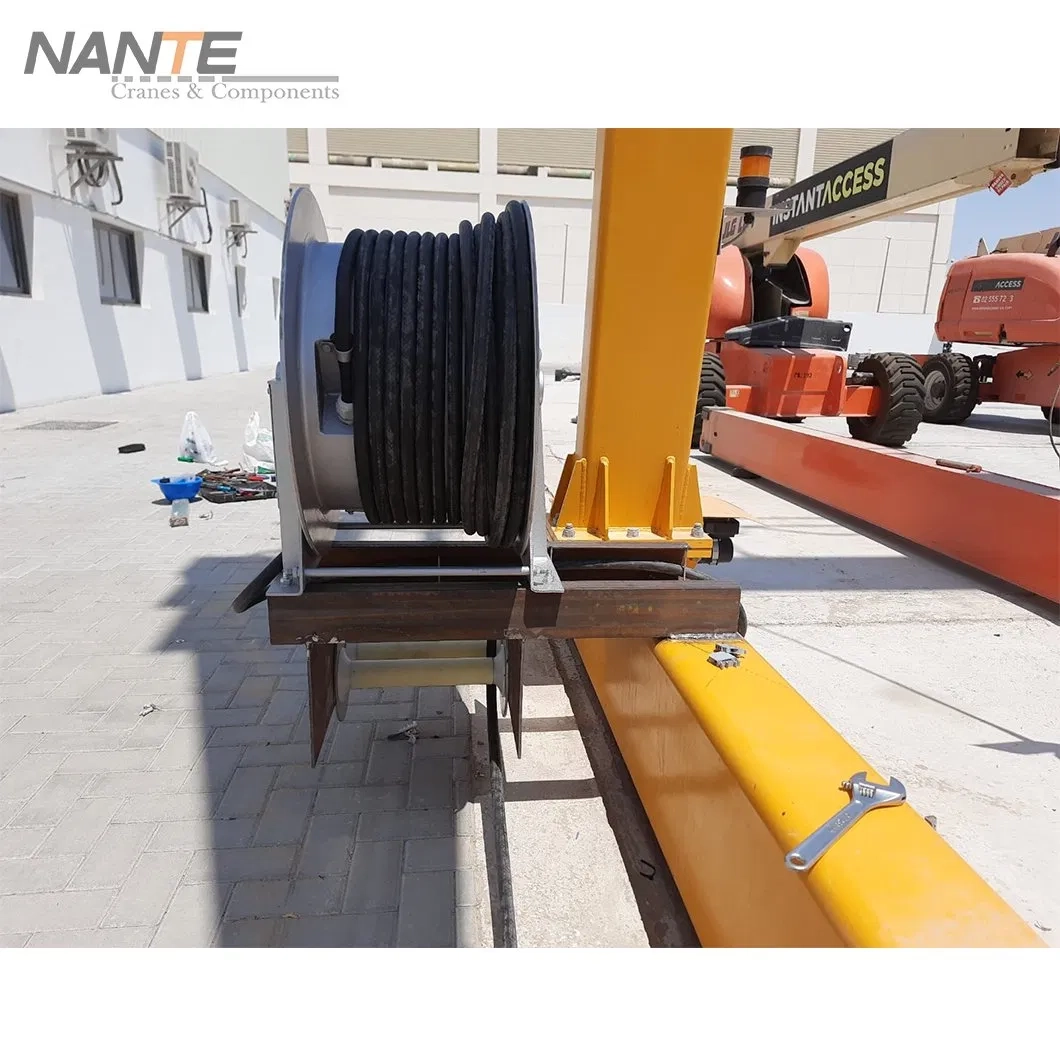
Spring crane cable reels (such as Nante’s SCR Series) work with pre-tensioned springs inside. These springs create pull-back force. When the crane moves, the cable goes out against the spring’s torque. When direction changes, the spring winds it back on its own. Important parts include a clutch-type gearbox. It slips if overloaded to control torque and protect pieces. There is also a time delay switch. It keeps winding for a bit after stopping to remove slack. High-strength nylon or steel pulley guiders help the cable track smoothly. Special clamps hold and guard the cable end.
This full mechanical setup matches crane speed without any outside power.
Advantages of Spring Cable Reels
Simple build with few parts lowers starting costs and makes things less complex.
No power used for the drive means better efficiency.
Less need for upkeep since fewer electrical items require checks.
Small and light design makes installation easy in tight spots.
Steady work for currents up to ~100A. This fits moderate power use without extra features.
These points make spring reels a cheap and trustworthy pick for usual light-to-medium jobs.
Typical Use Cases
Spring crane cable reels do well in light-duty spots. They fit single girder overhead cranes and single girder gantry cranes. These often have shorter paths and lower current needs. Vertical power in launching cranes or assembly areas gains from their easy setup. In indoor workshops or places with normal duty cycles, they give reliable and low-upkeep performance.
Motorized Cable Reel: When You Need More Power
What Is a Motorized Cable Reel
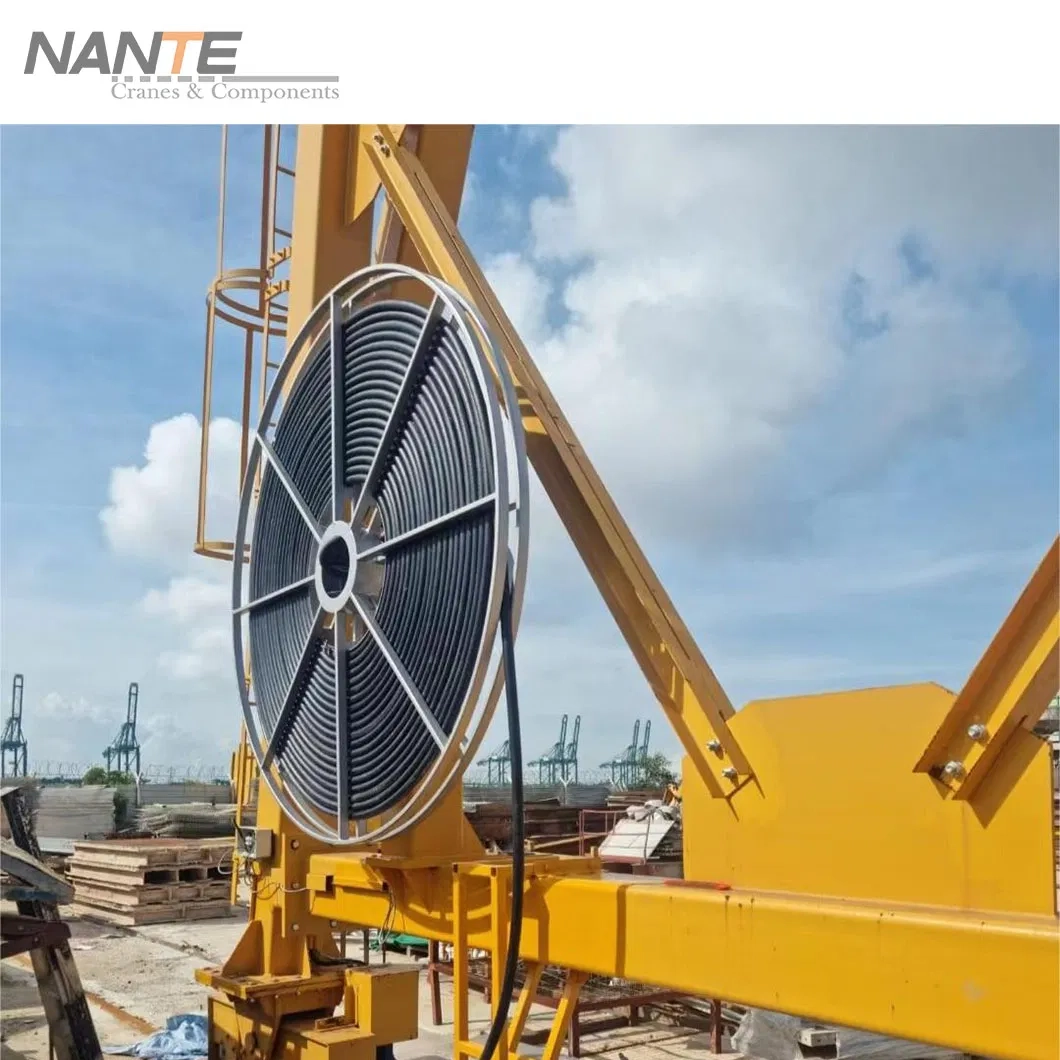
Motorized crane cable reels (such as Nante’s MCR Series) include an electric motor. It often comes from top suppliers with IP55 protection and F-class insulation. This gives controlled payout and retraction. They keep main features like clutch gearboxes for torque control, time delay switches against slack, strong guiders, and protective clamps. They handle both round and flat cables. Electric cabinets use IP55-rated Schneider components that meet IEC standards.
The motor drive allows exact matching and stronger torque.
Benefits of Motorized Reels
Handles heavier loads, longer travel, and higher currents up to ~630A.
Better tension control stops sag. This keeps power stable in high-cycle work.
Steady results no matter the speed or direction changes.
Stronger build for rough places with dust, water, or extreme temperatures.
Flexible for tricky movements that need constant high-power supply.
Motorized reels offer the toughness needed for heavy industrial tasks.
Best Applications
Motorized crane cable reels lead in heavy-duty cases. Examples include double girder gantry cranes at big sites. They support long horizontal or vertical travel in warehouses, construction areas, or high-load factories. For cranes with heavy duty cycles or outdoor use, motorized choices give dependable high-capacity power.
Spring vs Motorized: Side-by-Side Comparison
| Feature | Spring Cable Reel | Motorized Cable Reel |
| Drive Mechanism | Internal pre-tensioned spring | Electric motor with gearbox |
| Max Current Capacity | Up to ~100A | Up to ~630A |
| Travel Distance | Shorter to moderate (e.g., <30-50m typical) | Longer distances (extended spans) |
| Load Suitability | Light to medium duty | Medium to heavy duty |
| Maintenance | Low (mechanical focus) | Medium (motor, electrical inspections) |
| Cost | Lower initial investment | Higher upfront due to motor/electronics |
| Energy Use | None for drive | Requires motor power |
| Typical Cranes | Single girder overhead/gantry | Double girder gantry/overhead |
| Torque/Tension Control | Spring torque curve, clutch slip | Motor-driven precision, adjustable |
Spring reels focus on simple design and low cost but limit to lighter needs. Motorized reels shine in power and distance, yet add some complexity. Weigh these against the crane’s daily work.
How to Choose the Right Cable Reel for Your Crane
Picking the best crane cable reel means matching specs to actual needs.
Match Power Requirements
Check current, voltage, and phase demands. Loads under 100A work well with spring crane cable reels for good efficiency. Higher loads (100A–630A) call for motorized reels to keep steady power without drops.
Match Travel Distance
Short-to-moderate distances fit spring types. This lowers sag chances. Longer paths (>50-100m typical) need motorized reels for even tension and solid extension/retraction.
Environment/Work Conditions
Look at IP ratings (often IP55 standard) for dust, moisture, or outdoor settings. Think about duty cycle (CMAA classification), temperature around, and crane kind—overhead for accurate indoor work, gantry for tough flexible use. Rough conditions might need custom multi-drum designs or better motors.
Additional Technical Factors: Cable Type and Reel Sizing
Pick round cables for both kinds. Flat cables fit motorized reels for tight spooling. Make sure drum diameter follows bending radius rules (e.g., ≥10-12.5× cable OD). This stops conductor fatigue. Consider synchronization speed (e.g., frequency control for >60m/min travel) and tensile limits (≤15-20N/mm² on conductors).
Installation & Maintenance Tips
Good setup and regular care make the reel last much longer.
Mount it with exact alignment. This gives even tension and stops binding.
Confirm cable specs match reel limits. Tighten connections well.
Run full extension/retraction tests before starting work.
Check cables each month for fraying, kinks, jacket damage, or rust.
Clean guiders and clamps often to clear dirt.
For spring reels: Check spring tension and wear now and then.
For motorized reels: Grease motor/gearbox, look at electrical links, test motor.
Schedule: Daily quick looks, monthly close checks, quarterly full service.
Regular steps cut risks like cable jams, spring wear, or motor problems.
FAQ: Common Crane Cable Reel Questions
What is a spring crane cable reel?
A mechanical tension setup that uses springs for auto retraction. It suits lighter jobs with little upkeep.
What is the main difference in spring vs motorized cable reel?
Spring relies on passive torque (simpler, cheaper, lower capacity). Motorized uses active drive (more power, longer travel, better control).
How long can a cable be on a crane cable reel?
Spring types manage shorter-to-moderate lengths. Motorized handles much longer ones without losing tension.
Can you upgrade a spring crane cable reel to motorized?
Often possible with checks for fit—review specs for structure and electrical changes.
Which is better for gantry cranes: spring or motorized?
Motorized for double girder or long-travel setups. Spring for single girder or shorter spans.
What affects crane cable reel lifespan?
Duty cycle, weather exposure, tension control, how often maintenance happens, and how well cable and reel match.
What are common failure modes?
Cable wear or fraying, spring fatigue (in spring types), motor or gearbox troubles (in motorized), misalignment that leads to jams.
Ready to Select the Perfect Crane Cable Reel?
Nante Crane specializes in high-quality crane components, including reliable spring (SCR Series) and motorized (MCR Series) crane cable reels designed for safety, durability, and various crane applications like overhead, gantry, and more. Contact Nante Crane today for expert guidance on your power supply needs and customized solutions. Visit our site or reach out via contact-us for details.