English


What Determines Paper Mill Crane Requirements?
Date: 2026-11-20 Share:
Paper mill crane requirements come from the loads, the hook path, how often the crane moves, and what it encounters along the runway. A parent reel transfer may set the cycle time, a press roll change may set the capacity and clearance, and a steam plume near the wet end may set the protection requirements.
Start with a lift register for each crane bay. List the normal production moves, planned shutdown lifts, and credible backup assignments separately. That gives engineering and purchasing a common basis for deciding what each crane must do and what suppliers must demonstrate.
What Must an Overhead Crane for Paper Mill Operations Reach?
Map the Parent Reel Transfer at the Dry End
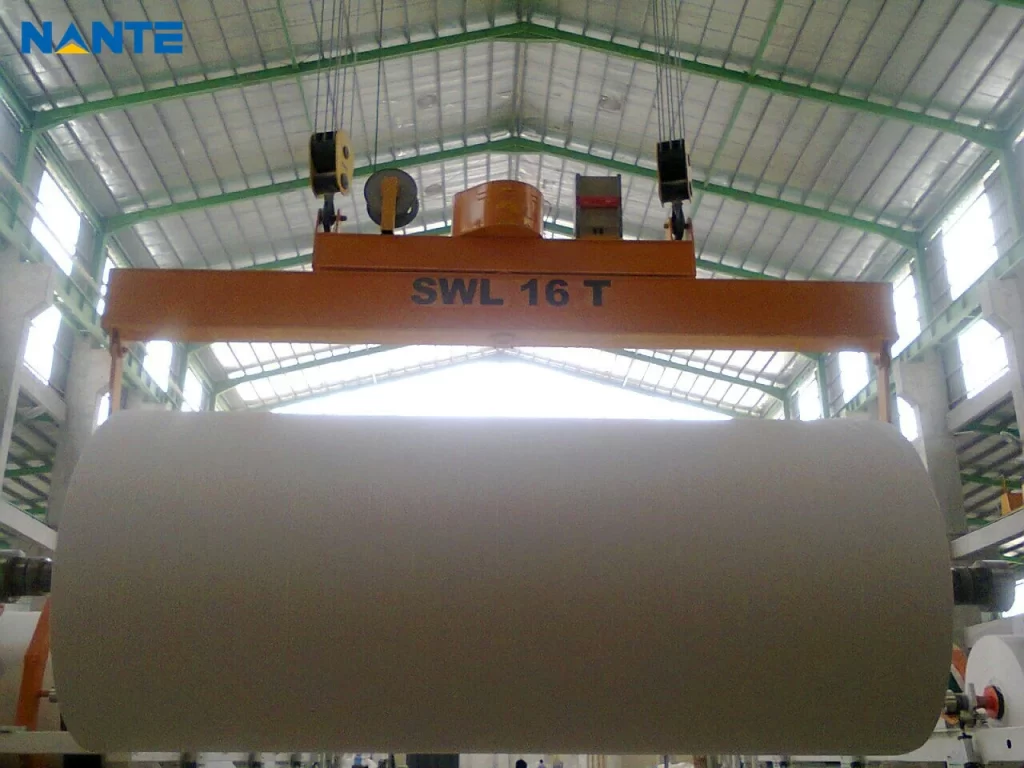
A parent reel is the large roll wound at the paper machine before the sheet goes to a winder for conversion into smaller rolls. Map the loaded move from the reel stand to the winder or staging saddle, then map the empty spool return. Give suppliers the pickup and setdown elevations, roll length and diameter range, shaft geometry, and any surfaces the lifting device must avoid.
State the permitted transfer time and the alignment tolerance at the receiving saddle. A variable frequency drive can shape acceleration and deceleration to limit swing, while slow final travel helps the operator line up the reel. Ask bidders to show how they will verify the complete cycle, including attachment engagement, settling, placement, and release.
If reels arrive faster than the winder can take them, identify where a full reel can wait and whether the crane must return an empty spool before the next transfer. Those details help buyers judge whether the bottleneck is crane motion, attachment handling, or a lack of staging space.
Draw the Maintenance Removal Path
Use the press roll or dryer cylinder removal drawing for the most restrictive shutdown lift. Trace the component from its installed position to the laydown stand or roll cart. Mark hood sections, guards, piping, platforms, and any parts that must come out first. A hook can reach the pickup point while the suspended assembly still cannot clear the machine.
Request plan and elevation drawings showing the highest usable hook position, the closest approach to each end of travel, and clearance with the actual lifting device fitted. On a retrofit, give the structural engineer the proposed wheel loads and verify runway capacity, rail condition, and the space needed to service the trolley.
How Does a Paper Mill Crane Duty Cycle Change the Specification?
Rated capacity tells the buyer how much the crane is designed to lift. The service classification reflects how hard it is expected to work over its design life. The same rated load can apply to a crane that changes a press roll during a shutdown and one that feeds a winder repeatedly through several shifts.
Give bidders the load spectrum: how many moves involve full reels, partial reels, empty spools, maintenance loads, and empty hooks. Record typical and peak moves per hour, hoisting and travel distances, and operating hours. Frequent starts and short moves can affect motor heating, while repeated loading affects structural and mechanical fatigue. Peak activity during a grade change or outage can be missed in a shift average.
Ask bidders to name the classification basis for the bridge and the hoist, show the load and cycle assumptions, and state any limits on starts, running time, or ambient temperature. A crane for the pulp and paper industry should be classified from its assigned work. The mill’s operating schedule alone does not establish crane duty.
If the wet-end crane is expected to back up the dry-end crane, define how often that would happen, how long it might last, and what transfer rate the mill can accept in backup mode. Include the backup moves in the duty estimate and confirm that the crane can reach both stations with the correct attachment.
How Do Moisture and Corrosion Affect a Pulp and Paper Crane?
Survey Exposure at Crane Height
Record conditions where the bridge, trolley, and controls actually operate and where they park. Above the wet end, steam may condense on cooler surfaces when production stops. A section of the runway beside a washdown area may see direct spray, while another bay may mainly expose equipment to airborne fiber. Include temperature changes, cleaning frequency, and any chemicals present.
Turn that survey into separate requirements for structural steel, mechanical components, and electrical equipment. For the structure, specify surface preparation, coating layers, and how dry film thickness will be verified. For rope, brakes, fasteners, bearings, and connectors, ask for material and protection details that match the exposure and can be inspected in service.
Specify Ingress Protection and Condensation Control Separately
An IP rating describes enclosure protection against the ingress of solids and water under defined conditions. Ask separately how the installed assembly handles condensation and chemical exposure. A cabinet can remain closed while humid air inside condenses during a cooldown. Confirm protection at cable entries and connectors and ask whether enclosure heaters or another condensation control method are proposed.
This crane corrosion protection guide explains how to document coating preparation and inspection. For an indoor paper machine bay, base the system on the mill’s exposure survey and confirm which parts the coating specification covers.
Specify Paper Mill Lifting Equipment as a Complete System
Match the Attachment to the Load
A shaft-engaging reel lifter and a device that grips a finished roll are designed for different contact points. Use the machine or roll supplier’s approved handling details to specify where the load can be supported, its center of gravity, its orientation, and how engagement or release will be verified. If the roll must turn before setdown, include the clearance swept by both the roll and attachment.
Include the weight of the lifting beam, hook attachment, and rigging carried by the crane in the load case. For a two-hoist design, require the supplier to state allowable combined loading, load sharing, and how the controls keep the pick points coordinated. Two hoist ratings cannot be added without checking the approved load case.
Compare the Bridge, Hoist, and Site Interfaces Together
The double-girder overhead crane with hoist and NHA series wire rope hoist show examples of bridge and hoisting equipment. Compare the assembled proposals at the same hook positions and under the same duty and environmental assumptions. A compact hoist can improve clearance, but the drawing still needs to show access for rope and brake service.
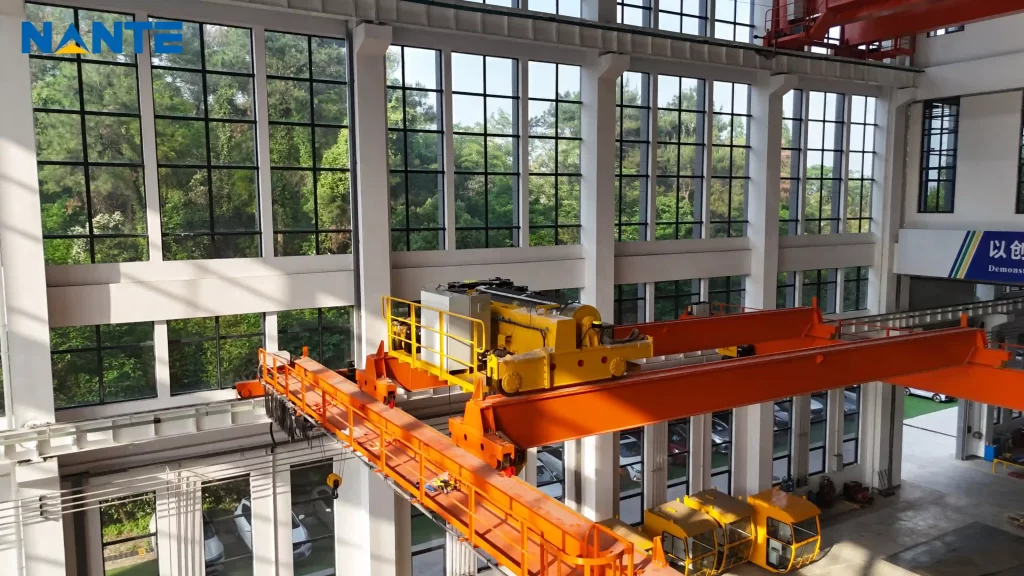
Nante Crane offers crane design and manufacturing. Its paper mill crane application guide provides an overview of common uses. For a bid review, use the same acceptance criteria for every supplier:
| What the mill provides | What the quote should return |
| Reel sizes, pickup and setdown points, and transfer time | Lifter interface drawing and a plan to demonstrate the transfer cycle |
| Shutdown load, rigging, and the route to the laydown stand | Hook coverage and clearance drawings plus runway wheel loads |
| Load spectrum, peak starts, and operating hours | Crane and hoist classification basis with key assumptions |
| Steam, washdown, and chemical exposure by bay | Component protection schedule, coating details, and inspection records required |
Clarify who supplies runway modifications, site power connections, installation, and commissioning. Agree on factory checks and site tests before ordering. If a factory test cannot reproduce the actual winder handoff, put that acceptance check in the site test plan. Request operating and maintenance manuals, service access details, and a critical spares list at handover.
Separate base scope from options such as powered rotation, synchronized hoisting, or automatic positioning. Require each option to identify the lift it serves and the acceptance criterion it changes. That makes it possible to compare a simpler proposal with a more automated one without assuming both can handle the same production sequence.
Frequently Asked Questions
Can One Paper Mill Crane Serve Production and Maintenance?
Yes, if the crane can meet both duties and reach both work areas with the required attachments. Check whether the crane must keep feeding the winder while maintenance needs the same runway. If the jobs conflict, quote a separate service hoist or another backup arrangement and compare the effects on production and outage access.
Which US Requirements Should a Reel Handling Specification Address?
Confirm the applicability of OSHA 29 CFR 1910.179 for the crane and 29 CFR 1910.261 for pulp, paper, and paperboard mill operations. The latter requires reels to stop rotating before they are lifted from their bearings. Document the crane-to-machine handoff and ask the project team to identify the applicable ASME B30 requirements for the lifting device.
Request a Paper Mill Crane Proposal Based on Actual Lifts
Plant engineers and purchasing teams can share a bay layout, the heaviest suspended load, the reel transfer rate, and the wet-end or washdown conditions. For retrofits, include the runway span, available hook height, and target outage window if known. To have Nante Crane review the proposed configuration and flag missing specification inputs, submit the paper mill crane project brief.