English


Understanding the Specifications of a 10-Ton Overhead Crane: A Comprehensive Guide
Understanding the Specifications of a 10-Ton Overhead Crane A Comprehensive Guide
Date: 2026-05-15 Share:
A 10 ton overhead crane acts as a steady bridge-style lift setup often found in factory buildings. This gear easily deals with weights up to 10,000 kg. It shifts items side to side and up and down in plants and storage areas. The 10 ton overhead crane specification usually lists main details like weight hold, lift level, width, rates, and work level. These points make sure safe and useful item moving in making, shipping, and big factory spots.
What Is a 10 Ton Overhead Crane?
10 Ton Overhead Crane Definition and Working Principle
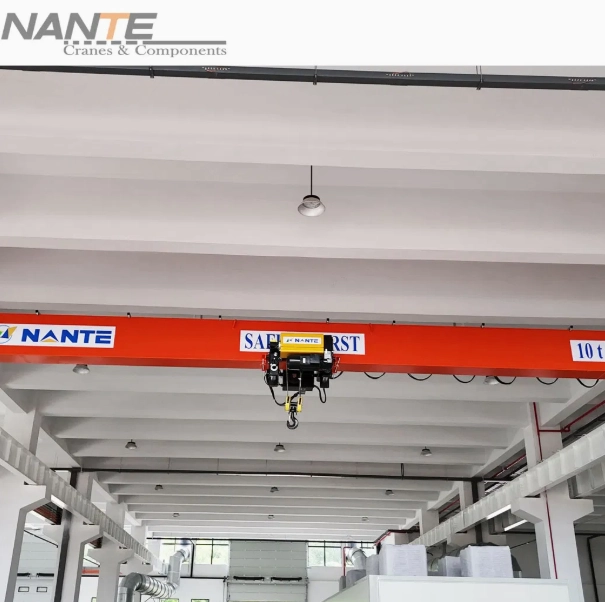
A 10 ton overhead crane, also called a bridge crane, stands as an upper lift tool built to pick up and carry weights up to 10 tons. The crane runs on raised track beams set along a structure’s length. Its work way depends on three matched actions. First, the bridge goes long ways along the track. Next, the trolley shifts side ways along the bridge. Then, the hoist raises or drops the weight straight up.
How a 10 Ton Overhead Crane Operates in Factories and Warehouses
In factories, a 10 ton overhead crane shifts basic items to make lines or done goods to ship spots. Warehouses use the crane to stack boxes, fill trucks, or get kept items from tall shelves. The crane does even, guided moves that cut weight sway and boost work flow. Workers gain from good sight and easy grips in day-to-day tasks.
Key Specifications of a 10 Ton Overhead Crane
10 Ton Overhead Crane Load Capacity Explanation (10,000 kg)
The weight hold of a 10 ton overhead crane hits 10,000 kg or about 22,000 pounds. This mark has a built-in safety edge. It often calls for test weights at 125% of the set hold during start-up. The detail fits fair to big item moving, like shifting machine parts, steel rolls, or gear groups in factory spots. Going over this point turns on guard setups to stop mishaps.
Lifting Height Range of a 10 Ton Overhead Crane (6m to 20m)
Lift height sets the up distance from the ground to the top hook spot. Usual ranges for a 10 ton overhead crane sit between 6 meters and 20 meters. Custom picks work based on structure room. Bigger lift heights help tall storage or spots with large weights. Right pick makes sure enough under-hook area. At the same time, it avoids clash with roof parts or lights.
Crane Span Specification and Working Coverage Area
Crane width checks the space between the middle lines of the track rails. It usually goes from 7.5 meters to 31.5 meters for 10 ton types. A bigger width grows the reach area. But it needs firmer track holds and structure parts. The detail right shapes how much ground the crane can cover well in one space.
Hoist and Trolley System Specification for Overhead Crane
The hoist and trolley make the main lift and side move unit. Hoists manage the up weight with holds matched to 10 tons. Trolleys give side shift at set rates. Details often add change rate drives for even speed-up and exact stops. These cut down use and boost spot accuracy in full factory spots.
Crane Speed: Lifting, Traveling, and Trolley Speed Parameters
Rates hold a big part in output. Usual lift rates go from 0.8 to 8 m/min. Dual-rate picks work for close check. Bridge travel rates often hit 20 to 60 m/min. Trolley rates sit between 20 and 40 m/min. These points let workers match rate with safety. This proves key when dealing with breakable or big weights in tight factory rooms.
Duty Classification A3, A5, A6, A7 Meaning in Crane Usage
Work level shows how hard the crane runs. A3 marks light work with rare use and low weight mix. A5 fits fair work in basic making with okay daily time. A6 and A7 handle big and very big work for steady or high-rate runs in steel spots or ship builds. Pick rests on average weight, daily run time, and lift count per hour. Bigger levels need stouter parts for longer use life.
Main Components of a 10 Ton Overhead Crane
Electric Hoist Structure: Wire Rope vs Chain Hoist Comparison
The electric hoist acts as the top lift tool. Wire rope hoists give fine last and bigger lift rates. They suit 10 ton holds and common use. These handle greater levels and give even work over long ways. Chain hoists fit better for light close jobs. But they may hold back work at 10 tons. Wire rope builds often bring better last in tough factory uses.
Bridge Beam, End Carriage, and Runway System Explanation
The bridge beam makes the side structure. It comes in box or beam shapes for power. End carriages hold the bridge and roll even on track rails. The track setup has side-by-side beams fixed to structure posts or roof. As one, these parts make sure steady, low-rub move. They also spread weights even to the structure.
Crane Control System: Pendant vs Remote Control vs Cabin
Check picks change by use. Pendant checks give plain, cheap work from the ground. Remote checks bring no-wire ease and better safety. They let workers keep space from the weight. Cabin checks fit high-work or long-width cranes. Here, the worker gets raised sight and ease in long shifts.
Power Supply System for Three-Phase Industrial Crane Power
Most 10 ton overhead cranes need three-phase factory power. This often runs at 380V or 400V with 50/60 Hz. Power send setups cover festoon cables, shut guide rails, or cable rolls. These keep steady power to motors and checks. They also fit the crane’s full move range without knots or breaks.
Types of 10 Ton Overhead Cranes
Single Girder 10 Ton Overhead Crane Features and Usage
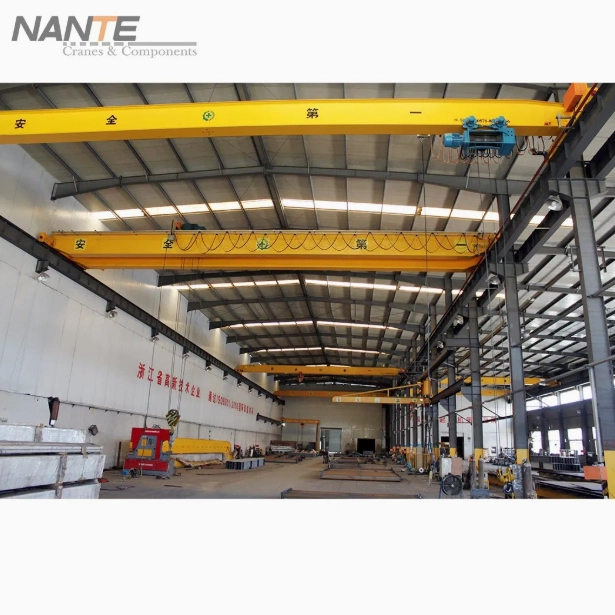
A single girder 10 ton overhead crane has one main bridge beam. The hoist trolley runs under it. This build gives less weight, lower price, and simple setup. It works well in shops with small up room or fair widths up to about 25 meters. Spots with light to fair work cycles often pick this type for good item moving.
Double Girder 10 Ton Overhead Crane Heavy Duty Applications
Double girder types use two side beams. They bring more steady, bigger lift levels, and longer width picks. The trolley goes on top of the beams. This boosts hook reach and lets add of paths or extra parts. Big-work shops, steel make shops, and high-rate runs gain from the better power and work of double girder builds.
Explosion Proof Overhead Crane for Hazardous Environment
Blast proof types add special shut motors, covers, and power parts. These run safe in burnable or blast air. Such cranes meet tight certs for chemical spots, paint shops, or gas deal spots. They keep full 10 ton lift power.
Applications of 10 Ton Overhead Crane
Factory and Manufacturing Plant Material Handling Solution
Making plants count on 10 ton overhead cranes to shift parts along build lines. They place big machines or move items between work spots. The crane makes work flow smooth. It also cuts wait time linked to truck jams.
Warehouse Logistics and Storage Lifting Operations
Warehouses use the crane to fill and empty trucks. They stack big boxes and sort stock in tall shelves. Good up and side move makes storage tight. It also speeds order fill.
Construction and Steel Industry Crane Application
In build and steel make, the crane deals with frame beams, pre-made parts, or raw steel hold. It backs exact place on work sites or in make shops. Here, right spot and power count.
Shipyard and Heavy Equipment Maintenance Usage
Ship builds and fix spots use 10 ton overhead cranes to lift motors, ship parts, or fix gear. The crane gives firm back in build, take-apart, and service of large machines.
How to Choose the Right 10 Ton Overhead Crane
How to Select Crane Span and Lifting Height Correctly
Check the needed reach area and top weight sizes first. Pick a width that fits the space size. Allow good side rooms too. Lift height must cover hook reach, weight level, and any up blocks. This makes sure full work ease.
Choosing Duty Class Based on Working Frequency
Check daily run hours, average weight part, and lift count. Light or rare use fits A3 or A4 levels. Steady make lines often need A5. Constant big runs call for A6 or A7 for last and less fix.
Environment Factors: Indoor, Outdoor, Hazardous Area Selection
Inside cranes work in set terms with basic guard. Outside types need weather hold against rain, wind, and heat swings. Danger spots ask for blast-proof builds and right power marks. These match safety rules.
Partner with Nante Crane for Reliable Overhead Crane Solutions
Nante Crane stands as a professional manufacturer with extensive experience in overhead cranes and crane components. The company offers single girder and double girder models suitable for 10-ton capacities, along with high-quality hoists, trolleys, end carriages, and safety systems. Nante provides custom design options and comprehensive support for factories, warehouses, and industrial lifting projects worldwide. Contact Nante Crane for expert guidance on selecting and implementing the right 10 ton overhead crane solution.