English



Top Applications of Bridge Gantry Cranes in Construction Projects
Top Applications of Bridge Gantry Cranes in Construction Projects
Date: 2026-04-24 Share:
Bridge gantry cranes act as key equipment in modern infrastructure work. These special cranes give strong lifting help for bridge building with good accuracy and speed. Engineers and project managers depend on bridge gantry crane uses to manage precast segments, full spans, and complex structures in a safe way. At the same time, they cut down on labor at the site and shorten the overall schedule.
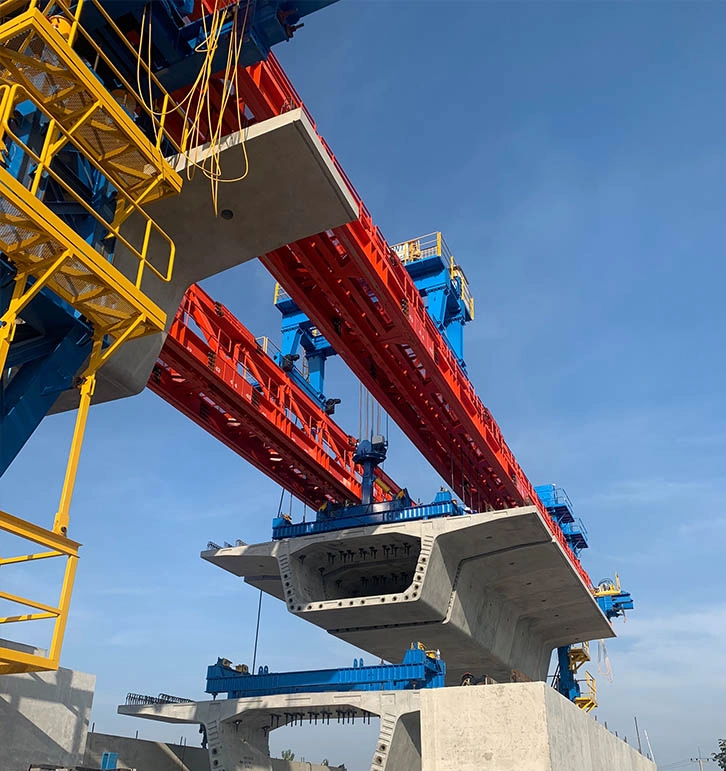
Bridge Gantry Cranes in Segmental Bridge Construction
Segmental bridge construction splits bridge decks into precast concrete segments. Workers then put them together at the site. Bridge gantry cranes do well in this approach. They offer exact placement of segments that weigh tens to hundreds of tons. The cranes travel along the partly finished structure or work from piers. In this way, they limit ground disruption.
Project teams pick gantry crane for segmental bridge construction in city zones and areas sensitive to the environment. The approach backs span-by-span or balanced cantilever erection. It also lets traffic move below without stops.
Precision Handling of Precast Concrete Segments
Bridge gantry cranes reach millimeter-level accuracy as they lift and set precast concrete segments. Operators rely on advanced control systems and spreader beams. These tools help align segments exactly before post-tensioning. Such accuracy keeps the structure strong and cuts the need for rework.
Main gains include fewer manual fixes during setup, steady alignment among many segments, and good fit for curved or sloped bridge lines.
Gantry crane for precast segment installation manages segments well in high-speed rail or highway projects. There, tolerances stay tight. The cranes back overhead erection. This avoids clashes with current infrastructure.
Benefits of Gantry Cranes in Urban Bridge Projects
Mobile gantry crane for urban construction sites works in tight spaces. It needs no large ground support. Compact designs let the cranes move through narrow turns and multi-level interchanges. They erect ramps or viaducts from above.
Gains cover little use of ground space, quicker erection speeds than old methods, and better safety from overhead work.
Compact gantry crane for limited space projects lowers upset in cities. It aids sustainable building ways. The cranes help keep traffic moving and reduce noise and dust in busy zones.
Full-Span Bridge Launching Applications
Full-span bridge erection lifts whole precast spans. These can weigh up to 900 tons and stretch 20–50 meters long. Bridge gantry cranes, often set as launching gantries here, place entire spans on piers in one step. This way speeds up construction a lot for long viaducts.
Gantry crane for full span bridge erection works great for high-speed rail corridors and raised highways. Quick progress counts in these spots. The method brings high-quality factory-cast spans with little finishing at the site.
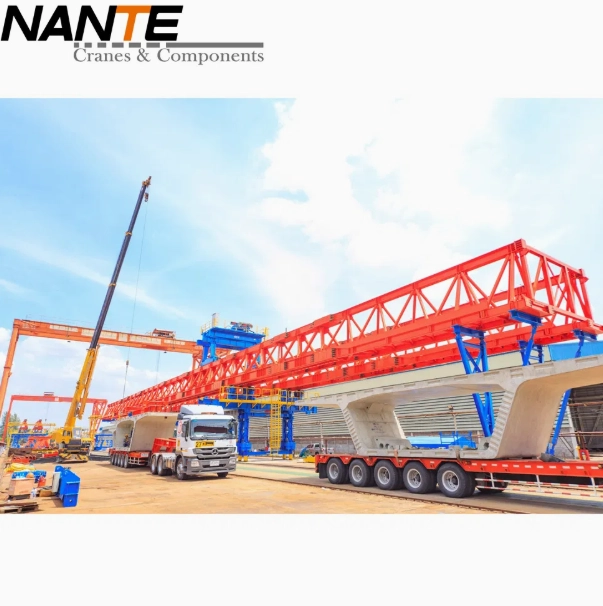 High-Capacity Lifting for Full Span Installation
Heavy lifting crane for 900 ton bridge segments uses strong truss or box-girder structures and several winch systems. The cranes raise precast spans brought by multi-axle transporters. They set them down with steady hydraulic or winch controls.
Common capacities include 700t–900t segmental launching cranes, lifting heights from 6 m to 50 m, and spans matched to project needs. The process allows erection of one full span in as little as 12 hours under good conditions.
This high-capacity work cuts the number of lifting cycles. It also shortens total project timelines. Project teams gain steady quality and face fewer delays from weather.
Multi-Crane Synchronization Technology
Synchronized gantry crane lifting systems link several lifting points. They keep heavy spans level during placement. Closed-loop hydraulic controls or electronic synchronization spread the load evenly. This prevents tilting.
Multi crane coordination bridge construction depends on real-time data sharing among cranes or trolleys. This technology aids safe handling of uneven or very long spans.
Synchronization lowers stress on the bridge structure at placement time. It also builds operator confidence in hard conditions.
Balanced Cantilever Construction with Gantry Cranes
Balanced cantilever construction builds bridges outward from piers in a balanced way. This controls uneven loads while work goes on. Bridge gantry cranes aid this method. They lift segments one after another while the structure stays steady.
Engineers choose these cranes for high piers or rough ground where access from below stays limited. The cranes work right on the finished deck or piers. This keeps stability through the whole process.
Engineering Challenges in Cantilever Construction
Challenges in balanced cantilever bridge construction include handling unbalanced moments, keeping stability as segments go in, and working at great heights. Gantry cranes solve these by giving controlled overhead lifting.
Lifting uneven loads with gantry cranes needs exact counterbalancing and matched controls. These keep the bridge deck level. The cranes help hold balance as the cantilever arms grow longer.
Synchronized Hydraulic Lifting Systems
Hydraulic synchronized lifting gantry crane gives controlled motion at several points. Operators change lift speeds and positions separately or together for exact segment placement.
Precision control in cantilever bridge lifting lowers stress on temporary supports. It also raises overall safety. The systems permit small adjustments that older equipment cannot provide.
Static vs Traveling Gantry Crane Systems
Static vs mobile gantry crane comparison aids project teams in picking the right setup. Static systems give fixed high-capacity support at piers. Traveling systems move forward along the bridge during construction.
Best gantry crane for cantilever bridge projects often mixes traveling features with hydraulic legs for self-launching ability. This flexibility fits different site conditions and bridge shapes.
Traveling systems cut setup time between spans. Static systems give top stability for the heaviest loads.
Modular & Precast Infrastructure Construction
Modular and precast methods move much of the work to off-site fabrication yards. Bridge gantry cranes then manage final assembly and setup at the site. This factory-style approach improves quality checks and shortens project schedules.
Gantry crane for modular bridge construction backs efficient transport and exact placement of prefabricated elements. The cranes fit well with casting yards and on-site erection steps.
Role of Gantry Cranes in Offsite Fabrication
Gantry cranes shift heavy precast elements inside casting yards and load them onto transporters. The cranes also help with storage and early quality checks before items reach the bridge site.
Precast infrastructure lifting solutions smooth logistics and lower crowding at the site. The cranes manage repeated lifts with steady accuracy.
High-Speed Rail & Viaduct Applications
Gantry crane for railway viaduct construction manages precast segments or full spans for raised high-speed rail lines. These jobs need tight tolerances and fast erection to hit strict timelines.
Precast segment installation high speed rail gains from overhead operations. These avoid clashes with current infrastructure or sensitive zones. The cranes support long viaduct sections with repeated precision.
BIM Integration with Gantry Crane Operations
BIM and gantry crane planning let teams model lifting sequences and spot possible clashes before actual work starts. Digital twin crane simulation construction shows load paths and crane moves in 3D.
This joining improves teamwork among design, fabrication, and erection groups. It leads to fewer mistakes and better workflows. BIM helps fine-tune crane paths and load orders for top efficiency.
Material Handling & Construction Site Logistics
Bridge gantry cranes improve daily material flow on big construction sites. They lift and move steel beams, precast elements, and other heavy parts with little manual help.
Gantry crane material handling construction site cuts delays and raises total output. The cranes adjust to both short-term and lasting yard layouts.
Heavy Material Transport on Construction Sites
Lifting steel beams and precast elements needs cranes with right capacities and reach. Heavy duty gantry cranes handle loads beyond what smaller gear can manage.
These uses reduce labor for manual handling by large amounts. They also speed material delivery to work areas. The cranes back just-in-time delivery plans.
Outdoor vs Indoor Gantry Crane Applications
Outdoor gantry crane for construction yards stands up to weather while giving mobility over open storage zones. Rubber-tyred or rail-mounted designs bring flexibility in large yards.
Indoor gantry crane material handling serves workshops or covered fabrication areas where exact, steady conditions matter. Both setups keep reliable work in different settings.
Single Girder vs Heavy Duty Gantry Crane Usage
Single girder gantry crane for light materials fits smaller parts or helper lifting tasks with capacities usually up to 20–63 tons. Heavy duty gantry crane for large infrastructure gives higher capacities for main bridge elements.
Project teams check load needs, span requirements, and site limits when they choose between these types. Nante Crane offers single girder gantry cranes (1-20t), double girder models with hoist (3.2-63t) or open winch (10-300t), and construction-focused segment lifters up to 1000t to match varied project demands.
Partner with Nante Crane for Your Next Bridge Project
Nante Crane specializes in designing and manufacturing high-quality gantry cranes and launching cranes tailored for demanding construction environments. The company offers a range of solutions including single girder and double girder gantry cranes, segmental launching cranes with capacities up to 900 tons or more through segment lifters, and custom components that support precision lifting and synchronized operations. With a focus on reliable performance, safety compliance, and project-specific customization, Nante Crane helps engineering teams achieve efficient and safe bridge construction outcomes. Contact Nante Crane today to discuss customized lifting solutions, capacity optimization, or project-specific crane selection for your infrastructure needs.
FAQ
What is the typical capacity of a bridge gantry crane used in segmental construction?
Bridge gantry cranes for segmental work commonly handle segments from 50 tons up to 900 tons or higher, depending on the specific launching gantry model and project requirements.
How do synchronized systems improve safety in full-span bridge erection?
Synchronized gantry crane lifting systems maintain level positioning of heavy loads, distribute forces evenly, and reduce the risk of tilting or structural stress during placement.