English



Power Supply in Overhead Cranes Energy Chains VS Festoons
Power Supply in Overhead Cranes Energy Chains VS Festoons
Date: 2026-03-20 Share:
In today’s industrial plants, a reliable overhead crane power supply keeps material handling safe and smooth with very little stoppage time. Two main power options stand out. One is the crane festoon system. The other is the crane energy chain. The crane festoon system hangs cables with trolleys that move on tracks. This setup gives flexible power as needed. Meanwhile, the crane energy chain relies on a closed and bendable carrier. It directs and guards cables through all movements. This detailed side-by-side look reviews their structure, results, and fit. It helps crane buyers, engineers, integrators, and maintenance crews pick the right overhead crane power supply for particular job needs.
What Is a Crane Festoon System?
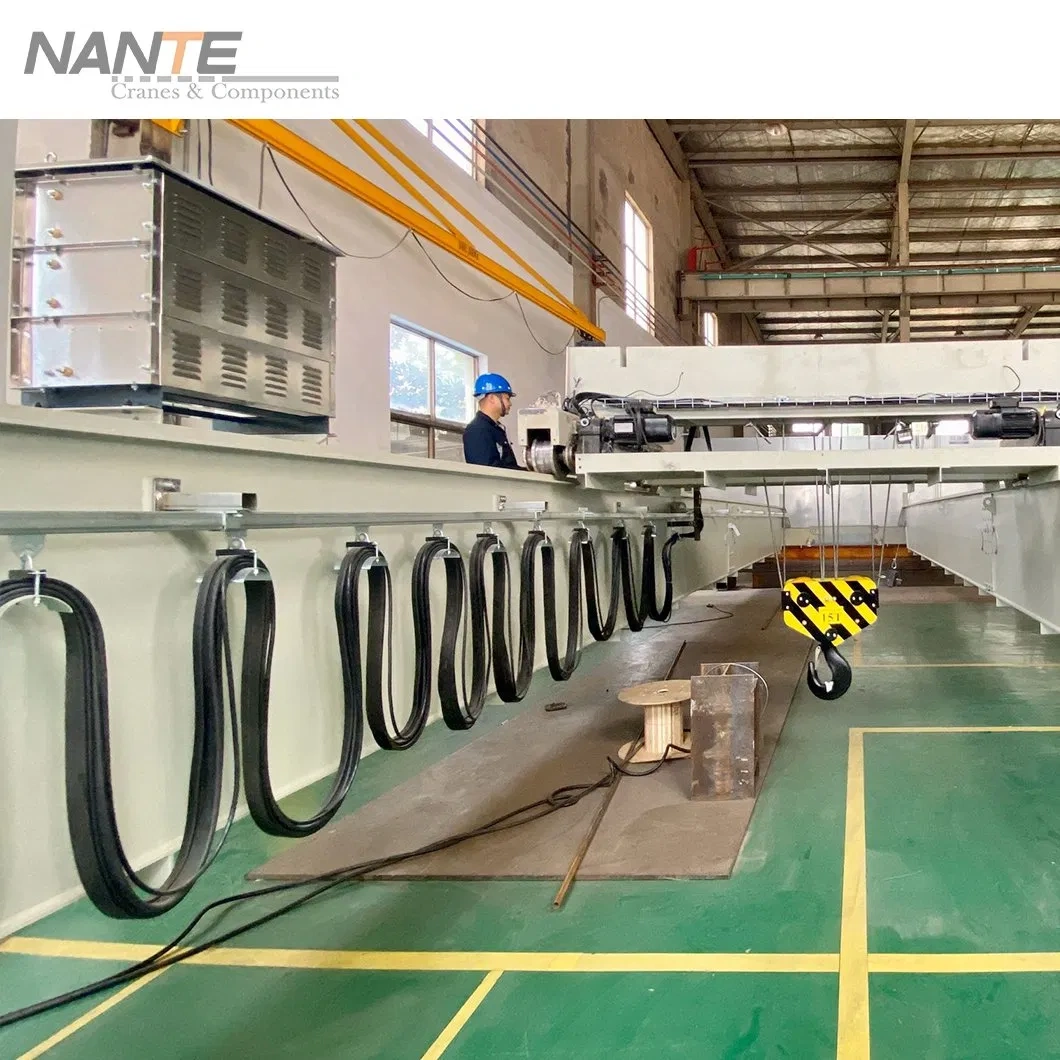
A crane festoon system delivers moving power. It uses hanging cables that travel with the crane along a special track. The cables create stretchable loops. These loops supply steady electricity to the hoist trolley and controls. The approach works well for side-to-side motion and average distances.
This way combines ease with dependability. It handles different cable kinds in many places.
Key Components of a Crane Festoon System
Festoon trolley: Carriers (steel for heavy loads up to 35kg or plastic for lighter 6kg applications) with wheels or bearings for smooth gliding.
Cable loops: Flat composite or round cables that stack neatly without twisting.
Track rail: C-track (galvanized for corrosion resistance), I-beam, square rail, or wire rope options.
Other parts include hangers, joiners, end brackets, and cable clips. These often come in galvanized or stainless steel. Stronger plastics improve strength in places with rust risks.
How a Crane Festoon System Supplies Power to Crane Trolleys
Cables connect to trolleys. The trolleys roll on the track. When the crane bridge or trolley moves forward, the trolleys move too. They stretch the loops and keep proper pull. When it pulls back, the cables fold like an accordion at rest. This keeps steady power going to hoists, controls, and extra functions.
Typical Applications of Crane Festoon Systems
Overhead cranes in warehouses and manufacturing plants.
Hoists needing organized power routing.
Warehouse lifting equipment and workstation jib cranes.
Gantry cranes (indoor/outdoor, moderate duty).
It performs strongly in dusty, wet, hot, or slightly rusty settings. It also works in explosion-proof versions when set up correctly.
Advantages and Disadvantages of Crane Festoon Systems
Advantages:
Simple, modular design for easy initial installation.
Low upfront cost, especially for light-to-medium duty.
Cables stack without twisting; trolleys handle multiple layers.
Hard-wired reliability in extreme temperatures or harsh conditions.
Customizable for basic or complex cable packages.
Disadvantages:
Exposed cables can swing, tangle, or catch on wind or junk.
Needs routine checks and oiling for trolleys, wheels, and bearings.
Big loop storage space cuts travel room in tight spots.
Cable damage speeds up during frequent cycles or long paths.
Build-up on lengthy runways shortens usable hoist and bridge reach at the ends.
What Is a Crane Energy Chain?
A crane energy chain (or cable carrier/drag chain) forms a bendable, fully covered shield. It usually comes from tough nylon. The system sorts and protects cables or hoses in active crane work. It stops twists, rubbing, and outside harm. At the same time, it allows quiet, strong motion.
Built for tough use, it carries power, signals, and liquid lines with trust.
How Crane Energy Chains Guide and Protect Moving Cables
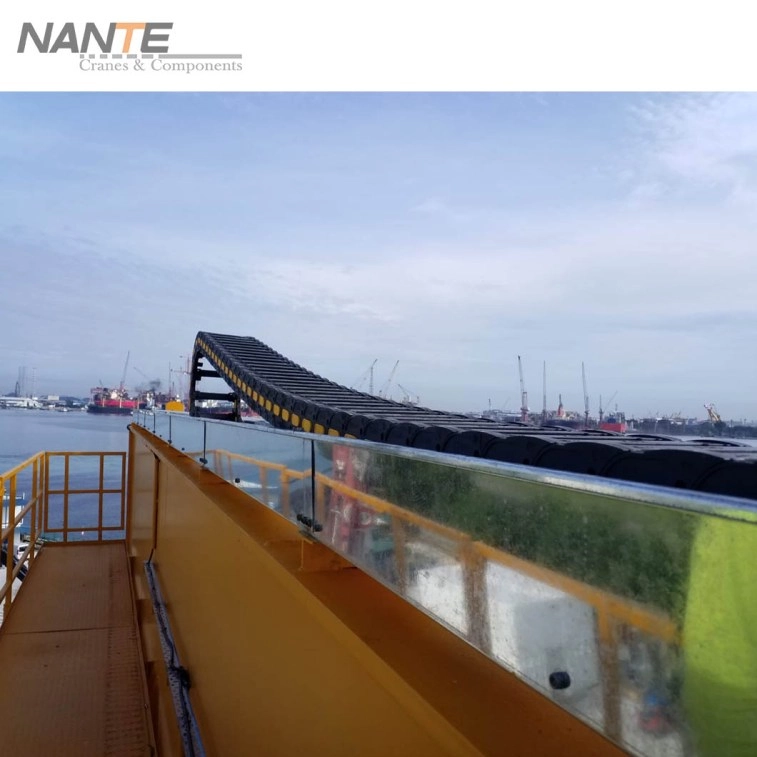
A set bend radius avoids too much curve harm. Inside dividers keep cables apart. This cuts down on rubbing and damage. Closed links block hits, dirt, dust, chemicals, sun rays, and bad weather. Strain relief holds everything tight.
Single cables swap out easily. Others stay untouched.
Installation of Crane Energy Chain Systems on Overhead Cranes
A guide trough fixes to the girder for straight backing. Cables pass through links that open. They link to the trolley. Chains filled ahead of time (with bearings for long paths) make setup simpler. The moving side fastens to the trolley. The fixed side attaches at the middle or end.
Types of Movements Supported by Crane Energy Chains
Horizontal travel over extended runways.
Vertical lifts in multi-axis setups.
High-speed, high-frequency crane motion with low noise.
Long unsupported lengths or gliding applications.
It manages straight, up-down, turning, and three-way routes very well.
Advantages and Disadvantages of Crane Energy Chains
Advantages:
Superior cable protection reduces damage/downtime.
~50% less cable length in center-mounted setups lowers weight/stress/costs.
Virtually maintenance-free (visual checks only).
Smaller operating window suits low-headroom/low-space applications.
Handles high speeds (>5-10 m/s), long travels (up to 800m+), and harsh environments.
Disadvantages:
Higher initial cost than basic festoon setups.
Requires precise trough/guide alignment during install.
Less common for very short, low-duty applications where simplicity prevails.
Energy Chain vs Festoon System: Key Differences in Overhead Crane Power Supply
These setups differ in main ways. The differences shape lasting results.
Cable Management and Protection
Festoon cables hang loose. They face risks from swing, twists, or junk in rough spots.
Energy chains cover and steer cables completely. They remove tangles. They also block rubbing, weather, and hits.
Space Requirements and Cable Length
Festoon calls for plenty of loop and parking room. This raises height needs and structure load.
Energy chain cuts cable use by ~50%. It lowers system height (~800mm). It also reduces steel needs (~10% less).
Maintenance and Service Life
Festoon calls for trolley and bearing oiling plus regular looks. Exposed pieces wear out faster.
Energy chain gives low-upkeep work. Tough materials bring longer life.
Speed and Travel Performance
Festoon fits short or medium paths and medium or low speeds. Droop and swing hold back better results.
Energy chain shines at high speeds, long distances, and active or heavy cycles.
When Should You Use a Crane Festoon System on Your Overhead Crane?
Crane festoon systems work nicely in easier cases.
Short Travel Distance Cranes
Practical for limited runways without excessive loop space issues.
Indoor Industrial Workshops
Cost-effective in controlled, moderate-duty environments.
Cost-Sensitive Projects
Lower initial investment and straightforward maintenance appeal to budget priorities.
When Is a Crane Energy Chain a Better Choice for Your Overhead Crane?
Crane energy chains do better in tough spots.
Long Travel Gantry Cranes
Minimizes cable stress over extended distances.
High-Speed Automated Cranes
Supports rapid, precise, frequent movements reliably.
Harsh Outdoor Environments
Withstands debris, wind, extreme temperatures (-40°C to +110°C), chemicals, and dust.
How to Choose the Right Power Supply System for Your Overhead Crane
Check job needs in a clear way.
Travel Length and Crane Speed
Short/medium + low/medium speed → festoon; long + high speed → energy chain.
Installation Space
Restricted headroom favors energy chain’s compact design.
Maintenance Requirements
Minimal upkeep priority → energy chain; tolerable regular checks → festoon.
Total Lifecycle Cost
Balance upfront expense against cable savings, reduced downtime, lower repairs, and longer service life.
Selecting the appropriate overhead crane power supply boosts safety, efficiency, and ROI.
Ready to Upgrade Your Overhead Crane Power Supply?
Nante Crane is a leading manufacturer with over 30 years of experience, specializing in overhead cranes, gantry cranes, and high-quality crane components including festoon systems and cable energy chains. Offering customized, safe, efficient solutions for global industries, Nante Crane delivers reliable electrification for demanding applications. Contact us today for expert advice on selecting the best overhead crane power supply system for your needs.
FAQ
What is the main difference between crane festoon system and crane energy chain?
Festoon relies on hanging cables/trolleys for simpler, cost-effective power; energy chain encloses cables for enhanced protection/performance in dynamic/harsh conditions.
Which is better for outdoor overhead cranes?
Energy chain, offering superior shielding from weather, debris, wind, and extremes.
How much cable can energy chain save compared to festoon?
Center-mounted energy chain typically uses about 50% less cable length, reducing weight and costs.
Is festoon suitable for high-speed cranes?
Limited—best for medium/low speeds; energy chain handles high speeds more reliably with less wear.