English



Overhead Crane vs Gantry Crane Which Is Best for Your Workshop
Overhead Crane vs Gantry Crane Which Is Best for Your Workshop
Date: 2026-07-10 Share:
Overhead Crane vs Gantry Crane is one of the most important decisions when choosing a workshop crane. The right choice depends on your factory structure, available floor space, lifting capacity, span, hook height, workflow, and future expansion plan. In some workshops, a workstation crane or jib crane may even be a better fit than a full overhead or gantry system.
This guide helps you match different crane types to real workshop conditions, so you can choose equipment that supports safe, efficient, and cost-effective material handling.
Decision Tree: How to Choose the Right Workshop Crane
Use this decision tree before requesting a quote:
Start
│
├─ Does your workshop have engineered runway beams or crane-supporting columns?
│ │
│ ├─ Yes → Consider an overhead crane.
│ │ │
│ │ ├─ Light to medium load and moderate span?
│ │ │ → Single girder overhead crane.
│ │ │
│ │ └─ Heavy load, wide span, or higher hook height?
│ │ → Double girder overhead crane.
│ │
│ └─ No → Can the floor support crane rails, legs, or wheel movement?
│ │
│ ├─ Yes → Consider a gantry crane.
│ │ │
│ │ ├─ Flexible indoor or outdoor lifting?
│ │ │ → Single girder gantry crane or mobile gantry crane.
│ │ │
│ │ └─ Heavy-duty or large-span lifting?
│ │ → Double girder gantry crane.
│ │
│ └─ No → Is lifting limited to one machine or work cell?
│ │
│ ├─ Yes → Consider a jib crane.
│ │
│ └─ No → For light repetitive handling, consider a workstation crane.
Key Workshop Conditions That Determine Crane Selection
Building Structure and Support
First, can your building support the weight of the new crane? Overhead cranes require runway beams, columns or structural support within the building. Gantry cranes on the other hand have legs that are supported by the ground and thus do not rely as heavily on the building’s structure.
This is particularly important for older buildings such as old factories as well as rented workshops, temporary production facilities and buildings without corbels. The rated load of the crane must not exceed the structural load bearing capacity of the supporting structure.
Floor Space and Obstructions
Overhead cranes keep the lifting system above the work area thus saving floor space for other machines, personnel, forklifts and production flow.
A gantry crane needs space for its legs, for the rails or for the wheels. That can be very practical, however, the travel path must remain clear.
A jib crane or workstation crane is better for a part of the workshop.
Capacity, Span, and Hook Height
Single girder cranes are suitable for light to medium weight lifting in workshops. Span is generally moderate for single girder cranes, and single girder is a cost effective solution.
For heavy loads, large span heights, high hook position and high usage a double girder crane is more suitable.
When a project is limited by hook height, hook capacity or long span, a double girder design should be evaluated first.
Indoor or Outdoor Use
Indoor production bays often favor overhead cranes when the building can support them.
Outdoor yards, semi-open workshops, warehouses without crane beams, and stock handling areas often favor gantry cranes.
For outdoor crane use, wind, rail clamps, travel limits, power supply, and maintenance access should be reviewed carefully. Official safety guidance also highlights wind indicators and rail clamps for certain outdoor crane applications.
When an Overhead Crane Is the Best Workshop Crane
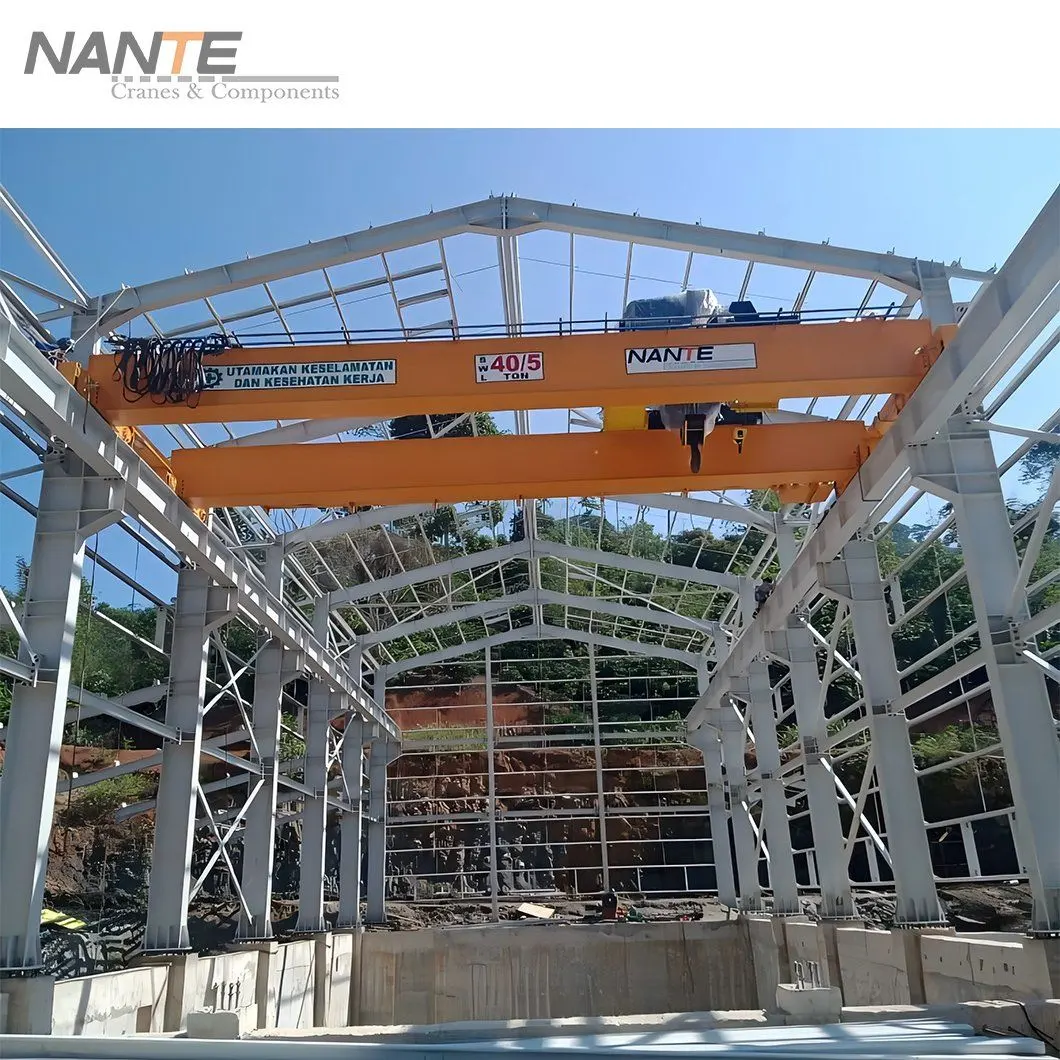
Best-Fit Conditions
An overhead crane is often the best choice when:
- The workshop has engineered runway support.
- The lifting route is fixed and repetitive.
- Floor space must remain clear.
- The crane will serve a long-term production bay.
- Full-area coverage is needed across the bay.
Main Advantages
Overhead cranes have efficient long travel, smooth cross travel, strong bay coverage and minimal floor space required. These cranes are widely used in many industries, including manufacturing, warehousing, assembly, maintenance and regular material handling.
Limitations
It may require structural verification, runway installation, and more planning before installation. It is also less flexible if your workshop layout changes frequently.
When a Gantry Crane Is the Better Choice
Best-Fit Conditions
A gantry crane is often better when:
- The building has no crane runway support.
- The lifting area may change.
- Indoor and outdoor operation are both possible.
- You want to reduce major building modification.
- The crane is used for loading, unloading, stockyards, or maintenance.
Main Advantages
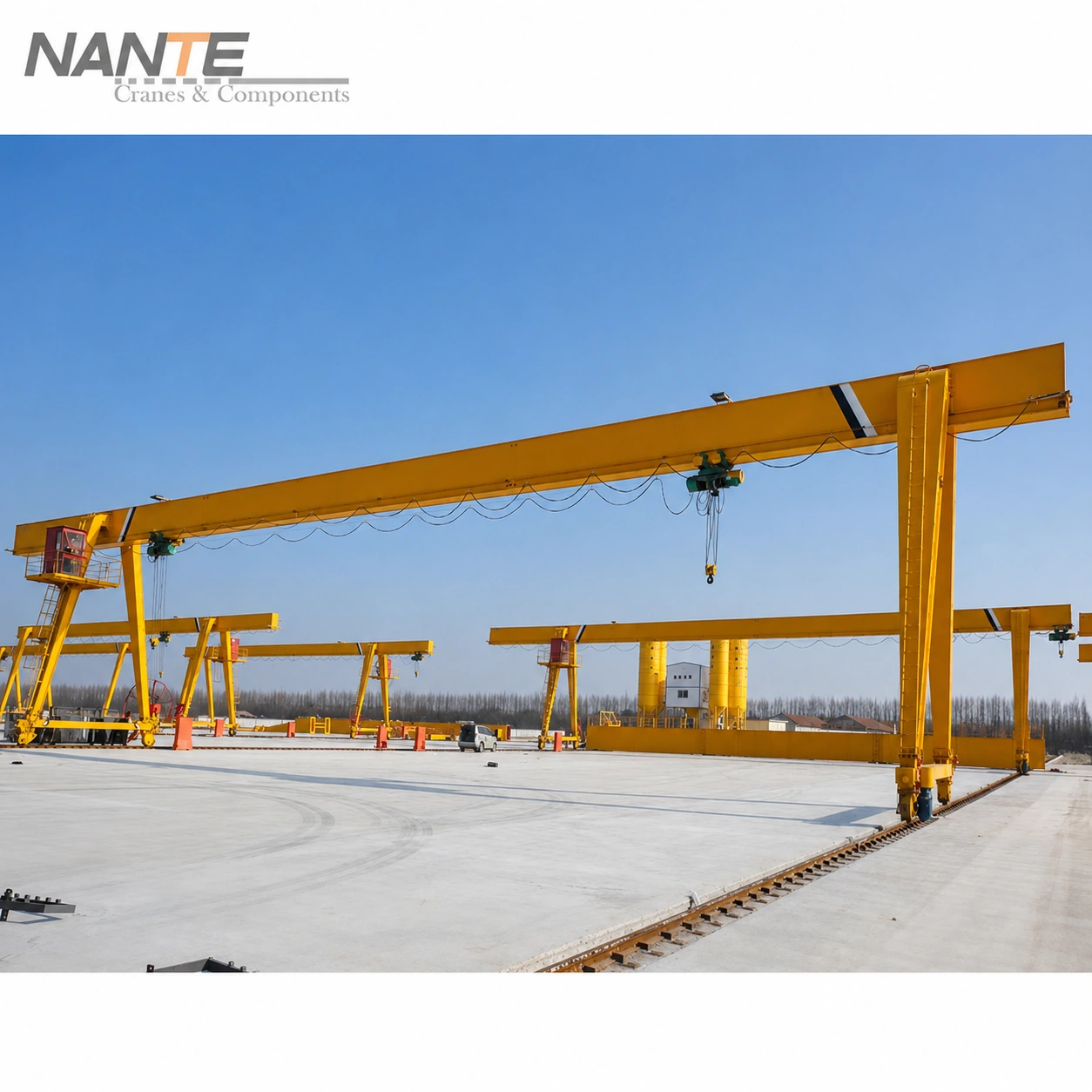
A gantry crane is more independent from the building structure. It can be installed in workshops, yards, warehouses, and temporary work areas. It can also be designed as single girder, double girder, semi-gantry, or mobile gantry depending on the application.
Limitations
The legs take up floor space. Rails, wheels, foundations, and travel routes must be planned carefully. The floor condition also matters.
Single Girder vs Double Girder
Choose Single Girder for Moderate Workshop Lifting
Single girder cranes are ideal for general use in production such as manufacturing, loading of machines, lighter production such as assembly lines, maintenance and warehouses.
It is usually more compact, lighter in self-weight, and cost-effective for moderate lifting requirements.
Choose Double Girder for Heavy-Duty Conditions
A double girder crane is better when the workshop needs higher capacity, wider span, more hook height, or frequent heavy lifting.
It is commonly selected for large equipment assembly, metal processing, heavy manufacturing, and high-duty production.
Jib Crane vs Workstation Crane
When to Choose a Jib Crane
A jib crane is ideal for one machine, one workstation, or one maintenance zone. It works well when loads move within a fixed radius.
Use it for tool rooms, welding cells, loading stations, and machine-side lifting.
When to Choose a Workstation Crane
A workstation crane is better for light loads, repetitive handling, assembly lines, and ergonomic lifting.
It supports smoother manual or motorized movement in a defined work zone and can reduce worker strain during repeated lifting.
Comparison Table
| Crane Type | Best For | Building Requirement | Floor Space Impact |
| Overhead crane | Fixed production bay | Runway/support structure needed | Low floor obstruction |
| Gantry crane | Flexible indoor/outdoor lifting | Less dependent on roof support | Legs or rails need space |
| Jib crane | One machine or work cell | Column, wall, or base support | Small working radius |
| Workstation crane | Light repetitive handling | Modular support or suspension | Defined work-zone impact |
Common Mistakes When Choosing a Workshop Crane
Choosing by Capacity Only
Capacity matters, but it is not enough. Span, lifting height, duty cycle, speed, control method, power supply, and site restrictions are also important.
Ignoring Building Structure
If the building cannot support runway loads, a gantry crane, jib crane, or workstation crane may be more realistic than an overhead crane.
Forgetting Future Layout Changes
If your production flow may change, consider whether the crane will still match your workshop in three to five years.
Underestimating Safety Requirements
Rated load markings, clearance, inspection, maintenance, operator visibility, and safe control design should be reviewed before operation. Safety rules require rated load markings to be clearly visible and require proper crane clearance from obstructions.
Final Selection Checklist Before Requesting a Quote
Prepare these details before contacting a crane supplier:
- Maximum load weight
- Average load weight
- Span
- Lifting height
- Travel length
- Indoor or outdoor use
- Column spacing
- Roof height
- Existing runway condition
- Floor condition
- Daily lifting frequency
- Power supply
- Preferred control method
- Future expansion plan
FAQ
Is an overhead crane better than a gantry crane?
Not always. An overhead crane is better for fixed indoor bays with proper support. A gantry crane is better for flexible areas or buildings without crane-supporting structures.
What is the best workshop crane for a building without corbels?
A gantry crane is often the first option to evaluate. For smaller loads, a jib crane, workstation crane, or mobile gantry crane may also work.
Is a jib crane enough for a small workshop?
Yes, if lifting is limited to one machine or work area. If loads must travel across the whole workshop, consider overhead or gantry options.
Nante Crane designs and manufactures industrial cranes and crane components for different workshop conditions, including overhead cranes, gantry cranes, jib cranes, light crane systems, electric hoists, crane travel units, mobile power supply systems, crane rails, and crane control panels; its official product range includes single girder overhead cranes, double girder overhead cranes, single girder gantry cranes, double girder gantry cranes, semi gantry cranes, jib cranes, light crane systems, mini mobile gantry cranes, and control panels for overhead and gantry crane applications. Contact Nante Crane today to discuss your workshop layout, lifting requirements, and the best crane solution for your facility.