English



Overhead Crane Price Explained: What Determines the Final Cost?
Overhead Crane Price Explained: What Determines the Final Cost
Date: 2026-01-08 Share:
Understanding overhead crane cost is a key step before asking for any quote from makers. Prices for overhead cranes can change a lot—even for setups that look alike at first—because each crane gets built to fit exact work needs, building limits, and site conditions. Overhead crane pricing explained shows that costs come from smart design choices, not random numbers. This detailed guide looks at the main overhead crane price factors, such as capacity, span, build type, duty level, site adjustments, and extra features, to help buyers check quotes with confidence and get real value over time.
Why Overhead Crane Prices Vary So Much
Overhead crane prices differ a great deal because every industrial lifting job is unique. A simple crane for rare use in a small shop needs much less strong build than a tough system that runs all day in a steel plant or foundry.
Differences come from changes in load needs, how often it runs, building limits, and safety rules. Basic setups work for short, low-level tasks. Advanced ones use better materials, stronger parts, and special guards for hard places. Buyers now want clear overhead crane pricing explained to make sure costs match true benefits—balancing start-up pay with less repair work, lower power use, and steady work over the crane’s life.
Key Overhead Crane Price Factors: A Detailed Breakdown
Many linked parts set the final overhead crane cost. Each one affects material needs, part specs, design work, and check tests.
Lifting Capacity (Tonnage)
Lifting capacity stays the biggest overhead crane price factor. Higher tonnage calls for much stronger main beams, end trucks, hoists, motors, and brake systems to keep strength and safety with the load.
Light-duty jobs (1–10 tons) use easier, lighter builds with normal parts. Medium-duty setups (10–50 tons) add thicker steel and higher-rated gear. Heavy-duty cranes (50+ tons) need deep structure checks, reinforced areas, and often made box beams or special hoists. This pushes up material and build costs a lot.
Key impacts include:
More steel amount and better alloys for beams and runways.
Bigger, stronger hoist and trolley units.
Better design math to meet bend and balance rules.
Span Length
Span length—the open space between runway rails—directly changes beam size and total material use. Longer spans raise bend forces, so they need thicker sides, bigger top parts, and extra supports to keep bend in allowed limits (usually L/600 to L/1000 by rules).
Spans under 15 meters allow cheap builds with standard rolled shapes. Spans over 30 meters often call for made box beams, curve shaping, and bracing. This boosts steel use by 30–50% or even more. Building layout matters here: wider areas or open zones raise spans, which increases structure needs and overhead crane cost.
Lifting Height and Hoist Type
Lifting height affects rope or chain length, drum size, and support needs. Taller lifts need longer reeving setups, bigger drums to hold rope layers right, and sometimes raised runway beams. This adds to part and setup complexity.
Hoist choice also sets costs apart:
Electric chain hoists give cheap, small answers for lighter loads and normal duty.
Wire rope hoists offer better lasting power, quicker speeds, and higher loads for hard use.
Other points include lift speed, control accuracy (like variable frequency drives), and duty match. All these raise part ratings and prices.
Crane Type and Structure (Single Girder vs. Double Girder)
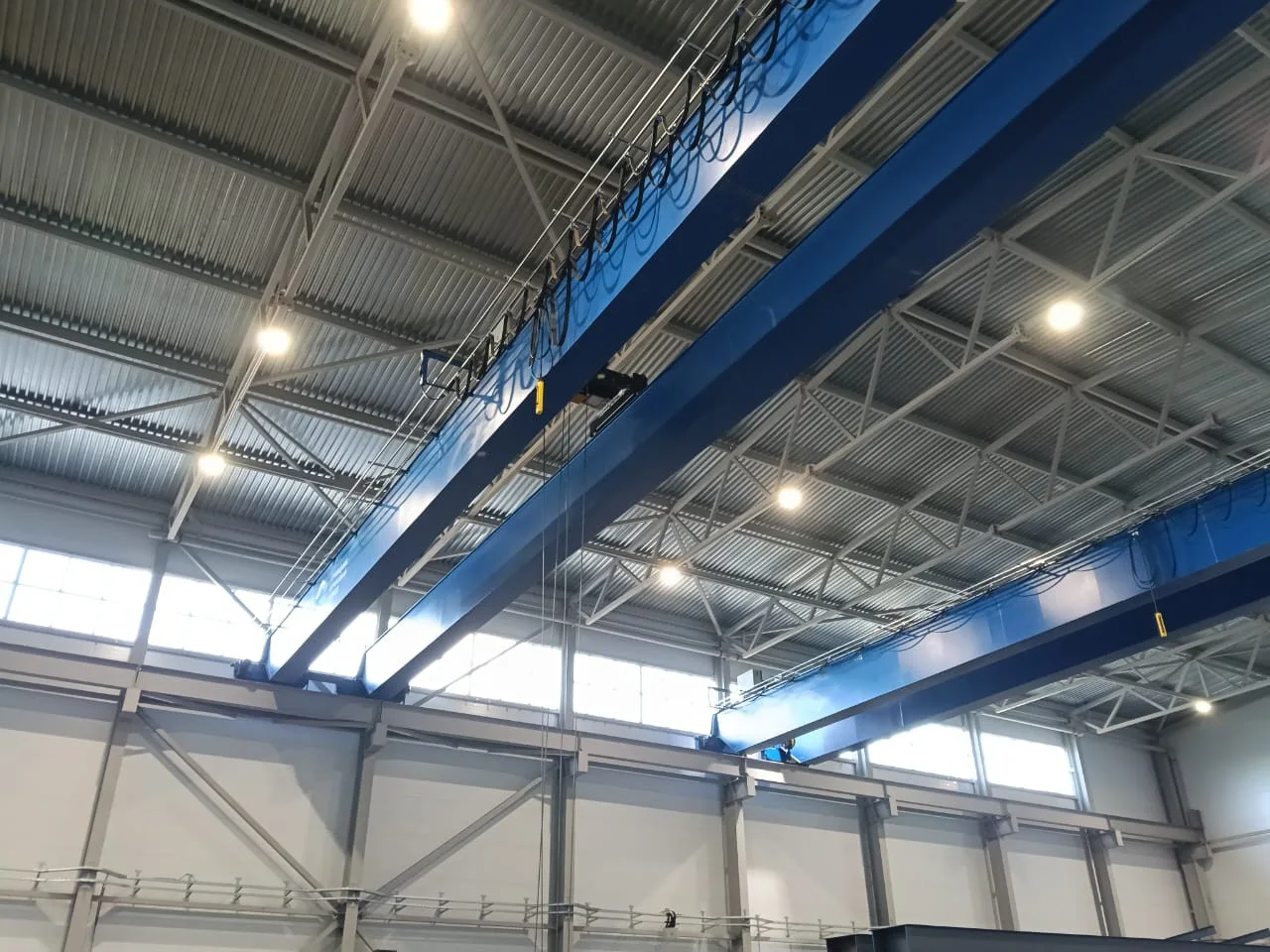
The basic build choice—single girder overhead crane or double girder overhead crane—greatly affects cost, work level, and fit for the job. Single girder setups give simple and low-cost options for lighter work. Double girder ones provide great strength for tough jobs.
| Feature | Basic Single Girder Overhead Crane | Customized Double Girder Overhead Crane |
|---|---|---|
| Typical Capacity | 1–20 tons (up to ~32 tons in some cases) | 10–300+ tons |
| Structure Complexity | Single main beam, lighter overall weight | Dual parallel girders, superior rigidity and load distribution |
| Cost Impact | Lower steel usage, simpler fabrication and assembly | Higher material volume, advanced welding, and engineering |
| Best For | Workshops, warehouses, light-medium assembly | Heavy industry, frequent high-capacity lifts, long spans |
| Customization Level | Moderate (limited by single-beam constraints) | Extensive (winches, auxiliary hoists, specialized trolleys) |
Single girder cranes work well in tight spaces or budget-tight projects. Double girder types become needed when higher hook heights, longer spans, or hard-duty work demand better stability and less bend.
Duty Cycle and Operating Environment
Duty cycle—checked by standards like FEM (1Am–4m), ISO, or matching CMAA classes—measures work strength through load range and run hours. Light or rare duty (FEM 1Am–2m, like lower CMAA classes) allows normal parts. Heavy or steady duty (FEM 3m–4m or more) needs better motors, gear boxes, brakes, and wear-proof parts to handle many starts, stops, and near-full loads.
Site conditions matter just as much:
High heat needs heat-proof insulation and cooling steps.
Rusty, dirty, or wet places demand coated or sealed parts and guard layers.
Blast-risk areas need safe or explosion-proof electric systems.
These changes raise design, material, and cert costs. But they ensure rules match, long life, and little stop time.
Customization, Safety Features, and Components
Custom parts fit the crane exactly to work flow needs. They often make added cost worth it by better output and lower risk. Common adds include:
Radio remote controls for better operator safety and view.
Anti-collision sensors and zone limit systems.
Overload guards, slack rope checks, and matched multi-hoist work.
Variable frequency drives for exact, power-saving motion.
Auto links for tie-in with output systems.
Top, modular parts (like high-efficiency motors, sealed bearings) stretch service times and cut total own costs. Safety adds, though they raise start price, match world rules (FEM, CMAA, ISO) and stop accidents.
Overhead Crane Cost Breakdown: Understanding the Logic
The final overhead crane cost includes linked parts. Each one comes from design need:
Structural elements — main girders, end trucks, and runway beams form the load-bearing framework.
Mechanical and electrical systems — hoists, trolleys, motors, controls, and power distribution.
Engineering and compliance — detailed calculations, FEM/CMAA/ISO certification, documentation, and testing.
Safety and ancillary features — protective devices, operator interfaces, and environmental protections.
Smart buyers focus on total cost of ownership over just start price. Good, right-spec systems cut power use, repair times, and surprise stops. Trusted makers give clear breakdowns. This makes sure every cost ties straight to work level, safety, and lasting power.
Get Your Customized Overhead Crane Quote Today
Ready to invest in a lifting solution engineered specifically for your facility? Contact us for a clear, obligation-free quote based on your precise requirements—lifting capacity, span, height, duty class, environment, and any special features.
Nante Crane is a leading Chinese manufacturer with over 30 years of experience, specializing in high-quality, customizable overhead cranes (single girder 1–20t, double girder up to 300t, underhung designs) built to international standards like FEM, CMAA, and ISO. Committed to safety, energy efficiency, and modular solutions, we serve 50+ countries with reliable components and comprehensive support. Request your personalized overhead crane quote now—visit https://www.nantecrane.com/ or fill out our form for expert guidance.
FAQ
What Affects Overhead Crane Price?
Lifting capacity and span typically exert the greatest influence, as they dictate girder sizing, material volume, and component strength requirements.
Why choose a customized overhead crane?
Customization ensures optimal alignment with your exact application, enhancing efficiency, safety, and longevity while preventing overspending on unnecessary specifications.
How can I get an accurate overhead crane price?
Submit comprehensive details—capacity, span, lifting height, duty class (FEM/CMAA), operating environment, and any special requirements—for a tailored, precise quotation.
Do safety features increase overhead crane pricing?
Yes, but they substantially lower accident risks, regulatory exposure, and long-term operational costs while ensuring full compliance with global standards.
Is a double girder crane always worth the extra cost?
Not necessarily for light-to-medium duty. Single girder models offer excellent economy in those cases. Double girder designs deliver superior value for heavy loads, extended spans, or high-hook-height needs.
How does duty cycle affect pricing?
Higher duty classes (e.g., FEM 3m–4m) require premium, fatigue-resistant components for continuous or intensive operation, increasing upfront costs but significantly extending service life and reducing maintenance frequency.