English



Overhead Crane Cables Solutions for Safe Power Transmission
Overhead Crane Cables Solutions for Safe Power Transmission
Date: 2026-03-19 Share:
Overhead crane cables play a key role in safe and steady power transmission for industrial lifting gear. These special crane power cables handle nonstop movement, frequent bending, and tough surroundings. Choices include flat festoon cable for overhead crane systems as well as drum reeling cable for crane long-travel setups. Picking the correct type cuts down on stoppages and improves safety. This detailed guide looks at main overhead crane cable types, features, ways to pick them, industry standards, usual problems, and useful advice for best results in hard-working settings.
What Are Overhead Crane Cables and Why Are They Important?
Overhead crane cables act as bendable electrical lines. They carry power and send control signals to moving crane parts such as hoists, trolleys, and motors. They stand apart from regular cables because they focus on strong mechanical toughness during repeated bending and pulling. Good choice stops power cuts, lowers chance of accidents, and keeps work flowing smoothly in factories, warehouses, and heavy industry sites.
Role of Cables in Crane Power and Control Systems
Cables supply electric power to run motors. At the same time, they carry low-voltage signals for accurate control and safety functions. They fit well with festoon tracks, reeling drums, drag chains, or pendant stations. This setup gives steady performance during crane movement.
Key Requirements for Moving Crane Cables
Frequent crane motion calls for certain special qualities:
Great flexibility to last through millions of bend cycles.
Strong resistance to bending and twisting so fatigue cracks stay away.
Good protection against scraping from guides, tracks, or outside contact.
Solid tensile strength to deal with pull forces and avoid stretching.
Such qualities help the cable last longer and keep electrical performance solid.
Challenges in Continuous Crane Motion
Constant bending causes material tiredness. Twisting puts stress on conductors. Scraping from trolleys or chains wears down the insulation. Outside elements like dust, water, oils, and UV light speed up breakdown. Special overhead crane cables use stronger builds to handle these problems well.
What Types of Cables Are Used in Overhead Cranes?
Different kinds of crane cables meet various power setups and work needs. Each kind works best for certain motion patterns and conditions.
Flat Festoon Cables for Crane Festoon Systems
Flat festoon cable for overhead crane does well in festoon arrangements for trolley and bridge travel. Its flat shape allows tidy stacking. This cuts down on twist and rubbing in the loops. Main benefits cover excellent bending resistance, less wear on tracks, and small size for tight spaces. It fits short-to-medium travel lengths in normal overhead cranes. It gives steady power with little risk of tangles.
Round Crane Cables for Flexible Power Supply
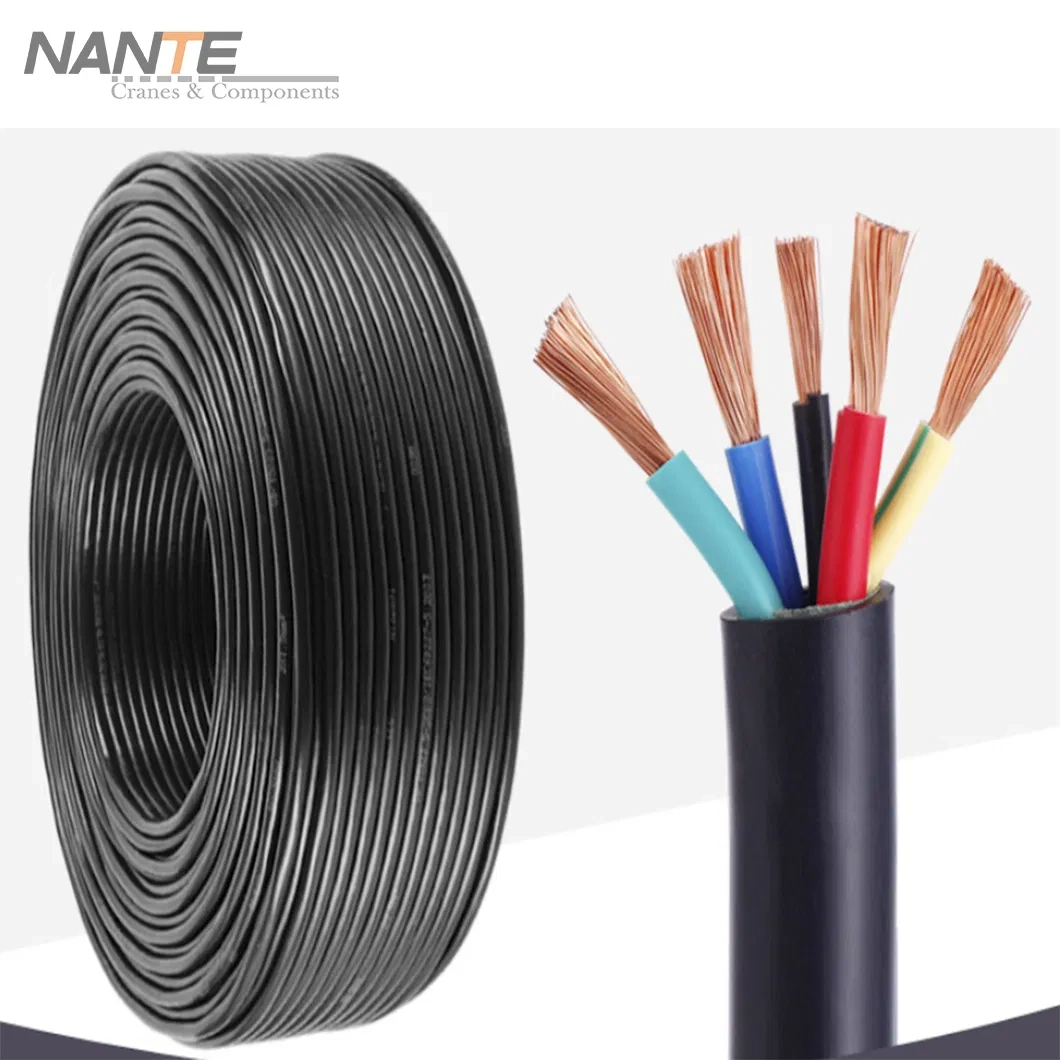
Round crane cable offers even shape for hoist setups and varied motion. It stands out with good torsion resistance. Strong flexibility spreads stress evenly in active work. It works great where steady power is needed for uneven or multi-direction movement.
Drum Reeling Cables for Cable Reel Systems
Drum reeling cable for crane backs up long-travel cranes through motorized or spring-driven reels. Higher tensile strength fights stretching when the cable extends or pulls back. Tough build allows smooth, automatic winding with no kinks. It suits long runways best because spooling stops loose cable or dragging. When compared to festoon systems, reeling fits longer distances and outdoor use with fewer hanging loops.
Pendant Cables for Crane Control Stations
Pendant cable for crane connects handheld or fixed control points. Its multi-core design sends dependable signals for operator instructions. The bend-resistant outer layer handles ongoing hand movement. It keeps control steady without signal problems or mechanical breaks.
Energy Chain Special Cables for Drag Chain Systems
Energy chain cable fits into closed drag chain or energy chain guides for automated cranes. Very high flexibility and anti-twist qualities stop tangles during fast motion. The enclosed shield guards against dirt, hits, and outside dangers. It works well in exact, high-cycle jobs where cable protection matters most.
High and Low Temperature Crane Cables for Extreme Environments
Special temperature-resistant versions increase where they can be used. High-temperature cables use flame-retardant and heat-resistant materials for steel mills, foundries, or smelting areas. Low-temperature cables stay flexible and avoid cracks in cold storage, outdoor northern sites, or chilled places.
Key Features of High-Quality Overhead Crane Cables
Top heavy duty crane cable shows:
Flexibility for nonstop motion without conductor tiredness.
Strong resistance to scraping and oil from dirt.
Weather protection with barriers against UV and water for long life.
Better mechanical power, including ability to handle tensile loads.
These points deliver reliable work in tough industrial places.
Industry Standards and Compliance for Overhead Crane Cables
Following global standards makes sure of safety and good function. Important ones cover IEC 60227 for flexible cables, IEC 60332 for flame resistance, and VDE rules for moving uses. Cables usually reach 0.6/1kV or 300/500V ratings. They use fine-stranded copper conductors (Class 5) for easy bending. PUR or rubber outer layers give better mechanical and outside protection than PVC in rough settings. Meeting these rules lowers failure chances and matches worldwide safety laws.
Common Failures in Overhead Crane Cables and Prevention
Common troubles cover insulation cracks from tiredness, conductor snaps from too much load, scraping damage, and rust in wet areas. Reasons come from wrong bending radii, too much pull, missing strain relief, or wrong match between cable and system. To prevent them, do regular visual checks. Follow minimum bend radii (typically 5-10× cable OD). Use proper lubrication when needed. Replace quickly when wear shows. Matching cable type to duty cycle lengthens useful life a lot.
How to Choose the Right Cable for Your Overhead Crane?
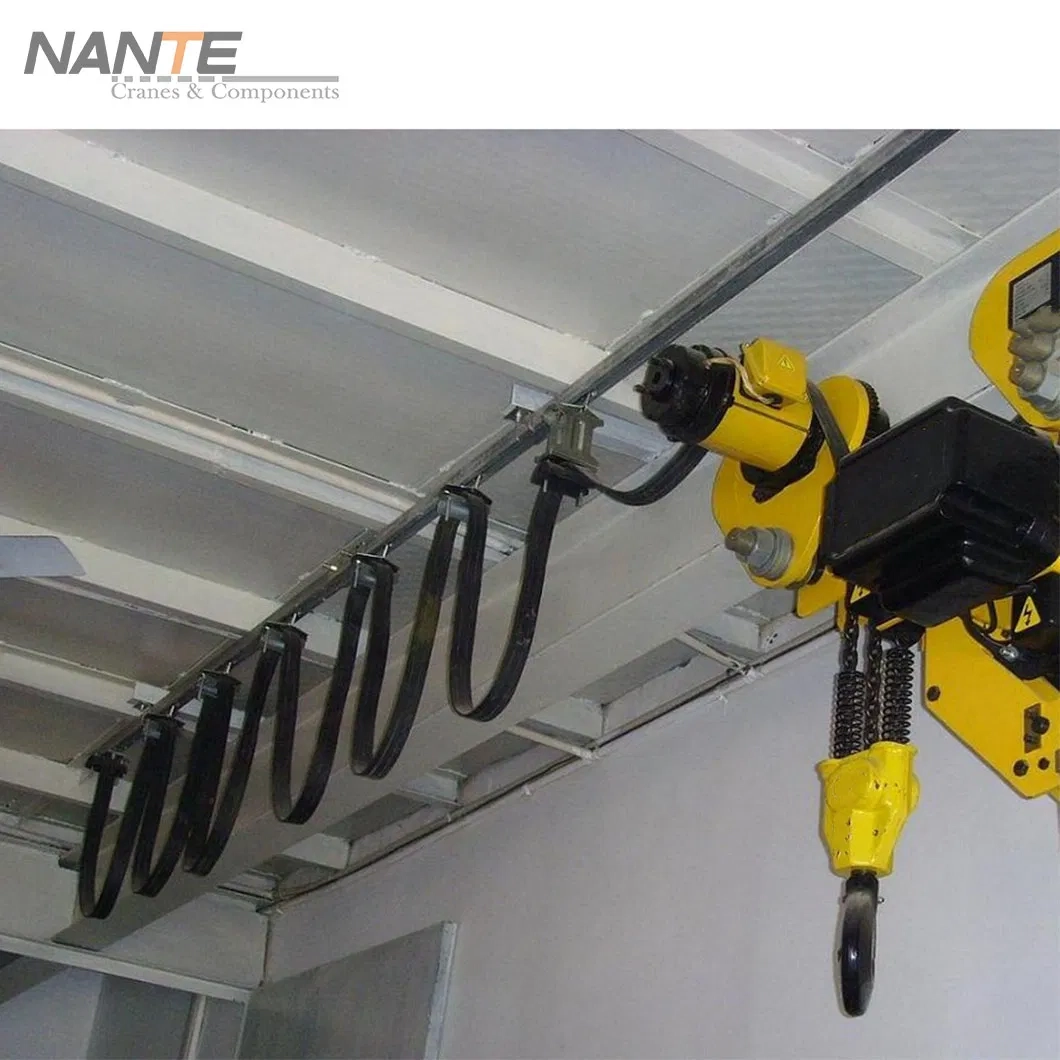
Use this crane cable selection guide to make smart choices.
Choose Based on the Power Supply System
Match the setup:
Festoon: Pick flat festoon cable for overhead crane for looped, medium-travel work.
Cable reel: Go with drum reeling cable for crane for long, spooled distances.
Energy chain: Select energy chain cable for guided, fast protection.
Consider Travel Distance and Motion Speed
Short or medium lengths work well with festoon or pendant types. Long distances or quick cycles need reeling or energy chain cables. These handle extra stress and stop whipping.
Evaluate Environmental Conditions
Think about harsh situations: high heat (foundries), very low cold (outdoor/northern), chemicals, dampness, or UV light. Choose suitable outer layers and materials for lasting strength.
For premium overhead crane cables tailored to your needs, trust Nante Crane
Nante Crane – a leading global manufacturer with over 30 years of expertise in high-quality cranes and components. Our durable crane cables, including YFFB flat, RVV round, PUR reeling, TLC energy chain, and temperature-resistant options, ensure safe, efficient power transmission across industries worldwide. Contact us today for customized solutions and expert support.
FAQ
What is the main difference between flat festoon cable and round crane cable?
Flat reduces twisting in stacked festoon loops; round provides uniform torsion resistance for general dynamic use.
How often should overhead crane cables be inspected?
Daily visual checks, plus detailed periodic inspections per duty cycle, environment, and manufacturer guidelines.
Can the same cable work for both power and control?
Hybrid designs exist, but dedicated cables often enhance reliability and fault isolation.
What makes drum reeling cable for crane suitable for long travel?
Superior tensile strength and bend durability enable secure automatic spooling over extended distances.
Why choose specialized cables for extreme temperatures?
They resist brittleness in cold or thermal degradation in heat, preserving flexibility and preventing failures.