English



Outdoor Truss Gantry Cranes: Wind-Resistant Solutions for Heavy-Duty Applications
Date: 2026-03-27 Share:
What Are Outdoor Truss Gantry Cranes?
Outdoor truss gantry cranes act as special lifting machines. They have an open lattice truss girder structure. Manufacturers build these cranes with strong steel materials like S355. The truss framework uses triangular web members. Workers weld these members together to create the main girder and legs.
This design stands out clearly from traditional closed box girder types. The open lattice cuts down self-weight. At the same time, it spreads loads well across many structural parts. Engineers prefer truss gantry cranes for outdoor use. The structure lets wind pass through easily.
The main benefits include bigger possible spans, much lighter total weight, and better wind resistance. Truss gantry cranes keep their structural strength under heavy loads in open areas. Common lifting capacities go from 5 tons to 300 tons. This depends on hoist or winch setups.
These cranes fit tough outdoor places. There, weather conditions require steady performance. The modular design allows flexible use at different sites.
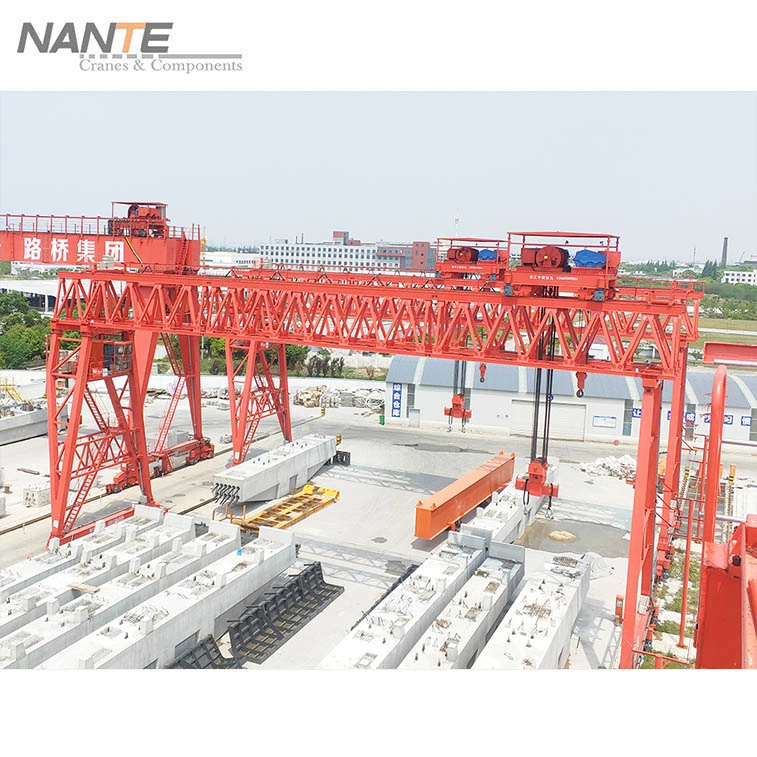
Key Features of Wind-Resistant Truss Gantry Cranes
Wind resistant truss gantry cranes use smart engineering. They work well in windy situations. The open truss structure forms the main feature. It lowers wind load because air flows right through the lattice.
This design cuts side pressure on the main girders and end carriages. Stability grows a lot when people compare it to solid box-type structures. These cranes follow international standards. The list includes FEM, CMAA, EN ISO, and GB rules.
Strong leg designs and tough bolted or welded connections add to overall strength. Optional anti-wind tools like rail clamps, storm anchors, and track stoppers give extra protection in very strong gusts.
Inverter-controlled motors give exact speed control. This leads to smooth work. Forged steel wheels receive heat treatment. They provide long-lasting movement under full loads. Surface preparation uses SA2.5 blasting. Then it adds C3-C5 corrosion-resistant painting according to ISO standards.
Truss Structure and Wind Load Reduction
The truss structure uses triangular shapes. This helps spread forces evenly through the whole framework. Triangular parts reduce bending moments and axial stresses when loads apply.
In outdoor settings, the open lattice setup lets wind move through the members. Wind does not hit a solid surface directly. This aerodynamic benefit lowers overall wind drag and side forces quite a bit.
Studies and real-world uses show that truss designs face much lower wind pressure than box girders. The drop often comes from protected elements and spread-out load paths inside the lattice.
Deflection control stays accurate. It usually stays limited to 1/700 to 1/1000 of the span length. Deeper truss profiles improve torsional stiffness and firmness. They do this without raising weight too much. Operators gain from better stability and less sway in strong wind events.
Heavy-Duty Lifting Capacity
Heavy-duty truss gantry cranes handle a broad range of lifting needs in difficult conditions. Hoist-based models support capacities up to 63 tons. Winch-equipped versions reach up to 300 tons for very heavy lifting.
These capacities allow movement of large materials. Examples include structural steel beams and precast concrete elements. Big spans and tall lifting heights fit various outdoor heavy-duty needs.
Inverter systems offer variable speed control. This ensures accurate positioning. Dual-brake mechanisms on winches provide safe stopping during hard work. High-efficiency bogie designs spread wheel loads evenly over runways.
Such technical features promise steady performance. They work well under many heavy cycles in tough environments.
Applications of Outdoor Truss Gantry Cranes
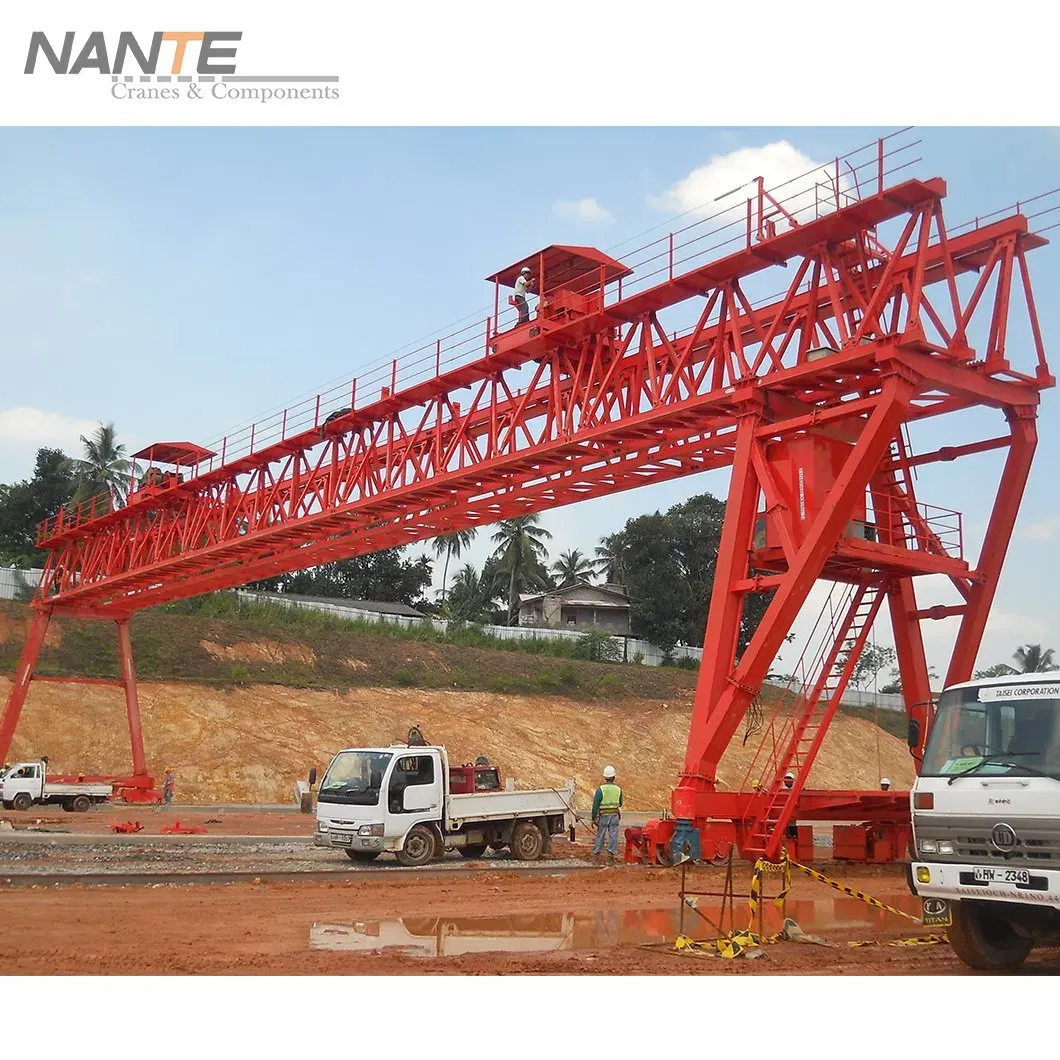
Outdoor truss gantry cranes show great flexibility in heavy-duty outdoor tasks. Their wind resistant features and modular build fit sites with strong weather exposure.
These cranes cover wide areas. They also provide mobility for short-term setups. They perform best in situations that mix large coverage with weather toughness.
Port and Dockyard Operations
Ports and dockyards use truss gantry cranes for container handling, bulk cargo movement, and heavy component transfers. Coastal spots expose equipment to constant strong winds.
The wind resistant truss gantry crane design keeps operational stability during vessel loading and unloading cycles. Open yard setups gain from reduced wind load effects on the structure.
These cranes help achieve good throughput in sea-exposed facilities. Their strong build ensures safety and steady work despite changing maritime weather patterns.
Construction and Heavy-Industry Uses
Construction sites use truss gantry cranes to move structural steel, precast elements, and heavy machinery components. Precast yards and steel warehouses depend on them for neat material storage and retrieval.
Shipyards apply these cranes for hull section assembly and outfitting tasks in open areas. Rail yards use them for trackside equipment handling and maintenance.
Modular configurations fit temporary project stages and movable operations. The lightweight but strong build manages heavy loads in a cost-effective way in exposed heavy-industry places.
Truss Gantry Crane Design Considerations
Designers adjust outdoor truss gantry cranes to match site-specific conditions exactly. Engineers check wind load classes, payload needs, and environmental exposures during planning.
Key considerations include structural reinforcements, material choices, and protective coatings. Good matching improves performance, safety, and long service life.
Span, Height, and Duty Class
Spans often range from 5 meters to 45 meters. This provides wide coverage in outdoor yards. Lifting heights go up to 60 meters. This helps with tall stacking or high handling tasks.
Duty class choices match operational intensity. They include heavy-duty classifications for continuous or frequent use. Engineers align these parameters with project size and load range.
Accurate matching avoids structural overload. It also encourages efficient resource use across installations.
Modular Assembly and Transport
Modular truss designs make disassembly simple into sections for transport. This method eases relocation to new project spots.
On-site assembly happens quickly with bolted connections and pre-fabricated parts. Smaller transport sizes cut logistics costs a lot.
Fast setup helps with construction expansions, port changes, or temporary yard setups. Flexibility supports changing operational needs without long downtime.
Advantages Over Box Girder Designs in Outdoor Settings
Truss gantry cranes perform better than box girder options in many outdoor heavy-duty applications. The open lattice structure naturally gives superior aerodynamic performance against wind forces.
Lighter self-weight lowers needs on runway foundations and supporting structures. Material efficiency reaches similar strength with less steel use for the same spans.
Cost-effectiveness comes from lower fabrication needs and easier handling during installation. Truss configurations keep benefits in wind-prone sites. There, box girders pull in too much lateral load.
Why Choose Truss Gantry Cranes for Outdoor Heavy-Duty Projects
Truss gantry cranes provide excellent wind resistance through their permeable lattice framework. Lower weight simplifies foundation engineering and installation processes.
These cranes do well over long spans in rough outdoor conditions. Proven durability and compliance with global standards guarantee reliable service in tough environments.
Ready to Enhance Your Outdoor Lifting Operations?
Nante Crane is a leading manufacturer with over 30 years of experience, specializing in high-quality cranes and crane components, including wind-resistant truss girder gantry cranes tailored for outdoor strong wind yards and heavy-duty applications. Contact Nante Crane today for custom solutions, expert consultation, and reliable lifting equipment to meet your project demands.
FAQ
What makes truss gantry cranes more wind resistant than box girder types?
The open lattice structure allows wind to pass through freely. This greatly reduces load compared to solid surfaces that catch wind pressure.
What lifting capacities do outdoor truss gantry cranes typically support?
Capacities range from 5 tons to 300 tons. Hoist models go up to 63 tons and winch types handle heavier loads up to 300 tons.
Are truss gantry cranes suitable for port operations?
Yes, their wind resistant design works very well in coastal and high-wind dockyard environments for safe cargo handling.
How does modular design benefit outdoor use?
It allows easy assembly, disassembly, and relocation. This offers flexibility for temporary sites, expansions, or changing project needs.