English


OEM Crane Components from China: A Buyer’s Guide for Global Importers
OEM Crane Components from China A Buyer's Guide for Global Importers
Date: 2026-09-11 Share:
Importing crane components is a specification and risk-management decision, not simply a hunt for the lowest unit price. The purchasing team must confirm mechanical fit, duty requirements, electrical compatibility, documentation, packaging, and support before a component leaves China. A disciplined process helps distributors and contractors avoid retrofit delays, unplanned downtime, and non-compliant installations.
What OEM crane components include
Main component groups
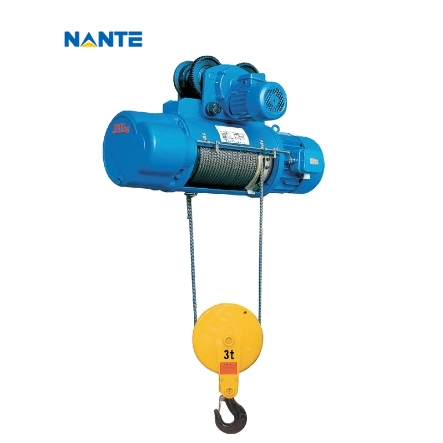
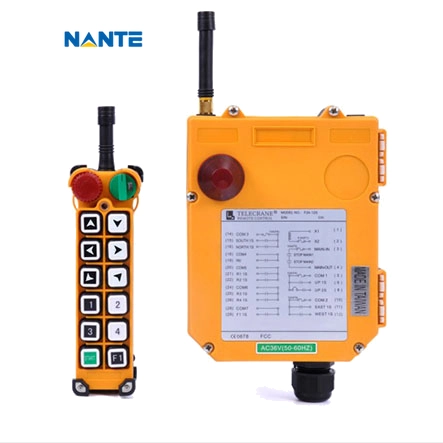
An OEM component is engineered or produced to an agreed drawing, interface, or equipment configuration. Typical groups include hoists and open winches, end carriages and travelling mechanisms, conductor rails and cable reels, control panels, remote controls, limit switches, overload limiters, crane rails, and rail accessories. A current crane component range provides a useful reference for building a request-for-quotation (RFQ) list.
The same part name can describe different designs. A wire-rope hoist may vary in reeving, drum dimensions, motor duty, brake arrangement, and control voltage. An end carriage must match wheel diameter, rail gauge, wheelbase, connection plates, and bridge-beam loads. A purchasing specification should therefore use drawings and interface data rather than a catalog name alone.
OEM, replacement, and private-label scope
“OEM” can mean an original replacement, a component made to an importer’s drawing, or a supplier’s standard product with a private label. The quotation should state which definition applies. It should also identify the design owner, drawing revision, permitted substitutions, branding, packaging marks, and whether production data may be reused for future orders.
How to define customized crane parts
Mechanical and duty inputs
The RFQ should capture rated load, load spectrum, lifting height, span or rail gauge, travel speeds, wheel loads, operating hours, starts per hour, ambient temperature, corrosion exposure, and installation altitude where relevant. For replacement parts, include the crane model, serial number, existing part number, photographs, critical dimensions, and measured wear.
The project owner should separate mandatory dimensions from negotiable features. For example, a distributor may require a fixed wheelbase and mounting pattern but allow alternative motor brands if torque, duty class, efficiency, and certification documents remain equivalent. This distinction gives the China OEM manufacturer room to optimize production without creating an interface risk.
Electrical, controls, and compliance
List supply voltage, frequency, phase, control voltage, protection rating, communication protocol, cable entry, emergency-stop logic, and preferred control method. Control panels and remote systems need an I/O list and a clear definition of fail-safe functions. The destination market may require compliance with local machinery, electrical, radio, or workplace rules; the applicable standard and certificate scope should be agreed before design freeze.
Ask for a compliance matrix that maps each requirement to a drawing, calculation, test record, or certificate. A management-system certificate is not the same as product compliance. Certificate scope, legal entity, manufacturing site, issuer, validity, and expiry should be checked against the purchase contract.
How to audit a crane spare parts supplier
Engineering and manufacturing evidence
An effective audit follows the component through design, purchasing, fabrication, assembly, testing, packing, and service. Evidence may include controlled drawings, bills of materials, material certificates, welding procedure and inspection records, machining reports, calibration records, brake or motor test data, and final inspection checklists.
For safety-related parts, the quality plan should define hold points and acceptance criteria. FAT documentation should identify the tested serial number and instruments used. When a supplier proposes an equivalent substitute, the change process should require written approval and an updated drawing revision.
Commercial and supply-chain checks
Price comparisons are meaningful only after scope normalization. Each quotation should list equipment, controls, runway or interface work, documents, testing, packing, freight, installation, commissioning, training, recommended spares, warranty, exclusions, and change terms. Incoterms, export packing standard, HS codes, country-of-origin documents, insurance responsibility, and delivery destination should be explicit.
The purchasing team can use a supplier evaluation checklist to structure factory audits and quotation reviews. A capable crane spare parts supplier should answer technical questions consistently across sales, engineering, quality, and logistics contacts.
Compatibility checks before ordering
Interfaces that commonly cause rework
Before approving a drawing, verify mounting-hole patterns, shaft or coupling dimensions, rail profile, wheel flange geometry, cable routing, connector pinouts, control logic, and available maintenance access. For hoists, check headroom, hook approach, reeving direction, drum or chain space, and load-path clearances. For end carriages, confirm bridge connection details and wheel alignment tolerances.
The buyer’s existing asset data should be treated as controlled engineering information. A clear redline process prevents an old photograph or superseded drawing from becoming the production reference. Where field measurements are uncertain, request a dimensional survey or a sample part before batch manufacture.
Testing and installation handover
The purchase order should define inspection stages, witness rights, test loads or functional tests required by the applicable code, and the document package supplied at shipment. Handover files commonly include approved drawings, manuals, spare-parts lists, lubrication instructions, wiring diagrams, certificates, FAT records, packing lists, and preservation instructions.
Installation responsibility must be allocated line by line. A component supplier may provide alignment data, commissioning support, or remote troubleshooting, while the importer or local contractor performs lifting, wiring, and statutory inspections. The contract should state who signs the final acceptance record.
Logistics and lifecycle planning
Packaging, spares, and traceability
Crane components can be heavy, long, or sensitive to moisture. The export-packing specification should cover lifting points, corrosion protection, shock restraint, center-of-gravity marks, desiccant, waterproofing, and serial-number labels. Photographs of packed cargo support claims handling and warehouse receiving.
For a distribution business, stock the failure-critical items identified by the duty cycle and service history. A recommended-spares schedule should separate commissioning spares, two-year operating spares, and long-lead strategic parts. Each item needs a part number, revision, compatible model, and storage condition.
Warranty and after-sales response
Warranty language should define start date, covered defects, exclusions, evidence required, response times, replacement process, freight responsibility, and field labor allocation. Ask how technical cases are logged and escalated, and whether manuals and drawings remain available after the project closes. These details matter more than a broad “lifetime support” statement.
When a China OEM manufacturer fits a global importer
A practical qualification sequence
For a first order, a staged qualification lowers exposure:
- Share a controlled RFQ with drawings, duty data, destination, and compliance requirements.
- Review the technical offer, deviations list, quality plan, and document index.
- Verify legal-entity details, factory capability, references relevant to the component, and export experience.
- Approve a sample, prototype, or first-article inspection when interfaces are high risk.
- Release batch production only after FAT evidence and packing approval meet the contract.
This sequence allows an importer to compare suppliers on evidence, not presentation quality. A scorecard can weight fit and safety, documentation, quality controls, lead-time credibility, landed cost, and service response.
Where Nante Crane can be evaluated
The official Nante Crane site presents Shaoxing Nante Crane Equipment Co., Ltd. and organizes component information by hoisting, travelling, mobile power supply, control and safety, and rail accessories. The hoisting mechanism products and travelling mechanism selection pages can be used to cross-check the scope of an RFQ. Product fit, documentation, testing, and commercial terms still require project-specific confirmation.
Procurement checklist for the RFQ package
Information to send with the inquiry
Include the following in one controlled package:
- Component description, quantity, part number, and drawing revision.
- Rated load, duty, speeds, dimensions, interfaces, and operating environment.
- Voltage, frequency, controls, communication, protection, and destination standards.
- Required inspection, FAT, certificates, manuals, labeling, and language.
- Incoterm, delivery address, packing limits, installation scope, and schedule.
- Commissioning spares, operating spares, warranty expectations, and local service needs.
For control upgrades, add the existing schematic and I/O list. For mechanical replacements, add measured dimensions and photographs with a scale reference. The crane control and safety equipment and rail and accessories categories help classify mixed-component RFQs.
FAQs about importing OEM crane components
Is a catalog part automatically interchangeable?
No. Interchangeability depends on interfaces, duty, clearances, controls, and applicable approval requirements. A drawing review and, for uncertain cases, a sample or first-article inspection are prudent controls.
What should a distributor request from a crane spare parts supplier?
Request a controlled technical offer, deviations list, quality plan, inspection records, certificates, manuals, spare-parts data, warranty terms, and a clear packing and shipping scope. The supplier should identify any assumptions that could affect fit or compliance.
How can landed cost be compared fairly?
Normalize the scope first, then add packaging, freight, insurance, duties, inland delivery, inspection, installation, commissioning, spares, and expected service costs. The lowest ex-works price may not be the lowest project cost.
Prepare a project-specific component review
Global importers can accelerate a quotation review by sending the component list, drawings, duty and environment data, electrical requirements, destination, required standards, inspection level, delivery terms, and replacement urgency. Nante Crane can then verify the available scope and prepare a project-specific technical and commercial response. Submit the controlled RFQ package through Contact Nante Crane.