English



Nante Crane Painting Process Upgrade with Heated & Mobile Booths
Nante Crane Painting Process Upgrade with Heated & Mobile Booths
Date: 2026-02-26 Share:
The Strategic Importance of a High-Performance Crane Painting Process
A strong crane painting process matters a lot for keeping overhead cranes, gantry cranes, workstation cranes, offshore cranes, and other crane parts dependable for years. It supports their frame strength and safe use.
Steel faces quick harm without proper shield. Air rust, water entry, and chemical harm lead to rust buildup, material breakdown, and final frame failure. Early paint breakdown causes expensive stoppages, regular checks, fixes, and possible safety dangers.
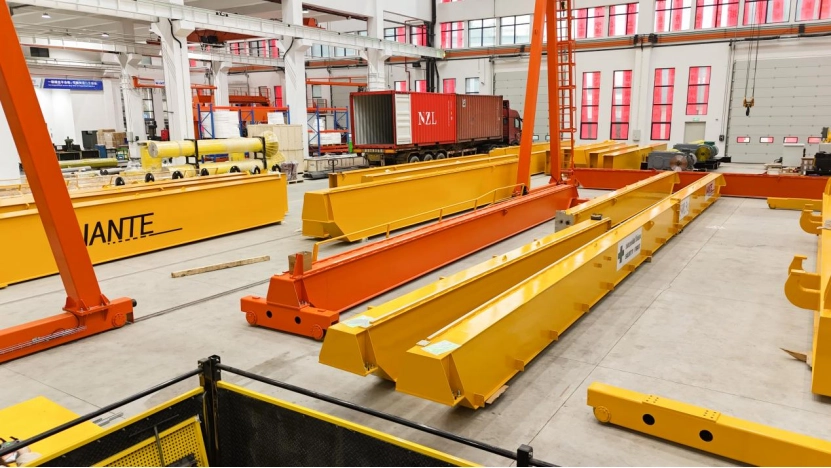
In places with weather shifts, like heavy dampness in plum rain (Meiyu) period and cold outdoor temps in winter, unchecked paint use creates major flaws. Heavy dampness holds back solvent dry, boosts chances of color streaks, solvent bursts, amine streaks, bubbles, and weak layer bonds. Low temps hold back setting, cut film build quality, and weaken link formation in epoxy and polyurethane setups.
Nante Crane handles these problems with major plant changes, strict methods, and tested supplies. This removes weather ties and guarantees steady, good outcomes.
Facility Upgrade – From Bottleneck to Controlled Production Asset
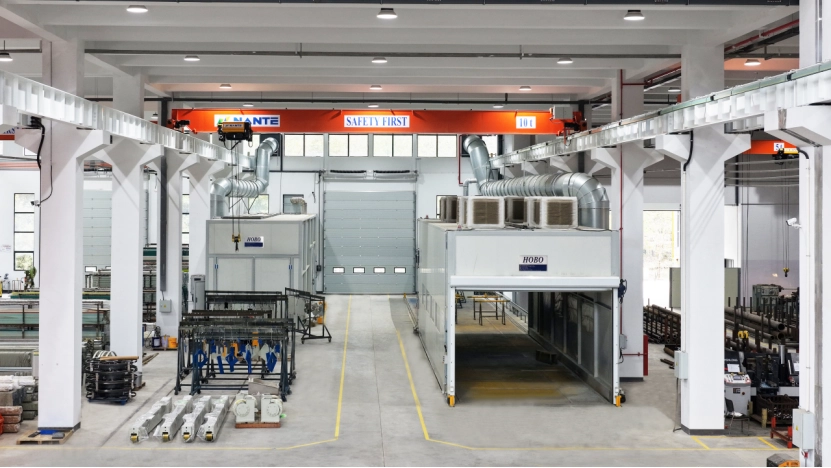
Nante Crane put in about 2 million RMB in built-for-job paint structures. This change adds two special paint rooms: one moving unit fit for big builds and one fixed unit with weather hold and heat feature.
The outcome brings much better output speed, even paint sameness, less redo work, and stronger on-time ship trust for all crane build tasks.
Mobile Paint Booth – Designed for Oversized Crane Main Beams and Structures
Nante Crane’s mobile paint booth sizes 5 m (width) × 4.5 m (height) × 15 m (length).
This room mainly handles paint for long-reach crane main beams, end trucks, big gantry frames, and other bulky crane parts.
Its block-style build lets it shift easily in work paths. It cuts inside move hazards and gives good air move over big areas. This counts for even paint spread on large rust-stop crane main beam builds.
Fixed Heated Paint Booth – Engineered for Adverse Climatic Conditions
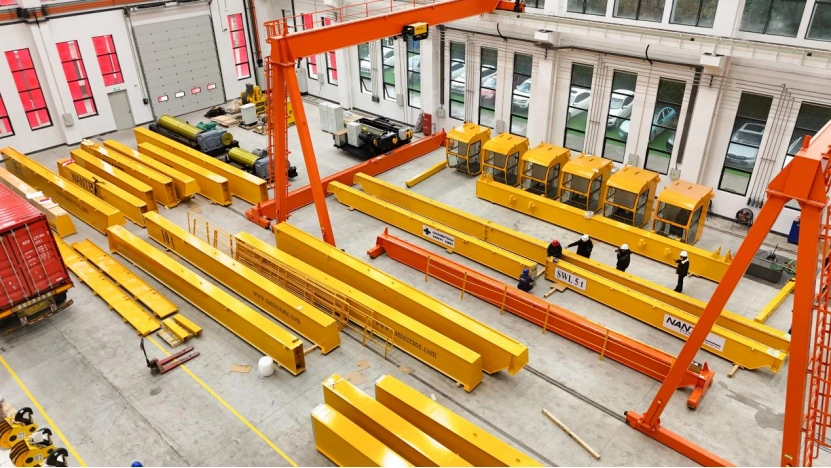
The fixed paint room sizes 4 m (width) × 3 m (height) × 13 m (length). It comes with a natural gas side heat system for exact temp control.
In the area, high dampness in rain season and low temps in winter make usual painting untrustworthy. This often brings water buildup, weak bonds, and late setting.
Pre-painting environmental conditioning lifts room and base temp to lower damp air and stop face water chance (dew point management). This makes sure the steel face stays dry and open to base paint use.
Post-application forced curing uses a set rise to 90 °C. It speeds solvent and water out, helps full link build, and cuts dry-off and full-set times greatly.
These steps cut down flaws like color streaks, solvent bursts, and water traps. They bring steady film build and strong rust-stop crane main beam shield all year.
Surface Preparation – The Critical Foundation of Coating System Performance
Nante Crane puts all steel builds through required grit blast clean to SA 2.5 (ISO 8501-1 / SSPC-SP 10 near-white metal finish).
This full prep takes away rust, mill scale, old paint, and dirt. It gains at least 95% clean, shiny metal with even grip marks (usually 40–75 μm face shape). The pointed, angled shape boosts stick power for later layers.
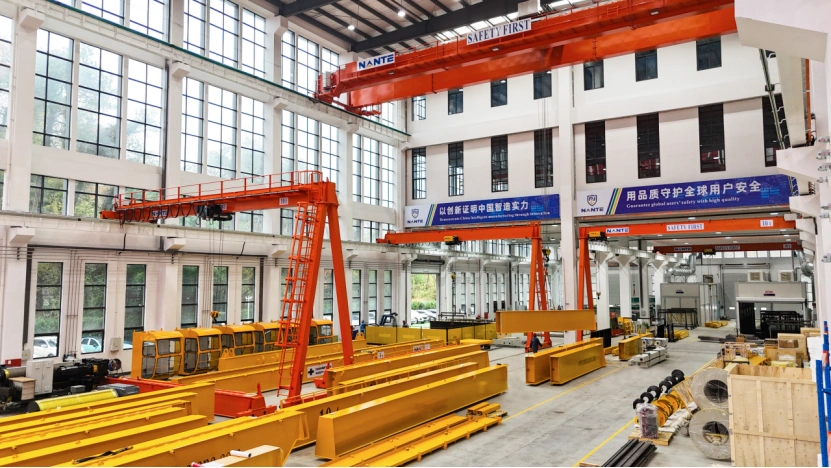
Number salt dirt testing (Bresle method or same) checks that bad ion leftovers stay under okay limits set by coating makers.
SA 2.5 prep stands firm for long output: it boosts bond power strongly, cuts under-film rust spread risk, and builds the base for lasting rust-stop crane main beam setups in tough spots.
Engineered Multi-Layer Coating System – Proven in Demanding Environments
Nante Crane’s coating plan and use steps grew from close work with a French firm in offshore lift gear for oil & gas sites, where the toughest rust-stop rules hold.
The usual multi-layer setup (normal dry film thickness) includes:
Epoxy primer (zinc phosphate or micaceous iron oxide) — 50–80 μm — providing excellent corrosion barrier and adhesion
High-build epoxy intermediate/build coat — ≈100 μm — adding film thickness, mechanical strength, and additional barrier properties
Aliphatic polyurethane (PUR) finish coat — ≈50 μm — delivering superior UV resistance, color stability, weather durability, and aesthetic retention
Total nominal DFT: 200–230 μm.
This setup holds color and shine for 5–10 years in usual air contact, with solid fight against UV breakdown, weather wear, rub, and air rust.
For rougher spots, Nante Crane gives custom long-last setups that match ISO 12944:
C4 (high corrosivity) — industrial areas and coastal zones with moderate salinity
C5 (very high corrosivity) — aggressive industrial atmospheres or high-salinity marine/coastal environments
These picks meet or top the standard’s last hopes for medium to very high work life.
Technical Benefits of Controlled Environment Crane Coating
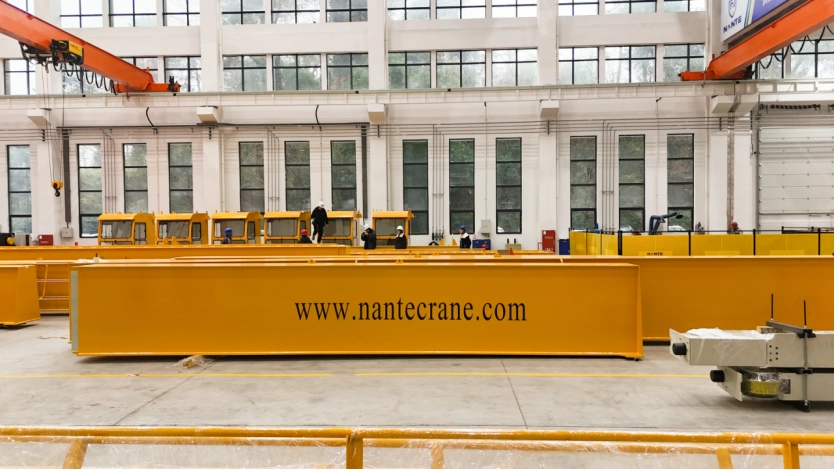
Controlled environment crane coating stops flaws from weather changes, like water-caused breaks, uneven thickness, weak spread, and wild set speeds.
The outcome shows more link tight, less hole spots, and better block work in the end layer.
Work gains cover shorter re-coat times, quicker move to next steps, and lower redo rates.
For customers, this means longer fix gaps, higher left worth, lower full-life costs, and better work safety.
Summary – Combining Infrastructure, Process Discipline and Proven Materials
Nante Crane’s crane painting process joins new plant spend, strict SA 2.5 face prep, multi-layer coating setup, and weather-held use to reach a big shift in paint quality.
This firm way places Nante Crane as a steady partner for making cranes with top work life and output.
Ready for Higher Coating Performance on Your Next Crane Project?
At Nante Crane, we understand that the reliability of your lifting equipment starts with superior surface protection. That’s why every overhead crane, gantry crane, construction crane, workstation crane, offshore lifting solution, and critical crane component we manufacture benefits from:
Advanced shot-blasting to SA 2.5 standard
Strict salt contamination control
Multi-layer high-performance coating systems
Controlled-environment application in modern heated and mobile paint booths
These features deliver exceptional anti-corrosion protection — especially for crane main beams — even in aggressive industrial, coastal, or high-humidity environments.
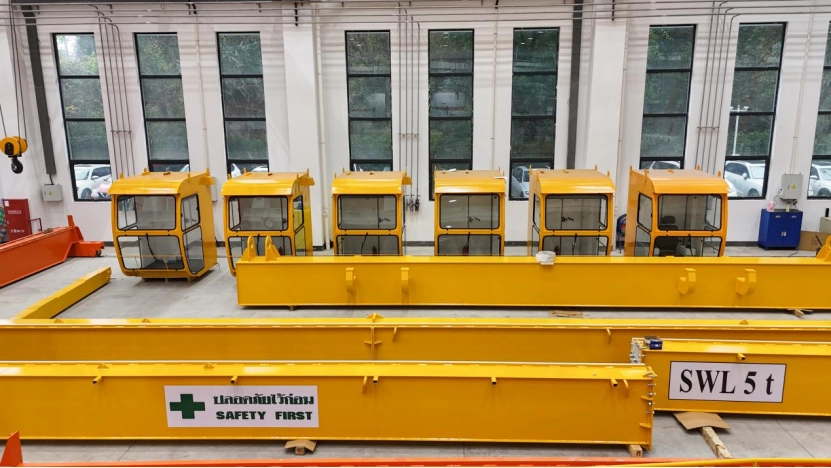
Whether your project requires standard long-term durability or customized C4 / C5 corrosion protection levels, Nante Crane has the process, equipment, and expertise to meet your exact specifications.
To discover our complete range of crane products and crane components, explore the full offering at the official website: www.nantecrane.com
For technical consultation, detailed coating recommendations, or to discuss your next project requirements, reach out directly to the Nante Crane team through the contact page at: www.nantecrane.com/contact-us
We’re ready to support your project with proven quality and year-round coating consistency.
Frequently Asked Questions
Why is SA 2.5 blast cleaning required instead of lower standards?
SA 2.5 provides near-white metal cleanliness and an optimal anchor pattern, maximizing adhesion and minimizing corrosion creep — essential for high-performance epoxy and polyurethane systems.
How exactly does heating the paint booth improve coating quality in rainy or winter conditions?
Pre-heating reduces relative humidity and eliminates surface moisture (dew point control); post-heating to 90 °C accelerates curing, solvent release, and cross-linking, preventing defects like blushing, poor flow, and entrapment.
What is the typical total dry film thickness and expected service life of your standard coating system?
Approximately 200–230 μm total DFT, delivering 5–10 years of stable color and integrity under normal exposure.
Can you provide C5-level corrosion protection for marine or highly corrosive industrial applications?
Yes — Nante Crane customizes systems to meet or exceed ISO 12944 C5 (very high corrosivity) requirements for aggressive environments.
How large a crane main beam can be processed in your painting facilities?
The 15-meter mobile paint booth is specifically designed for long-span main beams and oversized crane structures.
Do you perform dry film thickness measurement and adhesion testing after coating?
Yes — post-coating inspections include DFT verification and adhesion testing to ensure compliance with specifications.