English



Must-Have Crane Safety Enhancers: Control Systems & Smart Protection Devices
Must-Have Crane Safety Enhancers Control Systems & Smart Protection Devices
Date: 2026-04-10 Share:
Top 5 must-have crane safety enhancers include crane control panels, overload protection devices, limit switches, electromagnetic braking systems, and pendant or wireless remote controls with emergency stops. These parts form the main part of modern crane control system safety. They help stop overloads, collisions, over-hoisting, and sudden load drops. By seeing the crane control system as the main brain of operations, facilities in factories, ports, warehouses, and construction sites can lower risks a lot while keeping good compliance with international standards.
Crane safety enhancers play a key role in today’s busy lifting environments. Operators meet constant challenges from heavy loads, complex movements, and small workspaces. A reliable crane control system works as the central coordinator. It keeps every action inside safe limits. Understanding why crane safety systems matter helps industrial users make smart choices when they upgrade or pick new equipment.
Why Crane Safety Systems Are Important in Modern Crane Operations
Crane operations bring real risks such as falling loads, bridge or trolley collisions, over-hoisting, and structural overload. These events can cause serious injuries, equipment damage, expensive downtime, and problems with rules. In busy industrial places, even small mistakes can grow fast.
Why crane safety systems matter becomes clear when people look at the high-speed and high-capacity nature of modern cranes. The crane control system serves as the operational brain. It receives commands, watches real-time conditions, and starts protective actions right away. Without strong controls and connected safety devices, risks grow across overhead cranes, gantry cranes, and other lifting equipment.
Effective crane control system safety cuts human error. It gives quick response to faults. It also makes sure movements stay smooth and easy to predict. Facilities gain from fewer accidents, longer equipment life, and better compliance with safety rules. Investing in good crane safety enhancers protects workers and assets while supporting steady productivity in tough environments like ports and construction sites.
Core Crane Control Systems That Enhance Safety
The foundation of any safe crane operation lies in its control systems. These crane control components coordinate hoisting, long travel, cross travel, and trolley movements while adding several layers of protection.
Crane Control Panels (The Brain of Safety)
Crane control panels work as the central hub for all crane movements. They handle commands for lifting, traveling, and positioning while adding key safety features such as circuit breakers, relays, and contactors.
Built-in protections manage overload conditions and electrical faults. They cut power or start alarms before issues get worse. The panel makes sure operator inputs happen exactly right and gives fast response to unsafe situations. Integration with other safety devices lets the control system act as one safety core. This makes crane control panel safety features necessary for reliable daily operations.
Pendant Control Systems with Emergency Stop
Pendant control systems give direct wired operation from ground level. These handheld units usually have single-speed or double-speed buttons and a clear emergency stop button for quick shutdown.
Operators get good view of the load and workspace while they keep control over hoisting and travel functions. The special e-stop adds an important safety layer. It lets people stop all movements right away in dangerous situations. Pendant systems stay a basic tool for pendant crane control safety. They work especially well in jobs that need precise close-range supervision.
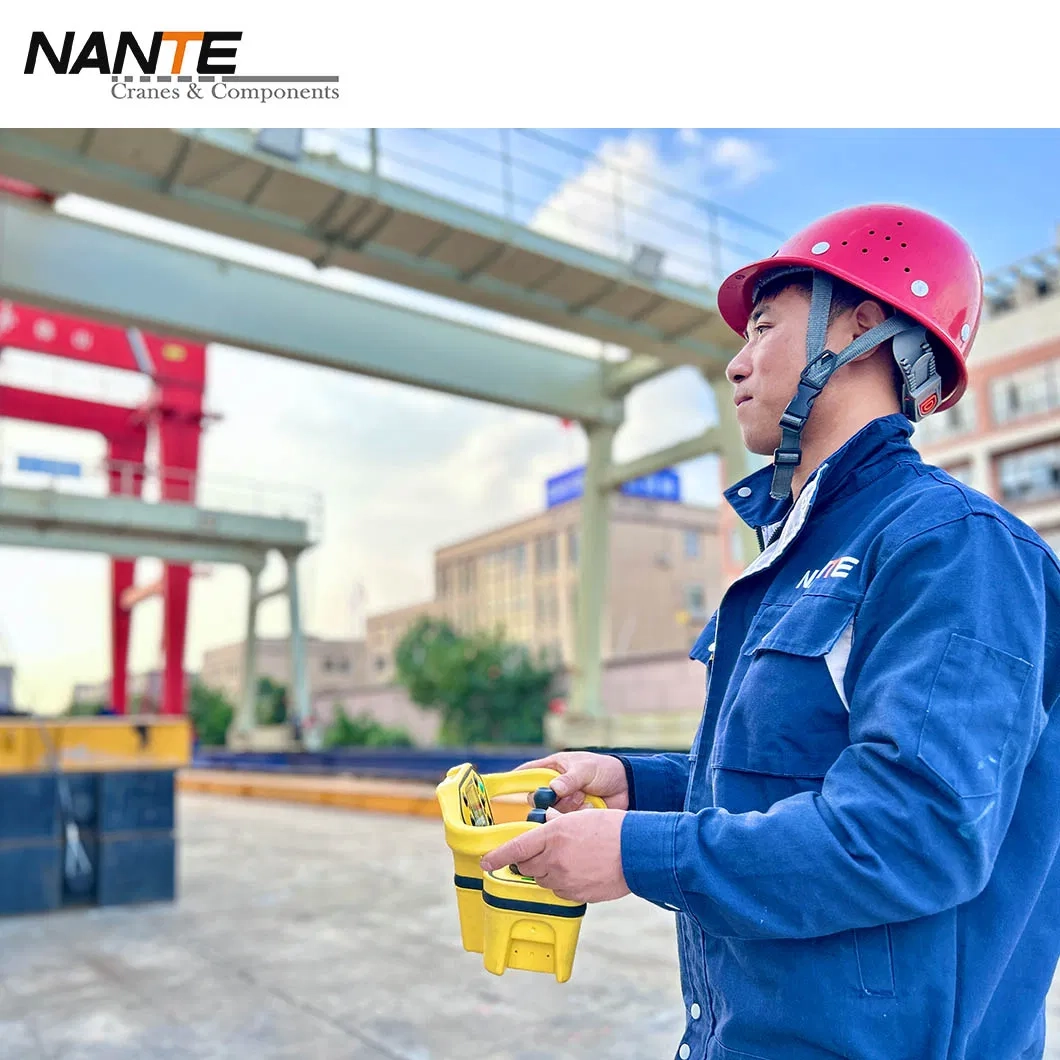
Wireless Remote Control Systems for Safer Distance Operation
Wireless remote control systems let operators work from a safe distance. This reduces exposure to moving loads, swinging hazards, and environmental risks. Modern remotes use reliable signal identification to avoid interference and support operating ranges up to 100 meters.
Benefits include better visibility, removal of cable tripping hazards, and more operational flexibility. Operators can pick the best positions without being tied to the crane. These systems greatly improve wireless crane remote control safety and overall crane control system safety. They keep personnel away from danger zones while giving full command.
Must-Have Safety Devices Integrated with Control Systems
Safety devices work closely with the crane control system. When connected well, they turn the control panel into an intelligent guardian that stops accidents before they happen.
Overload Protection Systems
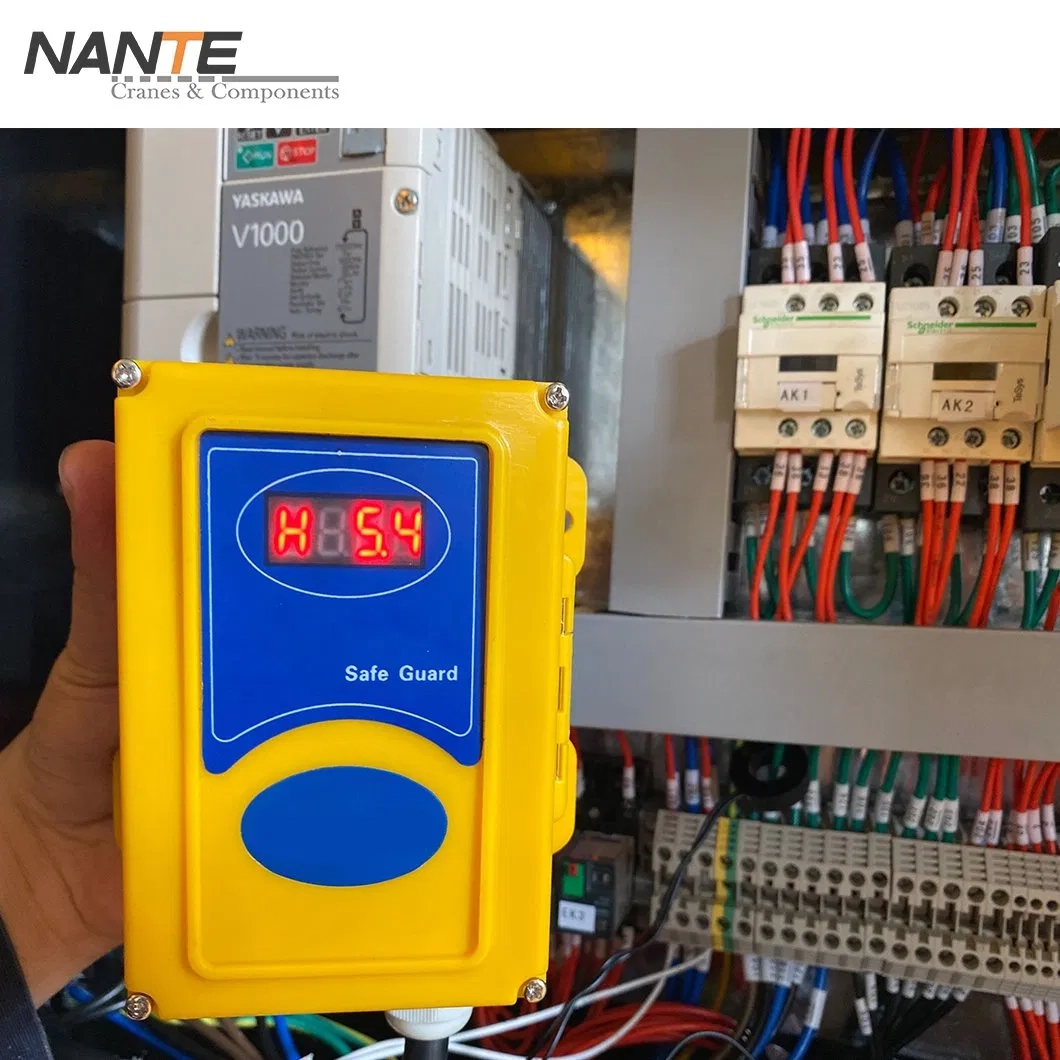
Overload protection devices keep constant watch on the lifted load against the crane’s rated capacity. When limits come close or get passed, the system stops hoisting motions automatically. This helps prevent rope breakage, structural damage, or tipping.
This crane overload protection device connects directly with the control system. It makes sure the response is fast. Load limiters protect both the crane and nearby infrastructure. They become essential crane safety enhancers in every heavy-lifting application.
Limit Switches (Travel & Hoisting Limits)
Limit switches set safe boundaries for crane movements. Hoist limit switches stop over-hoisting. Travel limit switches halt the bridge or trolley before they reach end stops or collision points.
These devices send signals to the control panel. The panel then cuts power or applies brakes. Rotary, lever, and cross-travel variants fit different crane setups. Proper crane limit switch safety removes risks of over-travel. It also makes sure positioning stays exact in complex workspaces.
Electromagnetic Braking Systems
Electromagnetic brakes give reliable stopping power for hoisting and travel motions. They engage automatically when power is lost or when emergency signals come. This action prevents uncontrolled load descent.
Many systems add dual-brake redundancy for critical applications. The crane braking system safety features work smoothly with the control panel. They deliver quick response and keep load control even during faults.
Emergency Stop Systems
Emergency stop (e-stop) systems offer one-touch shutdown across pendant, remote, and other control interfaces. They connect with overload, limit, and anti-collision signals for full protection.
Category 0 or 1 stops make sure halting stays safe and controlled. A well-designed crane emergency stop system stays easy to reach and dependable. It forms a final safety barrier in unexpected situations.
Smart Safety Enhancers in Modern Crane Control
Advancing technology brings intelligent layers that make crane control system safety even stronger.
Variable Frequency Drives (VFD) for Smooth Motion
Variable frequency drives (inverters) allow soft starting and stopping. They reduce load sway and mechanical stress. Precise speed control improves accuracy. It also cuts sudden movements that could cause accidents.
VFD crane safety benefits include smoother operations, lower energy use, and longer component life. They become valuable upgrades for both new and existing cranes.
Anti-Collision Systems
Anti-collision systems use sensors to detect other cranes or obstacles on the same runway. The control system gets signals and slows or stops movements automatically to avoid impacts.
This crane anti collision system proves especially useful in facilities with multiple cranes. It improves safety without losing productivity.
Real-Time Monitoring & Diagnostics
Modern control panels support real-time condition monitoring and diagnostics. Sensors track load, speed, temperature, and fault conditions. They give early warnings to operators or maintenance teams.
Smart crane monitoring systems allow proactive safety management. They reduce unexpected failures and support decisions based on data.
How to Choose the Right Crane Safety Enhancers for Your Operations
Selecting appropriate crane safety enhancers requires matching components to specific needs.
Based on Crane Type
Overhead cranes benefit from strong control panels and travel limit switches. Gantry cranes often need better anti-collision features for outdoor or large-span operations. Jib cranes and workstation systems focus on compact and precise pendant or wireless controls. Construction cranes and offshore models need heavy-duty braking and overload protection suited to tough conditions.
Based on Working Environment
Warehouse applications focus on smooth VFD control and exact positioning. Port and offshore environments need corrosion-resistant components and reliable wireless systems. Factory and construction sites emphasize emergency stops and real-time monitoring to handle changing loads and many people nearby.
Compliance with Safety Standards
All crane control components and safety devices should match ISO and FEM requirements. These standards control overload protection, limiting devices, emergency stops, and overall machinery safety. Choosing compliant solutions ensures rule following and long-term reliability.
A practical checklist includes checking load capacity, movement frequency, operator positioning, environmental factors, and integration abilities with existing control systems.
Ready to Upgrade Your Crane Control System Safety?
Nante Crane is a leading crane manufacturing company with over 30 years of experience in providing high-quality, intelligent, and customized crane solutions and parts worldwide. With expertise in providing high-quality and customized solutions for various types of cranes such as overhead cranes, gantry cranes, jib cranes, construction cranes, workstation cranes, and offshore cranes, Nante offers crane control panels, pendant controls, wireless remotes, overload protection, limit switches, and safety enhancement solutions to suit your needs. Contact Nante Crane today to get expert consultation and customized crane safety enhancers!
FAQ
What are the most important crane safety enhancers?
Key enhancers include crane control panels, overload protection, limit switches, electromagnetic brakes, and remote controls with emergency stops. Together they form a complete safety network.
How does a crane control panel improve safety?
The panel acts as the operational brain. It coordinates movements and connects multiple protection devices for immediate response to faults or unsafe conditions.
Why is overload protection critical in crane operations?
It prevents structural damage, rope failure, and tipping by stopping hoisting automatically when capacity limits get passed.
What is the difference between pendant and wireless remote control for cranes?
Pendant systems offer wired direct control with emergency stops. Wireless remotes give greater operator freedom, safer distances, and fewer tripping hazards.
Do crane safety devices need to comply with ISO or FEM standards?
Yes. Compliance makes sure devices meet strict performance and safety requirements for limiting, indicating, and emergency functions.