English



How to Select a Single Girder Overhead Crane or Double Girder Overhead Crane
How to Select a Single Girder Overhead Crane or Double Girder Overhead Crane
Date: 2026-03-19 Share:
Single Girder vs Double Girder Overhead Crane Selection
Factory managers and procurement teams often face tough choices about overhead cranes when they upgrade facilities or set up new ones. Picking the wrong type between a single girder overhead crane and double girder overhead crane may lead to safety risks, extra costs, poor work flow, or early replacement. This detailed overhead crane selection guide looks at designs, key specs, uses, and prices. It helps pick the best overhead crane for operations.
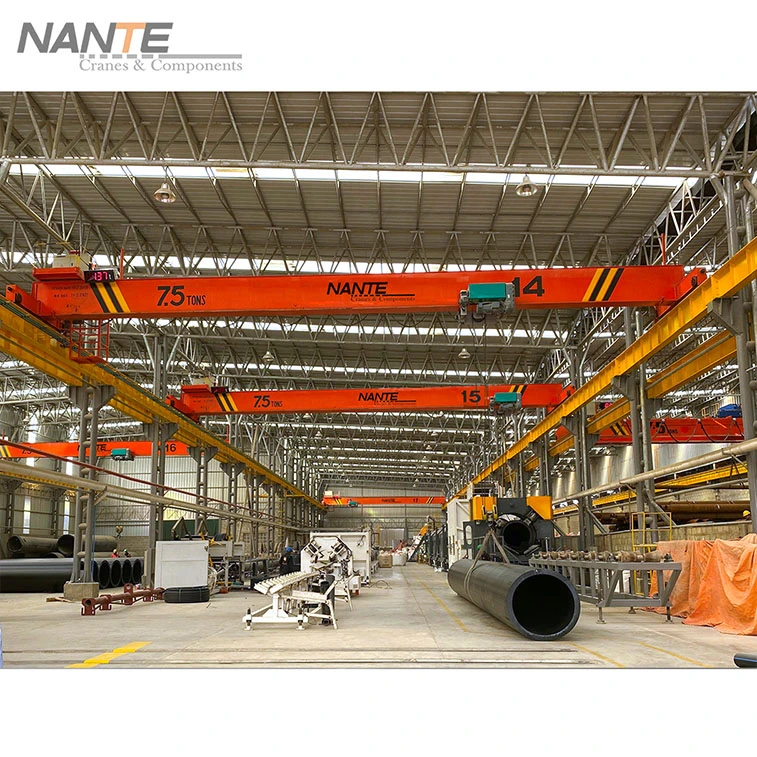
What Is the Difference Between Single Girder and Double Girder Overhead Cranes?
The main difference lies in the bridge. A single girder overhead crane has one beam. A double girder overhead crane uses two parallel beams. This change impacts stiffness, how weight spreads out, and overall performance.
Single girder overhead cranes focus on simple build and small size. Double girder overhead cranes stress strong build for tough, frequent work. Main differences between single and double girder crane cover material amount, hoist position, and fit for different tasks.
Structure and Design Differences
Single girder overhead crane structure: One main girder holds an underhung hoist trolley on the lower flange. This creates lighter total weight, simpler building process, and less strain on the building structure.
Double girder overhead crane design: Two girders (often box shape for extra stiffness) with top-running rails for the trolley. Better steadiness cuts down bending. It also allows extras such as walkways, cabs, or platforms.
Single girder overhead cranes lower the dead load on foundations. Double girder overhead cranes perform well in tough conditions thanks to strong twist resistance.
Lifting Capacity and Span Comparison
Single girder crane lifting capacity: Normal range stays at 1–20 tons (sometimes up to 32 tons for custom builds). It fits light to medium duty well.
Double girder crane span and capacity: Handles 5–300+ tons (even more with open winch). Spans go beyond 65 feet (up to 50m+). It keeps bending very low.
Double girder overhead crane manages bigger and more regular lifts across larger spaces with no issues.
Hook Height and Working Performance
Overhead crane hook height comparison shows double girder comes out ahead. The hoist sits between the girders. This gives 18–36 inches extra lift height and improved headroom.
Single girder overhead crane restricts height because of the underhung hoist. Double girder overhead crane allows quicker speeds, tougher duty cycles, and options like enclosed cabs. These improve working performance.
Advantages and Disadvantages of Each Design
Knowing the good and bad points helps make a better choice.
Advantages of Single Girder Overhead Cranes
Cost-effective: Lower costs for materials, shipping, and setup.
Compact and lightweight: Good fit for places with low headroom or tight space.
Better hook approach: Trolley and bridge get closer to walls.
Easier maintenance: Less parts make checks and fixes simpler.
Disadvantages of Single Girder Overhead Cranes
Capacity/span limits: Not good past 20 tons or 65 feet.
Reduced hook height: Limits vertical space.
Feature integration challenges: Hard to add walkways or heavy extras.
Advantages of Double Girder Overhead Cranes
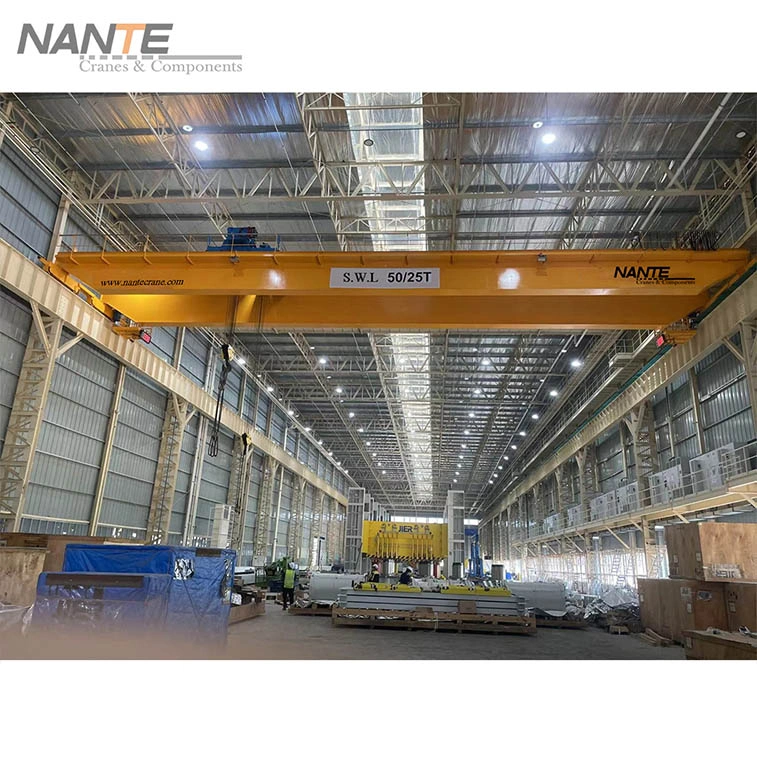
Superior capacity and span: Almost no real limits for big, wide jobs.
Greater hook height and stability: Helps with accurate lifts and regular heavy work.
Versatility: Simple to add platforms, lights, or outdoor features.
Long-term durability: Deals with hard duty and shows less wear.
Disadvantages of Double Girder Overhead Cranes
Higher cost: Needs more steel, harder building, and extra engineering.
Increased weight: Calls for stronger runways and foundations.
More complex installation: Takes longer and may need building changes.
When Should You Choose a Single Girder Overhead Crane?
Pick a single girder overhead crane for low-cost, average-level work.
Ideal Lifting Capacity Range (1–20 tons)
Light duty overhead crane works best up to 20 tons. It cuts down load on the building and saves energy during occasional tasks.
Best Workshops and Industries
Overhead crane for warehouse: Moves pallets and handles inventory in logistics.
Overhead crane for assembly workshop: Positions parts on production lines.
It also fits maintenance areas, light fabrication shops, small machine shops, and food/beverage material handling—where simple setup matters most.
When Should You Choose a Double Girder Overhead Crane?
Select double girder overhead crane for strong, busy settings.
High Capacity and Long Span Requirements
Heavy load overhead crane deals with 20+ tons in a steady way. Large span overhead crane covers wide bays without trouble.
Heavy Industry Applications
Overhead crane for steel plant: Handles coils, ingots, and structures.
Overhead crane for foundry: Lifts molten metal pots at high temperatures.
It appears often in shipbuilding, mining, power plants, heavy machinery sites, rail yards, and ports. These places need steady, tough duty cycles.
Key Factors to Consider When Selecting an Overhead Crane
A good overhead crane selection guide checks these main points for the right match.
Required Lifting Capacity
Overhead crane tonnage selection: Add max load plus rigging and safety margins. Think about future needs to prevent undersized equipment.
Span and Workshop Layout
Crane span calculation: Measure bay width carefully. Longer spans need double girder to control bending.
Duty Class and Working Frequency
Crane duty class selection: Follow FEM/ISO/CMAA rules (for example, FEM 1Am–2m for light work; 3m–4m for heavy). Look at cycles per hour, load pattern, and daily run time. These affect part sizes and service life.
Budget and Installation Cost
Overhead crane cost comparison: Single girder stays lower (easier and quicker setup). Double girder costs more (40–60% extra on materials and labor). Yet it gives better return in heavy use because of longer life.
Other points include power type, indoor or outdoor setting, temperature, and safety rules.
How to Decide the Right Overhead Crane for Your Factory?
Follow this clear method to find the best overhead crane for factory.
Quick Decision Table: Single vs Double Girder Crane
| Factor | Single Girder Overhead Crane | Double Girder Overhead Crane |
| Capacity | 1–20 tons (light-medium) | 5–300+ tons (heavy-severe) |
| Span | Up to ~65 feet | 65+ feet (longer possible) |
| Hook Height | Moderate (underhung limit) | Higher (18–36″ advantage) |
| Cost | Lower (economical materials/install) | Higher (robust build) |
| Installation | Faster, fewer mods | More complex, potential reinforcements |
| Duty Class | A1–A5 / FEM 1Dm–2m | A5–A8 / FEM 3m–4m |
| Best Applications | Warehouses, assembly, maintenance | Steel, foundry, shipbuilding, heavy manufacturing |
This overhead crane comparison table makes fast checks easier.
When to Consult a Crane Manufacturer
For unusual layouts, dangerous areas, or growth plans, look for a custom overhead crane solution. Manufacturers review site details and give exact suggestions.
Conclusion
Go with a single girder overhead crane in lighter, cost-aware, space-tight cases. Pick a double girder overhead crane for big loads, longer spans, and heavy use. Good overhead crane selection improves safety, work speed, and lasting value. Check load, span, duty, and budget carefully.
Ready to Find the Perfect Overhead Crane Solution?
Nante Crane is a professional crane and crane component supplier with over 30 years of experience. We provide excellent single girder overhead crane solutions (1-20T, compact and energy-saving design) and double girder overhead crane solutions (300T+, robust design for heavy usage). We provide customization solutions as well as modular crane components like hoisting mechanism, enclosed conductor rail, travelling mechanism, etc., with global service support in 50+ countries worldwide. Contact us at Nante Crane today!
FAQ
What is the main difference between single girder overhead crane and double girder overhead crane? Single uses one beam for lighter setups; double uses two for heavier stability and features.
Which overhead crane is better for heavy loads? Double girder excels beyond 20 tons with superior capacity and durability.
How does span affect overhead crane selection? Spans over 65 feet favor double girder to avoid deflection issues.
Is a single girder overhead crane cheaper? Yes, lower materials, freight, and installation costs make it more economical.
When should I upgrade to a double girder overhead crane? When loads exceed 15–20 tons, spans lengthen, hook height increases, or duty becomes severe/frequent.