English


How Double Girder Cranes Can Ease Lifting Operations?
How Double Girder Cranes Can Ease Lifting Operations
Date: 2026-04-17 Share:
Double girder cranes work as strong overhead lifting tools. They help make lifting tasks much easier in tough industrial places. These cranes have two parallel girders. The girders give extra strength and solid support for heavy loads. Many businesses pick double girder cranes when they move materials often or handle complex jobs. The design cuts down on daily problems. It also makes work safer and quicker.
Introduction to Double Girder Cranes for Efficient Lifting
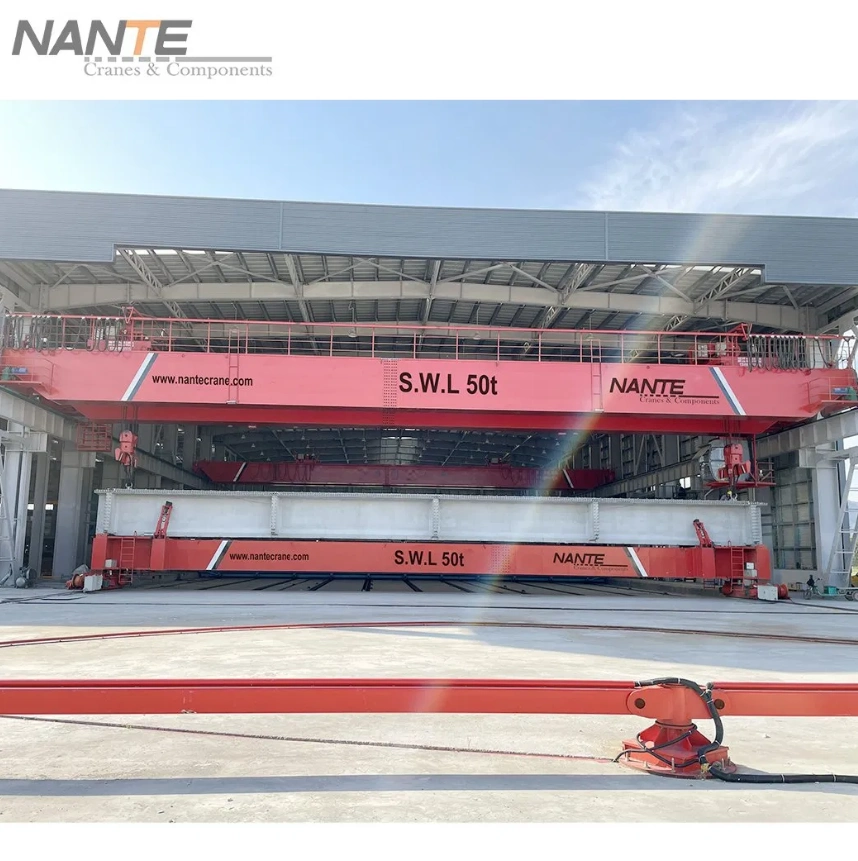
Double girder cranes are a tough kind of overhead crane system. They are built for heavy material handling. The equipment has two main girders that create a firm bridge. This setup lets the crane shift loads sideways along the runway and up and down with the hoist.
Facilities use double girder cranes to make lifting operations simpler. The two-girder setup spreads weight evenly. It also keeps structural bending low. Typical indoor uses appear in workshops and production halls. There, capacities go up to 63 tons. Spans run from 5 meters to 40 meters. The system supports smooth workflow. It lowers pressure on building structures and allows steadier load movement.
What Are Double Girder Cranes and How They Work
Double girder cranes act as electric overhead traveling (EOT) systems. In these systems, the hoist and trolley run along the top of the two parallel girders. The bridge, which the girders form, moves lengthwise on end trucks along fixed runway rails. At the same time, the trolley shifts crosswise on the girders. The hoist handles exact vertical lifting.
The working principle depends on coordinated motion. Inverter-controlled motors power the movements. They create smooth starts and stops. This method stops sudden jerks during lifts. It also supports steady operations without too much shaking. High-transmission-efficiency parts improve reliability in everyday lifting tasks.
Double Girder Crane Structure and Hoist Integration
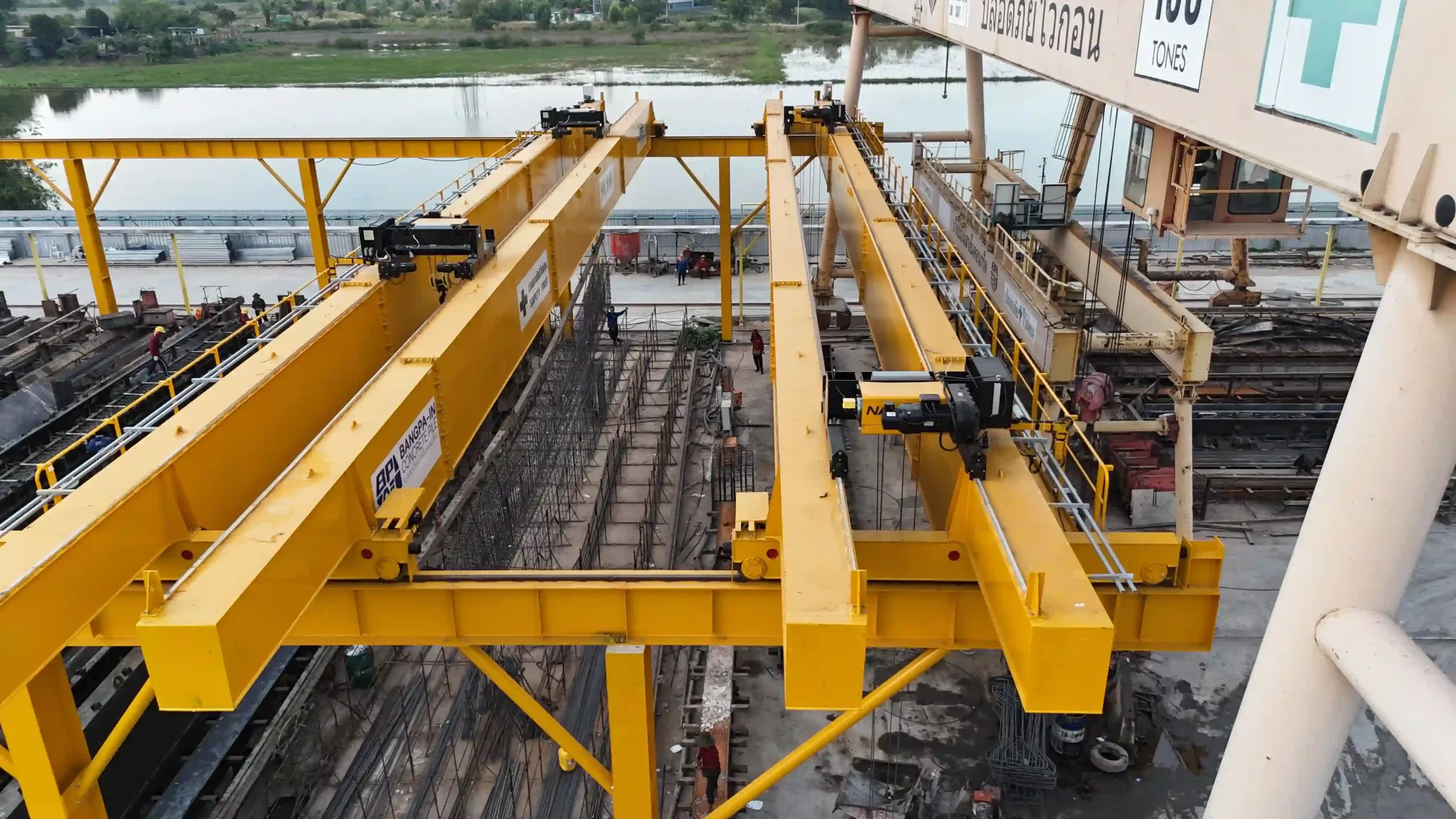
The structure of double girder cranes focuses on two welded girders. These girders use high-strength S355 material. They reach deflection ratios between 1/700 and 1/1000. This keeps very good stiffness under load. Walkways and handrails fit into the design. They allow safe access during setup.
Hoist integration happens either on top of the girders or between them. This position spreads loads more evenly across the bridge. It cuts deflection more than single-girder options do. The outcome is better stability. It directly helps lifting operations. Operators can place heavy items with more confidence and control.
Component Breakdown: Girders, End Trucks, Hoist and Trolley
Several main crane components work together to give reliable performance:
- Girders form the main load-bearing bridge and provide high rigidity for heavy loads.
- End trucks support the whole bridge and allow long travel. Hollow shaft designs fit smaller capacities. Bogie designs manage larger loads. Forged steel wheels with heat treatment ensure smooth running and durability.
- Hoist uses a European-standard electric model with double-speed or inverter control for precise lifting and lowering.
- Trolley carries the hoist across the girders. It offers flexible positioning over the work area.
Additional elements include IP55-protected motors with IE3 energy efficiency, electromagnetic brakes, and festoon or enclosed conductor systems for power supply.
Advantages of Double Girder Cranes in Lifting Operations
The advantages of double girder cranes show clearly when facilities deal with heavy or repeated lifting tasks. The dual-girder build gives better strength. It lowers risks from load sway and structural wear. Operators get faster cycle times and better accuracy. These factors together reduce operational downtime.
Double girder cranes also support higher duty classifications (M4 to M6). This makes them right for tough environments. Inverter controls and energy-efficient motors add to smoother performance.
Higher Load Capacity and Heavy-Duty Handling
Double girder cranes handle load capacities from 5 tons to 63 tons or more. This comes from the extra strength of two girders. The capability goes past usual single-girder limits. It allows safe movement of bulky or heavy items. Otherwise, those items might need several lifts or special equipment.
The design stops too much swaying. It keeps stable transport. Facilities gain from shorter handling time and lower accident risk when they move large machinery or raw materials. Higher load capacity directly supports more efficient double girder cranes lifting operations in busy settings.
Increased Hook Height and Operational Flexibility
One clear advantage shows in hook height. The hoist position between or on top of the girders often adds 18 to 36 inches of vertical clearance compared to single-girder designs. This extra height permits taller lifts inside the same building space.
Greater hook height improves flexibility for stacking, loading trucks, or moving loads in tight areas. Operators get more space to set materials exactly without lifting the whole crane structure. The outcome is smoother workflows and fewer changes during complex lifting sequences.
Stability and Precision for Continuous Lifting
The rigid double-girder structure delivers strong stability and exact load positioning. Low deflection and high-transmission-efficiency components reduce vibrations. This holds true even during ongoing or high-frequency lifts.
Inverter-controlled motors allow smooth speed changes. Electromagnetic brakes give reliable stopping power. These parts lower operator fatigue. They also protect the load and nearby equipment. Precision matters a lot when operators align heavy parts in assembly lines or production processes.
Suitable for Industrial Heavy Lifting and Complex Operations
Double girder cranes perform well in situations that need strong performance and detailed load paths. Safety features such as over-heat protection on motors and limit switches build operator confidence. The system manages complex operations where single-girder cranes might hit capacity limits or lose stability.
Facilities like the compact design and light self-weight. These features make installation easier while the cranes keep strong performance.
Comparison: Double Girder vs Single Girder Cranes
Understanding the differences between double girder and single girder cranes helps facilities choose equipment that truly eases lifting operations. Double girder models focus on strength and versatility for heavier tasks. Single girder options fit lighter duties.
Load Capacity Differences
Double girder cranes regularly manage loads from 5 tons up to 63 tons and beyond. They also handle higher duty cycles. Single girder cranes usually stop around 20 tons for lighter or medium-duty work.
This capacity difference makes double girder cranes the better choice for heavy industrial lifting operations. The extra girder shares the load. It reduces stress and allows safer, more frequent lifts without losing stability.
Span, Height and Machinery Integration
Double girder cranes support longer spans up to 40 meters while they keep rigidity. They also give greater hook height because of hoist placement above or between the girders.
The design fits easily with extra features such as platforms or specialized controls. Single girder cranes may give benefits in very low headroom situations. Yet double girder models offer better overall flexibility for heavy loads and wider coverage areas.
Real-World Applications That Benefit from Double Girder Cranes
Double girder cranes give clear better in fields where material deal hits output and safety right.
Heavy Manufacturing and Steel Production
In heavy make and steel make plants, double girder cranes shift big machine parts, raw steel rolls, or done goods with care. The high load size and steady cut turn times on make lines. Workers deal heavy parts safe. That lessens harm and backs steady make flows.
Warehouses and Material Handling Operations
Store rooms use double girder cranes to sort and move full goods over long spans. The more hook height lets good stack and get in tall store racks. Easy run traits help keep fast flow. They guard soft or heavy stock in regular lift jobs.
Shipyards and Construction Sites
Ship yards and big build sites count on double girder cranes for deal pre-made parts, heavy gear, or frame beams. The firm frame gives the steady need for outside or half-outside spots. More span and size let good move of over-size loads. That speeds job times and better site safety.
Choosing the Right Double Girder Crane for Your Facility
Assessing Load, Span, and Duty Cycle
Facilities should start by checking maximum load weight, required span length, and expected usage frequency (duty cycle). Lifting height and travel speeds also affect performance. For example, a 5–63 ton capacity range with 5–40 meter spans covers most indoor heavy lifting requirements. Accurate assessment stops under- or over-specification. It supports long-term productivity.
Operational Considerations for Long-Term Use
Control methods such as pendant and remote options give flexibility for different operator preferences. Energy-efficient designs with IE3 motors and inverter controls help manage power consumption during daily shifts. Considering these factors together with building clearances leads to a crane system that fits well and works reliably over time.
Ready to Enhance Your Lifting Operations with Reliable Double Girder Cranes?
Nante Crane is a leading manufacturer with more than 30 years of experience specializing in cranes and crane components. The company offers high-quality double girder EOT cranes with hoist. These feature compact design, light self-weight, smooth running, and compliance with international standards such as FEM, CMAA, EN ISO, and GB. These cranes deliver efficient, safe solutions tailored for various industrial lifting needs. Contact Nante Crane today to discuss customized options that fit your facility requirements.
FAQ
What is the main advantage of double girder cranes in lifting operations?
Double girder cranes provide higher load capacity, increased hook height, and greater stability. These features together ease heavy and complex lifting tasks while improving safety and efficiency.
How do double girder cranes differ from single girder cranes?
Double girder cranes offer superior load handling, longer spans, and better hook height because the hoist travels on top of or between two girders. This makes them more suitable for heavier industrial applications and higher duty cycles.