English



Gantry Crane Basics Single Girder, Double Girder, and Semi-Gantry Types
Gantry Crane Basics Single Girder, Double Girder, and Semi-Gantry Types
Date: 2026-02-20 Share:
A gantry crane is a handy lift tool used a lot for moving goods in many fields. Unlike overhead cranes that use building frames, a gantry crane has legs and end parts that hold up the bridge beam. This lets it work on its own on floor paths or rails. That setup fits gantry cranes well for outside spots and places without roof rail help. Usual gantry crane types cover single girder gantry crane, double girder gantry crane, and semi-gantry crane. Each kind gives clear pluses in weight hold, price, and use ease. This helps firms pick the best pick for storage areas, docks, build sites, and others.
Gantry Crane Types Overview
Gantry cranes show up in full and half setups. Full gantry cranes keep legs on both ends. They offer full move and steady base. Semi-gantry cranes use one floor leg and one building-held side. This saves room well.
Main pluses of gantry cranes cover:
Self hold without changing current buildings
Great fit for outside and inside use
Move along rails or paths
Solid parts like hoist, trolley, crane girder, end carriage, and electrical systems
These traits make gantry cranes safe, power-saving, and simple to keep up.
Single Girder Gantry Crane
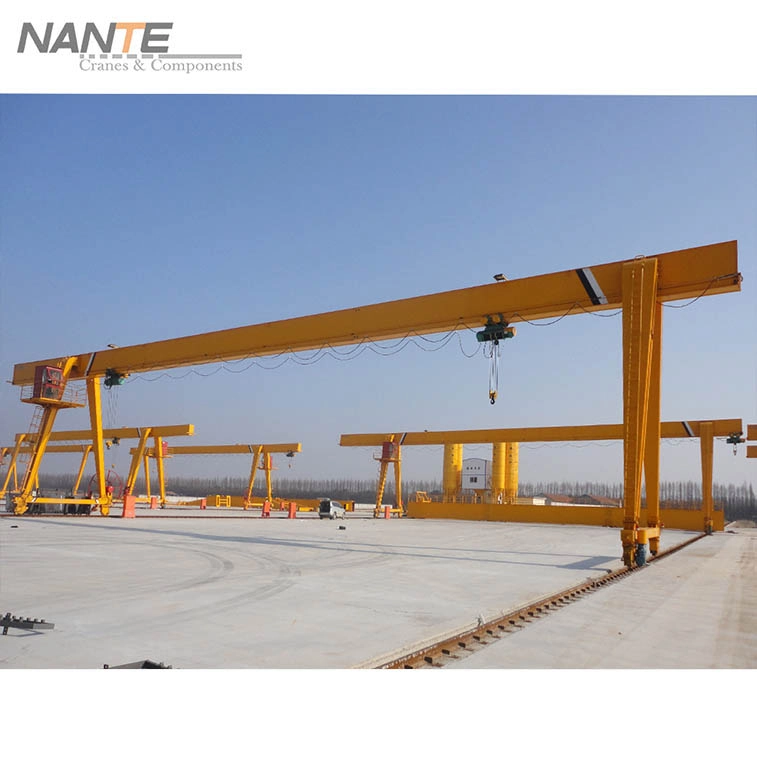
A single girder gantry crane uses one key crane girder (bridge beam). The hoist and trolley often go along the bottom edge for basic lifting.
Load Capacity Range
Single girder gantry cranes often deal with 1–20 tons. Some plans hit up to 30 tons for easy-to-fair work uses.
Typical Environments
These cranes fit inside storage, fix shops, and small outside lots. They work fine in low-time runs and short reaches.
Relative Cost Level
Single girder gantry cranes give lower price due to easy build, less stuff use, and simple setup.
When to Choose a Single Girder Gantry Crane
- Your loads stay under 20 tons.
- Budget is a key concern and you seek cost-effective lifting.
- You need a compact, lighter design for limited space.
- Operations involve occasional or medium-duty tasks.
Double Girder Gantry Crane
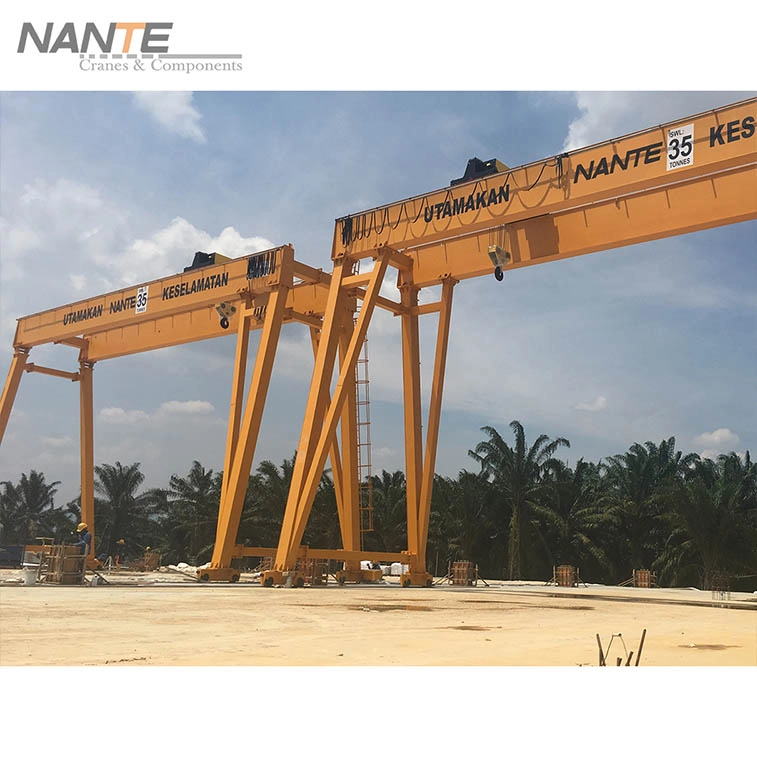
A double girder gantry crane has two side-by-side crane girders. It gives better power. The hoist and trolley usually run on top paths. This boosts hook reach, steady hold, and lift work.
Load Capacity Range
Double girder gantry cranes often take 5–300 tons or higher. Plans with open winch setups shine in tough, high-weight lifting.
Typical Environments
These cranes do well in hard outside spots like docks, stock lots, ship build areas, and big making. They manage high-time use and longer reaches with ease.
Relative Cost Level
Double girder gantry cranes show higher price from the strong two-girder build and more hard parts.
When to Choose a Double Girder Gantry Crane
- Loads exceed 20 tons and demand high stability.
- You run heavy-duty, continuous operations outdoors or in industrial zones.
- Greater lifting height, longer spans, or advanced features are required.
- Long-term durability and performance justify the investment.
Semi-Gantry Crane Explained
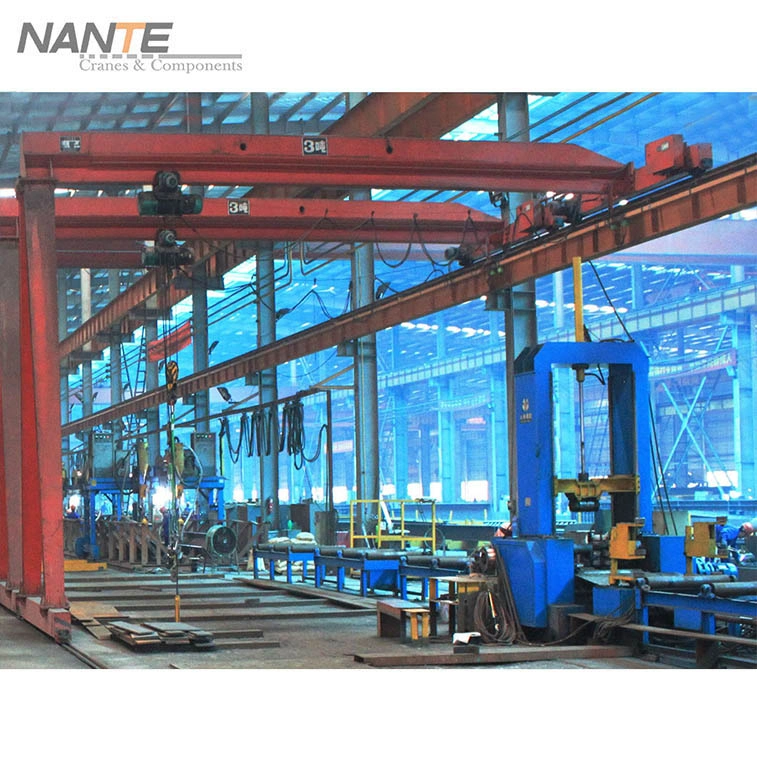
A semi-gantry crane mixes traits of full gantry and overhead setups. One side keeps a floor leg and path. The other fits on a building rail, wall, or post. This saves key floor room.
Load Capacity Range
Semi-gantry cranes often handle 0.5–32 tons. They back fair-weight lift needs.
Typical Environments
These cranes fit well inside (shops, sheds, move hubs) and some outside jobs. They join smooth with current builds.
Relative Cost Level
Semi-gantry cranes sit at a fair price level. They run higher than plain single girder kinds but cheaper than full double girder plans.
When to Choose a Semi-Gantry Crane
- Floor space is limited or you want to use existing building runways.
- Medium loads occur in workshops or confined areas.
- You desire cost savings compared to a full gantry crane while keeping mobility.
- Applications include metro maintenance, aviation assembly, or similar specialized tasks.
Difference Between Single Girder and Double Girder Gantry Crane
| Aspect | Single Girder Gantry Crane | Double Girder Gantry Crane |
| Load Capacity | 1–20 tons (up to 30 tons in some cases) | 5–300+ tons |
| Stability & Strength | Good for light/medium duty | Excellent for heavy, intensive duty |
| Lifting Height/Hook Approach | Moderate; limited by girder design | Superior height and better hook approach |
| Span Capability | Shorter spans | Longer spans possible |
| Typical Duty Cycle | Light to medium frequency | High frequency and heavy duty |
| Relative Cost | Lower | Higher |
| Best For | Warehouses, small yards, occasional use | Ports, shipyards, heavy manufacturing |
Single girder gantry cranes offer great worth for easy jobs with basic upkeep. Double girder gantry cranes bring top work for hard heavy weights and bigger work zones.
Gantry Crane Applications Outdoor
Gantry cranes shine outside. Their leg-hold setup cuts need for building frames. They stand up to wind and weather if set right (like truss girders for open spots).
Usual outside jobs include:
Ports and container handling
Stockyards and bulk material storage
Shipyards for hull sections and components
Construction sites for beams, panels, and equipment
Rail yards and scrap yards
Steel mills and fabrication areas
These jobs gain from the move and high-weight hold that gantry cranes give in open spots.
Gantry Crane vs Overhead Crane
Gantry cranes stand on legs and shift on floor paths. They stay mobile and fit for outside or short-term setups without build changes.
Overhead cranes fit on high rails tied to building posts. They offer set, high-weight inside work but need frame hold.
Pluses of gantry cranes:
Easier relocation and installation
No building reinforcement needed
Strong outdoor flexibility
Pluses of overhead cranes:
Higher possible capacities in fixed setups
Better space utilization indoors
Permanent stability for repetitive heavy lifts
Pick a gantry crane for outside lots, build work, or easy sites. Go for an overhead crane when top inside weight and set setup exist.
Choosing the Right Gantry Crane for Your Needs
Picking the top gantry crane rests on a few points:
Top load weight and time
Inside vs. outside spot
Open room and reach needs
Price vs. long-run strong needs
Fast check list:
Figure tonnage first
Check site settings (outside face, room limits)
Match price to work and upkeep
Add in future growth
This way makes sure steady, good goods move fit to work runs.
Ready to Upgrade Your Lifting Solution?
Nante Crane focuses on steady gantry cranes, covering single girder, double girder, and semi-gantry types, plus overhead cranes, construction cranes, workstation cranes, and quality crane components. With wide uses across fields like ports, storage, build, and more, and full service back, Nante brings made, power-saving fixes for goods move needs. Contact us today to discuss your project.
FAQ
What is the main difference between single girder gantry crane and double girder gantry crane?
Single girder models use one bridge beam for lighter loads (1–20 tons) and lower cost, while double girder designs use two beams for heavier loads (up to 300+ tons), longer spans, and greater stability.
Can gantry cranes be used outdoors?
Yes, gantry cranes are highly suitable for outdoor use in ports, shipyards, stockyards, construction, and more, thanks to their independent leg support and weather-resistant options.
How does a semi-gantry crane differ from a full gantry crane?
A semi-gantry crane has one ground leg and one building-supported side, saving space and cost for medium loads. A full gantry crane has two ground legs for complete mobility and higher capacities.
Which gantry crane type is more cost-effective for light loads?
A single girder gantry crane is the most cost-effective choice for light to medium loads due to its simpler design and lower material requirements.
What are typical applications for double girder gantry cranes?
Double girder gantry cranes are ideal for heavy-duty outdoor applications like ports (container handling), shipyards, steel stockyards, and large-scale manufacturing where high capacity and stability are essential.