English



6 Essential Tips of Launching Gantry Crane Operation
6 Essential Tips of Launching Gantry Crane Operation
Date: 2026-04-16 Share:
Launching gantry crane operation plays a critical role in modern bridge construction. Contractors rely on these specialized systems to lift, position, and install precast beams or concrete segments with high precision across challenging sites. Proper launching gantry crane operation ensures safety and efficiency when erecting spans over rivers, highways, or difficult terrain. This guide shares 6 essential tips that help project managers and operators handle beam lifting, alignment, and span shifting effectively. Readers will learn bridge launching crane safety tips and practical steps for how to operate launching gantry crane in real bridge projects.
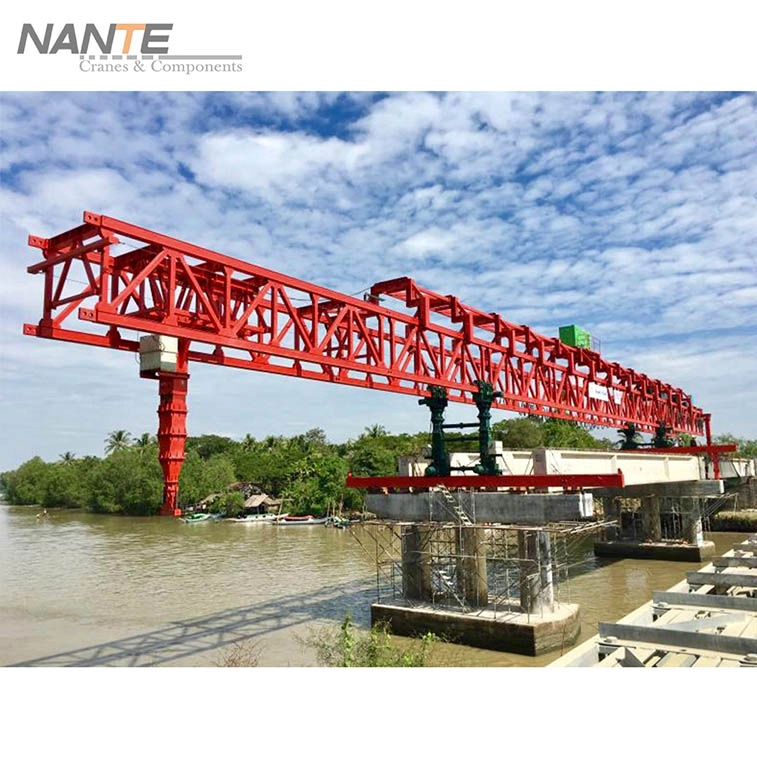 Understand Launching Gantry Crane Working Principles
Launching gantry cranes serve as dedicated equipment for bridge erection. These cranes lift precast beams, steel box beams, or precast segment sections into place. After completing one span, the crane advances to the next span to continue construction. The process supports efficient segmental assembly while maintaining structural stability.
What Is a Launching Gantry Crane in Bridge Construction
A launching gantry crane functions as a self-advancing system designed specifically for bridge projects. The crane spans between completed sections and piers. It picks up heavy precast elements. Then it moves them into position. Finally, it lowers them accurately onto bearings. Operators then connect the segments before the entire system launches forward. This capability makes the launching gantry crane ideal for viaducts, highway bridges, and infrastructure built over obstacles.
Span-by-Span vs Balanced Cantilever Methods
Bridge teams choose between two primary erection approaches depending on project conditions. The span-by-span method assembles all segments for one complete span before applying tensioning. The crane then advances steadily to the next span. This approach works well for simpler, straight alignments and delivers predictable progress.
The balanced cantilever method builds symmetrically outward from a central pier. Segments are placed evenly on both sides to maintain equilibrium and minimize unbalanced loads on the pier. This technique suits continuous bridges or curved alignments where stability during construction remains critical. Launching gantry crane operation adapts to both methods through adjustable support legs and precise controls.
Key Components of the Launching Gantry Crane
The crane truss girder forms the main load-bearing structure. Manufacturers weld it from high-strength S355 material using compact truss designs that follow ISO 15614 and AWS D14.1 standards. The crane truss girder provides stiffness while keeping overall weight manageable for long spans.
The crane winch handles lifting duties. It often features multiple wire rope layers and a short drum design for enhanced reliability and reduced wear. Operators use construction-grade or European-standard winches that support smooth hoisting of heavy segments.
The crane control system manages all movements. Panels designed to IEC standards include real-time monitoring of load weight and lifting speed. Additional elements include the anti-roller mechanism, which CNC machining produces for precision and durability during forward travel.
Ensure Proper Pre-Operation Inspection
Thorough pre-operation checks form the foundation of safe launching gantry crane operation. Teams must verify every critical system before any lift or movement begins. This step prevents accidents and supports consistent performance throughout the bridge project.
Check Structural Integrity of the Crane Truss Girder
Operators examine the crane truss girder for any signs of deformation, cracks, or weld issues. The compact welded structure must remain free of damage to handle heavy loads during segment erection. Visual and dimensional checks confirm that the girder aligns correctly with support points on the bridge alignment.
Inspect the Crane Winch System and Wire Rope
Inspection of the crane winch focuses on proper drum winding and brake function. Teams check the wire rope for visible wear, kinks, or broken strands. Multiple rope layers improve lifting reliability when the crane handles precast beams or large segments. Any irregularity requires correction before operations resume.
Verify the Crane Control Panel and Monitoring Features
The crane control panel must respond correctly to all commands. Operators confirm that the monitoring system displays accurate load and speed data in real time. Functional limit switches, emergency stops, and communication links ensure the entire system supports safe launching gantry crane operation from the initial setup.
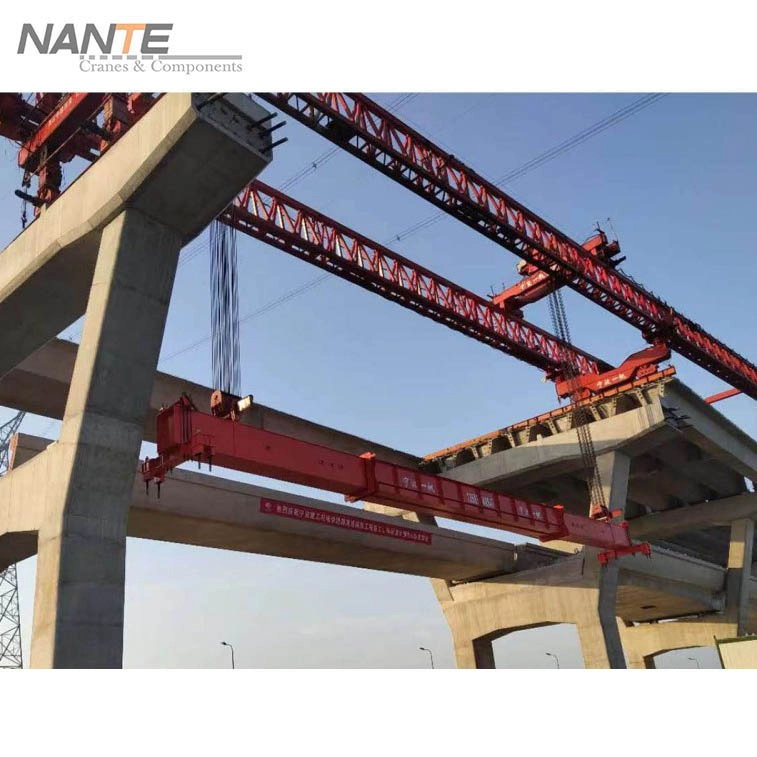
Follow Standardized Load Handling Procedures
Safe and precise load handling directly impacts both segment quality and project timelines. Standardized procedures minimize risks while enabling millimeter-level accuracy during installation.
Proper Beam Lifting and Positioning Techniques
Operators center the crane winch over the load and perform a test lift to verify balance. They hoist the precast beam or segment to the required height. They use fine controls for lateral and longitudinal adjustments. This methodical approach achieves precise placement onto pier bearings or existing deck sections.
Avoid Overloading and Uneven Load Distribution
Every lift respects the crane’s rated capacity for the specific configuration. Teams distribute loads evenly to prevent stress concentrations on the crane truss girder. Uneven loading can cause instability. So operators monitor weight distribution continuously through the crane control system.
Achieve Precision Alignment for Segment Installation
Fine adjustment mechanisms allow operators to align segments with sub-millimeter accuracy. The process involves coordinated movements of the lifting trolley and rotation features when needed. Precise alignment reduces subsequent adjustments and supports strong epoxy joints and post-tensioning in both span-by-span and cantilever work.
Optimize Crane Movement Between Spans
After completing a span, the launching gantry crane must advance safely to the next position. Optimized movement procedures maintain stability and prepare the system for the following erection cycle.
Execute Smooth Forward Launching Mechanism
The launching sequence begins once the current span receives full tensioning. Support legs or the crane truss girder advance in coordinated steps. Operators transfer loads carefully between front, middle, and rear supports to keep the system balanced during the launch.
Rely on the Anti-Roller System for Stable Travel
The CNC-machined anti-roller mechanism prevents tilting and ensures smooth travel along the bridge deck or rails. This feature provides stability even under dynamic conditions. It allows the crane to drive the girder forward or reposition support legs without excessive vibration or misalignment.
Handle Curved Bridge Construction Effectively
Curved alignments require additional planning. Rotating parts on the launching gantry crane enable side beam erection without extra assistance. Operators adjust paths and use the crane’s variable span features to follow the bridge geometry while maintaining safety and precision.
Utilize Smart Control and Monitoring Systems
Modern technology enhances decision-making during every phase of launching gantry crane operation. Real-time data and automation reduce human error and improve overall control.
Enable Real-Time Load and Speed Monitoring
The integrated monitoring system tracks load weight and hoisting speed continuously. Operators receive immediate feedback and can adjust actions to stay within safe limits. This capability proves especially valuable when handling heavy precast segments at varying heights.
Leverage Automation and Remote Control Features
Automation assists repetitive tasks such as segment placement and minor alignments. Remote control options allow operators to maintain safe distances while retaining full command over movements. These features streamline workflows in both span-by-span and balanced cantilever scenarios.
Benefits of IEC Standard Crane Control Systems
Crane control panels built to IEC standards deliver consistent and reliable performance. Clear displays and responsive interfaces help teams maintain high safety levels. The systems integrate well with other bridge construction equipment and support efficient project execution.
Emphasize Operator Skill Requirements and Compliance
Skilled personnel and adherence to standards ensure repeatable success in demanding bridge environments. Human factors remain central to effective launching gantry crane operation.
Operator Skill Requirements for Launching Gantry Crane Operation
Qualified operators understand load paths, exclusion zones, and emergency protocols. They coordinate with spotters and ground teams during lifts and launches. Experience with variable site conditions helps teams adapt procedures while preserving safety and efficiency.
Adhere to International Standards in Operations
Operations follow established guidelines from FEM, EN, ISO, and related codes. Compliance covers load testing, anchoring during launching, and proper use of all safety devices. These standards ensure the crane performs reliably across different segmental bridge erection projects.
Integrate Safety Protocols Throughout the Workflow
Clear communication protocols, exclusion zones, and continuous monitoring form core bridge launching crane safety tips. Teams establish stop-work authority and conduct briefings before each major phase. These measures protect personnel and assets during critical lifting and span-shifting activities.
Correct launching gantry crane operation accelerates bridge construction timelines while significantly lowering risks associated with heavy segment handling and span shifting. Teams that apply these 6 tips achieve higher precision, smoother workflows, and better overall project outcomes in demanding bridge environments.
Get Customized Launching Gantry Crane Solutions from Nante Crane
Nante Crane is a leading manufacturer with more than 30 years of experience providing high-quality cranes and crane components for bridge construction and other lifting applications. The company offers reliable launching gantry cranes in single girder (50t-100t), double girder (120t-300t), and segmental (700t-900t) configurations, along with advanced crane winch, crane control system, and truss girder designs that meet international standards such as FEM, ISO, and IEC. Project teams seeking tailored equipment and support can contact Nante Crane for efficient bridge construction solutions.
FAQ
Q1: What is the main purpose of a launching gantry crane in bridge construction?
A: The launching gantry crane lifts, positions, and installs precast beams or segments, then moves forward to the next span efficiently and safely.
Q2: How does the span-by-span method differ from balanced cantilever in launching gantry crane operation?
A: Span-by-span completes one full span before advancing, while balanced cantilever builds symmetrically from a pier, suiting continuous or curved bridges.
Q3: Why is real-time monitoring important during launching gantry crane operation?
A: Real-time monitoring of load and speed helps operators maintain safety and precision when handling heavy segments.
Q4: What capacity range do launching gantry cranes typically cover for bridge projects?
A: Capacities range from 50t for smaller beams to 900t for large segmental work, depending on the crane configuration.