English


What Determines Steel Plant Crane Requirements?
Date: 2026-11-13 Share:
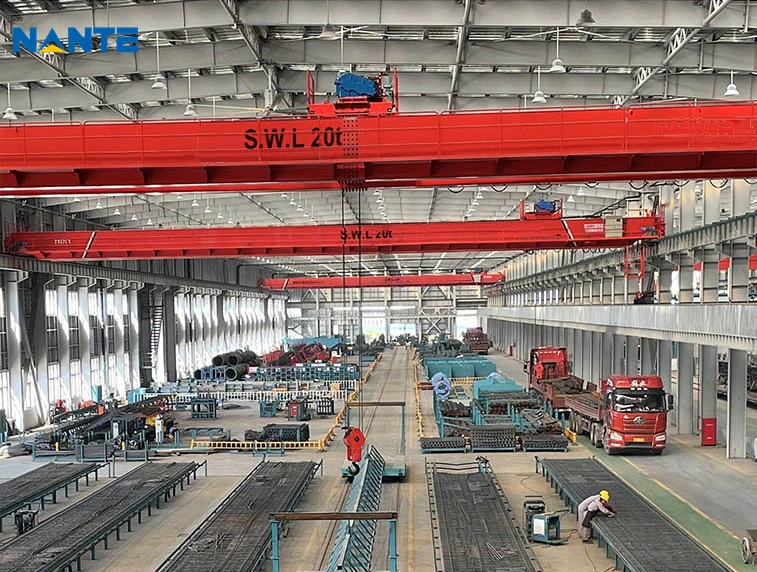
Steel plant crane requirements depend on the suspended load, the production cycle, the operating environment, and the consequences of a failed lift. Rated capacity, span, and lifting height establish where the crane can work. Load frequency, heat exposure, runway limits, and operator visibility determine how it must work.
A ladle transfer crane, a coil handling crane, and a maintenance crane can have the same rated capacity and require different hoists, brakes, motors, and controls. A useful request for quotation (RFQ) describes the most demanding lift and the busiest production shift, then asks each supplier to explain how its proposed crane will handle both.
What an Overhead Crane for Steel Plant Operations Must Handle
Turn each lifting task into an RFQ requirement
Start with the load at the hook, the route it follows, and the conditions at pickup and set-down. If one crane serves multiple tasks, list each task separately. This gives suppliers a basis for explaining which application governs each part of the design.
| Steel plant application | Data to include in the RFQ | What the supplier should confirm |
| Ladle transfer | Maximum filled ladle weight, detachable lifting beam weight, transfer route, and duration of heat exposure | Brake arrangement, load holding on loss of power, and the heat exposure assumed for critical components |
| Coil handling | Coil weight and dimensions, tong or C-hook details, peak shift throughput, and placement tolerance | Hook access with the attachment fitted, low-speed control, and achievable cycle time |
| Maintenance lifting | Heaviest assembly, removal path, landing point, lift frequency, and existing runway information | Wheel loads, clearance for the assembly and rigging, and any runway or installation work required |
Record the combined weight of the material, vessel or carrier where applicable, and detachable below-the-hook equipment. For an offset load, include the center of gravity and required orientation. State the units explicitly, particularly where equipment documents use both U.S. short tons and metric tonnes.
Verify the load path and runway together
Provide a bay drawing that shows pickup and landing elevations, hook approaches, obstructions, and the clearance needed with the attachment in place. A crane may have enough vertical travel to lift a maintenance assembly while lacking the horizontal approach needed to place it on a service stand.
For a replacement, request proposed wheel loads, wheel spacing, and the forces used to design the runway interface. Have the plant’s structural engineer review the rails, beams, and supports. Where cranes share a runway, identify permitted simultaneous operation and any travel restrictions before comparing configurations.
Steel Mill Crane Requirements for Heavy Loads and Duty Class
Specify a heavy duty steel crane from the production cycle
A load spectrum shows how often a crane operates at different fractions of its rated load. Pair it with peak lifts per hour, shifts per day, typical hoisting and travel distances, and expected service life. Include empty returns, long holds, and repeated positioning moves where they are part of production.
Repeated loading affects the fatigue demands on the structure and mechanisms. Frequent starts and reversals also affect motor heating, while repeated lowering can increase the thermal demand on the braking system. For this reason, the RFQ should describe both the heaviest lift and the work the crane repeats throughout a shift.
Ask for the basis behind the proposed duty class
Require each bidder to state the classification system and edition, the proposed crane service class, and any separately classified mechanisms. Ask suppliers to identify the assumed load distribution, total cycles, and operating hours. These inputs give the purchasing team a common basis for reviewing offers that use different classification systems.
For production-critical service, include the time spent engaging, positioning, and releasing the attachment. A higher travel speed may have little effect on throughput if the cycle is dominated by aligning a coil tong or settling the load at the landing point. Ask bidders to estimate cycle time against the same sequence.
High Temperature Crane Inputs, Motor Selection, and Corrosion
Specify where and for how long the crane is exposed
Distinguish ambient air temperature from radiant heat. Identify where the hook block, lifting attachment, trolley, and electrical equipment sit during normal operation and during delays. A hook block held above a hot vessel during a process interruption can experience longer exposure than the same block during a normal transfer.
Ask for the temperature assumptions and protective measures behind the component selection. For the hoist motor, request the proposed rating at the specified ambient temperature, speed range, and starting frequency. Sustained low-speed operation can reduce cooling from a shaft-mounted fan, so the bidder should explain the cooling arrangement and any resulting operating limits.
Define contamination by location
Record where airborne scale collects, where condensation forms, and where washdown or corrosive fumes reach equipment. A plant can then specify coating preparation and inspection for exposed steel, plus sealing and cable entry details for electrical enclosures.
Ask how technicians will reach filters, cooling equipment, and inspection points. If a coating is likely to be damaged during assembly or service, include the repair procedure and inspection criteria in the handover documentation.
Operator Cabins and Safety Requirements
Check visibility from the actual operating position
Compare an operator cabin, radio control, and pendant control against the lift route. For a cab, review visibility at the pickup and landing points, heat exposure at the glazing, ventilation or cooling, and safe access and egress. For radio control, identify where the operator can stand with a clear view and adequate separation from the load path.
Where a camera is needed, define the view it must provide and what the operator should do if the feed is unavailable. Include a site check with the intended attachment fitted so the team can assess sightlines under realistic conditions.
Define load holding and recovery before ordering
For covered U.S. installations, OSHA 29 CFR 1910.179(f)(2)(vi) requires at least two holding brakes on each independent hot-metal hoisting unit that uses power control braking. Ask for a brake arrangement drawing and an explanation of how the hoist holds the load on power loss and controls lowering in normal operation.
Specify the intended response to emergency stops, hoist and travel limits, and loss of the control signal where applicable. Assign responsibility for verifying those responses. For a suspended ladle, agree on a plant recovery procedure and a safe way to validate the relevant functions during commissioning.
Compare Steel Plant Crane Proposals Against the Same Duty
Request evidence tied to the steel mill application
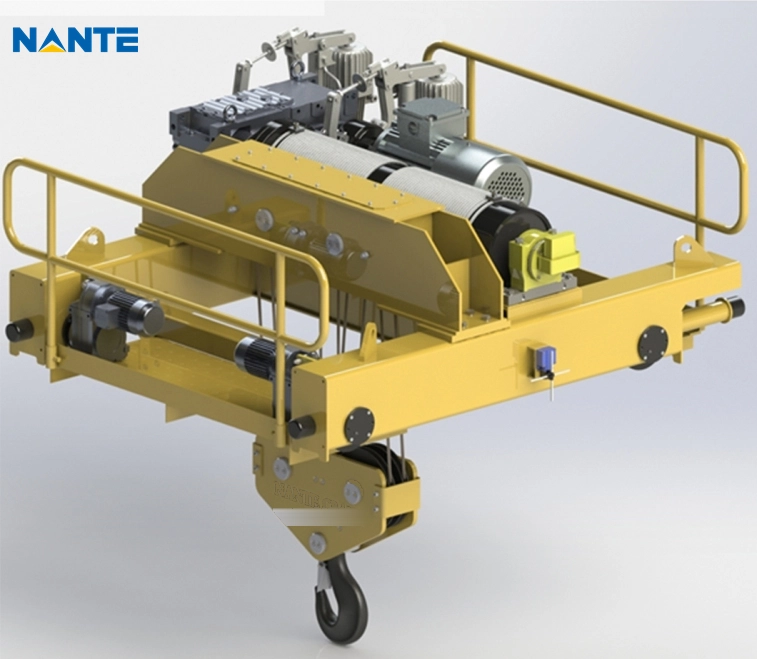
For heavy production service, Nante Crane offers a configurable double-girder overhead crane with winch, with operator cabin and electrical enclosure options. The overhead crane product range provides a starting point for reviewing other configurations across the plant.
The steel mill crane systems guide covers equipment by application. For furnace and casting bays, the high-temperature overhead crane design guide covers component protection in more detail.
Assign an acceptance check to each critical requirement
Before award, reconcile exclusions that affect installation or production readiness, particularly runway work, controls integration, site testing, and startup spares. Put each critical acceptance item in the purchase specification with its evidence, verification stage, and responsible party.
| Requirement | Evidence or acceptance check |
| Ladle hoist behavior | Brake drawings and an agreed test procedure for load holding and relevant fault responses under controlled conditions |
| Coil handling throughput | A site cycle check with the specified attachment, representative load, and actual pickup and landing points |
| Retrofit fit | Approved arrangement and runway reactions, followed by site checks of hook approaches and clearances |
| Environmental protection | Component rating documentation, agreed coating inspection records, and confirmation of access to cooling and inspection points |
Separate factory checks from tests that depend on the installed runway, process equipment, or operating position. Before handover, collect the as-built drawings and inspection procedures. Confirm which brake, drive, and cooling parts the plant will stock and how maintenance staff can access them.
Frequently Asked Questions
Can the same crane handle coils and molten steel?
A shared crane needs an engineering review of both services. Evaluate the combined duty, attachments, thermal exposure, operating modes, and applicable hot-metal requirements. Also check how attachment changes and competing production schedules affect crane availability.
Can a maintenance crane be reassigned to regular production work?
Start with the new load spectrum and peak cycle, then review the existing crane and runway against that duty. The assessment should consider equipment condition, service history, fatigue exposure, brakes, and controls as well as rated capacity.
Request a Steel Plant Crane Technical Proposal
Submit the lift data and bay layout for review
Plant engineering and purchasing teams can share the application, maximum suspended load and attachment, span and lift height, peak production cycle, heat exposure, bay drawing, and installation location. For a replacement, include available runway information. For a configuration review and a project-specific technical proposal based on those inputs, submit the steel plant crane project brief.