English


How to Choose a Reliable Crane Component Manufacturer in China
Date: 2026-11-06 Share:
A reliable crane component manufacturer in China should qualify through verifiable evidence: relevant certificates, controlled manufacturing processes, traceable inspection records, and comparable export experience. Buyers should use these checks to decide which manufacturers enter the RFQ shortlist.
A focused qualification review connects a manufacturer’s product range and factory capabilities with the requirements of the proposed order. The purchasing team needs evidence connected to the actual manufacturing site, product family, and proposed order.
The audit should answer one question: does this manufacturer control the processes and decisions that determine component quality? Technical and commercial quotations become more useful once that responsibility is clear.
Define the Manufacturer Approval Scope
Audit the component family being purchased
A manufacturer may be suitable for fabricated end carriages but need further assessment for electrical control panels. Approval should identify the component family, manufacturing location, and processes reviewed.
Define whether the proposed purchase covers a complete assembly, a machined part, a replacement unit, or production to an approved drawing. Identify the critical features that affect fit, function, and safe integration.
This keeps supplier approval specific. Evidence from one product line should not automatically qualify every item in the catalog.
Separate mandatory requirements from preferences
Before contacting factories, establish the conditions required for shortlist entry. These might include identifiable manufacturing responsibility, relevant technical records, controlled drawings, and acceptance of the proposed inspection requirements.
Treat preferences separately. Workshop resources and product coverage are most useful when supported by traceability and inspection records relevant to the order.
Record each finding as verified, pending evidence, or unacceptable for the proposed scope. This makes the selection decision easier to explain internally.
Verify Certifications and Company Identity
Match certificates to the legal entity and site
Request complete certificate copies. Check the company name, production address, certificate number, scope, issuing body, and validity dates. Confirm the record with the issuer where verification is available.
Compare these details with the proposed contracting company and manufacturing site. If an exporter handles the sale, document the relationship between the exporter and factory.
A mismatch requires clarification. Buyers should understand which entity manufactures the component, releases it for shipment, and accepts responsibility for nonconformities.
Distinguish management certification from component evidence
Review management-system certification separately from the documents required to accept the quoted product. A certificate should not replace an approved drawing, inspection record, or agreed test report.
Ask the manufacturer to identify the requirements applicable to the proposed component and destination. The purchasing team’s responsible engineer should confirm the project requirements.
Create a short evidence matrix: requirement, supporting document, responsible party, and unresolved exception. A general compliance statement should remain pending until its scope is clear.
Audit an OEM Crane Components Supplier’s Process Control
Establish the boundary between in-house and outsourced work
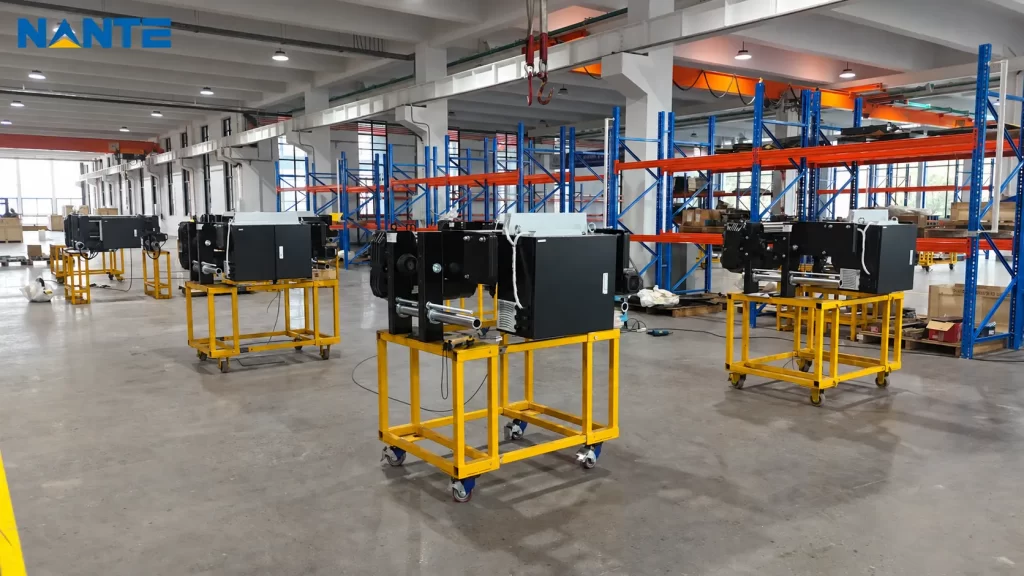
Ask the OEM crane components supplier to map the production route for the proposed assembly. Identify where fabrication, machining, heat treatment, coating, assembly, and testing occur.
Outsourcing should trigger questions about control. Who approves subcontractors? How are specifications transferred? What inspection takes place when subcontracted items return?
Request examples connected to the relevant product family. A written process should be supported by records showing how the manufacturer applies it.
Follow one component through its records
During a factory visit or remote audit, select a recent component and trace its documentation from the released drawing to final inspection.
Check whether the drawing revision matches the production instructions. Review material identification where required, inspection results, nonconformity records, and release authorization.
The purpose is to establish continuity. Buyers should be able to connect the finished component with the instructions and checks used to produce it, without relying entirely on verbal explanations.
Examine how defects and changes are controlled
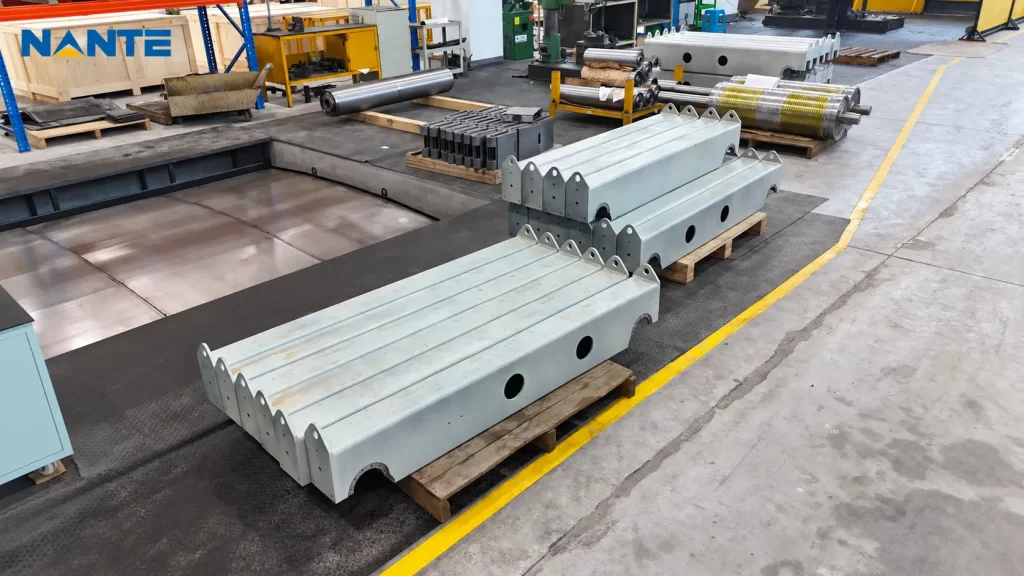
Ask for an anonymized example of a rejected part or production deviation. Review how the issue was identified, contained, corrected, and closed.
Determine whether rework requires approval and subsequent inspection. Clarify who can authorize a substitution or accept a deviation from the purchase specification.
For repeat orders, ask how engineering changes reach production and purchasing. Changes to a wheel, motor, brake, bearing, or control arrangement may affect the approved assembly and should follow agreed notification rules.
Assess Production Capacity and Inspection Readiness
Verify capacity at the actual bottleneck
Total workshop area is a weak substitute for an order-specific capacity review. Ask which operation could constrain the proposed quantity and schedule.
Relevant constraints may include machining availability, purchased drives, assembly stations, or testing resources. Request a schedule showing drawing release, material availability, production, inspection, and packing.
Check whether the schedule accounts for existing commitments. Shortlist decisions should reflect a credible production route and available resources rather than an unsupported delivery promise.
Match measuring equipment to critical features
Ask how the manufacturer verifies the dimensions and functions that matter for the component. Review suitable measuring equipment, identification, calibration status, and inspection instructions.
For an end carriage, the review might address mounting dimensions and wheel arrangement. For a hoist assembly, it might address specified interfaces and agreed functional checks.
Do not prescribe the same inspection package for every component. Agree on methods and acceptance criteria that match the actual drawing, application, and supply scope.
Verify a China Crane Manufacturer’s Export Experience
Request evidence from comparable component orders
A China crane manufacturer’s export history is most useful when it includes similar components, documentation obligations, and destination requirements.
Request anonymized examples of approved drawings, inspection packages, packing records, or export documents. These should help establish that the supplier has managed a comparable order.
Where customer permission is available, reference checks can explore drawing accuracy, handling of changes, document completeness, and corrective action. Shipment volume alone should not determine technical approval.
Examine how export problems were resolved
Ask the supplier to explain a previous delivery discrepancy or technical complaint without disclosing confidential customer information.
Review the sequence: notification, investigation, containment, corrective action, and closure. Establish which team owned the response and how the resolution was documented.
For shortlisted manufacturers, clarify the process for technical claims, replacement parts, and warranty review. A documented response process is more useful than an undefined promise of support.
Build an Evidence-Based Crane Parts Supplier Shortlist
Use official information to target the audit
The official company profile identifies Nante Crane as a designer and manufacturer of cranes and crane components. Purchasing teams can use this profile to begin a component-specific discussion about manufacturing scope, technical documentation, and inspection requirements.
The current Crane Components directory groups products into hoisting mechanisms, travelling mechanisms, mobile power supply, controls, and rail accessories. Buyers can use these categories to define which manufacturing capabilities require review.
For a hoist inquiry, the NHA Series Wire Rope Hoist page provides a product reference. The audit should then request the relevant production, inspection, and configuration-control evidence.
Apply a clear shortlist decision
Use the same decision rules for every crane parts supplier:
| Audit area | Evidence required | Shortlist decision |
| Identity | Clear factory and contracting responsibilities | Hold if responsibility remains unclear |
| Qualifications | Relevant, verifiable certificate details | Clarify mismatches before approval |
| Process control | Production route and supporting records | Approve only the reviewed scope |
| Inspection | Suitable methods and traceable results | Resolve critical verification gaps |
| Capacity | Order-specific resource and schedule review | Confirm realistic availability |
| Export support | Comparable records and claim-handling process | Define unresolved support obligations |
A conditional shortlist is appropriate when a limited gap has a named owner and a clear closure requirement. Critical unresolved issues should remain visible rather than disappear into an overall score.
FAQs About Manufacturer Audits
Can a remote factory audit support shortlisting?
A remote audit can support initial screening when it includes live process review and controlled document sharing. Identify the areas that remain unverified and decide whether an on-site visit or independent inspection is needed.
Does a successful sample qualify repeat production?
A sample supports evaluation of the submitted item. Repeat-production approval also requires revision control, consistent inspection, substitution rules, and traceability appropriate to the order.
Should price influence manufacturer qualification?
Price belongs in the commercial comparison after mandatory qualification requirements are satisfied. Buyers should avoid using a low quotation to offset unresolved manufacturing responsibility or missing acceptance evidence.
Submit a Manufacturer Qualification and RFQ Brief
Request confirmation for the proposed component scope
Purchasing teams should prepare a concise brief covering the component type, quantity, available model or drawing, operating conditions, destination, and required delivery date. Identify the manufacturing and inspection evidence needed for shortlist approval.
Ask Nante Crane to review the requirement and confirm the proposed component, quotation scope, available documentation, and any points requiring clarification. Start the supplier evaluation with a focused brief and request a component qualification review and quotation.