English


IP55 vs IP65 Crane Motor: What’s the Difference?
Date: 2026-11-05 Share:
The main difference in an IP55 vs IP65 crane motor comparison is dust protection. IP55 is dust-protected, allowing limited ingress within the applicable acceptance criteria. IP65 is dust-tight under specified test conditions. Both have water-protection digit 5, indicating protection against water jets.
For crane procurement, the practical question is how to turn site conditions into a motor specification that can be quoted, documented, and accepted.
A complete requirement connects operating exposure with the enclosure rating, environmental provisions, supplied configuration, and inspection criteria. IP65 is justified when dust-tight protection is needed; it does not automatically resolve condensation, corrosion, or demanding cleaning conditions.
Define the IP Rating for Crane Motors Before Requesting Quotes
Identify the Standard and Supplied Configuration
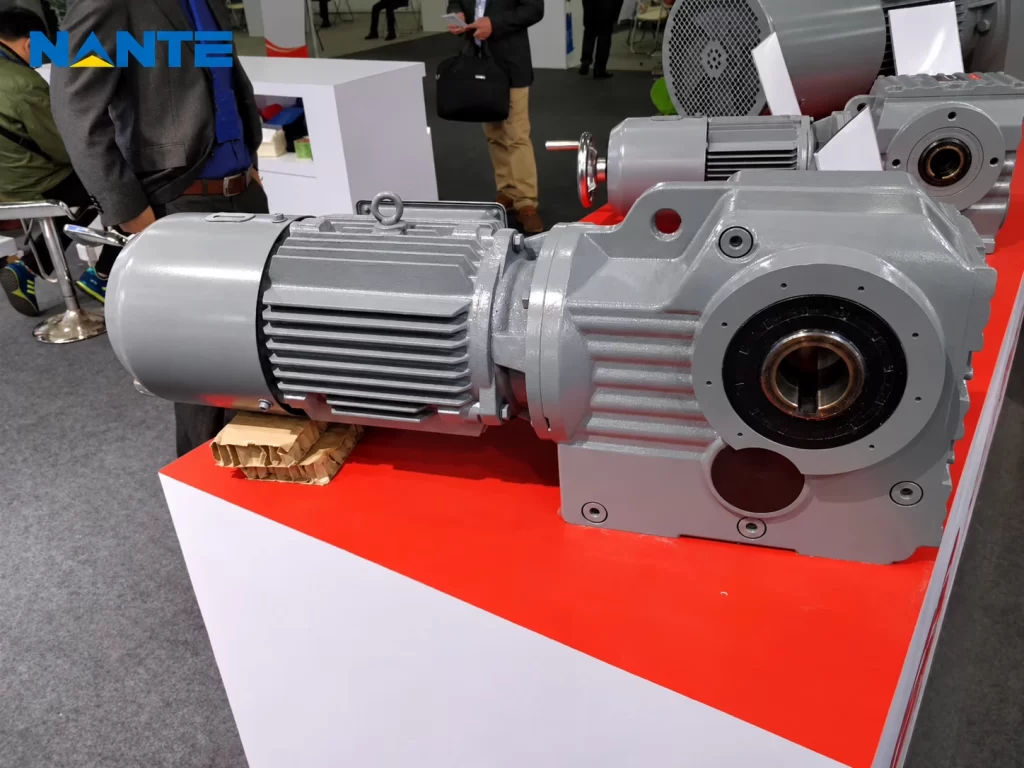
A purchase specification should state the required IP code and ask the supplier to identify the applicable standard and edition. For rotating electrical machines, IEC 60034-5 addresses enclosure protection; IEC 60529 provides the broader enclosure IP classification framework.
Request confirmation for the proposed motor configuration, including the terminal box and cable-entry arrangement. Ask suppliers to declare accessory ratings separately where brakes, encoders, or auxiliary fans have different protection arrangements.
Avoid descriptions such as “fully sealed” unless they are supported by a defined rating and documented scope.
Separate Ingress Protection From Environmental Suitability
An IP code does not establish motor duty, corrosion resistance, chemical compatibility, or condensation prevention. These require separate review.
The quotation should identify environmental assumptions and exclusions. This makes it possible to distinguish a compliant enclosure from a motor assembly suitable for the complete application.
Use Operating Conditions to Select the Protection Package
A Compact IP55 vs IP65 Decision Table
| Operating conditions | Selection direction | Additional requirements |
| Controlled indoor dust exposure | Evaluate IP55 | Confirm ambient limits, cooling, and maintenance access |
| Persistent fine airborne dust | Evaluate IP65 | Confirm dust characteristics and the supplied assembly’s rating |
| Outdoor exposure or high humidity | Assess IP rating alongside environmental measures | Specify weather protection, condensation control, and corrosion resistance |
| Direct hose cleaning | Neither rating alone establishes suitability | Obtain approval for the defined cleaning procedure |
These directions support initial screening. Final selection requires manufacturer confirmation for the documented conditions.
Record Conditions at the Motor Location
A building described as “indoor” may still contain grinding dust, process spray, or open loading bays. Exposure may also change along the crane’s travel route.
Record dust sources, cleaning methods, temperature range, humidity, and idle periods. Include photos showing the motor position, nearby processes, and existing covers.
For outdoor equipment, describe direct rainfall, wind-driven spray, runoff, and coastal exposure. These details provide a stronger selection basis than “outdoor duty.”
Specify an IP55 Crane Motor for Controlled Exposure
State the Assumptions Supporting Selection
An IP55 crane motor can be appropriate where the manufacturer confirms compatibility with the actual dust and water exposure.
Document the conditions supporting that choice. These might include controlled airborne contamination, limited incidental water exposure, and practical maintenance access.
Identify exceptions explicitly. A crane that crosses a dusty production station should be assessed for that exposure, even when most of its travel occurs in a cleaner area.
Include Cooling and Cleaning Requirements
Enclosure protection does not prevent dust from accumulating on external fins and fan covers. External deposits can restrict heat dissipation.
Require manufacturer-approved cleaning instructions and adequate access around cooling components. Any protective cover should preserve airflow and service access.
During installation review, check that nearby structures and cable routing do not obstruct ventilation.
Specify an IP65 Crane Motor When Dust-Tight Protection Is Needed
Describe the Dust Rather Than Only Its Severity
For an IP65 crane motor inquiry, identify the material, exposure duration, accumulation pattern, and consequences of ingress.
Where dust is abrasive or chemically aggressive, request separate confirmation of seal and material compatibility. Dust-tight construction alone does not establish resistance to every contaminant.
The specification should also address external buildup. IP65 does not eliminate cooling-surface cleaning or inspection of enclosure joints and entries.
Keep Dustproof Crane Motor and Hazardous-Location Requirements Separate
“Dustproof crane motor” is an informal description. Replace it with an explicit protection requirement and supporting documentation.
Combustible dust introduces a separate assessment. IP65 alone does not establish ignition protection or suitability for a hazardous location.
For US projects, the responsible engineer should identify the applicable location classification and equipment approval requirements. Suppliers should provide matching documentation for the proposed assembly.
Replace Waterproof Crane Motor Claims With Exposure Limits
Define the Cleaning Procedure
A waterproof crane motor request is too broad for reliable supplier comparison. Both IP55 and IP65 provide the same specified water-jet protection level.
Neither rating alone establishes suitability for immersion, steam cleaning, or arbitrary pressure washing. Describe the actual cleaning procedure:
- Water pressure and temperature.
- Nozzle type and minimum distance.
- Chemicals and concentrations.
- Cleaning frequency and duration.
- Equipment operating or shutdown condition.
Ask the manufacturer to approve that procedure in writing. Resolve any restrictions before the purchase order is issued.
Specify Condensation and Corrosion Measures Separately
High humidity and temperature cycling can create internal condensation. Increasing dust protection does not establish condensation prevention.
Ask whether heaters, insulation treatment, or manufacturer-approved drainage arrangements are required. Where heaters are supplied, document their power supply, controls, and intended operating periods.
Corrosive exposure also needs separate requirements for coatings, materials, and seals. The environmental package should address each risk individually.
Prepare an RFQ That Produces Comparable Motor Proposals
What to Include in a Crane Travel Motor RFQ
The following example can be adapted after the project team supplies the missing operating values.
- Application:Replacement bridge-travel motor for an existing overhead crane.
- Equipment information:Attach motor and brake nameplate photos, mounting dimensions, shaft details, and electrical connection information.
- Operating duty:State working hours, starts per hour, load pattern, travel speed, and inverter operating range.
- Environment:Describe dust, water exposure, temperature range, humidity, and corrosive substances. Include site photos.
- Protection requirement:State IP55 or IP65 for the motor and terminal box. Request the applicable standard and supporting documentation.
- Accessories:Identify brake, heater, thermal sensors, encoder, and cable-entry requirements. Request separate ratings where applicable.
- Supplier response:Provide the proposed model, drawings, deviations, environmental provisions, maintenance instructions, and quotation exclusions.
This format connects the requested rating with the application instead of treating the IP code as a complete motor specification.
Compare Equivalent Supply Scopes
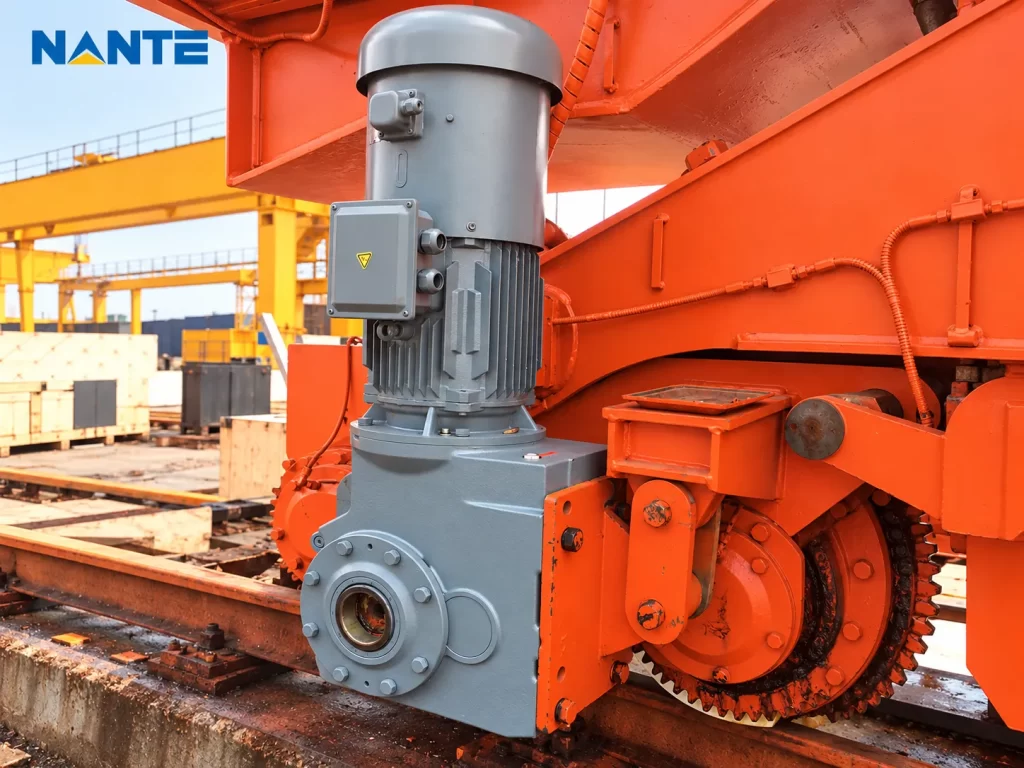
Nante Crane supplies cranes and crane components. For travel applications, its crane travelling mechanism range provides a relevant starting point for discussing motor and mechanism interfaces.
Ask suppliers to identify compliance, deviations, and unresolved questions against each RFQ requirement.
Compare equivalent scope: motor, brake, heater, sensors, glands, documents, testing, spares, warranty, and delivery. A higher enclosure rating does not establish equivalent torque, braking, or thermal performance.
Establish Acceptance Requirements Before Ordering
Review Documents Before Shipment
Approved documentation should identify the supplied model, protection rating, configuration, and installation restrictions.
Request a datasheet, relevant drawings, installation instructions, and the agreed evidence supporting the protection declaration. If test reports are required, define their scope and relationship to the proposed configuration.
A routine running test does not demonstrate dust or water ingress performance. Distinguish functional testing from any separately agreed protection testing.
Inspect the Delivered Motor Assembly
At receipt, compare equipment identification with the approved documents. Inspect the enclosure, terminal-box cover, gasket condition, cable-entry components, and supplied accessories.
Record damage, missing closures, or configuration differences before installation. A declared rating does not make an incomplete or damaged enclosure acceptable.
Keep inspection photos linked to the motor identification and resolve discrepancies through a documented process.
Verify Installation and Commissioning
Check gland compatibility, unused-entry closures, mounting orientation, and instructions for drains or seals. Confirm that installation work has preserved the reviewed enclosure arrangement.
Verify heater operation where supplied, cooling clearances, brake function, and other agreed functional requirements.
Avoid improvised spray testing. Any site protection test should use an agreed procedure with defined responsibilities, precautions, and acceptance criteria.
Plan Maintenance Around the Installed Protection System
Preserve Seals, Entries, and Cooling Surfaces
The protection package requires maintenance throughout service. Inspection should address enclosure damage, loose covers, deteriorated seals, cable entries, and external contamination.
After repairs, use the specified replacement parts and reassembly instructions. Unauthorized changes can compromise the installed protection.
The broader guide to crane design for harsh environments provides context for coordinating enclosure protection with humidity, weather, and corrosion measures.
Frequently Asked Questions
Is IP65 Always Better Than IP55 for Crane Motors?
IP65 provides stronger dust protection. The appropriate selection depends on the application; both ratings have the same water-protection digit.
Does IP65 Make a Motor Suitable for Every Outdoor Installation?
No. Weather exposure, condensation, corrosion, temperature, and installation details require separate confirmation.
Must Every Supplied Motor Undergo an IP Test?
Not automatically. The purchase order should define acceptable evidence and any additional testing required for the project.
Submit a Crane Motor Specification for Application Review
Provide the Inputs Needed for a Focused Inquiry
Purchasing teams should provide motor identification, function, mounting details, operating duty, environmental exposure, and required acceptance documents.
For a crane or component inquiry, ask Nante Crane to review these inputs and identify the proposed configuration, protection provisions, and quotation scope through a project-specific crane motor inquiry.