English



How to Evaluate Overhead Crane Quality: A Complete Inspection and Load Capacity Guide
Date: 2026-08-21 Share:
Assessing the quality of an overhead crane is not as easy as assessing its looks or tonnage capacity. The B2B consumer needs to know the process of assessing an overhead crane from the structural fabrication, welding, through to the mechanics, electrics, assembling and testing. In addition, the overhead crane load capacity calculation should be backed up with engineering data, duty condition and rated capacity.
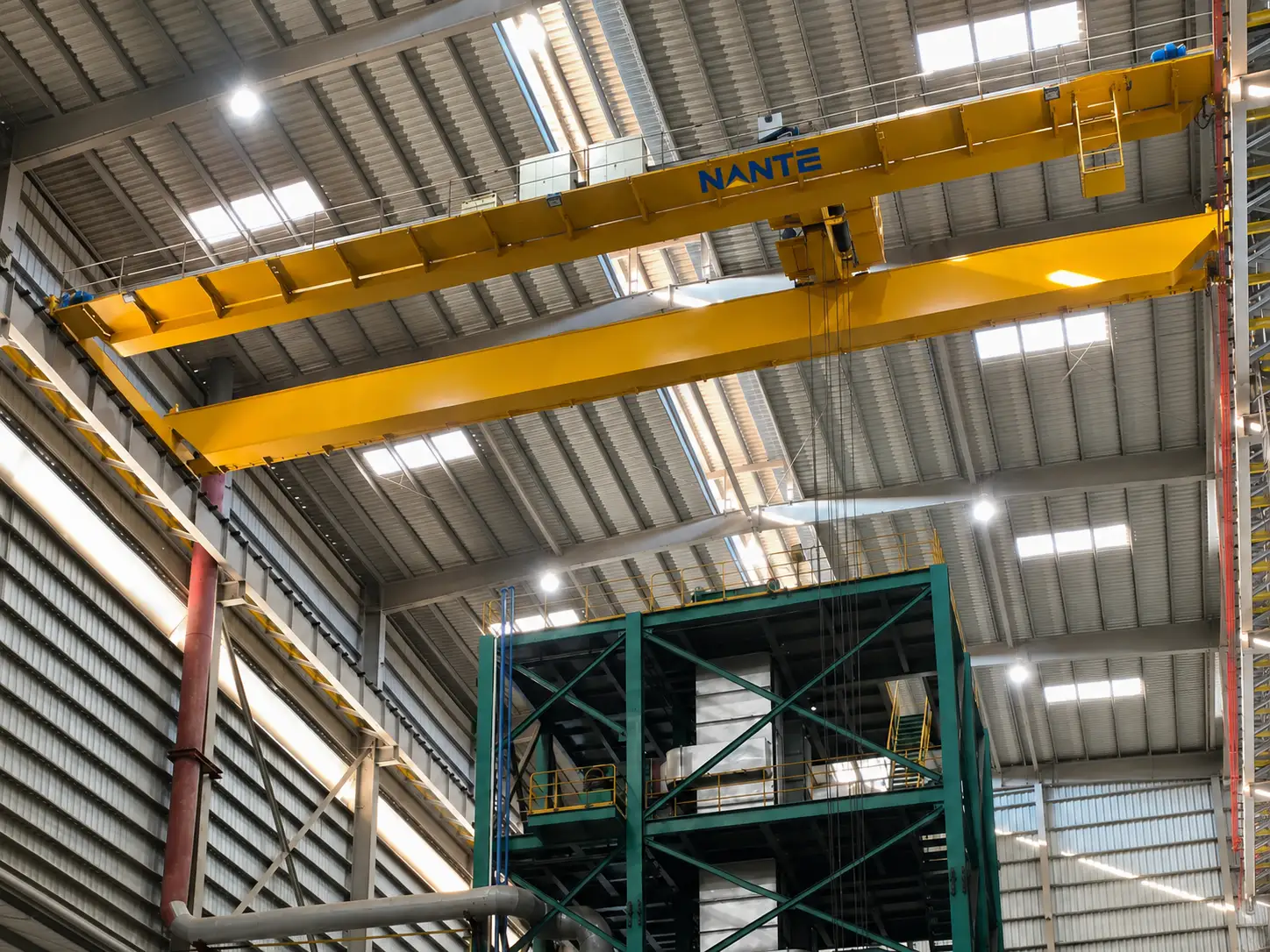
What Determines Overhead Crane Quality?
The crane quality depends on a number of factors which include a well-controlled chain of events; design, materials, construction, welding, painting, mechanical and electrical installation.
Quality Starts With the Design Requirements
Before inspecting steel, confirm rated capacity, span, lifting height, operating speeds, duty classification, environment, power supply, and expected operating cycles.
Duty classification is particularly important. International crane classification considers factors such as the total number of working cycles during the design life and the load spectrum. Therefore, two cranes with the same rated tonnage may require significantly different structural and mechanical designs.
Review Drawings, Calculations, and Traceability
Request the drawings, calculations, certificates of materials, welding certificate, electrical drawing, testing report, calibration certificate, and the Factory Acceptance Test (FAT) procedure.
Through these, a procurement engineer or an engineering team will be able to confirm that the equipment is in line with the approved technical specification and not based on physical appearance alone.
How to Inspect an Overhead Crane During Manufacturing
Inspection should follow production, not start after the finished crane is painted. ISO 9927-5 specifically addresses inspections for bridge and gantry cranes, reinforcing the importance of a systematic crane inspection process.
Inspect Structural Steel and Girder Fabrication
Verify material grade, plate thickness, identification, and certificates against approved drawings.
During fabrication, check:
- Girder straightness
- Specified camber
- Flange and web alignment
- Stiffener positions
- Connection-hole locations
- End-carriage interfaces
- Welding distortion
Dimensional errors can contribute to wheel misalignment, crane skewing, rail wear, vibration, and installation problems.
Actual manufacturing photographs of steel identification, girder fit-up, dimensional measurement, and structural assembly are particularly valuable during remote supplier evaluation.
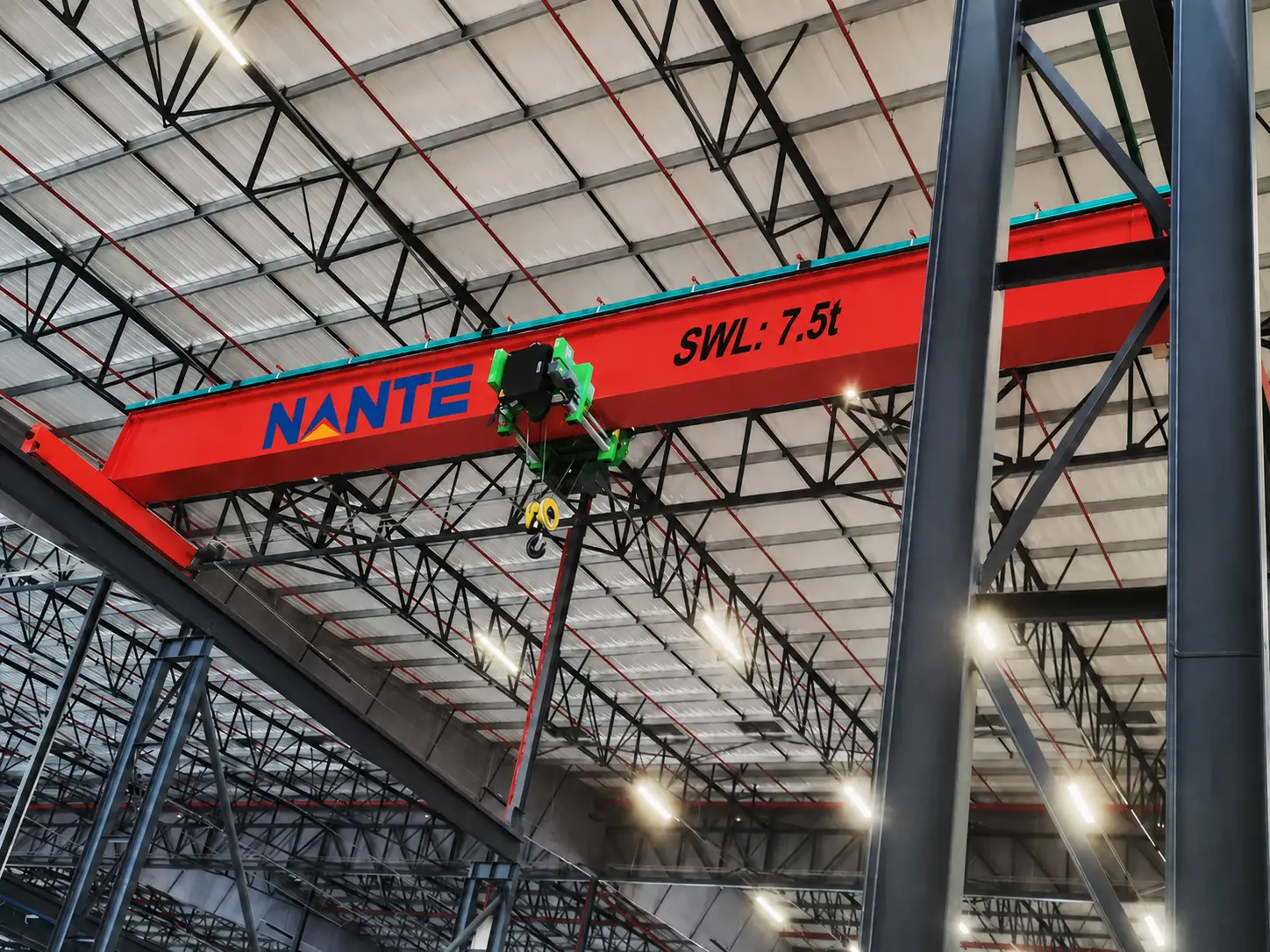
How Welding Quality Affects Overhead Crane Quality
Welding directly affects the integrity of load-bearing crane structures. The ISO 3834 series treats fusion welding quality as a controlled manufacturing requirement applicable both in workshops and at field installation sites.
Check Procedures, Weld Appearance, and NDT
Review welding procedures, welder qualifications, joint preparation, filler materials, repair procedures, and distortion control.
Visual inspection should look for defects such as:
- Cracks
- Undercut
- Visible porosity
- Incomplete welds
- Irregular weld profiles
- Excessive distortion
For critical welds, verify that the required non-destructive testing, or NDT, has been completed. Review the inspection report, acceptance result, and any repair records. A repaired weld should be re-inspected according to the applicable procedure.
How to Inspect Crane Painting and Corrosion Protection
Painting is not simply a cosmetic indicator of overhead crane quality. The coating system protects structural steel against the operating environment.
Protective-paint standards distinguish coating systems according to environmental exposure and surface preparation, which is why buyers should define coating requirements in the purchase specification rather than simply requesting a particular paint color.
Check Surface Preparation and Dry Film Thickness
Confirm that rust, scale, oil, and other contamination have been removed before coating.
Inspect primer and finish coats, edges, weld areas, missed spots, and visible coating damage.
Dry film thickness, or DFT, should be measured with calibrated equipment and compared with the agreed coating specification. A photograph showing an inspector taking DFT measurements provides far more useful quality evidence than a photograph of a fully painted crane alone.
How to Evaluate Mechanical Component Quality
Mechanical inspection should cover the hoisting, cross-travel, and long-travel mechanisms.
Inspect Hoisting and Travel Mechanisms
Check motors, gearboxes, drum, wire rope, sheaves, hook block, brakes, couplings, wheels, fasteners, guards, and lubrication.
Verify rope reeving, hook condition, drum grooves, brake adjustment, and mechanical alignment.
Pay particular attention to wheel and drivetrain alignment. Poor alignment can lead to flange wear, vibration, and increased loads on travel components.
How to Inspect the Crane Electrical System
Electrical quality affects crane safety, uptime, troubleshooting, and maintenance.
IEC 60204-32 covers electrical equipment for hoisting machines, including overhead travelling cranes, and addresses areas such as earthing and bonding, circuit protection, emergency-stop functions, control circuits, and technical documentation.
Inspect the Control Panel and Safety Functions
Check:
- Enclosure suitability
- Internal layout
- Terminal tightness
- Wire identification
- Cable routing
- Grounding
- Circuit protection
- Electrical drawing consistency
Then test emergency stop, travel and hoisting limits, overload protection, warning devices, braking response, and specified interlocks.
For new or altered cranes, OSHA requires operational testing of functions including hoisting and lowering, trolley travel, bridge travel, limit switches, locking devices, and safety devices before initial use.
Overhead Crane Load Capacity Calculation: What Buyers Should Really Verify
A common purchasing mistake is to treat crane lifting capacity calculation as a simple “load plus safety margin” formula.
Crane capacity must instead be supported by engineering analysis.
What Is Crane Rated Capacity?
Crane rated capacity is the maximum load for which a crane or individual hoist is designed and built by the manufacturer and identified on the equipment. OSHA uses this definition and also requires rated-load markings to be displayed on the crane.
Rated capacity should not be confused with a temporary test load.
How to Calculate Crane Capacity for a New Application
When buyers ask how to calculate crane capacity, define the actual application first:
- Identify the heaviest load.
- Include applicable below-hook lifting devices.
- Define span and lifting height.
- Establish operating frequency and duty class.
- Identify environmental conditions.
- Submit these inputs for engineering verification.
- Confirm the rating through calculations, drawings, component selection, and testing.
International crane design principles use calculated loads and load combinations to demonstrate the competence of structural and mechanical components. This is why final crane capacity cannot responsibly be determined by simply adding an arbitrary safety percentage to the load weight.
The maximum crane load during normal operation should remain within the documented rated capacity.
Rated Capacity vs. Test Load
A load test verifies crane performance under controlled conditions. It does not increase the crane’s normal working capacity.
Testing requirements depend on the applicable jurisdiction, standard, manufacturer recommendations, and project specification.
For example, OSHA states that rated-load test loads shall not exceed 125% of rated load unless otherwise recommended by the manufacturer. This is a specific regulatory requirement and should not be presented as a universal global rule.
Inspect Final Crane Assembly and Alignment
Verify Mechanical and Electrical Assembly
Check girder-to-end-carriage connections, bolted joints, trolley installation, guards, wheel alignment, drivetrain alignment, rope reeving, brakes, cable routing, sensors, grounding, warning devices, and labeling.
The completed crane should also be compared with the latest approved mechanical and electrical drawings.
Factory Acceptance Testing: The Final Proof of Overhead Crane Quality
FAT connects manufacturing inspection, assembly, safety checks, and performance verification.
Conduct Functional and Load Testing
First run:
- Hoisting and lowering
- Trolley travel
- Bridge travel
- Braking
- Limit switches
- Emergency stop
- Warning functions
Then conduct the specified load tests and observe movement, braking, vibration, abnormal noise, and structural behavior.
Where required, measure girder deflection and check for unacceptable permanent deformation after unloading. Acceptance values should come from the applicable design standard and project specification rather than a generic value copied from another crane.
The FAT report should record crane identification, test loads, calibration status, results, defects, corrective actions, and approvals.
Overhead Crane Quality Inspection Checklist
Use this crane quality checklist during supplier audits and pre-shipment inspection:
- FAT records and punch-list items are closed.
- Approved drawings and calculations match the crane.
- Material certificates and traceability are complete.
- Girder dimensions meet specifications.
- Welding qualifications and required NDT reports are available.
- Coating preparation and DFT are recorded.
- Hoist, rope, hook, wheels, gearboxes, and brakes are correctly installed.
- Control-panel wiring, grounding, limits, and emergency stop are verified.
- Final assembly and alignment are measured.
- Functional and required load tests are completed.
OSHA similarly distinguishes initial inspection from frequent and periodic inspection requirements, demonstrating why crane inspection should be organized systematically rather than treated as a one-time visual check.
Common Red Flags in Crane Manufacturing Quality
Watch for undocumented weld repairs, inconsistent dimensions, missing NDT reports, poor surface preparation, missing DFT records, wheel misalignment, incorrect rope reeving, unclear electrical labeling, incomplete grounding, outdated drawings, uncalibrated instruments, or missing load-test results.
For B2B procurement, missing evidence is itself a quality risk.
What Manufacturing Photos Should Buyers Ask to See?
Ask for original photographs of material identification, girder fit-up, welding, NDT, dimensional checks, painting, DFT inspection, mechanical assembly, control-panel wiring, safety testing, and load testing.
Use descriptive SEO filenames such as overhead-crane-girder-welding.jpg, crane-weld-ndt-inspection.jpg, and overhead-crane-load-test.jpg.
Alt text should accurately describe the manufacturing activity shown instead of repeating the same target keyword on every image.
How to Compare Crane Manufacturing Quality Before Buying
Before ordering, request a quality plan, inspection plan, material certificates, welding and NDT records, coating specification, electrical drawings, dimensional reports, and sample FAT documentation.
Define Acceptance Criteria Before Production
The purchase specification should define:
- Applicable standards
- Rated capacity
- Duty class
- Materials
- Welding and NDT requirements
- Coating requirements
- Electrical requirements
- FAT procedure
- Load testing
- Documentation
- Witness points
- Acceptance criteria
Do not compare suppliers by price alone. Similar cranes can differ considerably in engineering, fabrication accuracy, corrosion protection, electrical integration, inspection depth, and documentation.
Conclusion: Overhead Crane Quality Must Be Verified From Design to Testing
A reliable evaluation follows one chain:
Design → Materials → Fabrication → Welding → Painting → Mechanical Components → Electrical Systems → Assembly → Inspection → Load Testing → Documentation
The strongest indicator of overhead crane quality is objective evidence that the crane was engineered for its required duty, manufactured under controlled processes, assembled accurately, and verified through documented inspection and testing.
Request an Overhead Crane Proposal from Nante Crane
Nante Crane provides overhead cranes and crane components for industrial material-handling projects, including single-girder, double-girder and underhung overhead cranes, electric hoists, travelling mechanisms and crane control systems.
If you are evaluating an overhead crane supplier for a new project or replacement crane, contact Nante Crane and send us your required lifting capacity, span, lifting height, duty class, power supply, operating environment and inspection requirements. Our team can provide a project-specific technical proposal, crane configuration, quotation and quality inspection plan. Contact us today to discuss your project or request a quote.
FAQ
How do you evaluate overhead crane quality?
Evaluate design documentation, material traceability, structural fabrication, welding, coating, mechanical and electrical systems, assembly alignment, safety functions, load testing, and inspection records.
How is overhead crane load capacity calculated?
Start with the heaviest intended load and applicable lifting attachments, then define span, duty class, operating frequency, environment, and required motions. Final rated capacity should be established through engineering calculations and component verification rather than an arbitrary safety percentage.
What is the difference between maximum crane load and rated capacity?
Rated capacity is the manufacturer-designated maximum operating load for the crane or individual hoist. A controlled test load may be different, but the test load does not become the crane’s normal permissible working load.
What documents should I request during a factory inspection?
Request approved drawings, structural calculations, material certificates, welding and NDT records, coating records, electrical schematics, dimensional reports, calibration certificates, functional-test results, load-test records, FAT reports, and closure records for outstanding punch-list items.