English


How to Determine the Right Rotation Range for a Jib Crane
How to Determine the Right Rotation Range for a Jib Crane
Date: 2026-06-12 Share:
Selecting the best jib crane rotation range is a key engineering choice. It affects workstation jib crane coverage, operator productivity, and overall workshop efficiency. The jib crane working radius and slewing angle decide how well a crane serves its area without problems. Whether you plan a new setup or update current equipment, knowledge of rotation options helps. These options range from limited 180° swings to full 360° rotation. This approach improves space use and keeps safety clearances in place. The guide looks at main factors, comparisons, and useful strategies for the right setup.
Understanding Jib Crane Rotation Basics
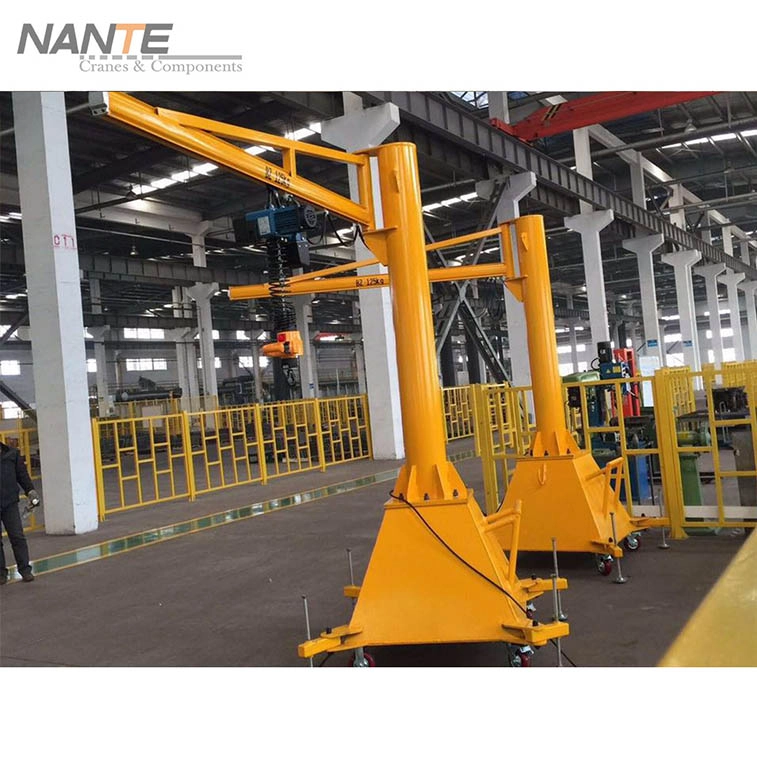
Jib cranes have a vertical mast or mounting structure and a horizontal boom. The boom rotates around a pivot point. The rotation range, also known as the slewing angle, sets the arc or circle the boom covers. This forms the crane’s effective workspace.
Common rotation options include:
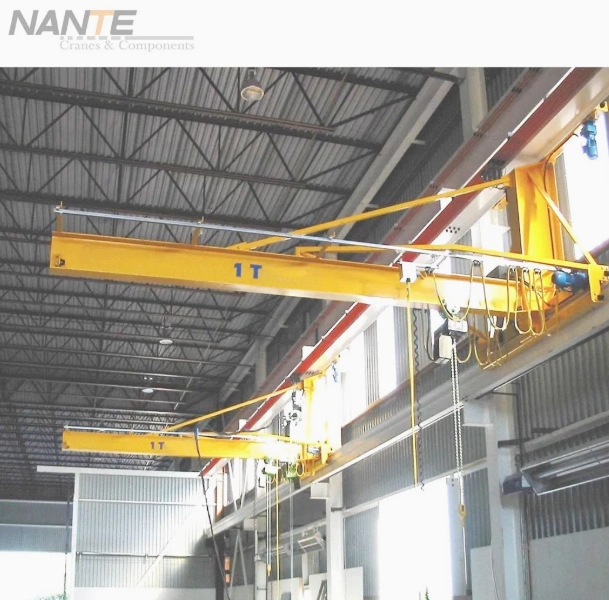
- 180°:These work well for wall-mounted or column-fixed units. They give semi-circular coverage.
· 270°: This hybrid choice provides more reach in tight layouts.
· 360°:Full rotation appears often in freestanding pillar models. It allows complete circular access.
The jib crane working radius measures the distance from the pivot center to the farthest hook position. Boom length and rotation together set total coverage area. For example, a 5-meter radius with 360° rotation covers a full 10-meter diameter circle. A 180° option limits it to a semicircle. Good selection makes the crane match material handling needs. It avoids wasted space or dead zones.
Key Factors in Jib Crane Rotation Angle Selection
The correct angle choice needs review of several site-specific elements.
Workspace Layout and Obstructions
Check the floor plan with care. Note walls, columns, machinery, storage racks, and pedestrian pathways. These items may limit boom movement. In busy workshops, limited rotation stops collisions. Open central areas gain from wider swings. Pillar jib crane layout planning should map all possible interferences early. This step prevents costly changes later.
Material Flow and Workstation Requirements
Production workflows set the needed coverage. Linear assembly lines along walls often fit 180° cranes. These allow smooth back-and-forth movement. Circular or multi-station setups, such as machining cells or maintenance bays, work better with 360° access. This setup supports quick repositioning. Workshop examples include tool rooms where operators move loads between benches and testing stations. Fabrication areas serve multiple welding positions from a central pillar.
Load Capacity and Operator Efficiency
Rotation range influences cycle times and ergonomics. Wider angles cut walking distance and manual repositioning. They lower fatigue and raise throughput. For repetitive tasks, a well-matched jib crane working radius keeps loads in easy reach. This reduces strain and improves operator efficiency. Heavier loads may need reinforced structures. These structures affect possible rotation limits.
Safety Clearance Considerations
Always keep enough clearances for swinging loads, hoist movement, and personnel. Mark rotation zones clearly. Ensure no risk of side-loading or collisions. Safety protocols include limit switches for motorized rotation and enough headroom. Good planning stops accidents and meets industry standards.
180 Degree vs 360 Degree Jib Crane: Which Is Right for You?
The decision between 180 degree vs 360 degree jib crane setups depends on space, application, and flexibility needs.
180° jib cranes (often wall-mounted) perform well in space-constrained environments. They save floor area by attachment to existing structures. They provide reliable semi-circular coverage for linear workstations. Advantages include easier installation and lower foundation needs. However, they limit access to one side. They suit less for central or multi-directional workflows.
360° jib cranes (typically pillar or freestanding) give maximum versatility. They deliver full circular coverage. This option works for island workstations or areas that need access from all directions. Benefits include higher productivity and better material flow. They require stronger foundations and more open space.
In workshop examples, a 180° unit might serve a wall-side packaging station well. A 360° pillar crane in the center of a maintenance shop lets technicians swing loads to any tool or vehicle position. 270° models can meet needs in layouts with moderate obstructions.
Optimizing Workstation Jib Crane Coverage and Working Radius
Good optimization balances coverage with real constraints.
Calculating Effective Working Radius
Follow these steps to find the right radius:
Measure from the pivot point to the farthest required load drop-off.
Add hoist and hook dimensions plus safety margins.
Account for load sway and boom deflection under maximum capacity.
Verify against manufacturer load charts, as capacity decreases with longer radius.
Text-based layout diagram example: Imagine a pillar at the center. With a 4m boom and 360° rotation, shaded coverage forms a full circle with 8m diameter. For 180°, it becomes a semicircle along one wall.
Enhancing Coverage Through Layout Planning
Pillar jib crane layout planning should combine multiple units or articulating arms for tight spaces. Position cranes near high-frequency handling points. Use overhead views to see overlapping coverage and remove gaps. Workshop examples show paired 180° wall cranes covering long bays. A central 360° unit feeds surrounding stations.
Workspace Optimization with Jib Cranes
Strategic placement reduces travel time and bottlenecks. Combine jib cranes with workstations to create ergonomic cells. Operators handle materials without too much movement. This method improves flow, cuts downtime, and raises overall productivity in manufacturing, assembly, and maintenance environments.
Practical Tips for Implementation and Best Practices
- Reinforce foundations for 360° pillar models to handle full rotational forces.
· Use motorized slewing for frequent or heavy operations; manual suits lighter, occasional use.
· Install rotation limit stops where full swing is unsafe.
· Schedule regular inspections of slewing mechanisms and structural integrity.
· Incorporate control panels with emergency stops and clear zoning.
Include layout diagrams showing before-and-after scenarios: a cluttered workshop transformed by properly rotated jib cranes that streamline material paths.
Common Mistakes to Avoid in Rotation Range Selection
Overestimating usable angle due to unaccounted obstructions.
Ignoring safety clearances around full rotation paths.
Choosing insufficient coverage for multi-station needs, leading to extra handling.
Underestimating foundation requirements for 360° models.
Failing to match rotation with actual workflow patterns.
Careful planning avoids these pitfalls and ensures long-term performance.
Choose the Right Jib Crane Solution for Your Workspace
Nante Crane is a leading manufacturer of cranes and crane components. It offers a comprehensive range of workstation solutions including free standing jib cranes, wall mounted jib cranes, and more. Their designs support flexible slewing angles (180°, 270°, 360°) with capacities from 250kg to 5000kg. These follow international standards like FEM, CMAA, and ISO. With robust construction, reliable motorized or manual rotation, and advanced control systems, Nante products deliver excellent workspace optimization, efficiency, and safety. Explore their full lineup of jib cranes and components to find tailored engineering solutions at https://www.nantecrane.com/.
FAQ
What is the typical rotation range for a pillar jib crane?
Freestanding pillar models commonly offer full 360° rotation, while wall-mounted versions are often limited to 180° for safety and structural reasons.
How does rotation angle affect jib crane working radius?
Larger angles expand the covered area proportionally. A 360° crane with a given radius covers a full circle, while 180° provides half. This directly impacts workstation jib crane coverage.
When should I choose 180° over 360° for workstation jib crane coverage?
Select 180° for wall-adjacent linear layouts with space limits. Choose 360° for central or island positions needing omnidirectional access.
What safety factors matter most in jib crane layout planning?
Prioritize clearances, marked swing zones, proper foundations, and interference-free paths to protect operators and equipment.