English


How Launching Cranes Reduce Bridge Construction Time
How Launching Cranes Reduce Bridge Construction Time
Date: 2026-06-12 Share:
Launching crane efficiency has changed modern bridge building. These tools help teams build bridges in a faster, safer, and more exact way. Bridge launching crane systems cut down work on site. They use prefabrication and machine-based erection. This approach supports quick bridge building methods. The systems raise launching gantry productivity. They shorten project timelines in a big way. At the same time, they lower labor needs and reduce effects on the environment.
This article looks at how these advanced bridge erection equipment solutions create real time savings in infrastructure projects.
Understanding Bridge Launching Crane Systems
What Are Bridge Launching Crane Systems?
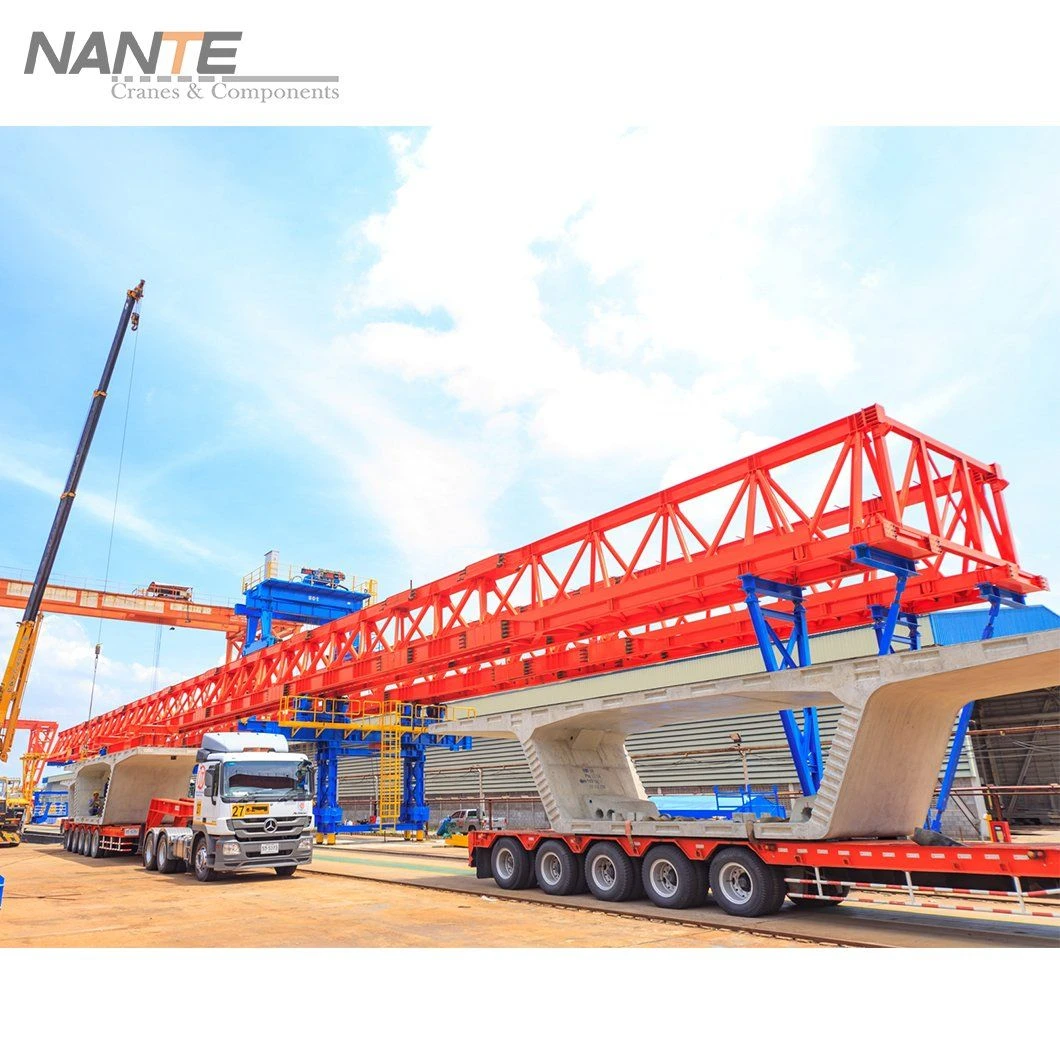
Bridge launching crane systems, often called launching gantries, are special overhead or underslung machines made for bridge construction. They lift, move, and place heavy precast concrete segments, girders, or full spans onto piers with care.
These systems work mostly from the finished bridge deck or piers. They move forward span by span on their own. They do not need much ground support. This design works well for difficult sites like rivers, valleys, railways, or busy urban areas with limited space.
Typical capacities range from hundreds to over a thousand tons. Spans usually stay between 20–50 meters or more based on the project. Their mobility and precision help with fast, repeated erection cycles. These cycles matter for large infrastructure work.
Key Components and Operational Principles
Core components include main girders (often box-type for strength and stability), lifting trolleys with winches or hoists, hydraulic support legs, launching mechanisms, and advanced control systems.
The operational cycle usually involves lifting a precast element from a delivery vehicle or transporter. Next, the system positions it with accuracy. Then it secures the element with temporary supports. After that, the gantry launches forward to the next spot.
Hydraulic synchronization keeps movement smooth and spreads the load evenly. Computer-aided controls improve safety and accuracy. Lightweight yet high-strength materials lower the gantry’s self-weight. This allows it to manage heavier payloads in an efficient manner.
Comparison with Traditional Bridge Erection Methods
Traditional methods use ground-based mobile cranes, extensive falsework, or scaffolding. These need a lot of site preparation. They create more disruption. They also extend timelines because of sequential workflows.
Launching crane systems work from above instead. They operate over obstacles with little ground impact. They also support parallel off-site prefabrication. This often leads to 30–70% faster completion than cast-in-place approaches. Safety gets better too because less work happens at height or in dangerous zones.
The Role of Launching Cranes in Accelerated Bridge Construction
Principles of Accelerated Bridge Construction (ABC)
Accelerated Bridge Construction (ABC) focuses on prefabrication, modular components, and new placement methods. The goal is to reduce time on site and limit traffic problems.
Launching cranes fit in well. They install precast elements quickly. These elements come from controlled factory settings. This method moves most heavy work off site. Bridge components arrive ready for fast assembly.
ABC techniques stress speed but keep quality high. They use high-early-strength materials, precise tolerances, and mechanized erection. These help meet tight deadlines in highways, railways, and urban infrastructure.
Time Savings Mechanisms
Launching systems allow continuous erection cycles. While one span finishes, segments for the next one get delivered and prepared.
Setup and teardown times drop. Self-launching features remove long repositioning of regular equipment. Projects often finish several spans per week. This compresses overall schedules through less weather exposure and fewer labor-heavy tasks.
Parallel workflows join factory casting with on-site mechanized placement. This speeds things up further. It often cuts total construction duration by 30–50% or more.
Impact on Project Schedules and Milestones
Faster span completion lets teams reach milestones earlier. Examples include opening sections to traffic or meeting funding deadlines.
For time-sensitive projects, this means lower user costs from detours. It also reduces financing expenses. Public infrastructure sees quicker return on investment. Launching cranes help finish projects months ahead of traditional schedules.
Boosting Launching Gantry Productivity
Factors Enhancing Launching Gantry Productivity
Productivity grows with optimized erection cycles, skilled crews, and reliable equipment.
Important factors include precise segment delivery timing, automated controls for quicker lifts and positioning, and good shift planning for nonstop work. Typical metrics show several segments or full spans installed per day under good conditions.
Training operators on synchronized hydraulics and safety protocols reduces downtime. It also raises output.
Technological Features Improving Efficiency
Modern gantries use hydraulic jacking for launching, variable frequency drives for smooth movements, remote monitoring, and lightweight high-strength steel structures.
Quick-connect systems and modular designs allow faster reconfiguration between projects. These features shorten cycle times from hours to minutes per operation.
Measuring and Optimizing Productivity on Site
Time-motion studies, cycle analysis, and digital tracking find bottlenecks.
Best practices include integrated logistics for just-in-time segment delivery, double-shift operations, and predictive maintenance to prevent breakdowns. Continuous improvement leads to higher daily installation rates and better overall project efficiency.
Precast Segment Installation with Launching Cranes
Span-by-Span Erection Method
In the span-by-span method, the launching gantry installs all segments within one full span one after another. It applies post-tensioning. Then it moves to the next span.
This repeated process suits simply supported bridges. It offers high speed with steady workflows. Temporary supports hold segments until the span becomes complete and stable.
Balanced Cantilever Construction Technique
For longer or continuous spans, the balanced cantilever method places segments symmetrically outward from a pier. It builds in a cantilever way.
The gantry manages asymmetrical loads with care before connecting at mid-span. This technique works well for complex alignments, curved bridges, or sites that need few temporary supports.
Advantages in Quality and Speed
Factory precasting gives better concrete quality, dimensional accuracy, and durability.
On-site work focuses on rapid, exact placement. This reduces weather-related delays and labor needs. The combination creates faster, higher-quality bridges with good long-term performance.
Launching Cranes in High-Speed Railway Bridge Construction
Specific Demands of High-Speed Rail Projects
High-speed railways need very high precision with tight geometric tolerances. They use heavy box girders that often exceed hundreds of tons.
Minimal disruption to existing lines is important. Rapid erection is critical to meet aggressive national infrastructure timelines. Safety and ride quality must stay high.
How Launching Systems Meet Railway Requirements
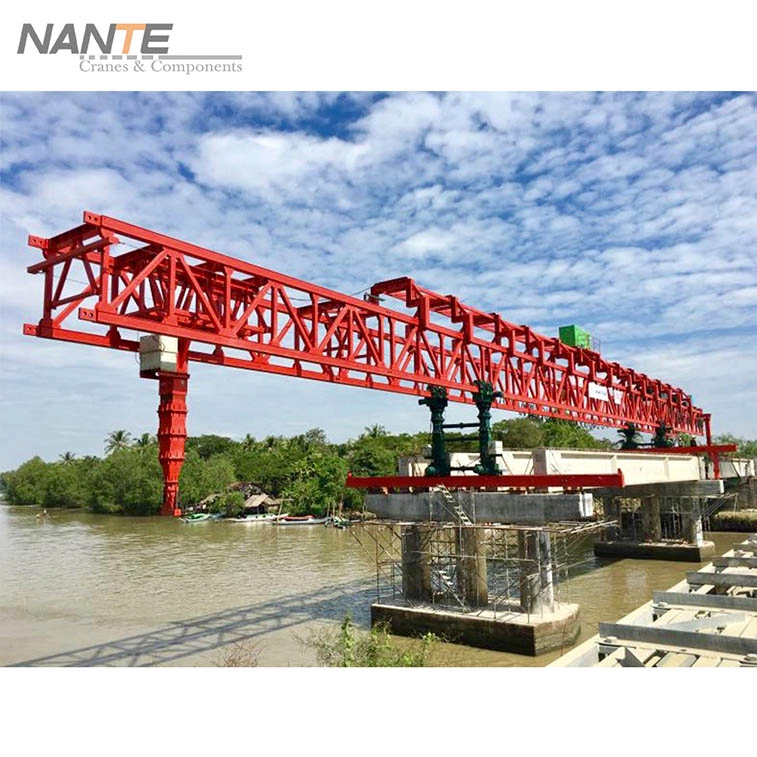
Launching gantries handle full-span or segmental methods. These fit 24–40 meter spans common in high-speed lines.
High-capacity lifting, synchronized controls, and self-launching reduce possession times on active corridors. They support heavy loads with stability for precise alignment.
Real-World Efficiency Gains
These systems support compressed schedules. Viaducts finish at faster rates than with traditional methods.
Reduced ground activity protects sensitive environments. It also allows concurrent operations. This helps massive network expansions move forward efficiently.
Broader Benefits of Bridge Erection Equipment
Reduced Labor Requirements and Safety Improvements
Mechanization cuts crew sizes needed for heavy lifting and positioning. It lowers exposure to heights and heavy loads.
Automated controls and remote operation improve safety. They reduce accident risks that are common in regular bridge work.
Cost and Environmental Advantages
Shorter timelines lower overall costs through reduced equipment rental, labor, and financing.
Less temporary works and site disturbance cut material use and emissions. Overhead construction protects habitats below bridges. This supports sustainable infrastructure goals.
Versatility Across Project Types
Launching systems adapt to straight, curved, or skewed bridges in highways, viaducts, and challenging terrains.
Different configurations—overhead, underslung, or hinge types—give flexibility for various infrastructure needs.
Best Practices for Implementing Launching Crane Systems
Planning and Site Preparation
Success begins with detailed engineering analysis.
Equipment selection must match span lengths and loads. Logistics planning for segment transport is also key. Early stakeholder coordination ensures smooth integration with prefabrication yards.
Maintenance and Operational Safety
Regular inspections of hydraulic systems, structural components, and controls prevent failures.
Comprehensive operator training and risk assessments keep safety standards high during all operations.
Overcoming Common Challenges
Strategies for weather delays, alignment variations, and integration with other ABC methods include contingency planning, robust designs, and adaptive controls.
Proactive problem-solving keeps projects on track.
Partner with Nante Crane for Advanced Launching Solutions
Nante Crane is a professional manufacturer specializing in high-quality construction cranes and components. Their bridge launching gantry systems, overhead and underslung designs, along with advanced crane control panels, deliver reliable performance for demanding projects.
Explore their comprehensive range of construction cranes and proven expertise at nantecrane.com to enhance your next bridge project’s efficiency. Contact Nante Crane today.
FAQ
What is the main advantage of bridge launching crane systems?
They significantly accelerate erection while improving safety and precision.
How do launching gantries support accelerated bridge construction?
They enable rapid precast segment or girder placement with minimal on-site disruption.
Are launching cranes suitable for high-speed railway bridges?
Yes, they handle heavy loads and tight tolerances efficiently.
What factors affect launching gantry productivity?
Cycle optimization, equipment features, crew experience, and project planning.