English


Electric Wire Rope Hoist: What Makes It a Preferred Choice in Material Handling?
Electric Wire Rope Hoist What Makes It a Preferred Choice in Material Handling
Date: 2026-03-27 Share:
In today’s material handling, the electric wire rope hoist works as a dependable lifting tool for crane systems. It differs from lighter options. This tough solution performs well in tough conditions. It provides better load capacity and good accuracy. People use it in overhead crane setups or gantry crane applications. It solves main problems in industrial lifting. This guide explains its meaning, main parts, benefits, kinds, uses, choice factors, performance details, and why it stays the best option. All these help judge this important crane part.
What Is an Electric Wire Rope Hoist?
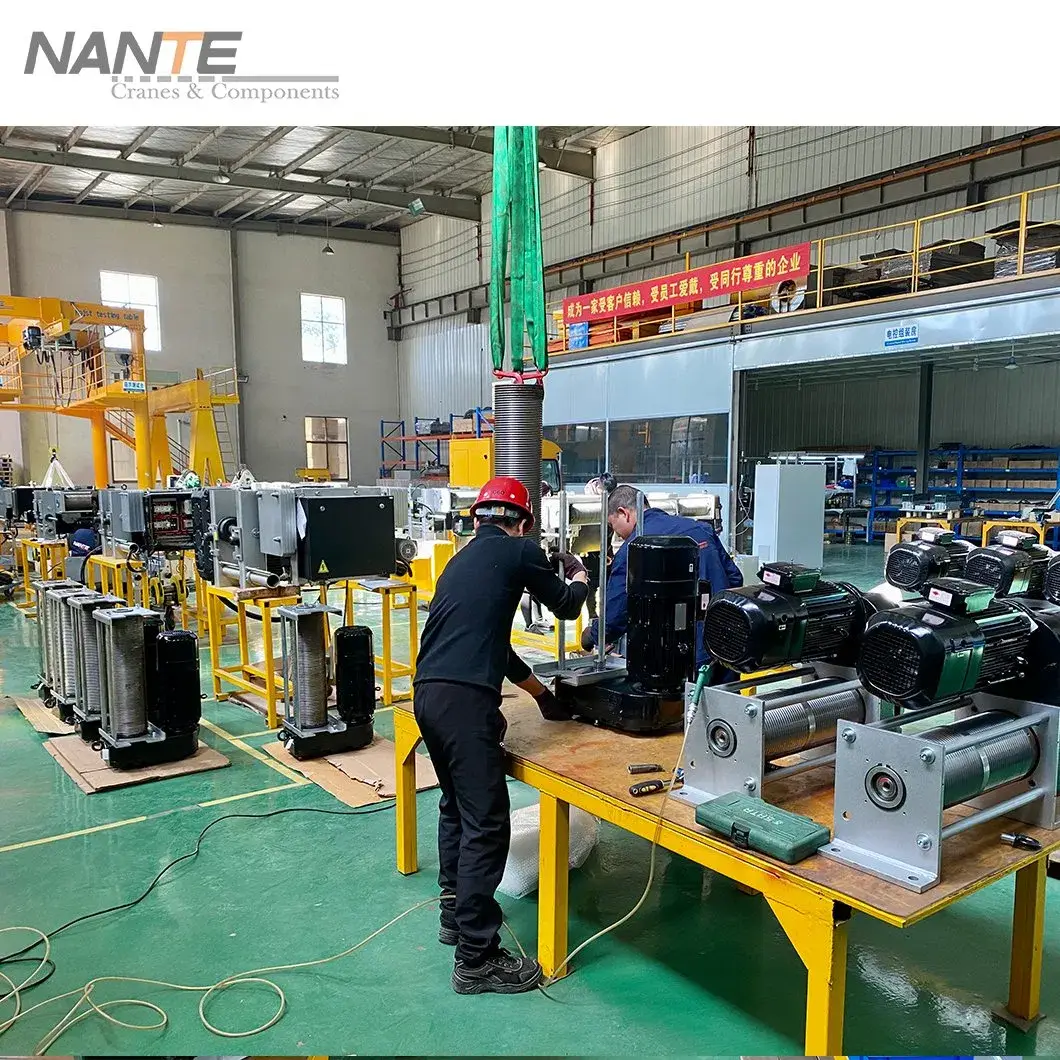
An electric wire rope hoist acts as an electric lifting device. It lifts and lowers heavy loads with strong steel wire rope. The rope winds around a turning drum.
The working method follows a simple order. The operator turns on the hoist. Then the electric motor begins and turns the gearbox. Next, the gearbox spins the drum. The drum winds or unwinds the wire rope. This rope connects to the hook block and pulley system. As a result, it gives steady up-and-down movement with very good balance.
This hoist serves as the main lifting part in crane systems. It drives overhead cranes, gantry cranes, and monorail cranes.
Key Components of an Electric Wire Rope Hoist
The parts of an electric wire rope hoist join forces. They give steady results in crane work. Every piece adds to strength, control, and protection.
Hoisting Motor and Gearbox
The hoist motor links straight to a planetary reducer. This setup reaches good power transfer. At the same time, it keeps the build small.
The gearbox lowers motor speed. It also increases torque in a smooth way. It runs with little sound and very small shaking. So it keeps steady power even in long, hard work periods.
Wire Rope and Drum System
Strong steel wire rope makes the lifting part. It has many strands. So it fights wear, tiredness, and rust well. This gives a long working life.
The drum has spiral grooves. These grooves wrap the rope in an even pattern. A rope guide stops twists or overlaps. It keeps steady winding and smooth lifting action when under weight.
Safety Devices in Electric Wire Rope Hoists
Safety parts guard operators and machines. An overload limiter stops lifting right away if the limit gets passed. Upper and lower limit switches work with rotational limit switches and cross limit switches. They manage the hook’s moving distance. A phase relay protects from electric problems.
These setups make sure the hoist runs safely and steadily in hard crane settings.
Advantages of Electric Wire Rope Hoists in Material Handling
Electric wire rope hoists do better than other choices in serious industrial places. They manage bigger needs without trouble. They lead the market for loads of 10 tons and more.
Higher Load Capacity
A heavy duty electric wire rope hoist carries much heavier weights than chain hoists. Its capacities often go up to 63 tons or beyond. Longer lifting heights become possible too.
This quality fits uses where chain hoists cannot reach. The hoist holds balance even with full loads across long paths.
Stable and Precise Lifting
The drum winding setup creates smoother action than chain systems. Operators get exact placement with less side-to-side movement.
This exactness helps when moving fragile or very large items. The lifting stays managed and even during the whole process.
High Efficiency in Industrial Operations
These hoists raise output in factories, warehouses, docks, and logistics areas. Quick lifting speeds and dependable work cut down stop times.
They improve material movement in crane systems. They support nonstop work flows. Total efficiency grows a lot in storage tasks and production results.
Types of Electric Wire Rope Hoists for Different Crane Systems
Monorail / Underslung Electric Wire Rope Hoist
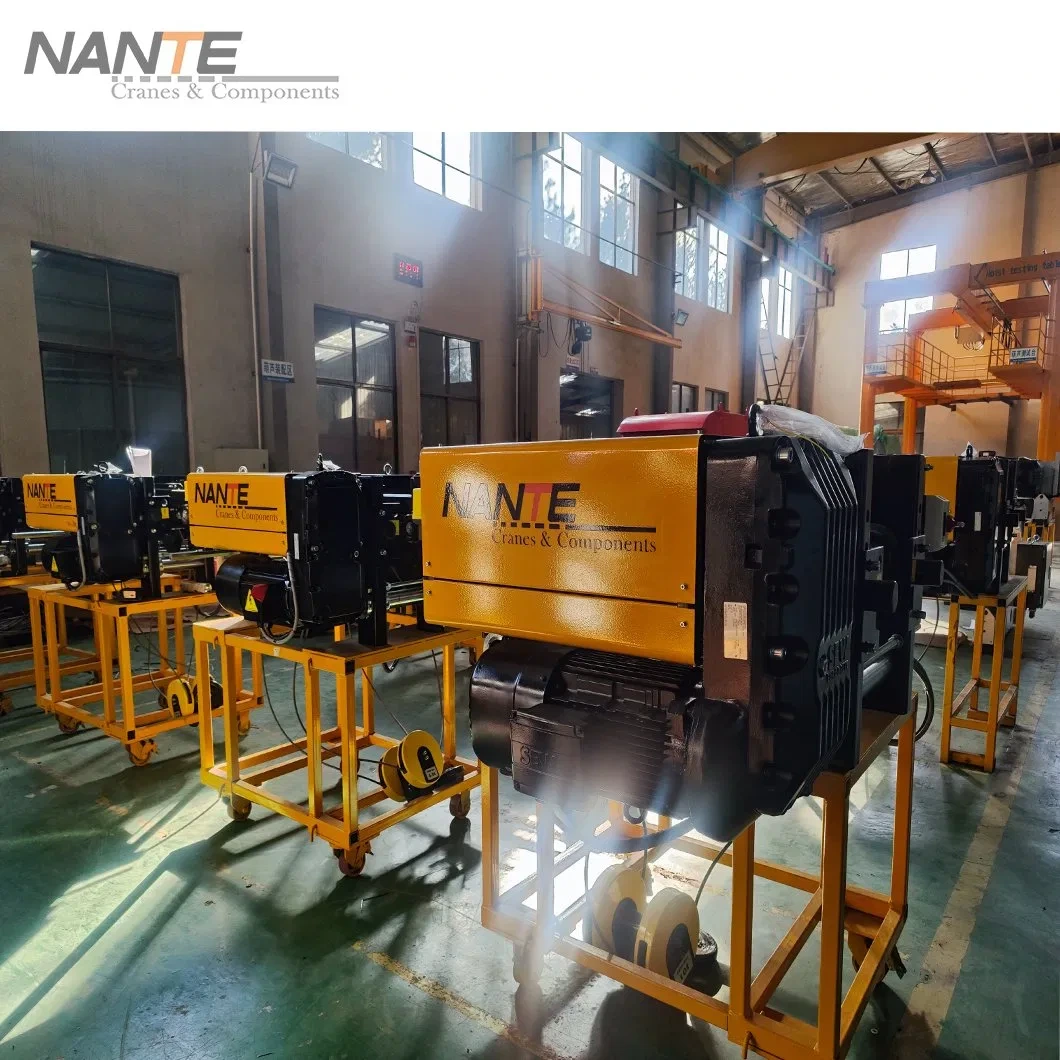
The Monorail or Underslung Electric Wire Rope Hoist (Type E Monorail Hoist or Low-Headroom Monorail Trolley Hoist) suits single-girder overhead cranes, underslung cranes, monorail runways, and jib cranes. Its compact trolley runs on the beam’s bottom flange, saving headroom in height-limited spaces. It handles lighter to moderate loads up to 20-30 tons, perfect for workshops, warehouses, and general applications.
Top-Running Single-Girder Electric Wire Rope Hoist
The Top-Running Single-Girder Electric Wire Rope Hoist is built for top-running single-girder overhead cranes, with the trolley on the girder’s upper surface. It offers good hook height and span efficiency while keeping design simple. Ideal for moderate-duty lifting in manufacturing settings needing reliable overhead movement.
Double-Girder / Crab Electric Wire Rope Hoist
The Double-Girder or Crab Electric Wire Rope Hoist (Type D Crab Unit or Double-Girder Crab Hoist) fits double-girder overhead cranes, gantry cranes, and heavy bridge systems. Mounted on a crab spanning two girders, it provides high stability, true vertical lift, and capacities from 10 to 150+ tons. It excels in severe-duty environments like steel mills, shipyards, and ports.
Low-Headroom Electric Wire Rope Hoist
The Low-Headroom Electric Wire Rope Hoist (Low-Headroom Monorail Hoist or Ultra Low-Headroom Crab Unit) optimizes monorail or double-girder designs for tight vertical clearance. It maximizes hook travel in constrained buildings or retrofits without sacrificing lifting strength.
Specialized Electric Wire Rope Hoist
Specialized Electric Wire Rope Hoists include explosion-proof models for hazardous zones, curved monorail hoists for non-linear paths, and custom versions with advanced features for unique safety or operational needs.
Typical Applications of Electric Wire Rope Hoists
Electric wire rope hoists act as the chief lifting tool in many crane kinds. They stand out in heavy material moving.
Common setups cover overhead cranes on factory floors, gantry cranes for outside or warehouse spots, and monorail cranes for straight-line carrying. Every type gains from the hoist’s strength and exactness.
Main fields cover manufacturing, metallurgy, power plants, chemical plants, construction, oil and gas, heavy machinery, ports, warehouses, aerospace, green energy, highways, bridges, metal and steel, precast, mining, shipbuilding, advanced manufacturing, logistics, metro rail transit, and aviation.
The electric wire rope hoist for overhead crane and gantry uses shows special strength. It handles heavy and exact lifts in these places.
How to Choose the Right Electric Wire Rope Hoist
Picking the right model gives the best results in a crane system. Look at these main points.
Load Capacity
Fit the hoist to the biggest weight expected. Pick a heavy duty electric wire rope hoist for tough jobs that go past lighter choices.
Lifting Height
Find out the needed up-and-down distance. The drum and rope setup has to hold this height. It must keep balance too.
Duty Cycle
Check how often and how hard the hoist runs. Higher duty levels fit nonstop heavy work in industrial spots.
Crane Type Compatibility
Make sure it matches the overhead crane, gantry crane, or other frame. Good fit promises smooth work and safety.
Performance Specifications and Duty Classifications
Knowledge of technical details aids matching the electric wire rope hoist to actual needs in crane systems.
Load Capacity and Lifting Height Ranges
Heavy-duty types usually manage 1.6 to 63 tons or more. Lifting heights can change. They often go past 30 meters. This suits tall buildings and deep holes.
Lifting Speeds and Motor Efficiency
Lifting speeds go from 0.8 m/min for careful tasks to 10 m/min or quicker for fast work. High-efficiency motors and planetary gearboxes give even speedup and steady results.
FEM and ISO Duty Cycle Classifications
Hoists get rated under FEM 1Am to 3m (same as ISO M4 to M6) levels. These levels look at load pattern and daily run hours. They make sure the unit handles nonstop heavy work in tough crane uses. Safety and long life stay strong.
Why Electric Wire Rope Hoists Remain the Preferred Choice
Electric wire rope hoists bring together strong load capacity, good work efficiency, exact control, solid safety parts, and great custom choices. They give better lifting speeds, quieter running, and farther reach than other options.
They stand as the main lifting tool in current industrial lifting. They provide dependable work where it counts most. Their flexibility and toughness make them the first pick for overhead and gantry crane systems around the world.
FAQ About Electric Wire Rope Hoists
What is the difference between a chain hoist and a wire rope hoist?
Wire rope hoists do well with heavier loads, taller lifting heights, bigger capacities, smoother work, and quicker speeds. Chain hoists suit lighter, more regular, or smaller spaces better.
How much weight can a wire rope hoist lift?
Capacities usually fall from 1.6 tons to 63 tons or higher. This depends on the model and setup. This spread fits heavy-duty industrial jobs well.
Are electric wire rope hoists suitable for hazardous environments?
Yes. Special explosion-proof types give safe and steady work in explosive or risky areas. Performance stays the same.
Discover Reliable Crane Solutions with Nante Crane
Nante Crane, a leading manufacturer with over 30 years of experience, specializes in high-quality cranes and crane components, including advanced electric wire rope hoists as part of intelligent, efficient lifting systems. Serving global industries with customizable, safe, and modular solutions, Nante delivers reliable performance for overhead cranes, gantry cranes, and more. Contact Nante Crane today to explore how our electric wire rope hoists can optimize your material handling operations.