English



Different Construction Methods for Launching Gantry Cranes in Bridge Construction
Different Construction Methods for Launching Gantry Cranes in Bridge Construction
Date: 2026-03-26 Share:
Launching gantry cranes act as special overhead machines. Manufacturers create them for accurate bridge building. These cranes lift and put precast beams or segments in place. They move forward span by span over the piers. Builders use launching gantry cranes for full span erection launching gantry solutions in repeated highway and high-speed rail jobs. They also pick segmental launching gantry crane models for tricky urban viaducts and curved paths.
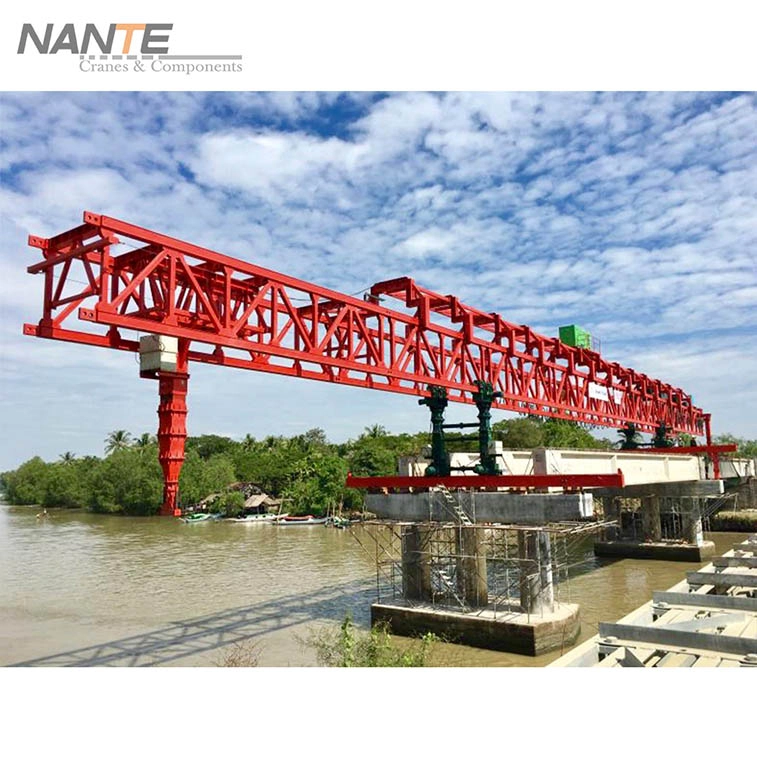
What Are Launching Gantry Cranes in Bridge Construction
Launching gantry cranes work as movable overhead systems. They launch themselves forward. These cranes place bridge girders or segments right from the piers. They stand out from regular cranes. They need no support on the ground below the deck. Instead, launching gantry cranes shift ahead on their own legs once a span finishes. The setup allows safe work over rivers, roads, or city spots with little room. Launching gantry cranes manage precast concrete parts like T-beams, U-beams, steel box girders, and segmental pieces very carefully.
How Launching Gantry Cranes Install Bridge Beams
The launching gantry crane sets its main frame over two piers. Lifting trolleys or winches raise the precast beam from vehicles underneath. Operators line up the beam exactly. Then they lower it onto the bearings. After the span gets fixed with prestressing, the crane moves forward to the next spot. This cycle repeats smoothly for T-beam, U-beam, or box girder kinds. The whole process cuts down time for on-site work. It also keeps the bridge shape accurate from start to finish.
Key Components of a Launching Gantry Crane
Launching gantry cranes have several connected parts. These ensure steady support and easy motion. The main girder makes up the central truss. It usually comes from strong S355 steel for a compact and tough build. Front and rear legs hold it on the piers. Hydraulic systems help with smooth forward moves. Lifting trolleys and winches manage loads carefully. Bracing frames and a control cabin with live load checks finish the design. Manufacturers adjust these parts to fit certain beam types and job needs.
Technical Specifications of Launching Gantry Cranes
Launching gantry cranes feature well-planned specs. These fit different bridge building demands. Manufacturers design the details for steady work in full-span and segmental jobs. The specs keep the crane safe with heavy weights and changing site setups.
Lifting Capacity Ranges and Applications
Launching gantry cranes provide lifting power from 50 tonnes in single girder types to 900 tonnes in segmental versions. Single girder launching gantry cranes manage 50t to 100t. They suit lighter T-beam and U-beam setups on normal highway bridges. Double girder launching gantry cranes handle 120t to 300t. They work for medium tasks with heavier precast parts. Segmental launching gantry cranes go up to 700t to 900t. They fit large box girder segments in complex viaducts. These ranges let contractors choose the right model for the weight of factory-made beams or segments.
Span Length and Lifting Height Capabilities
The span coverage for launching gantry cranes goes from 20 metres to 50 metres based on the type. Single girder models cover 20m to 40m spans. They offer lifting heights up to 30 metres. Double girder types reach 25m-50m spans and 50m lifting heights for taller piers. Segmental cranes work well in 30m-45m spans. They stay stable during cantilever steps. Manufacturers change these sizes to match bridge plans, ground levels, and curve needs.
Full-Span Erection Method Using Launching Gantry Cranes
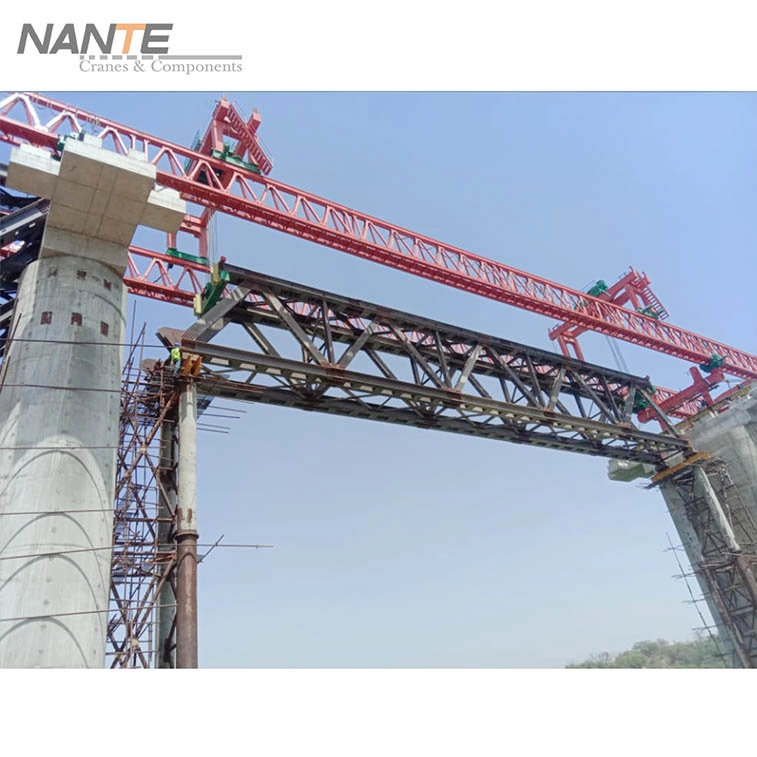
The full span erection launching gantry method puts whole prefabricated spans in one go. Contractors pick this way for high-speed rail and highway bridges. These often have repeated straight spans up to 50 metres. The launching gantry crane lifts the full factory-built span. It places the unit straight onto the piers. This way cuts on-site joining work a lot. It speeds up schedules greatly. It also manages big temporary loads on the supports below.
How the Full-Span Launching Method Works
Transport vehicles bring the full-span beam to the location. The launching gantry crane raises the whole piece with strong winches and trolleys. Operators set the beam precisely on the piers. They lock it with prestressing. Then the crane pushes ahead on its legs to the next span. The steps repeat with great accuracy and little ground mess. Full span erection launching gantry cranes reach fast erection speeds. They need almost no extra work later. Factory production keeps quality steady.
Advantages of Full-Span Launching Gantry Cranes
Full-span erection launching gantry cranes give top efficiency for factory-prefabricated beams. The method keeps quality even because work happens in controlled factory settings. Projects gain from less labor at the site and quicker finish times. These cranes fit repeated spans very well. They help build long highway or rail lines rapidly.
Segmental Construction Method with Launching Gantry Cranes
Segmental launching gantry crane models split bridge spans into smaller precast units. This allows flexible building. Contractors choose this method for urban viaducts, curved bridges, and places with tight traffic rules. The way makes segment transport simple. It lowers effects on nearby areas. Launching gantry cranes manage the careful placement for complex structures. They allow overhead building with no need for ground access.
Span-by-Span Segmental Construction
In the span-by-span launching gantry crane method, the crane builds all segments for one full span first. Operators lift each segment one after another from the back or below. They line them up and add longitudinal prestressing. When the span ends, the crane moves forward to the next piers. This technique suits repeated spans of 30 to 50 meters. It keeps traffic issues low in crowded city areas. The method gives tight control over shape. It reaches erection rates of 2 to 4 spans per shift.
Balanced Cantilever Segmental Method
The balanced cantilever launching gantry crane method grows outward evenly from a main pier. The crane sets segments on each side in turns to hold balance during work. Operators bring segments from behind or under the deck. This method handles curved paths and longer spans up to 100 metres or more quite well. Launching gantry cranes support tough ground like deep valleys or high piers. They offer strong stability and overhead action.
How to Choose the Right Launching Gantry Crane for Construction Methods
Project managers need to match the launching gantry crane to the selected method, bridge kind, and site setup. Important points include lifting demands, span size, and ground issues. Good choice ensures top work and cost savings during the whole job.
Single Girder vs Double Girder Launching Gantry Cranes
Single girder launching cranes have a basic and light design. They suit smaller loads and shorter spans. These models work fine for lighter T-beam or U-beam jobs in simple projects. Double girder launching cranes give more strength and steadiness for bigger loads and longer spans. Most bridge jobs prefer double girder models. They deal with hard conditions well and support higher capacities up to 300 tonnes.
Capacity and Span Requirements
Lifting capacity stands as the main factor for picking launching gantry cranes. Models range from 50 tonnes for standard beams to 900 tonnes for heavy box girders. Span coverage must fit the bridge plan. It usually stays 20 to 50 metres. The gantry length often reaches about 2.3 times the span for safe moves. Bridge types affect choices. T-beam and U-beam fit full-span methods. Box girders suit segmental work. Ground type, curve, and access also shape the final pick.
Advantages of Using Modern Launching Gantry Cranes
Modern launching gantry cranes change bridge building with smart design and useful features. These cranes bring clear gains in speed, safety, and site control for all methods.
Higher Efficiency in Bridge Beam Installation
Launching gantry cranes finish installation steps quicker than old ground-based tools. The self-launching setup cuts setup time between spans. Projects reach better daily progress with factory-prefabricated parts and exact trolley systems.
Safer Construction Over Rivers and Highways
The overhead work of launching gantry cranes keeps workers clear of risky ground spots. Built-in load limiters, emergency stops, and live monitoring improve safety during lifts over water or busy roads. These features lower dangers in high or limited places.
Reduced Ground Equipment and Traffic Disruption
Launching gantry cranes remove the need for lots of scaffolding or ground cranes under the bridge. The system runs fully from piers. It cuts environmental effects. Urban and highway jobs see less traffic stops because segments come and go from above.
Ready to Elevate Your Bridge Project? Contact Nante Crane Today
Nante Crane stands as a leading manufacturer of cranes and crane components with more than 30 years of history, specializing in comprehensive lifting equipment solutions including construction cranes, launching gantry cranes, overhead cranes, and gantry cranes for bridge, highway, and high-speed rail applications, while offering custom solutions and a global service network serving over 50 countries.
Contact Nante Crane for tailored launching gantry crane solutions that match your bridge construction method. Request a quote or consultation today to optimize efficiency and safety on your next project.
FAQ
What is a launching gantry crane?
A launching gantry crane is specialized equipment that lifts and places precast bridge beams or segments while it self-launches forward across piers.
How do I select the right launching gantry crane capacity?
Base selection on lifting needs from 50 tonnes to 900 tonnes, span range, beam type, and project conditions like curvature or terrain.
What advantages do launching gantry cranes offer?
Launching gantry cranes provide higher efficiency, enhanced safety, reduced ground disruption, and suitability for complex bridge environments.