English


How Does a Festoon System Manage Moving Cables on Overhead Cranes
How Does a Festoon System Manage Moving Cables on Overhead Cranes
Date: 2026-03-19 Share:
Overhead cranes need good cable management. This helps keep power and control signals steady while parts move. A festoon system for overhead crane is a well-tested way to handle moving cables. It keeps them neat and safe from tangles, rubbing, or harm. This overhead crane festoon cable system relies on tracks, trolleys, and looped cables. These parts give steady electricity and signals. In this guide, look at what a crane festoon cable management system is, how it runs, its kinds, benefits, how it compares to other choices, things to think about when picking one, setup tips, and usual uses in factories and work sites.
What Is a Festoon System in Overhead Crane Power Supply?
A festoon system is a moving power supply and cable handling answer made just for cranes. It sends steady electricity and control signals to parts that shift, such as the hoist and bridge.
Overhead cranes travel side to side along runways and bridges. If cables are not managed well, they can drag on the floor, get twisted, or come loose. That brings safety dangers and stops work.
A festoon system for overhead crane holds cables up in the air and keeps them tidy. It fits medium travel lengths. So it works great for many normal crane setups in manufacturing, warehouses, and ports.
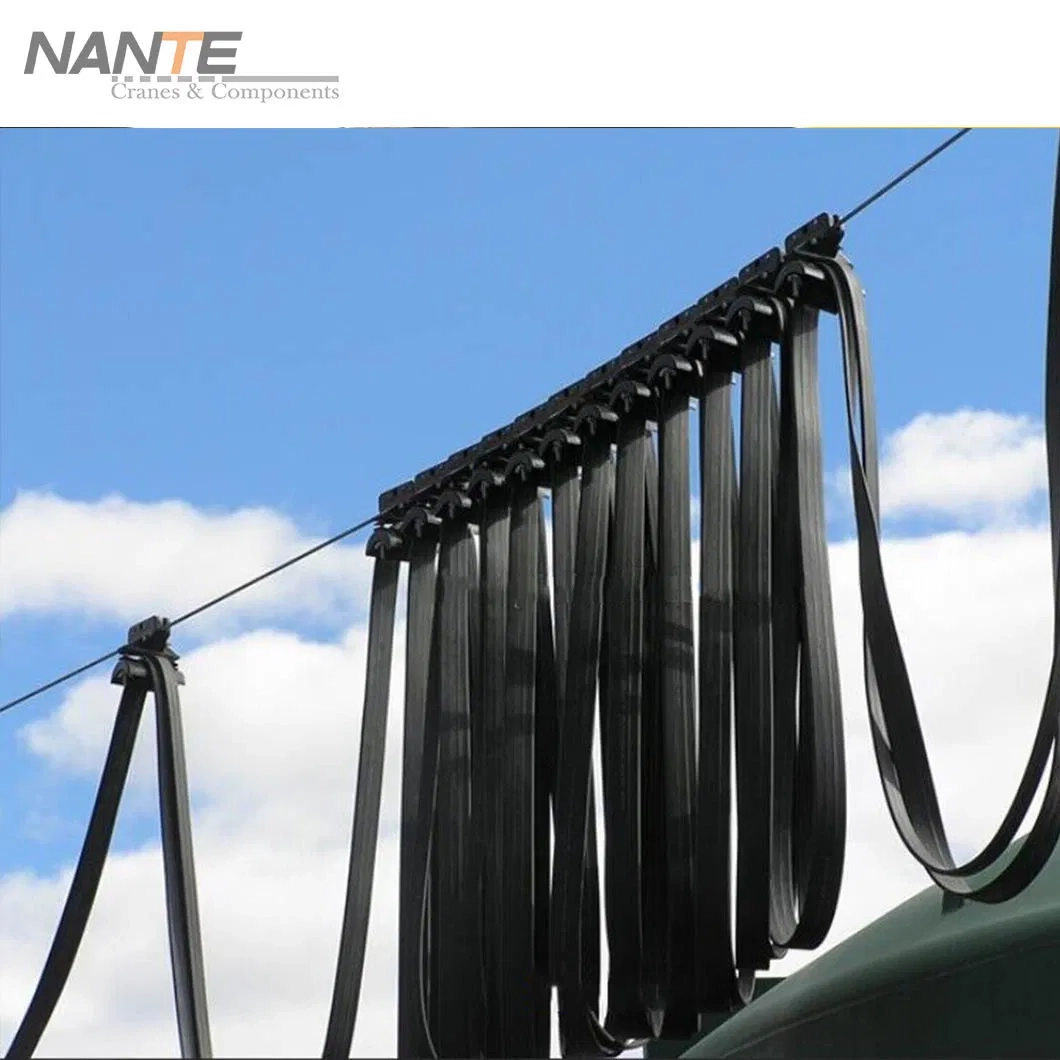
Main Components of a Crane Festoon Cable System
The system depends on a few main crane parts that work as a team for steady results:
Crane festoon track — Often a C-track (enclosed galvanized steel profile) or I-beam for direction and backing.
Cable trolley — Rolls along the track and holds up cables (made in steel or strong plastic types with ball-bearing wheels for easy motion).
Towing trolley — Links to the moving crane piece and drags the cable trolleys when it moves.
Cable clamp / hangers — Hold flat or round cables tight to the trolleys so they do not slip.
End stop — Sets the travel limit and stops trolleys from coming off the track ends.
Flat cable or round cable — Bendable, tough choices that carry power and control signals; flat cables pile up clean without twists.
These parts give smooth and trusted work. Galvanized or stainless steel materials fight rust. Strong builds manage big loads and rough settings.
How Does a Festoon System Manage Moving Cables on Cranes?
The main job of a crane festoon cable management system is to keep cables neat and safe while the crane moves. It stops dragging, tangling, rubbing, and other risks.
Cables stay up high and under control. This makes them last longer and boosts safety in crowded work places.
Cable Loop Movement During Crane Travel
The basic idea uses changing loop shapes:
When the overhead crane moves away from the fixed power point, the towing trolley pulls the cable trolleys down the track.
Cables make bigger loops (festoon loops) to match the extra distance. They do this without pull or stress.
When the crane comes back toward the power point, trolleys pull in and pile up close together.
Loops get smaller in an accordion way. This clears extra slack and stops ground touch, twists, or too much rubbing.
This easy stretching and shrinking keeps cable handling solid the whole time. It gives steady power even at normal speeds.
What Types of Festoon Systems Are Used for Cranes?
Festoon systems come in different kinds based on track style and job needs. Picking one depends on how much weight it carries, the setting, travel length, and crane kind.
Common kinds have closed shapes for extra cover and open beams for bigger jobs.
C-Track Festoon System
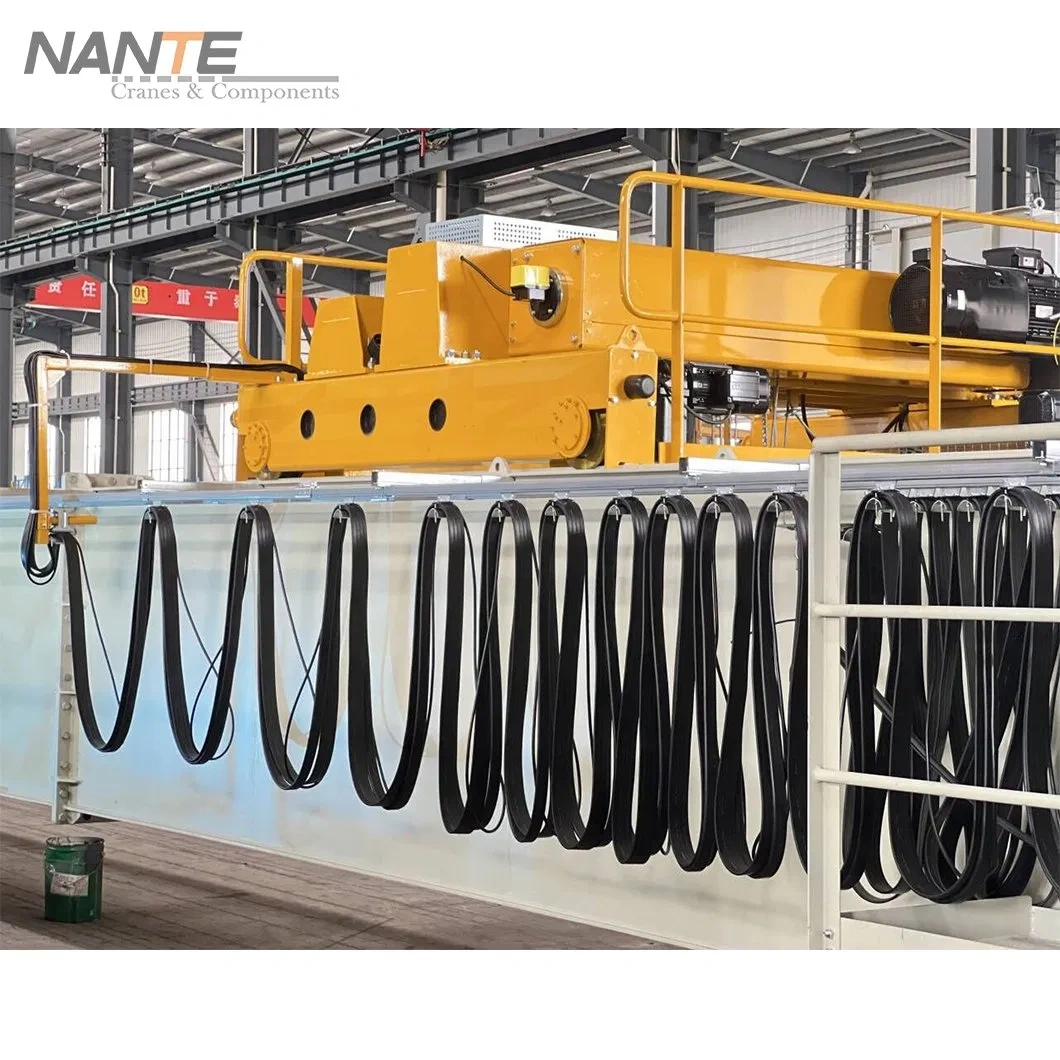
The C-track festoon system is common for regular overhead cranes and workstation cranes.
Features include:
Small, light, enclosed galvanized steel track that blocks dust and bits.
Easy trolley rolling with ball bearings.
Strong support for heavy cables with no droop.
Simple to adjust and change for different setups.
It does well inside with flat or round cables for medium work. It stays steady in hot or tough spots.
I-Beam Festoon System
The I-beam festoon system fits heavy-duty overhead cranes and outside uses.
Key points:
Solid build with more carrying power for longer stretches.
Tough enough for hard spots, like mills, ports, and very hot zones.
Holds heavier cables and extra layers well.
It deals with rough settings and keeps good results.
Comparison: Festoon Systems vs. Other Crane Electrification Options
Festoon systems are one of three main ways to bring power to cranes, along with conductor bars and cable reels.
Festoon vs. Conductor Bars: Conductor bars have sliding collectors on fixed bars. They suit long runs and setups with many bridges where space is tight. Festoon systems do better in rough, hard places (inside/outdoor, high heat, explosion-proof needs). They use direct cable touch to fight wear. But they need extra room for piled loops.
Festoon vs. Cable Reels: Reels (spring-loaded or powered) roll up cables for very long paths or below-hook tools in rusty or explosive areas. Festoon systems are easier and need less care for medium lengths. They also stack in a neat way without complex moving parts.
Festoon systems offer a good mix of trust, price, and use for many overhead crane jobs.
What Are the Advantages of Festoon Systems for Overhead Cranes?
Festoon systems give a solid, low-cost cable management answer for lots of work.
They mix good results, safety, and low price well.
Continuous Power Supply for Moving Equipment
The system keeps power and control signals steady. No breaks happen while the crane moves.
It handles power and control cables together for hoist work, bridge travel, and other tasks.
Organized Cable Management and Safety
Cables stay up and form loops the right way. This stops tangles, dragging, or harm from outside things.
Less rubbing means cables last longer. It cuts chances of electric problems, fluid leaks, or job site accidents too.
Cost-Effective Solution for Medium Travel Distance
Setup and care costs stay lower than some other choices. The plan is simple.
It works well for crane travel from 5–200 meters. Downtime stays low during setup.
Additional Benefits: Durability and Flexibility
Festoon systems stand up to things like UV rays, oil, rubbing, and hot or cold weather when good cable covers are picked. Bendable paths allow curves or tricky routes in some setups.
Key Factors to Consider When Selecting a Festoon System
Pick based on:
Travel distance and crane speed (faster speeds need special designs to stop swinging or strain).
Load and cable weight (C-track for medium, I-beam for heavy).
Environment (indoor/outdoor, heat, rust, explosion-proof needs).
Space limits (loop storage needs room at one end).
Track layout (straight vs. curved; good alignment matters for long life).
Good picking leads to top work and lasting use.
Installation Considerations for Festoon Systems
Setup needs careful steps:
Fix the track firmly to the crane frame or runway with hangers spaced at 5-6 foot gaps.
Line up the track straight to avoid sticking or noise.
Guide cables through hangers carefully and skip sharp turns.
Place the towing arm and end stops in the right spots.
Check the full travel path for smooth moves with no blocks.
Expert setup cuts down on later problems like rubbing or poor line-up.
Where Are Festoon Systems Commonly Used?
Festoon systems show up in different moving equipment setups:
Overhead cranes (bridge and monorail types).
Hoists, including electric chain and wire rope models.
Gantry cranes.
Monorail systems.
Common industries include manufacturing plants, warehouses, ports, material handling facilities, water treatment, and plating lines. These places need trusted moving power every day.
Why Choose a Festoon System for Your Overhead Crane?
Festoon systems bring solid cable handling, steady power, better safety, and money savings. They stay one of the most used and helpful power supply answers for overhead cranes.
For many setups, they beat other choices thanks to simple design, toughness, and many uses.
Ready to Optimize Your Crane’s Cable Management?
Nante Crane is a leading manufacturer of cranes and crane components with over 30 years of experience. They specialize in high-quality festoon systems, overhead cranes, gantry cranes, jib cranes, and more for diverse industrial applications. With a focus on safety, durability, and customization—including C-track, I-beam, and specialized options—Nante serves global customers across 50+ countries. Contact Nante Crane today to explore festoon system solutions or request a consultation for your project.
FAQ
What is a festoon system for overhead crane?
It is a mobile cable management and power supply system using tracks and trolleys to deliver electricity and signals to moving crane parts safely.
How does a crane festoon cable system work?
Trolleys move along a track, forming extending and contracting cable loops as the crane travels, keeping cables organized without drag or tangling.
What are the main types of festoon systems?
Common types include C-track (compact, medium-duty) and I-beam (heavy-duty, robust), plus options like angle bar for specific needs.
What are the key benefits of overhead crane festoon cable management?
Benefits include continuous power, organized cables, reduced wear, improved safety, durability in harsh environments, and cost-effectiveness for medium distances.
In which applications are festoon systems most common?
They are widely used in overhead cranes, hoists, gantry cranes, monorails, and industries like manufacturing, warehousing, ports, and material handling.