English


Overhead Crane Solutions for Mineral Processing Plants and Smelters
Overhead Crane Solutions for Mineral Processing Plants and Smelters
Date: 2026-03-06 Share:
In mineral processing plants and smelters, an overhead crane for mineral processing plants plays a key role in shifting heavy loads under tough conditions. These places deal with high heat, rough dust, and harmful gases. Such factors soon harm regular equipment. Unlike basic cranes, smelter overhead crane and mining plant crane setups rely on special crane components. For example, they include heat-proof covers and closed drives. These help ensure a long working life. Solid performance affects plant running time, work flow, and staff safety. This guide reviews main uses, unique needs, and build traits that make these strong cranes vital.
Overhead Crane Applications in Mineral Processing

Overhead cranes act as the main path for material movement in each step of mineral processing and basic metal making. They carry items from raw mine ore at tens of tons to careful handling of anodes and cathodes in electric refining.
Key applications include:
Loading primary and secondary crushers as well as feeding large autogenous, semi-autogenous (SAG), and ball mills
Transferring bulk ore between stockpiles, surge bins, and process silos
Moving filter cakes, thickened tailings, flotation concentrates, and leaching residues
Charging furnaces, converters, and anode furnaces with molten metal or hot materials in smelters
Handling spent anodes, new anode assemblies, cathodes, and starter sheets in copper, zinc, and nickel refineries
Supporting major maintenance tasks such as removing and replacing mill liners, thickener rakes, and large agitators
These tasks run non-stop. They often work 24 hours a day, 365 days a year. So, crane readiness is essential. One breakdown can lead to hours or days of stopped work across the whole site.
Crane Solutions for Smelters and Concentrators
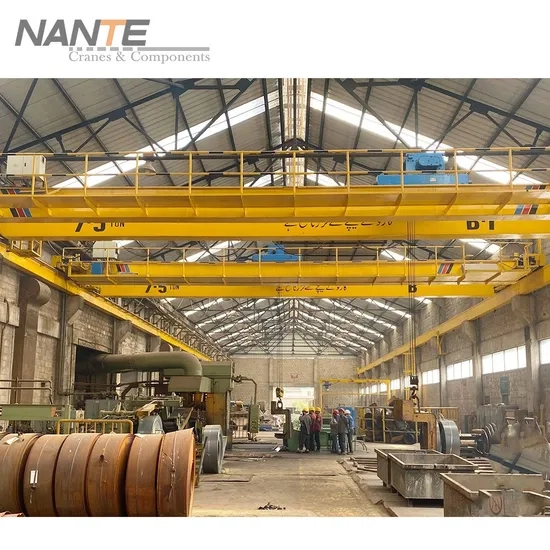
Concentrators mainly use cranes for wet-process upkeep. This covers lifting heavy slurry pumps. It also includes swapping thickener drive parts, fixing filter presses, and shifting large wear liners.
Smelters create much harder demands, however. Common jobs include:
Charging ladles and buckets with molten matte or blister copper
Extracting and inserting anodes and cathodes during electrolytic cell maintenance
Skimming slag, dross, and furnace accretions
Transporting hot cast ingots, slabs, or anodes to cooling areas
Handling furnace relining materials and removing spent refractory bricks
These repeated, hot, frequent tasks need cranes with strong heat handling, dust blocking, and rust fighting.
Special Crane Requirements for Smelters
Smelting work creates a very harsh setting. It involves heat glow from open furnace doors, chemical gases, tiny particles, and work cycles that hit FEM group A6–A8 or CMAA Class E–F.
Regular cranes fail fast under these pressures. Motor coils get too hot and fail. Wheel edges and tracks wear out quick. Electric points rust. And frame parts weaken from acid harm.
A well-built smelter overhead crane tackles these issues with:
Higher frame rating with better wear strength
Bigger crane components (hoist drums, gears, wheel sets) to cut stress spots
Full guard treatments on all open areas
Improved electric and control setups for high room heat
The cost of solid work is huge. In busy smelters, crane stop time often sits in the top three reasons for lost output.
Overhead Crane for High-Temperature Environments
High heat poses the biggest risk to crane life near smelting and casting spots.
Main build changes cover:
Class H (180 °C) or Class C insulated motors with extra heat guards
Many-layer heat blocks and shiny stainless-steel guards around the hoist, trolley, and control boxes
High-heat fake oils and dry lube for gears, bearings, and wire ropes
Air-push cooling setups or full air-cooled worker rooms and electric spaces
Heat-proof power and control wires with silicone or plastic covers
These steps allow steady work at room heat of 65–75 °C. Short high points go over 100 °C. They keep inside part heat in safe bounds.
Dust-Resistant Crane Systems
Mineral dust is fine, sharp, and very rough. It rubs like sand on all moving parts and electric points.
Tested dust-block plans include:
IP65 / IP66 / IP67 rated motors, brakes, and control panels
Fully closed, oil-bath or grease-fed gear boxes with air vents and push-pressure clean
Many-path and touch seals on all wheel bearings and turn shafts
Guard folds or covers over wire festoon setups and closed rail paths
Steady auto blow or shake clean spots built into the plan
When dust entry drops from the start, upkeep times grow a lot. Surprise fixes drop too.
Corrosion-Resistant Crane Components
Harmful air quickly breaks bare steel, aluminum, copper, and wire covers.
Standard rust fights include:
Hot-dip galvanizing (minimum 85–100 μm thickness) on bridge girders, end carriages, and runway beams
Multi-coat epoxy-polyurethane or zinc-rich primer systems for maximum barrier protection
Stainless steel (304 or 316) for platforms, ladders, handrails, cable trays, and small fabricated parts
Fully potted or encapsulated junction boxes and terminal strips
Galvanized or stainless-steel-core wire ropes with independent wire rope core (IWRC)
Sacrificial anodes or impressed-current cathodic protection in extremely aggressive zones
These fixes often stretch frame work life over 20–30 years in rough smelter air.
Heavy-Duty Crane Design for Harsh Environments
Strong cranes for mining and smelting stand apart from usual work models.
Basic build rules include:
Duty rating and load range matched to real work settings (often FEM A6–A8)
Strong end frames, wheel groups, and bumpers built for common jolt and side loads
Large-sized crane components—bigger hoist drums, heavier gears, thicker shafts—to cut stress
Two or extra braking setups (main + urgent) on hoist, trolley, and bridge moves
Part-based, quick-swap wear goods (liners, wheels, brake pads) for fast fix in planned stops
These picks keep frame strength and part trust under thousands of heavy runs each year.
Safety Considerations in Mining and Smelting Cranes
In sites with hot metal, bad gases, and big loads, crane safety and work trust go hand in hand.
Big risks cover load falls near furnaces, electric issues in wet or lead spots, worker heat strain, and hits with fixed builds.
New plans cut these with stacked guard setups. They go beyond basic rule lows.
Redundant Safety Systems in Smelter Cranes
Extra backups are required in key jobs:
Dual independent hoist brakes (one service, one emergency)
Independent overspeed and final limit switch arrangements
Secondary power disconnects and emergency stop circuits
Continuous insulation monitoring for cranes operating in electrolytic zones
Load cells with automatic overload cut-off and anti-collision sensors
These extras greatly lower the chance of one weak spot causing big harm.
Remote Control and Automation for Mining Cranes
Far-off and half-auto running has turned common.
Main gains include:
Complete removal of operators from high-temperature, dusty, or fume-laden zones
Superior visibility via fixed and PTZ cameras with thermal imaging
Electronic anti-sway, micro-speed, and precise positioning control
Pre-programmed repetitive paths for anode changing, ladle charging, or slag skimming
Real-time diagnostics, usage logging, and predictive maintenance alerts
Many sites now pick radio far control as main running. Heated or air-cooled rooms stay as extra.
For mineral processing plants and smelters seeking durable, high-performance overhead crane solutions designed for extreme conditions, Nante Crane offers a comprehensive range of heavy-duty overhead cranes, specialized crane components, and tailored applications. With proven expertise in harsh environments, reliable products, full-service support, and global delivery capability, Nante Crane delivers long-lasting solutions that maximize uptime and safety—contact us today to discuss your specific requirements.
FAQ
What makes an overhead crane for mineral processing plants different from standard cranes?
They feature higher duty classifications, Class H/C heat-resistant insulation, IP65+ sealed components, multi-layer corrosion protection, oversized mechanical parts, and redundant safety architecture to endure abrasive dust, extreme temperatures, and corrosive gases for decades.
How do smelter overhead cranes handle high temperatures?
Through Class H insulated motors, multi-layer heat shields, high-temperature lubricants, forced ventilation, and thermal-barrier enclosures that maintain safe internal temperatures during prolonged exposure to 65–80 °C environments.
Why is dust resistance critical for mining plant cranes?
Fine abrasive dust rapidly wears gears, bearings, wheels, and electrical contacts. IP65+ sealing, enclosed drives, labyrinth seals, and positive-pressure purging minimize ingress, extend component life, and reduce maintenance frequency.
What safety features are essential in these cranes?
Dual independent brakes, overload protection, multiple limit switches, insulation monitoring, anti-collision sensors, remote radio control, electronic anti-sway, and emergency shutdown circuits minimize risks in hazardous molten-metal and toxic-gas environments.
How can I choose the right crane for my smelter or concentrator?
Evaluate required capacity, actual duty cycle, peak ambient temperature, dust/corrosion severity, travel speeds, span, and maintenance access constraints. A detailed site survey and process review ensure the crane matches your exact operating conditions.