English



What Is an Overhead Crane Definition, Applications, and Key Components
What Is an Overhead Crane Definition, Applications, and Key Components
Date: 2026-02-20 Share:
An overhead crane, also often called a bridge crane, is a strong machine for handling materials. It lifts and shifts heavy items over a work area. The crane runs on high parallel paths (runways) fixed on walls or posts of a building. A solid flat beam named the bridge goes along these paths. Meanwhile, a lift tool (hoist) shifts over the bridge. It raises or drops loads up and down.
Think of firm rails along a factory section. A broad beam slides easily side to side on them. A tough hoist hangs under it. The hoist can grab tons of stuff and set it right where it fits. This setup lets overhead cranes have full control in three ways. It does so without using key ground space. These cranes boost safety, quickness, and order in work spots.
This piece covers what an overhead crane is. It explains how it runs, its basic components, various types, usual capacity and span, and real applications.
What Is an Overhead Crane?
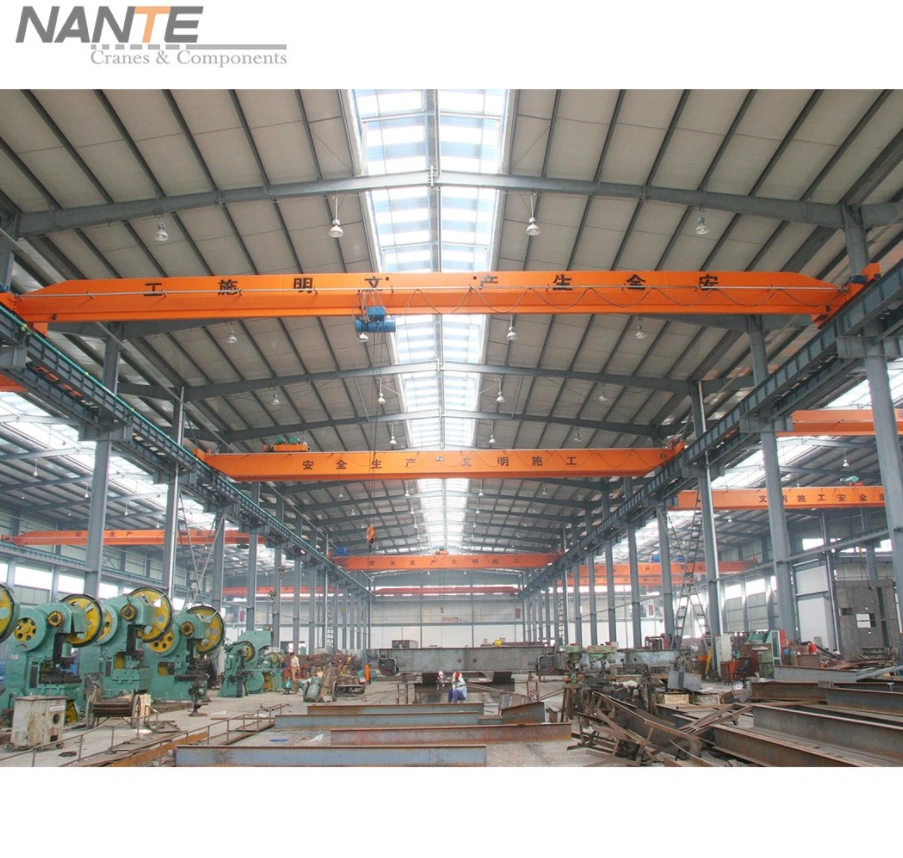
An overhead crane is a kind of crane that works over the job zone. Its bridge covers the width of the area. It moves on set runway rails. This setup allows exact side and up-down shifts of heavy goods.
The word bridge crane means the same gear. The bridge is the shifting beam that links the two sides. It holds the lift setup. Unlike moving cranes or lift trucks, overhead cranes remain fixed in a structure.
They free up ground area. They also cut the chance of crashes. This happens because the load goes high over staff and tools.
How Does an Overhead Crane Work?
An overhead crane shifts in three ways:
The bridge goes the length of the runway rails (long travel / longitudinal motion).
The trolley shifts across the bridge (cross travel / lateral motion).
The hoist raises and drops the load up and down.
Electric motors drive each shift. Workers guide the crane with a hanging button panel from the bridge. Or they use a wireless hand guide. In some setups, a small room sits on the bridge for the worker.
New safety tools, like end switches, load guards, and rush stops, help stop mishaps. They also ensure even, right work.
Overhead Crane Components
Each overhead crane has a few main crane components that work as a team.
Key Components of an Overhead Crane
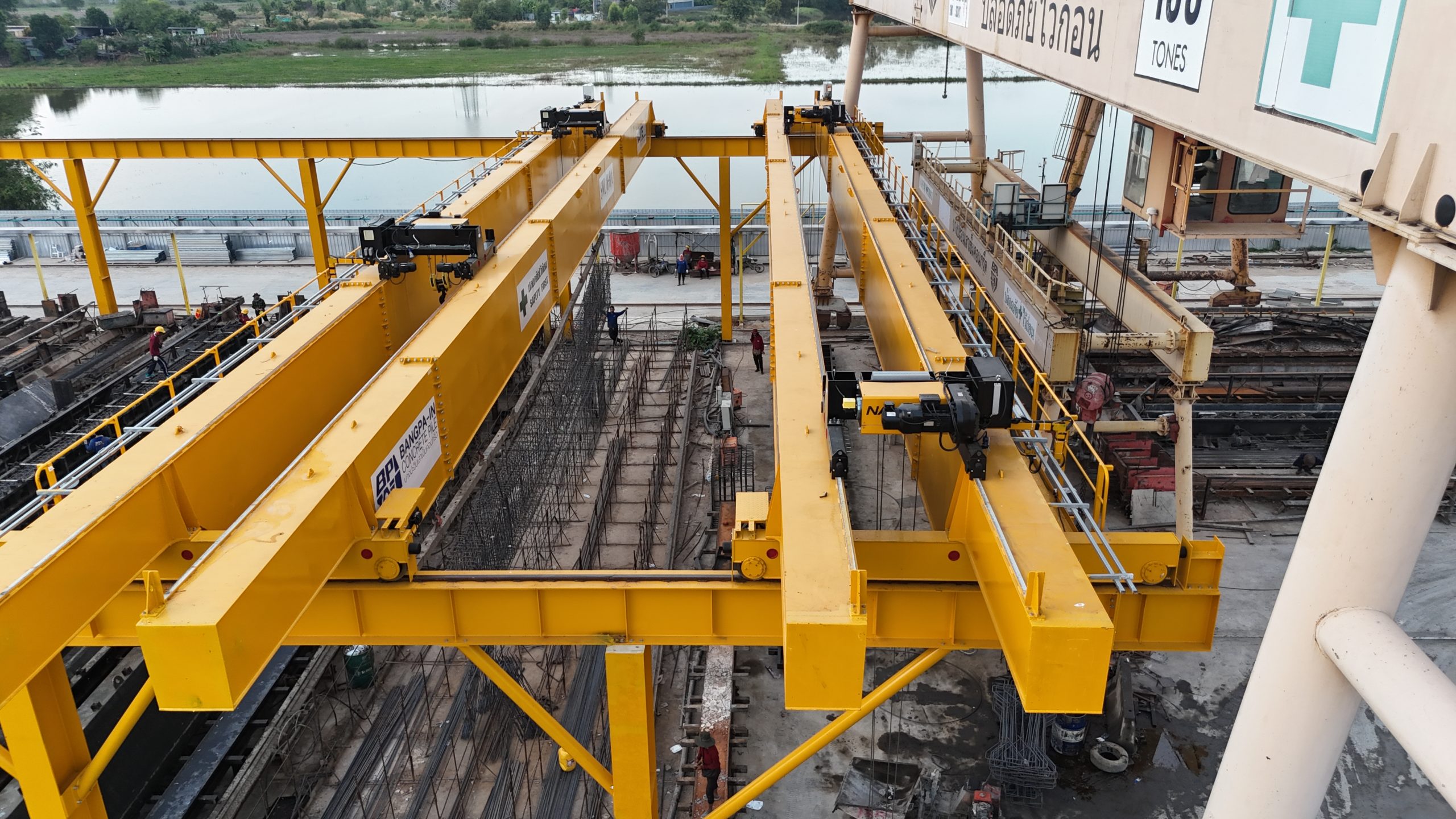
Crane bridge— The chief flat frame (single or double girder) that covers the area. It holds the trolley and hoist.
Crane hoist— The lift tool. Usual kinds include wire rope hoists and chain hoists. Some tough models use open winches.
Crane trolley— The shifting part that takes the hoist over the bridge.
Crane end carriage— The wheeled parts at each side of the bridge. They let it go along the runway rails.
Crane runway— The high rails or beams set on the building frame. They hold the full crane.
Crane travelling mechanism— Motors, gears, and wheels that push bridge and trolley shifts.
Control systems— Pendant controls, remote controls, or worker rooms, plus control boards.
Safety devices— Overload limiters, limit switches, alert lights, and bumpers.
Power supply systems— Festoon cable systems, enclosed conductor bars, or cable reels that bring power safely.
Each part gets made for steady work, exact shifts, and long use time.
Types of Overhead Cranes
Overhead cranes have a few styles to fit different site needs.
Common Types of Overhead Cranes
- Single girder overhead crane— Has one main beam. It weighs less, takes less room, and costs less. Usual loads go from 1 to 20 tons. It fits small shops or light items.
- Double girder overhead crane— Has two side beams for more power and higher loads. It often pairs with a hoist (3.2–63 tons) or an open winch (10–300 tons). It works for heavy work use.
- Underhung overhead crane— Hangs from roof beams, not ground paths. Loads often go from 0.5 to 10 tons. It suits spots with low roof space or no floor posts.
The best kind relies on load size, cover length, roof high, and task needs.
Overhead Crane Capacity and Span
Overhead crane capacity means the top safe work load (SWL) the crane can take. Loads go from 0.5 tons for small underhung types to 300 tons for big double-girder cranes with open winches.
Overhead crane span is the space between runway rails. In short, it is the width the bridge reaches. Spans go from some meters to over 30 meters. This depends on building plan and beam power.
Double-girder types often hold higher loads and longer reaches than single-girder ones. Load and reach always match the site’s frame, item needs, and safety rules.
Overhead Crane Applications
Overhead cranes are key where heavy or repeat lifts happen inside.
Which Industries Use Overhead Cranes?
Manufacturing— Shifting parts on build lines, handling tool machines, and setting heavy parts.
Steel industry— Moving steel rolls, blocks, bars, and hot metal pots safely and well.
Warehousing and logistics— Loading and dropping trays, sorting big storage, and using high space best.
Construction— Lifting forms, steel frames, and heavy gear at inside build zones.
Oil & gas— Keeping big valves, pumps, and pipes in oil plants or work sites.
Power stations— Handling makers, turners, changers, and upkeep jobs.
Aerospace— Setting plane parts, motors, and fine tools just right.
Ports— Shifting box loads or bulk items in roofed zones.
These cranes raise work output, cut hand-lift dangers, and use full roof height.
Frequently Asked Questions (FAQ)
What is the difference between an overhead crane and a bridge crane?
There is none. Overhead crane and bridge crane name the same gear. The term bridge crane points to the beam that looks like a bridge. It moves on the paths.
How much weight can an overhead crane lift?
It varies by type. Small single-girder cranes take 1–20 tons. Double-girder ones with hoists handle up to 63 tons. Open-winch types hit 300 tons or more. Always see the set safe work load.
Are overhead cranes safe?
Yes. When built right, set up well, and kept up. Built-in safety tools (overload limiters, limit switches, emergency stops) and steady checks keep dangers very low.
How long do overhead cranes last?
With solid upkeep, good overhead cranes run steady for 20–30 years or more.
Ready to Upgrade Your Lifting Solutions?
Nante Crane focuses on fine overhead cranes and crane components. It offers types like 1–20 ton single girder models, 3.2–63 ton double girder cranes with hoist, 10–300 ton double girder cranes with open winch, and 0.5–10 ton underhung designs. Their goods stress safety, power save, small frame, and changes to fit varied work needs. Contact Nante Crane today to talk fit overhead crane fixes, steady parts, and full help services for the site.