English



Retrofit vs New Purchase: When Upgrading Your Gantry Crane Makes Sense
Retrofit vs New Purchase: When Upgrading Your Gantry Crane Makes Sense
Date: 2025-12-05 Share:
When a company already has a gantry crane, owners often struggle with a tough decision. They can either spend money on a gantry crane retrofit or just purchase a completely new unit. For most businesses that operate older cranes, modernizing the existing one usually turns out to be the wiser money choice. It brings big performance gains while costing far less. In this piece, we will look at situations where an upgrade gantry crane plan works better than total replacement. We will also explain how these projects happen, when they really pay back, and how to check if your crane is a good candidate.
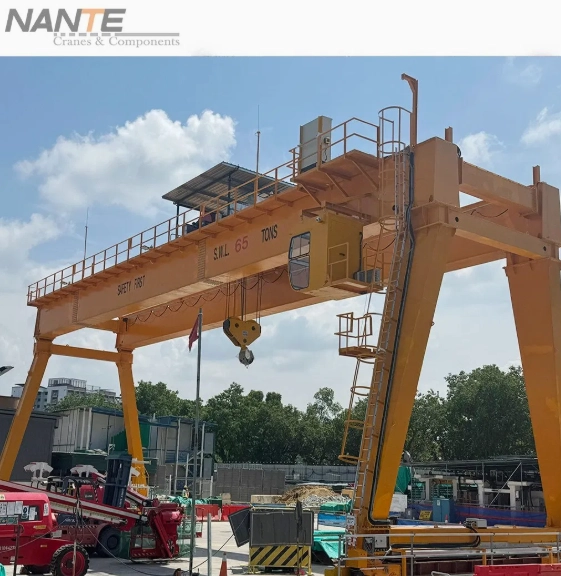
Understanding Common Retrofit Scenarios
Modernizing an existing gantry crane rarely means tearing everything apart and starting over. Most times, teams simply update certain parts. Here are three common situations people face.
Control System Modernization
Many older cranes still use outdated contactors, relays, or very old PLCs. Finding spare parts becomes tough, and unexpected stops happen more often. A control system retrofit swaps those old analog panels for fresh digital controls, frequency converters, a Crane Management System (CMS), and easy-to-use touchscreens for operators. The result brings clearer diagnostics, remote checking, stronger safety features, and smoother daily work.
Rail and Track Upgrades
After years of heavy service, runway rails, end trucks, or wheels often show clear wear, poor alignment, or metal fatigue. Instead of buying a whole new crane, owners can refresh the rails — for instance, by re-levelling them, changing damaged sections, or fitting tougher wheels. This change creates gentler movement, less shaking, fewer repair calls, and longer life for the main steel structure.
Hoist / Lifting Mechanism Refresh
The lifting parts — hoist, wire rope, motor, brakes — usually get refreshed rather than thrown away completely. Teams might add a newer high-efficiency hoist, a motor with regenerative drive, or stronger braking units. Such improvements typically raise speed and precision, cut power usage, and bring down regular service costs.
Cost Comparison: Retrofit vs New Gantry Crane
The main question most managers ask is simple: when does a gantry crane retrofit truly save cash compared to ordering a brand-new crane?
Upfront Costs
- Retrofit: Money goes toward new parts (control panels, hoist, rail pieces), engineering work, labor for fitting, and some lost production time.
- New Crane: Budget covers full manufacturing, transport, ground work (foundations, rail), fitting, start-up testing, and often local permits.
Lifecycle Cost & ROI
- A retrofit can cost 30–50% of a new crane yet return 70–80%+ of useful life (or even more), depending on the starting condition. (Note: these figures are illustrative; a precise business case depends on your system.)
- After the upgrade, owners usually enjoy stronger performance, lower repair bills, and better energy use, which speeds up the payback period.
Risk & Disruption Considerations
- Retrofit: Generally causes less trouble. Teams keep the main steel frame, limit factory interruptions, and skip heavy building work.
- New Crane: Might force longer shutdowns, new concrete foundations, and more complicated setup stages.
Inspection & Assessment Before Upgrading
Before anyone signs off on a gantry crane retrofit, a careful check-up is necessary. These are the main points to examine.
Structural Integrity Check
- Look closely at main girders, legs, and joints for signs of fatigue, cracks, or bending.
- Use non-destructive testing (NDT) or detailed calculations to prove how many years are left.
Runway / Rail Condition
- Measure rail straightness, welds, surface wear, and end-stops.
- Decide which sections can stay and which need fixing or full replacement.
Hoist & Motor Evaluation
- Test hoist capacity, rope or chain wear, brake response, and motor condition.
- Choose between simple repairs, full refurbishment, or brand-new lifting gear.
Control & Safety System Audit
- Study current panels, PLCs, relays, and safety locks.
- Check if they meet today’s rules and whether new systems would greatly improve monitoring and control.
Cost-Benefit Feasibility Study
- Gather results from steel, mechanical, and electrical checks to build a solid business case.
- Compare expected retrofit price, downtime, ROI, risk, and remaining years against the cost of a new crane.

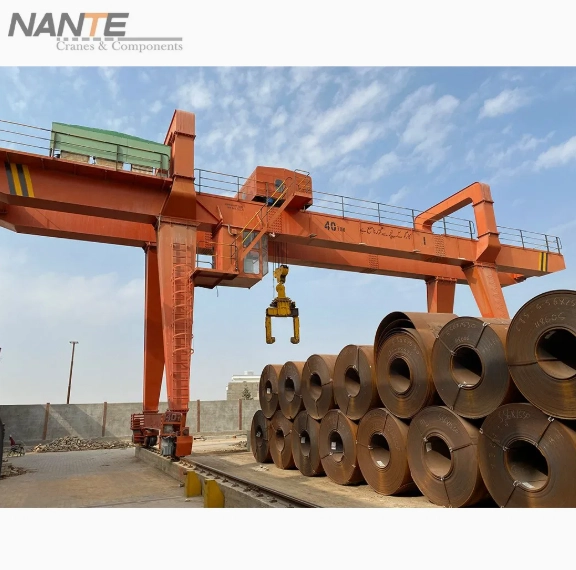
Before-and-After Retrofit: Visual Comparison
To help everyone see the value, add clear before-and-after pictures or drawings in the proposal. Good examples include:
- Control Panel: Old analog panel → new digital HMI / touchscreen + CMS
- Rails & Wheels: Worn, misaligned rails → re-leveled or replaced with new wheel sets
- Hoisting Mechanism: Original, possibly worn hoist → modern, energy-efficient hoist with regenerative drive
These images quickly show how modest changes deliver large improvements in safety, speed, and dependability.
When Retrofit Makes More Sense Than Buying New
These are the typical cases where a gantry crane retrofit clearly wins on cost:
- The crane’s structural frame (girders, legs) stays strong and still has plenty of fatigue-life left.
- Updating controls, hoist, or rails will clearly boost daily output or add many useful years.
- Keeping production running with little stoppage matters most; full replacement would hurt too much.
- Limited budget makes an upgrade easier to approve than a brand-new machine.
- Site limits (foundations, permits, available space) make a new project hard or expensive.
When a New Purchase Might Be Justified
Still, sometimes buying a brand-new gantry crane is the smarter move:
- The current crane shows serious structural damage, deep fatigue cracks, or clear safety problems.
- Lifting demands have grown greatly (much heavier loads, wider span).
- Important papers are lost or unreliable, raising risk during retrofit planning.
- Future growth needs more power or features than the old frame can ever provide, even after upgrades.
- Total long-term cost of retrofitting gets too close to the price of a fresh crane.
Introducing Nante Crane — Your Retrofit & New Crane Partner
Nante Crane stands ready to help with both retrofit work and brand-new gantry crane projects:
- Company Profile: Nante Crane is a leading manufacturer of industrial lifting equipment, including overhead cranes, gantry cranes, electric hoists, and components.
- Product Expertise: Their product lines include single-girder and double-girder rail-mounted gantry cranes that comply with international design standards (FEM, CMAA, EN ISO, GB).
- Retrofit Services: Nante Crane can assess your existing crane, perform structural inspections, and design retrofits for control systems, hoists, rails, and safety systems.
- Turnkey Solutions: Their team handles engineering, manufacturing, installation, commissioning, and testing — giving you a seamless upgrade experience.
- Quality & Reach: Nante holds certifications for quality and safety, and serves clients in dozens of countries, with thousands of end users.
Thinking about modernizing the crane you already own instead of replacing it? Contact Nante Crane today for a comprehensive gantry crane retrofit assessment. Experienced engineers will examine the current setup, discuss possible improvements, and work out exact savings and return on investment. ➡ Visit Nante Crane Contact Page to schedule your retrofit evaluation.
FAQ (Frequently Asked Questions)
How long does a typical gantry crane retrofit take?
A retrofit timeline depends on the scope — control system, hoist, rails, or all three — but many retrofits can be completed in weeks, not months, minimizing downtime.
Will a retrofit affect certification or safety inspections?
Not if done correctly. With proper engineering and installation from a qualified partner like Nante Crane, retrofits can be re-certified and pass all required safety inspections.
Can you retrofit a very old crane (20+ years)?
Yes — provided the structural frame is sound. A thorough assessment is key. If the steelwork is good and just the systems are dated, retrofit often wins out over a full replacement.
What kind of cost savings can I expect from modernizing controls?
Upgrading to digital controls, CMS, and modern drives improves diagnostics, reduces energy use, minimizes operator errors, and often pays for itself quickly.
Does Nante Crane offer retrofit globally?
Yes. Nante Crane operates in multiple regions and serves clients around the world. They can provide on-site assessment, retrofit engineering, installation, and support in many countries.
By choosing the gantry crane retrofit path, companies can keep valuable equipment longer, cut major spending, and raise daily performance — all while avoiding the huge trouble and expense of a complete crane replacement. With a trusted partner like Nante Crane, the upgrade process stays smooth, successful, and ready for years ahead.